10 Years of NaNoWrimo

It’s the night before NaNo (Oh my god it’s the night before NaNo!), and I thought since this will be my tenth year participating I would honour the occasion by looking back at my previous NaNo years. I first heard about the National Novel Writing Month in 2008 from a friend at Uni and made the last minute decision on 31st October to sign up and participate. I remember being so worried about not reaching the 50k goal my first story had 4000 words just on a lady vacuuming her house. I have since learnt my lesson and trusted my story will stretch without the inane fillers.

I have been lucky enough to reach the 50k goal each year, mainly I think because I couldn’t stand it if I didn’t. I’ve had a few years where I have been well behind, well behind, and had marathon word count days to catch up. In 2013 I had to write 12 800 words on the final day to make my goal. It was probably the most stressed I have ever been for NaNo. I finished at 11:56pm, uploaded and verified with minutes to spare. I had been counting down the clock for the final 24 hours and had 15k to write in that time. It didn’t help either that that particular year was tough because while I’d loved my story idea, after the halfway point it was like pulling teeth.

I also finished with 45 minutes to spare in 2015. That wasn’t a tough year story-wise, I quite enjoyed it. The main rule to remember is as long as you get 50k by the 30th, it doesn’t matter when you hit each word count goal. In 2014 I didn’t get 25k until the 22nd and yet by the 30th I had my 50k. I’ve also started one week in on numerous occasions when I was still at uni, sometimes even two weeks in. The delightful year was when I had to do the two side by side and was trying to do NaNo and assignments alongside one another. Fun times.
My best and the most favourite year was in 2012 where I smashed the 50k and wrote almost 60 000 words, exceeding the daily word count every single day. I went back and worked on this story again last year, adding another 25k whilst writing a short story collection alongside it. I plan to do the same again this year, it’s definitely the story I want to finish and refine out of all I’ve written.

There is a wonderful thrill about doing NaNo. I love the prospect of diving into a fresh new story, discovering where it will go and realising more often than not how unprepared you actually are. And knowing you are doing it alongside millions of people around the world is a great comfort. There’s a resource right there for guidance and support, people who know what it is like.

My favourite thing on the website is the personal stats. Not only do you get the usual per day ones once the event starts, you also get the Expected Finish Date, which in the past has often said mid March the following year when I’ve been quite behind. I also love the new one which tells you the Total Word Count of all your NaNo pieces. It makes you feel rather proud when it tells you you’ve written over 465 000 words.

Ten Years of Genres

I have written many types of stories for NaNo, I’ve liked writing all of them, but some I pulled off better than others.

2008: Mainstream Fiction
2009: Satirical
2010: Romance
2011: Historical/Family Saga
2012: Mainstream Fiction
2013: Historical
2014: New Adult
2015: Fantasy
2016: Short Stories
2017: Mainstream Fiction

I couldn’t really say which one I liked better in terms of genre. Fantasy was fun, but historical was as well. And Mainstream is easy because there’s technically less you have to research when it’s all right in front of you and not 80 years ago or locked in your imagination.


Advice

I can’t go on about being part of NaNo for ten years without leaving you with advice for first-timers.

  1. Quantity over quality

Resist the urge to edit. It will be hard, I know the pain of wanting to get a scene/paragraph/sentence just right, but this is not the time. There’s a strong chance the entire page and the three before it will be scrapped in the second draft, so don’t waste valuable time critiquing what you have. Just get it on the page; the time to edit is December 1st.

  1. Use the Forums

They are a brilliant resource for inspiration, challenges, distractions, or self-promotion. I have used the forums numerous times over the year for title ideas, shout outs for personal word count goals, or just for some fun games to relax. You can talk through problems or discuss non-Nano things as well. There’s groups for other people in your area too so you can have some nearby support, and there’s always someone willing to help.

  1. WriteOrDie is a gift from the writing gods

It is your friend, your saviour, and a god among writing programs. My love for this online resource knows no bounds. It has helped me through every single one of my stories. It helps you push through the urge to stop and think by punishing you if you pause to long. It also makes me think on my feet and actually makes ideas flow much better.

  1. Reward your achievements

They don’t have to be big. Have a chocolate for hitting the daily word count. Hit a personal goal? Reward yourself. Motivate yourself to keep going; it will be amazing how much you can get done when you add up the little goals you’ve set during the day or the week.

  1. Listen to all the advice out there.

There are always tips and tricks for doing NaNo. The NanoWriMo Twitter is always offering advice and doing writing challenges to help the word counters rise. There are professional and published authors out there who still do NaNo, they have advice as well on how to keep going when it seems like you’re at a loss.

  1. Don’t Worry if You Don’t Reach 50k

And last of all: don’t worry. If you don’t hit 50k, that’s fine. You still tried. And maybe next year you’ll get closer. Remember that whatever you ended up with is more than what you had in October, and it’s a start onto something amazing. Be proud of what you are doing. Not everyone is trying to write a novel in 30 days.

Good luck to everyone who is participating in NaNo, whether you are seasoned or diving in for the first time.

The Muse by Jessie Burton

Published: 26th July 2016 (print)/26th July 2016 (audio) Goodreads badge
Publisher:
 Picador/HarperAudio
Pages: 445/1 disc – 12hrs (MP3)
Narrator: Cathy Tyson
Format: Audiobook
Genre: Historical Fiction
★   ★   ★  – 3 Stars

A picture hides a thousand words…

On a hot July day in 1967, Odelle Bastien climbs the stone steps of the Skelton gallery in London, knowing that her life is about to change forever. Having struggled to find her place in the city since she arrived from Trinidad five years ago, she has been offered a job as a typist under the tutelage of the glamorous and enigmatic Marjorie Quick. But though Quick takes Odelle into her confidence, and unlocks a potential she didn’t know she had, she remains a mystery – no more so than when a lost masterpiece with a secret history is delivered to the gallery.

The truth about the painting lies in 1936 and a large house in rural Spain, where Olive Schloss, the daughter of a renowned art dealer, is harbouring ambitions of her own. Into this fragile paradise come artist and revolutionary Isaac Robles and his half-sister Teresa, who immediately insinuate themselves into the Schloss family, with explosive and devastating consequences. 

I actually read this before I read The Miniaturist and since I didn’t like that, I wonder if I would have picked this up. But since I read it before I eagerly took it up and actually rather enjoyed it. It was steady, not obviously exciting or adventurous, but it was interesting and dramatic in its own way. There was a lot of focus on the characters and their interactions with others to create the drama rather than needing too much outside influence, despite the civil war looming in the background in the 30s, which I must say did add its own tension and a wonderful historical reality.

The story has a dual timeline which switches between 1960s London and 1930’s Spain, a connection between the two we’re not sure of until a painting arrives at the gallery where Odelle Bastien has begun working. Burton switches between the 1960s and the 1930s beautifully, mixing the stories together and revealing what needs to be told at the right times, holding back when needed.

I liked that Burton gave us a few intriguing mysteries to ponder. I had theories about them and changed and altered them based on what happened in the story. Of course, some were predictable in hindsight, but there was always a slight chance that I was wrong, and I guess when I had a bet on either side I was going to right either way. I loved Odelle as narrator. I listened to the audiobook so Tyson did a beautiful accent which brought Odelle to life. But even without that, Odelle is a great character, she is a smart, sensible woman, she has pride and respect for herself and while she is a bit timid at times, she is also loyal and curious. This curiosity gets her involved with her employer and starts her on her own investigation into why there are so many unanswered questions and mysteries surrounding not only her employer but also this new, important painting.

There are many intriguing characters in this story. Isaac Robles and Olive Schloss are complicated in their own ways, as is Teresa. The pressure of their era and the secrets that they must keep haunt them and Burton brings this out in their words and their actions, making each one complex and full. The tone changes between each era are subtle but make a huge difference. Burton doesn’t just tell us we’re in the different decade, her writing has a different tone to it that feels freer or more confined, depending what is needed.

I enjoyed where this story went, I became more invested as it went along in both Odelle and Olive’s storylines. I wanted to know the answers as much as Odelle did and I was curious how Burton would approach their reveal. What resulted was a captivating story with twists and turns that actually did surprise me at times. I loved the chaos of the characters and the human motives behind decisions that alter paths completely.

I found myself wanting to keep going, I looked forward to getting back into the story, and with a curiosity of my own I wanted to see how it ended. Burton has created a story that will delight and surprise you in a multitude of ways. It has great a great historical presence across two defining eras of the 20th century, which has been coupled with fascinating characters that bring their own dramas to the page. Even if you weren’t a fan of Burton’s other work (as I wasn’t), give this story a go because it might just surprise you.

You can purchase The Muse via the following

QBD | Booktopia
Amazon | Wordery
Book Depository | Dymocks

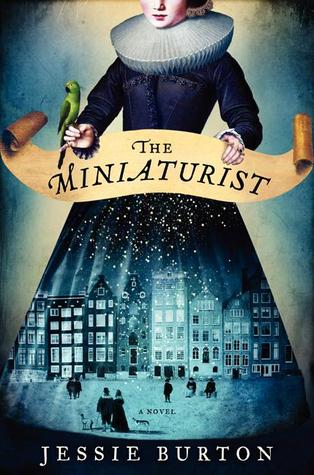
The Miniaturist by Jessie Burton

Published: 3rd July 2014 (print)/26th August 2014 (audio) Goodreads badge
Publisher:
 Ecco/HarperAudio
Pages: 416/1 disc
Narrator: Jessie Burton
Format: Audiobook
Genre: Historical Fiction/ Magical Realism
★   ★  – 2 Stars

On a brisk autumn day in 1686, eighteen-year-old Nella Oortman arrives in Amsterdam to begin a new life as the wife of illustrious merchant trader Johannes Brandt. But her new home, while splendorous, is not welcoming. Johannes is kind yet distant, always locked in his study or at his warehouse office–leaving Nella alone with his sister, the sharp-tongued and forbidding Marin.

But Nella’s life changes when Johannes presents her with an extraordinary wedding gift: a cabinet-sized replica of their home. To furnish her gift, Nella engages the services of a miniaturist–an elusive and enigmatic artist whose tiny creations mirror their real-life counterparts in eerie and unexpected ways…

Johannes’s gift helps Nella pierce the closed world of the Brandt household. But as she uncovers its unusual secrets, she begins to understand–and fear–the escalating dangers that await them all. In this repressively pious society where gold is worshipped second only to God, to be different is a threat to the moral fabric of society, and not even a man as rich as Johannes is safe. Only one person seems to see the fate that awaits them. Is the miniaturist the key to their salvation…or the architect of their destruction?

I’ve given it two stars, but by the end of it I wanted to give it 1.5. I was told this was a brilliant read, I did not find this. I persevered and hoped for something to come of it. And not only did I get no real answers, the ending was unsatisfactory and I feel a bit cheated. I don’t know whether this has to do with the magical realism side of the story, but I wasn’t a fan.

The beginning started out ok, after a prologue from an unknown voice we’re introduced to Nella and her arrival at her new life. We’re thrust into Amsterdam in the 1600s and all its glory. Burton makes it easy to understand while still having the gravitas it needed and the seriousness to understand Nella’s predicament, and her style of writing feels like it suits the era and is easy to comprehend.

I settled into the story and got used to Nella and the other characters. I was intrigued, I was curious. It does start to go a bit stale and as part two hit I was weary but something finally seemed to be happening. This didn’t last though and the story dragged on. I think Burton tried to include too much. There’s the historical story happening with sugar, plus a lot of religious elements and political components. On top of that is Nella’s place and the mystery of the miniaturist. It makes for a heavy story and one that takes a lot of pages to tell.

Some parts were predictable and it was a case of waiting for the book to catch up with what you already suspected. Other times it felt like every second chapter had a typical twist of some kind and it got to the point it was just “Oh, another twist, sure, why not’. I will give Burton some credit, she actually followed through on a few things I thought she wouldn’t, that impressed me. But in doing that she also added to the unsatisfactory feeling and the sense that while some things appeared to be resolved, nothing felt like it was. We’re left hanging, not even with a sense that we understand how things would keep going, an abrupt finish that doesn’t answer anything.

I found that I wanted to get to the end without reading the middle. I figured I could ignore this middle part and just see what happens and get the answers to the big questions that Burton keeps raising. I wanted to get to the end to find out what the whole point of it was and found nothing but disappointment. It was anticlimactic after the [supposed] build up and it felt flat.

I’d been looking forward to reading this for months and had it praised and recommended to me by a few people so I was eager to see what it was like. Not to mention the beautiful cover. To come out the other end with meagre enthusiasm is a sorry state to be in.

You can purchase The Miniaturist via the following

QBD | Booktopia

Amazon | Wordery

Book Depository | Dymocks

La Belle Sauvage (The Book of Dust #1)

Published: 19 October 2017 Goodreads badge
Publisher:
David Fickling Books
Pages: 560
Format: Paperback
Genre: Young Adult
★   ★   ★   ★   ★  – 5 Stars

Eleven-year-old Malcolm Polstead and his dæmon, Asta, live with his parents at the Trout Inn near Oxford. Across the River Thames (which Malcolm navigates often using his beloved canoe, a boat by the name of La Belle Sauvage) is the Godstow Priory where the nuns live. Malcolm learns they have a guest with them; a baby by the name of Lyra Belacqua . . .

For over ten years I have been waiting [im]patiently for this book to finally be published. From 2005 when Pullman first really mentioned he was working on it I have waited. I’ve check update after update, any little mention from 2005, 2007, 2012 when Pullman said he was taking over a year off everything just to work on it. When the “late 2016” possible publication was announced I was excited but also doubtful, when that got pushed back to 2017 I was heartbroken. When that 19 Oct date was announced in February this year I may have lost my little mind. Then I had to wait, but it finally happened. I finally got it, I finally read it, and I have to say, my word was it worth the long wait.

The Book of Dust is everything I possibly imagined it to be and more. It is a beautiful and magnificent book that draws you right back into Pullman’s world, so much like ours but still completely different. It’s familiar, but not too familiar because it takes place away from the Oxford we know but still feels like slipping into a well-loved pair of shoes. I fell in love again almost instantly and the more I read the more drawn in I became. Every turn of the page I was almost in tears of happiness and I loved this new side of this world we got to explore. (As I said, I have a slight obsession with this series and I have been waiting a long time for this book, so no judgement please).

Pullman’s new characters are as fully formed and unique as his existing ones, and those we’ve met before (technically) are also introduced as if we’re meeting them for the first time, such is the benefits of having a new point of view to focus on. Malcolm Polstead is a great voice to tell this story; he is young, can come off as a little simple or naive, but shows strength and determination when needed. His loyalty and friendship for others, and his love and protection over Lyra is his driving force. His sense of what is right and what’s wrong is clear, and he has wonderful guidance around him to direct his curious mind.

I loved Malcolm. I loved his love of Lyra, and I love his childlike wonder and innocence. Having only really seen Lyra’s interactions with Pan as the example of child/dæmon relationship, it was great seeing Malcolm and Asta’s connection. Pullman also includes subtle and brief bits of information about the daemons through the story, and uses childlike curiosity to cover any questions, much as he did in His Dark Materials.

What I found interesting was that Lyra’s role is so small, she is just a baby after all, and yet she is the entire point of the book as well. One thing I adored, and actually had never thought about before was babies and baby daemons. There’s plenty of children’s daemons in the trilogy, but babies not so much. Seeing baby Lyra and baby Pan interact was joyous, and every time they’re mentioned I found myself aging them forward to the wild girl and dæmon ten years on and thinking of all the great things they were going to achieve.

Important things to note, there is some swearing in this book, one of the Big Ones I guess you could say is said by a few characters. Pullman has used them well so they work, but it was a surprise when they appeared. Also, there is a darker story here, it’s a bit more brutal at times, nothing too explicit, but just darker. Pullman has also said numerous times this is not a sequel or a prequel, he calls it an equal, a companion piece. I would agree in as much as it is separate from the trilogy, and even separate in part from the follow up books he did. But my opinion is you do have to read the original three first. Very much like Star Wars you need to have experienced all that there is in the originals before you go back to the Before. Knowing what it all means and to know the grandeur and power it holds is more impactful as you read this book. Secrets from the trilogy are openly discussed, mysteries are no longer mysterious as they play out before you. All of which is fantastic mind you, but knowing that they have been secrets means that reading the trilogy after this will not have the same effect at all in my opinion. Though I would be interested to speak to someone who does read this first.

When I finished reading I did find myself with a few tears. Not so much for what happens but for all of it: for the big, gorgeous new story, for Lyra and Pan and Malcolm and his beloved canoe. For the strength and love Malcolm has, and the beautiful innocence and unbridled sense of doing what is right. And of course, because who can read any book about this world and not end up in beautiful tears of happiness? When I finished that last page I wanted to hug the book close to my chest because it was perfect in all the ways that mattered. Pullman brought long time devoted fans the book they’ve been longing for for over ten years. He made us wait, but for what has come of that waiting I couldn’t ask for anything more. I can only imagine what is going to come in the next two volumes, and I’m sure Pullman will come up with something much better than I ever could imagine.

In a Sydney Morning Herald article Pullman said that the second book is written but not yet edited. With a hopeful release date of next year I have something to look forward to that’s much less vague than it has been. If you’re interested, it’s a great article, Pullman talks about his Australian connection to parts of La Belle Sauvage, and his experience with the whole writing experience.

You can purchase La Belle Sauvage via the following

QBD | Dymocks

Booktopia | Book Depository

Amazon | Publisher

Audible | Wordery

Forever in Blue: The Fourth Summer of the Sisterhood by Ann Brashares

Published: 9th January 2007 (print)/2008  (audio) Goodreads badge
Publisher:
 Delacorte Press/Bolinda audiobooks
Pages: 384 pages/7 discs
Narrator: Angela Goethals
Format: Audiobook
Genre: Young Adult
★   ★   ★  – 3 Stars

With unravelled embroidery and fraying hems, the Traveling Pants are back for one last, glorious summer.
Lena: Immerses herself in her painting and an intoxicating summer fling, fearing that the moment she forgets about Kostos will be the moment she sees him again.
Carmen: Falls under the spell of a sophisticated college friend for whom a theatrical role means everything and the heritage of the Pants means nothing.
Bridget: Joins a dig for an ancient city on the coast of Turkey and discovers that her archaeology professor is available in every way except one.
Tibby: Leaves behind someone she loves, wrongly believing he will stay where she has left him.
It’s a summer that will forever change the lives of Lena, Carmen, Bee, and Tibby, here and now, past and future, together and apart.

The first year of university for the girls and with it comes all sorts of drama and life lessons. Brashares did a good job bringing us into this world of separated friends who are trying to find their place in the big wide world and still struggling to hold onto their former lives. The distance of college and being forced to grow up and be independent challenges the girls and makes them assess who they are and what they want from life.

And, again, Pants that still fit and don’t smell and apparently still look wearable after having pond water, dirt, sweat, and who knows what else on them make the rounds. At least this time doesn’t seem to be focused as much on the Pants. They make their appearance and are shown to be worn a few times, but they mainly just sit nearby, so much so I had moments forgetting they were even in the story until they were mentioned. They have definitely become more of a symbol than requiring any real wear from them.

After seeing some improvement in Bee after the first two summers, her storyline is strange and annoying. I’ve figured out I’m just not going to like her character. I will accept her for who she is and just not like her that much. Why Brashares needs Bee to have these older guy relationships, 15 and 19, now 19 and 30. Can’t she stop falling for older guys who are now not only married but also her teacher? The fact she’s even on a dig in Turkey is a complete surprise, has she been harbouring this archaeological love for three books without us knowing? This plotline came from out of the blue as far as I know. Full credit to her though, she treats her family storyline with care and brings to light the struggle she has had over the years.

One thing Brashares doesn’t seem to have realised that book four means the girls are practically 20, and while they do 20 year old things, they still act like they’re children at times. Her language is telling us these adult things are happening, but the petulance and childishness still remain from her characters.

Having said that, some of the girls are better than others. Carmen, who also has picked up a theatre hobby from nowhere, was much less spoilt than before. I actually sympathised with her a lot in this, Brashares develops her like a proper person and makes us understand her emotional neglect and absence from her friends. Lena also is a bit more focused and adult, she is being the 19 year old she is meant to be, working out who she is and what she wants in her life.

I will admit, while I have been a fan of Tibby’s for the series, I think Brashares drew out her storyline for a lot more drama and length than needed. I liked the drama, but I disliked the overdramatic reactions. Though four books deep into this I really so think it’s the writing that keeps bugging me. I think Brashares just needed to tell the same story better and it wouldn’t feel as melodramatic and sickly sweet and charming sometimes. She writes really well sometimes and then other times it just doesn’t work.

Where Brashares shines is in the final chapters. The summation of this story and these girls’ journey is the best part. It is about friendship, about memories, about love and good times. I remembered why I enjoyed reading these stories in the beginning; it highlights the growth of the friendship over the years and gives you a sense of satisfaction as it ends. It remains the sweet and charming book it’s always been, but Brashares ends the fourth book with respect and a promise for the girls’ futures.

You can purchase Forever in Blue via the following

Dymocks | Book Depository

Booktopia | Fishpond

BookWorldAmazon Aust

Previous Older Entries