Green Eggs and Ham by Dr Seuss

Birthday

10500516_792284587518837_642003267089225361_nA very happy birthday to the delightful Dr Seuss today. Today is Seuss’ 110th birthday, and at the time of this posting I am very disappointed there is still no sign of a Google Doodle commemorating this. The man who is most commonly known as Dr Seuss was actually born Theodor Seuss Geisel in 1904 and was an American writer, poet, and cartoonist. Son to Theodor Robert and Henrietta (Seuss) Geisel, he was also the grandson of German immigrants. Geisel lived in Springfield, Massachusetts, where his father ran a brewery and it was a street in this town that Geisel used as an inspiration for his first book as Dr Seuss, And to Think That I Saw It on Mulberry Street. Geisel is mainly known for his children’s books written under his pen name Dr Seuss, though this was not the only pen name he used, in college he had written under Dr. Theophrastus Seuss and later used Theo LeSieg as well as Rosetta Stone. Through his life Geisel published a total of 46 children’s books, his most celebrated being The Cat and the Hat, as well as Horton Hears A Who!, How the Grinch Stole Christmas!, The Lorax, as well as One Fish, Two Fish, Red Fish, Blue Fish plus many others. Seuss’ works are known for their imaginative characters, rhyme, and frequent use of anapestic metre. His works have been adapted into many forms, including 11 television specials, four feature films, a Broadway musical, and four television series. As a cartoonist and illustrator, Geisel published works in advertising campaigns, and also worked as a political cartoonist in New York. In World War ll he put his skills to work in the animation department of the United States Army, and later won an Academy Award in 1947 for his film, Design for Death. It is hard to think of Geisel as anyone other than Dr Seuss, he has flooded out culture in so many ways as Seuss it is hard to see him as anyone else. He was an interesting guy though, and he contributed a lot more than just his work as Dr Seuss, but there is not doubt the impact those books have had on children as well as society as a whole. The term Grinch has become infiltrated into our culture, and many of his books and characters are as loved today as they were when they were first released. You can read more about Geisel here, and if you’re feeling particularly jovial and adventurous, check out Seussville.


Published: August 12, 1960 Goodreads badge

Publisher:
 Random House
Pages: 62
Format: Book
Genre: Children’s Picture Book
★   ★   ★   ★   ★  – 5 Stars

When people think of Dr Seuss I think the one book that immediately comes to mind is The Cat in the Hat. I was never a huge fan of The Cat in the Hat, I liked many of his others though, I did always like Green Eggs and Ham. I like Green Eggs and Ham because it is not only a great book and very clever, but also because it has one of the best stories behind its creation, one of those great trivia stories about the origin of songs and books and all those things. The story of Green Eggs and Ham involved Seuss and his publisher Bennet Cerf, who after receiving a book of Suess’ of 225 words, made a bet he could not complete one containing only 50. The result is Green Eggs and Ham and it goes to show that you do not need a lot of words to make a story. It is a great idea; there is also an excellent Hank Green song that is similar where he sings a minute and a half song using only the same ten words. It isn’t the same as a story I grant you, but it very cool all the same. Green Eggs and Ham is a conversation between the unnamed narrator and a man known only as Sam-I-Am. Sam-I-Am continually pesters the narrator to sample the dish known as green eggs and ham, following him to various locations and asking him once more. It is a very simplistic story, but one that offers a range of great catchphrases and a joy in the fact the premise is so simple and jovial. The best part was that this simple story, containing only fifty different words, managed to get on the Banned Book list in People’s Republic of China. Much like The Lorax that people thought it was against loggers of some such nonsense, in 1965 Green Eggs and Ham was deemed to be considered a “portrayal of early Marxism”. This banning lasted until 1991 where it was lifted after the death of Seuss. Another fun fact, apparently in September 2013 it was read aloud in the US Senate as part of a Texas Senator’s 21 hour long speech advocating defunding the Patient Protection and Affordable Care Act (also known as Obamacare). I won’t ruin the ending for you, and as engaging as the story is there isn’t a lot of character development though. We don’t get the typical back story about who Sam-I-Am is nor our mysterious narrator, but there is a suspense about the book which only adds to the enjoyment. It is a wonderful book, and I think everyone should read it, and other Seuss books, find their own favourites and read them regardless of who you are.

I wish Theodor Geisel a very happy birthday, and I hope Dr Seuss, no matter where you are whether here or Katroo, that the Birthday Bird throws an amazing party for you.

Oh, also, for those who are not sure how to pronounce Seuss, here is a rhyme to help.

“I’m sad to report, I’m sorry to say That Seuss is not pronounced at all in that way.
You choose to rhyme Seuss with goose juice and and moose juice
But that is not a pronunciation Seuss himself would choose
If he was here today and still had a voice
You would clearly hear him say “My name is Dr SOICE!”

And finally, just a quick note to say, do you know how weird it is to keep writing “I like Green Eggs and Ham” when that goes against everything you have heard!? It messes with you a small bit, it really does.
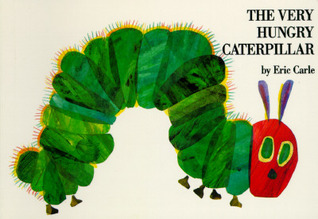
The Very Hungry Caterpillar by Eric Carle

Birthday

A very happy birthday to Eric Carle today, author and illustrator of so many delightful books, who is 84!

Carle was born in 1929 in New York to German parents but went back to Germany when he was six years old. After harrowing experiences through the war, Carle returned to America in 1952 where he got a job as a graphic designer for the New York Times and later at an advertising agency.

The work of Eric Carle is easily recognisable, his artwork and illustrations are unique and his books tell of nature and the world. Carle himself said that with his books  “I attempt to bridge the gap between the home and school. To me home represents, or should represent; warmth, security, toys, holding hands, being held. School is a strange and new place for a child…I believe the passage from home to school is the second biggest trauma of childhood; the first is, of course, being born…The unknown often brings fear with it. In my books I try to counteract this fear, to replace it with a positive message. I believe that children are naturally creative and eager to learn. I want to show them that learning is really both fascinating and fun.”

The way Carle makes his art is fascinating. I had never really thought about it before, I assume it was just paintings but apparently his work is created like a collage using hand painted papers that are cut and layered to form the images. There are also other techniques such as die-cut pages, and actual twinkling lights and noises in some books as well. All very high class compared to the felt puppets and faux fur I remember from my books.

My favourite book of Carle’s is of course The Very Hungry Caterpillar. I read this so many times as a kid it’s great. Yet another example of interaction and creative book creation, there are holes in the book, the pages are different sizes, it is amazing. It seems growing up Carle was familiar with different shaped books in Germany. I understand the reasons why but we need more books here that are weirdly shaped.

The Very Hungry Caterpillar was published in 1969 and the story behind it is rather cool. According to Carle, “One day I was punching holes with a hole puncher into a stack of paper, and I thought of a bookworm and so I created a story called A Week with Willi the Worm.” But how did we get to the caterpillar? Willi was a bookworm, but apparently poor Willi would not be a great protagonist as a green worm (poor Willi), then Carle’s editor suggested a caterpillar, which made Carle think of a butterfly and there you go. So in a sense we can all now say the very hungry caterpillar’s name is Willi. This must be made known to the world.

I must say, this was a fun review to write, short books, especially children’s books can bring out a silliness you really can’t get away with for big, long, serious books. If you don’t know the story of the very hungry caterpillar you may not want to read ahead, but even if it spoils it, which is will because there is nothing much else to talk about in there, then I half apologise and half demand you go read the book.

Published: September 29th 1994
Goodreads badgePublisher: Puffin
Pages: 26
Format: Picture Book
Genre: Children’s Picture Book
★   ★   ★   ★   ★  – 5 Stars

This is a story of suspense and tension. The main character of this story is born into a world in constant hunger and we follow him as he devours food at an alarming rate, never able to quench his hunger. Day after day he does nothing but eat, eating more and more as the days go by. He tries to be healthy in the beginning but as the days progress his hunger drives him to junk food and after all that cake and sugar and cheese…well, that’s right, he becomes ill. The suspense was amazing. Was this finally the way to stop this hunger machine before he ate through his world of food? Could this tummy ache be enough to stop his rampage on the food? Would there still be enough to support the remaining population? I had to read on to find out.

After having eaten so much this character had become so large he hides himself from the world. So large in fact he must built a house around himself to shield the judging eyes of the neighbours and those who come across him. Housebound, and living off the vast amount of food he’d consumed in his lifetime, this character is sheltered from the world. Until one day, after probably taking a good long hard look at what he’d become, had an instinctual desire to change himself, become a new and brighter person. After emerging slowly from his custom built house to this new world he was no longer a very hungry caterpillar, he was a beautiful butterfly (or he’d eaten himself into a food coma and was delusional about his true butterfly abilities. Either way).

Where the Wild Things Are by Maurice Sendak

Birthday

Happy Birthday Maurice Sendak! It was a sad day when the world lost him last year, yet we know his stories will live on. So, in honour of his birthday, I am reviewing my favourite book of his, Where the Wild Things Are.

Maurice Sendak was born in 1928, the same year as Mickey Mouse, and he had an interesting life. His extended family were killed in the Holocaust which naturally exposed him to concepts of mortality and death, and he had health problems as a child. It was these health problems which confined him to his bed that developed his love of reading, and it was watching Disney’s Fantasia that made him want to be an illustrator (who wouldn’t that film was phenomenal).

His first illustrations were published in a textbook called Atomics for the Millions and he spent a lot of time illustrating other people’s works before beginning to write his own. He is quoted as saying “My gods are Herman Melville, Emily Dickinson, Mozart. I believe in them with all my heart”; but there were many other sources of inspiration from painters, musicians, authors, and a key influence was his own father and the stories he told him.

The impact of Sendak is clear when you look at what people said about him when he died last year. The New York Times called Sendak “the most important children’s book artist of the 20th century.”
Darling Neil Gaiman said “He was unique, grumpy, brilliant, gay, wise, magical and made the world better by creating art in it.” And even the delightful Stephen Colbert said that “We are all honoured to have been briefly invited into his world.” I wholeheartedly agree with them all. He did have other books, his final book, Bumble-Ardy, was published eight months before he died, and there was a posthumous picture book, titled My Brother’s Book, published in February 2013, 50 years after Where the Wild Things Are. It is hard sometimes to remember there are more books out there when Where the Wild Things Are is so loved and cherished.

Sendak wrote Where the Wild Things Are in 1963 and from a rocky and critically negative start it has grown to be one of the most beloved stories of all time. Author Francis Spufford said that the book is “one of the very few picture books to make an entirely deliberate and beautiful use of the psychoanalytic story of anger”, and I think this is entirely true, part of what makes it wonderful.

I am not sure how many of you have read Where the Wild Things Are, and it is a fairly short book so I probably will be giving a variation of a spoiler so here it is, the spoilers warning just in case because there is not a lot to cover. But even so, you should read the book regardless of me spoiling it a smidge.

Published: May 4th 2000
Goodreads badgePublisher: Red Fox
Pages: 37
Format: Picture Book
Genre: Children
★   ★   ★   ★   ★  – 5 Stars

One night Max puts on his wolf suit and makes mischief of one kind and another, so his mother calls him ‘Wild Thing’ and sends him to bed without his supper. That night a forest begins to grow in Max’s room and an ocean rushes by with a boat to take Max to the place where the wild things are. 

As a kid, I adored Where the Wild Things Are and I still do. I think everyone needs to read it at some point in their life (I am not telling you not to watch the 2009 film but…I am not 100% convinced about that yet, it made me slightly ill at ease and a bit grumpy when I watched it but I can see what they were doing. It looked nice, that’s something). The book had been adapted several times before the movie, including an animated short in 1974 (with an updated version in 1988) and a 1980 opera.

Where the Wild Things Are tells the story of Max, a boy who puts on his wolf suit and gets into mischief. He was a Wild Thing and so he goes and joins the other Wild Things, sailing away in a private boat until he reaches the land of the Wild Things where his many adventures can begin.

The absolute best bit I think is the ending, and all of it, and really what this whole story is. Sendak shows us the story of Max, but while it looks like we are looking from the outside, it is actually Max who is telling us this story, it is all from Max’s point of view. We see him take control of these Wild Things, he rules them, sends them to bed without supper, he becomes the one in charge. I certainly do not want to be psychologically breaking down this story because that is the first step to ruining something wonderful, but as clear as it is, it shows you the power of Max’s mind, and what is entirely possible if given half the chance.

We need to take a moment to mention the pictures, Sendak did the pictures himself and they are stunning. They are displayed filled with colour, but have a dark mystical element as well. There are pictures that sit on white pages, there are pictures that sit above text strips, and there are wonderful full page and two page illustrations that require no words at all; truly beautiful.

These images, as a lot of children’s illustrated books do, support the story, and tell the story so limited words are needed. There is an argument in the scholarly world that illustrations lead children’s minds and makes them unable to create images on their own but I think there are exceptions, this is one. You can still use the images Sendak gives you to create a fuller story, you can imagine the dancing and the sailing and everything, the illustrations are your starting point.

This is a beautiful book and a great story that lets you enter the world of the Wild Things; and if Max’ mischief isn’t enough fun, than the majesty that Sendak puts into the Wild Things through image alone is pretty darn amazing, I always wanted one based on those illustrations alone. A truly amazing story, by a truly wonderful person, author, and illustrator who wrote and illustrated many more books you should check out, and I think you should all experience Where the Wild Things Are if you haven’t.

Maurice Sendak Goodies

1983 Disney CG Animation of Where the Wild Things Are – it ends abruptly and seemingly in the middle but it is still rather cool

Maurice Sendak reading Where the Wild Things Are

10 Fascinating Interviews via Flavorwire

Another Interview

Next Newer Entries