Once again the Newcastle Writers’ Festival is upon us; three glorious book filled days where you meet other book enthusiasts, see authors you love or have just discovered chat about their work, their passion, and their inspiration, and it’s also a place to immerse yourself within the book world. In its fourth year it is looking bigger and better and knowing how successful it has been in the past no doubt any expectations will be met. From 1 April until 3 April people from around Newcastle and across the state and country flock to the city where authors and numerous personalities from the Newcastle region, as well as wider Australia and overseas gather to discuss books and reading and important topics and issues of the day.
This year, creator and wonder-genius Rosemarie Milsom designed a program around history, memoir, and climate change, enlisting the help of big names like Tim Flannery, Kerry O’Brian, Leisel Jones, Richard Glover, Ross Gittens and a myriad of others to share the message and their stories. I booked in a total of 10 sessions, a combination of paid and free events, but as the nature of the festival goes, I ended up going to ones I had not planned and missed others I planned to see. No regrets though because they were all so wonderful.
The festival kicked off this morning, a variety of sessions on offer to get you in the mood before the official opening night event later tonight. This festival is not entirely about memoir and climate change, there are also some wonderful YA sessions and sessions about Aussie authors later this weekend that I am really looking forward to attending. One of the things I love about this festival is that not only has it introduced me to a bunch of books I probably wouldn’t have read, but it’s also helping me discover more great Aussie talent. In a small way it’s even helping me step out of my comfort zone and take chances on sessions and authors to open my mind and embrace new things, whether that is new genres or ways of writing, or even listening to discussions I may never have considered before.
I kicked of the 2016 festival with a talk about Shakespeare, specifically What’s Special About Shakespeare? Hugh Craig, who was coincidentally my lecturer for a Shakespeare class many years ago, was speaking about what is it that has made Shakespeare last and remained so popular over the last 400 years. As a lover of the Bard and with my own celebrations in the works to celebrate this anniversary I was intrigued. Hugh spoke about how Shakespeare and his plays can be found almost anywhere, in any culture. Everyone knows something about Macbeth or Hamlet, bits of Shakespeare plots and characters and themes appear in popular culture, and not just in the English speaking world.
This was a fascinating analysis; Hugh asked whether an alien visiting earth, who had been introduced to Shakespeare, would be able to see from his works alone how exceptional Shakespeare is, is there numerical proof? Hugh looked at whether it was Shakespeare’s characters, the amount of plays he’d written, or even his vocabulary had an impact on his lasting success. With the figures broken down it is evident Shakespeare was not that exceptional himself, given the chance other playwrights such as Ben Johnson or Chris Marlow could easily have had the success Shakespeare did. What Hugh established though, that while Shakespeare was rather average, in both vocabulary and language, what makes him exceptional is what he does with the words rather than the words themselves. He used familiar words to their maximum effect; simple words had the greatest effect on a play because they were so moving. An example used was from Twelfth night. A simple phrase, “I was adored once too” opens up a completely new perspective on character Sir Andrew and yet there is nothing grand about those words themselves.
For the hour sitting there I was amazed. To see Shakespeare broken down into numbers and analysed in such a way actually made it more impressive. It took nothing away from the beauty of his plays and in an interesting way, it enhanced them even more. Knowing that Shakespeare contributed an incredible amount of words and phrases to the English language it was fascinating to see that it was not the vast vocabulary that made him special, it was what he did with it that does.
I will certainly be discussing this session further as part of my Shakespeare month, otherwise I think I could write about it forever and I would end up writing a thousand words or two on it which no one wants.
I also attended a wonderful session with author Peter Uren who hosted A Guide to Self Publishing. Peter did not go in wanting to give a “How to” talk, instead he spoke of his own experiences in the self publishing world. He spoke about the importance of a good editor and good writing, but he also spoke about how it’s crucial to find the right self publisher. Researching your options and choosing a publisher that is right for you is a key aspect. He also stressed the importance of doing your own promotion and the more you do yourself the cheaper it will be.
 Peter chose self publishing because he wanted his book on sale now, not years down the track which was a possibility. He does a lot of promotion himself and with three books under his belt he is pleased with his success so far. Self publishing is a misnomer in Peter’s mind, because you don’t do it all by yourself, you need to contact someone for help whether it is the beta readers, distributers, or self publishers who will help with print on demand and other production components. Peter also warned that not all you’re offered is what you’ll need, or worth what you’re charged. His advice is when in doubt ask questions and if you can’t do something, find someone who can.
It was an interesting and different side of the discussion than what I had seen before. I learnt more about the self publishing industry and it makes you aware of the fact there is a lot more involved than simply uploaded a final copy of your book to Amazon.
My final event of the day was attending the opening night. This year it was held in the beautiful Civic Theatre and after being entertained by MC James Valentine and hearing Rosemarie’s speech about her pride and joy with this year’s festival it was time to get to the main component. John Doyle spoke with Tim Flannery about his experience as a scientist with an English degree, and as old friends and with John Doyle at the helm there was plenty of laughter and humour in the discussion.
 This was not the first event, but it was the first big event. Flannery spoke about where his passion for science and discovery came from, from the first fossil he found as an 8 year old to discovering species in New Guinea. He told stories about seeing effects of climate change first hand and told us what needs to be done to save not only Australia but the world with coal being our biggest problem right now. What was interesting is that Flannery used his English degree to tell the stories of science. Scientists, Flannery said, never appreciate how to write, writing novels helps you tell stories, converting to complex science into an understandable language.
I had a fantastic first day and after coming home late, tired, yet exhilarated, I have high hopes for what the rest of the weekend has in store for me!

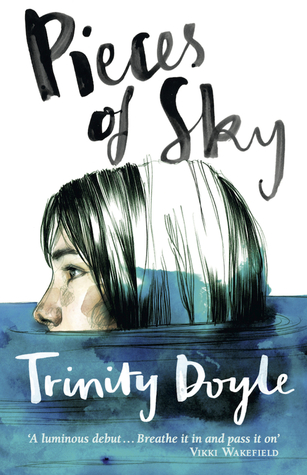 Lucy’s life was going as smoothly as any teenager’s could. She was in the local swimming club, and loved it; she lived with her parents and her brother, Cam, in the small coastal town she’d known all her life. She had friends, she had goals – she had a life. Now Cam is dead, her parents might as well be – and Lucy can’t bear to get back in the pool. All she has to look forward to now is a big pile of going-nowhere.
 Like a lot of people who studied Shakespeare in high school I didn’t have the best appreciation for it. I remember being in primary school and being fascinated and saddened that he died on his birthday, but that was as far as my childhood Shakespeare experience went. My distaste in high school initially was because the texts we had to study weren’t that interesting and of course how it was taught to us wasn’t that engaging. In Year 9 we studied Romeo and Juliet as well as Richard III. I remember sitting in class while my teacher had a tape player on her desk of someone reading Richard III aloud and I promise you it was as boring as it sounds. We also watched a movie adaptation which wasn’t great either. Because of this I have not read Richard III since because of my first impression. I have though found it interesting discovering just how false a lot of it is and how inaccurate Shakespeare was and why, but still that isn’t enough to make me read it again.