The Movies of Roald Dahl

With the announcement this morning that Tim Minchin’s stage play of Roald Dahl’s Matilda is coming to Australia in August 2015 I thought I would have a look at the other adaptations of Dahl’s books that have been made. In total only nine adaptations have been made of Dahl’s work, including two for both Matilda and Charlie and the Chocolate Factory.

Roald Dahl wrote many books in his life but there are definitely a select few that seem to have become more popular than others, especially in terms of making movies or musicals about them.

b94qXd1FcIwgzv0NYMUe2bjrzJRThe first film adaption would have to be the exceptional Willy Wonka and the Chocolate Factory, adapted in 1971 from Dahl’s Charlie and the Chocolate Factory. Fun fact,
there was supposed to be a sequel which followed the events in the 1972 sequel The Great Glass Elevator, but Dahl was so disappointed and angry by what producers had done to his book he refused – a bit like what happened with Mary Poppins and Walt Disney funnily enough. Those pesky film makers twisting stories for their own entertainment purposes.

Personally I adore the 1971 film, even if it is different than the book, there was a sense of excitement and wonder but also fear. Gene Wilder played Willy Wonka as a man who never told you the whole story, avoided answering questions and you were never sure you could trust him. Wilder chose this route intentionally, and while Dahl gives us a Wonka who is a strange a bizarre man, Wilder makes him that extra level of eccentric. 

The next adaptation made was in 1989 with the beautiful BFG. Turned into an animated film, The BFG captures some of the wonder that Dahl can add to his writing. This film is also a much closer and truer adaptation of the book, whether it is the animated nature, or the fact that it is such a beautiful story on its own you don’t really need to change anything and make it more fanciful than it already is. The songs Dahl wrote into the book remain and the simple joy from Sophie and her relationship with the BFG is quite wonderful.

This film also had a much better reaction by Dahl compared to Willy Wonka. According to director Brian Cosgrove, when Dahl finished his first screening of the film he stood up and clapped. I think as a book and a film The BFG doesn’t get as much adoration as it should, it seems to be overshadowed by the live action and more popular films which is a shame.
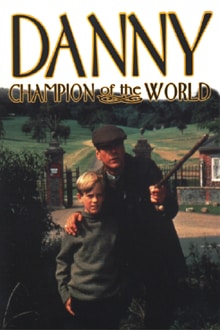
 Another film that is forgotten was the telemovie also made in 1989 of Danny, Champion of the World, based on Dahl’s 1975 book of the same name. This is one film I haven’t seen, I actually didn’t know they had made an adaptation of this so that may be my mission to track down a copy. It also features the wonderful Jeremy Irons and his real life son Samuel Irons as Danny so that’s cool.

This was another film that Dahl approved of. In the documentary ‘Danny and the Dirty Dog: The Making of Roald Dahl’s Danny, Champion of the World’, he lauded the cast and production with great enthusiasm. The adaptation is fairly close to the book it seems, with certain elements being truncated or removed for time purposes but bein
g a telemovie it is essentially a direct adaptation with the scenes and most dialogue straight from the book. That is a bonus of telemovies that films don’t have, they tend to be almost pure adaptations of their books.

One of my favourite Dahl books and one I think got an absolute wonderful adaptation is the 1990 live action version of The Witches. Oh I loved this film as a kid. As wonderful as Quentin Blake’s illustrations were, there is something that little bit more unsettling and eerie about seeing them portrayed by a real person. With Anjelica Huston acting as the Grand High Witch, Dahl’s description of witches comes across wonderfully, and the narrative and sense of danger stays true, including the dark humour Dahl loved.

The Witches unfortunately falls victim to the tradition of making the ending different than what was in the book. Generally this is to make sad endings happy and change whatever bad event happens into a good one. That annoys me still, but aside from this it is still a rather good, the story follows the book and everything we loved and were grossed out by in the book is transferred to the screen.

In 1996 Disney made the brilliant film James and the Giant Peach that involved both live action and stop-motion. Fun fact, the boy who played James quit acting after being bitten by the spider in one scene; I think this is an adorable overreaction. This was also another film Dahl didn’t want adapted. He declined numerous offers in his lifetime but after his death his widow gave the go ahead for the production.

There are some noticeable differences between the film and the 1961 book, these don’t really do anything to change the enjoyment though I may be biased. I had a slight obsession with this film as a child, I remember one day watching it, rewinding the video and watching it again, rewinding the video and watching it again. All day. And it was only quite a few watches in that I let it run through the credits (while I danced to the song) and I found the additional scene. That was an unexpected surprised, especially considering how many times I had seen it before. But that isn’t the point, I think it is a great retelling of the book and the changes made fit in with the surreal and absurd premise that Dahl created.

large_zvgm8Yckvd12iZFaXRXbblcRcO8Also in 1996, Matilda was turned into a very popular film with Mara Wilson. I think this is the Dahl film people think of, especially Gen Y’s or those who were not exposed to Willy Wonka and away from the Disney influence. What was brilliant about Matilda is that the narration helped the story along and I think it would be a different movie without it.

This narration also keeps it in check with the book, the dialogue is similar if not the same in places and the ending stays intact in the same way it doesn’t. In the space of a line it changes a few things but that can be forgiven. One thing about Dahl adaptations is that his characters are brought to life very well and this is no exception. All the characters are excellently represented in the film, each playing their roles well. Trunchbull scares you, Matilda delights, and small heroes like Brutus are given their time to shine.

And then we get to the Charlie and the Chocolate Factory remake. I do not like this movie. I saw it once under duress and I am trying to block it from my memories as best I can. To say this is a closer adaptation to the original book may be correct – and Dahl’s widow and daughter got total artistic control and final privilege on the choices of actors, directors and writers – but there are other things in there that are not which just make you feel very annoyed, like giving Wonka family history. Though four out of the five songs in the film use lyrics written by Dahl himself so that’s really good.

Fun morbid fact, Gregory Peck was offered the role of Grandpa Joe but died before he gave a definite answer, and Peter Ustinov was also offered the role but died before giving his answer. Gene Wilder said he didn’t want to see the film saying “The thing that put me off…I like Johnny Depp, I like him, as an actor I like him very much…but when I saw little pieces in the promotion of what he was doing, I said I don’t want to see the film, because I don’t want to be disappointed in him.” And I have to say, I love all Depp’s work, but this is the only one I don’t like of his. Wilder is onto something.

The latest film adaptation is the Fantastic Mr Fox. Another one I haven’t seen, I was initially put off by the creepy looking stop-motion animation aspect but I loved the book so it is on the list to see. Apparently it is loosely based on the book and there is also some criticism about the film taking away from the darker and more Dahl aspects of the book, making it Americanised and more like the director Wes Anderson with just a little Dahl.

This has become highly acclaimed however. There are also a plethora of celebrities voicing the characters including George Clooney and Meryl Steep, and the attention to detail is commended by many.

 
1338221294_Image1_matildaAnd finally we have the delightful Tim Minchin’s musical about Matilda. I saw this in London last year and loved it, the songs are phenomenal and the production is exceptional. 2015 cannot come fast enough for me and I think Minchin has handled this beloved story with great respect and done it superb justice.

Technically it is written by Dennis Kelly, but with music and lyrics by Minchin it is hard not to see it as a little bit his. It was first performed in 2010, then with its West End debut in 2011 so it has been a long time coming here. I remember a couple of years ago Minchin saying he always wanted to do this and he asked Dahl’s widow permission for the rights. This could be me misremembering and if I find the reference I will add it here. I am fairly sure he did say he had wanted to do this for awhile though.

With the success of Matilda, as well as the past films, it is clear Dahl’s storytelling and ability to bring joy, laughter and a small amount of grotesque to people’s lives is yet to falter. I look forward to future adaptations of his other books with the hope if they go ahead they are given the same level of respect as those that have come before.

No dates have been announced for the Australian production as of yet. For information about the musical you can check out Minchin’s website, the official  Matilda: The Musical site, or have a Google and see what delights pop up.

Newcastle Writer’s Festival 2014

The Newcastle Writer’s Festival released their 2014 program this weekend and I know a fair few people who were there waiting and already have read through the various sessions and work out which ones they can attend and where the overlapping conflicts and tough decisions lie. I know with my own choices I had to choose between a few things, had to decide what was more valuable and what sparked my interest. As a first round I have a list of seven across two days including some excellent sessions with Kate Forsyth, Ryan O’Neill, Kaz Delaney, Wendy Harmer, and a range of others.

For those interested in going, the Newcastle Writers Festival is in its second year and is held in April with this year’s dates the 4th, 5th, and 6th. Started by Rosemarie Milsom with the support and backing of many great people the festival could be put on. Last year there were more than 70 writers participating with 38 sessions running. This year is just as big if not bigger and if last year is anything to go by it will be a resounding success and fun weekend in Newcastle. All the details can be found on their website, along with the program of sessions and information, times and locations. Just check though because while most are free, there are a few that require you to purchase a ticket, but it isn’t all that expensive.

I went to the inaugural Writers Festival last year with Jess over at The Never Ending Bookshelf, and for a first year event is was pretty spectacular. Certainly cannot believe it has been a whole year already. This year the events are mainly situated in the City Hall as far as I can see which is a lot different than last year. One of my favourite sessions last year was actually hosted in one of the pubs I used to go to after Uni with a few friends so that was rather interesting. Of course it was in the back room away from the general public, but it was still very cool. Now we’re in the City Hall so getting to see all their various rooms should be interesting.

The festival is across three days, and the sessions cover everything; there are sessions about crime writing, poetry, writing for children, writing fairy tales, romance, and just plain old writing. There are also sessions and talks by specific authors for you to attend. To learn more about the festival you can read their About page, or just have a look through their website, check out the programs that will be running, see the authors that are visiting and have a general squiz at how amazing it is going to be. You can also follow the latest news and information on Facebook and Twitter. It is only the end of February but I can already see that April is definitely going to be getting off to a very good start.


Poems of Banjo Paterson

Ok, we have to post some poems because they are truly great reads. You can’t just talk about the man behind the poems. There is something wonderful about hearing these poems being read aloud but they are also wonderful to read yourself as well. There is a great sense of adventure and suspense and daring in these poem and there is a reason they are Australian classics that are loved across the board, especially The Man from Snowy River. You should also listen to the darling Slim Dusty singing Waltzing Matilda because if anyone is going to sing it it should be Dusty, but you can read the poem here which is slightly different.

Clancy of the Overflow (published in The Bulletin 21 December 1889)

I had written him a letter which I had, for want of better
Knowledge, sent to where I met him down the Lachlan, years ago,
He was shearing when I knew him, so I sent the letter to him,
Just “on spec”, addressed as follows: “Clancy, of The Overflow”.

And an answer came directed in a writing unexpected,
(And I think the same was written in a thumbnail dipped in tar)
‘Twas his shearing mate who wrote it, and verbatim I will quote it:
“Clancy’s gone to Queensland droving, and we don’t know where he are.”
In my wild erratic fancy visions come to me of Clancy
Gone a-droving “down the Cooper” where the western drovers go;
As the stock are slowly stringing, Clancy rides behind them singing,
For the drover’s life has pleasures that the townsfolk never know.

And the bush hath friends to meet him, and their kindly voices greet him
In the murmur of the breezes and the river on its bars,
And he sees the vision splendid of the sunlit plains extended,
And at night the wondrous glory of the everlasting stars.

I am sitting in my dingy little office, where a stingy
Ray of sunlight struggles feebly down between the houses tall,
And the foetid air and gritty of the dusty, dirty city
Through the open window floating, spreads its foulness over all.

And in place of lowing cattle, I can hear the fiendish rattle
Of the tramways and the buses making hurry down the street,
And the language uninviting of the gutter children fighting,
Comes fitfully and faintly through the ceaseless tramp of feet.

And the hurrying people daunt me, and their pallid faces haunt me
As they shoulder one another in their rush and nervous haste,
With their eager eyes and greedy, and their stunted forms and weedy,
For townsfolk have no time to grow, they have no time to waste.
And I somehow fancy that I’d like to change with Clancy,
Like to take a turn at droving where the seasons come and go,
While he faced the round eternal of the cashbook and the journal –
But I doubt he’d suit the office, Clancy, of “The Overflow”.

The Man from Snowy River (published 26 April 1890)

There was movement at the station, for the word had passed around
That the colt from old Regret had got away,
And had joined the wild bush horses – he was worth a thousand pound,
So all the cracks had gathered to the fray.
All the tried and noted riders from the stations near and far
Had mustered at the homestead overnight,
For the bushmen love hard riding where the wild bush horses are,
And the stockhorse snuffs the battle with delight.

There was Harrison, who made his pile when Pardon won the cup,
The old man with his hair as white as snow;
But few could ride beside him when his blood was fairly up –
He would go wherever horse and man could go.
And Clancy of the Overflow came down to lend a hand,
No better horseman ever held the reins;
For never horse could throw him while the saddle girths would stand,
He learnt to ride while droving on the plains.

And one was there, a stripling on a small and weedy beast,
He was something like a racehorse undersized,
With a touch of Timor pony – three parts thoroughbred at least –
And such as are by mountain horsemen prized.
He was hard and tough and wiry – just the sort that won’t say die –
There was courage in his quick impatient tread;
And he bore the badge of gameness in his bright and fiery eye,
And the proud and lofty carriage of his head.

But still so slight and weedy, one would doubt his power to stay,
And the old man said, “That horse will never do
For a long a tiring gallop – lad, you’d better stop away,
Those hills are far too rough for such as you.”
So he waited sad and wistful – only Clancy stood his friend –
“I think we ought to let him come,” he said;
“I warrant he’ll be with us when he’s wanted at the end,
For both his horse and he are mountain bred.

“He hails from Snowy River, up by Kosciusko’s side,
Where the hills are twice as steep and twice as rough,
Where a horse’s hoofs strike firelight from the flint stones every stride,
The man that holds his own is good enough.
And the Snowy River riders on the mountains make their home,
Where the river runs those giant hills between;
I have seen full many horsemen since I first commenced to roam,
But nowhere yet such horsemen have I seen.”

So he went – they found the horses by the big mimosa clump –
They raced away towards the mountain’s brow,
And the old man gave his orders, “Boys, go at them from the jump,
No use to try for fancy riding now.
And, Clancy, you must wheel them, try and wheel them to the right.
Ride boldly, lad, and never fear the spills,
For never yet was rider that could keep the mob in sight,
If once they gain the shelter of those hills.”

So Clancy rode to wheel them – he was racing on the wing
Where the best and boldest riders take their place,
And he raced his stockhorse past them, and he made the ranges ring
With the stockwhip, as he met them face to face.
Then they halted for a moment, while he swung the dreaded lash,
But they saw their well-loved mountain full in view,
And they charged beneath the stockwhip with a sharp and sudden dash,
And off into the mountain scrub they flew.

Then fast the horsemen followed, where the gorges deep and black
Resounded to the thunder of their tread,
And the stockwhips woke the echoes, and they fiercely answered back
From cliffs and crags that beetled overhead.
And upward, ever upward, the wild horses held their way,
Where mountain ash and kurrajong grew wide;
And the old man muttered fiercely, “We may bid the mob good day,
No man can hold them down the other side.”

When they reached the mountain’s summit, even Clancy took a pull,
It well might make the boldest hold their breath,
The wild hop scrub grew thickly, and the hidden ground was full
Of wombat holes, and any slip was death.
But the man from Snowy River let the pony have his head,
And he swung his stockwhip round and gave a cheer,
And he raced him down the mountain like a torrent down its bed,
While the others stood and watched in very fear.

He sent the flint stones flying, but the pony kept his feet,
He cleared the fallen timber in his stride,
And the man from Snowy River never shifted in his seat –
It was grand to see that mountain horseman ride.
Through the stringybarks and saplings, on the rough and broken ground,
Down the hillside at a racing pace he went;
And he never drew the bridle till he landed safe and sound,
At the bottom of that terrible descent.

He was right among the horses as they climbed the further hill,
And the watchers on the mountain standing mute,
Saw him ply the stockwhip fiercely, he was right among them still,
As he raced across the clearing in pursuit.
Then they lost him for a moment, where two mountain gullies met
In the ranges, but a final glimpse reveals
On a dim and distant hillside the wild horses racing yet,
With the man from Snowy River at their heels.

And he ran them single-handed till their sides were white with foam.
He followed like a bloodhound on their track,
Till they halted cowed and beaten, then he turned their heads for home,
And alone and unassisted brought them back.
But his hardy mountain pony he could scarcely raise a trot,
He was blood from hip to shoulder from the spur;
But his pluck was still undaunted, and his courage fiery hot,
For never yet was mountain horse a cur.

And down by Kosciusko, where the pine-clad ridges raise
Their torn and rugged battlements on high,
Where the air is clear as crystal, and the white stars fairly blaze
At midnight in the cold and frosty sky,
And where around The Overflow the reed beds sweep and sway
To the breezes, and the rolling plains are wide,
The man from Snowy River is a household word today,
And the stockmen tell the story of his ride.

Happy Birthday Banjo Paterson!


Birthday
Today is the 150th birthday of the Australian poet Banjo Paterson and who would I be if I didn’t acknowledge some of the great poetry he wrote and the impact he’s had on our culture.

banjo150

Google Doodle

Banjo Paterson was born Andrew Barton Paterson in 1864 and lived at the property “Narrambla” which is out near Orange, NSW. He moved around a lot later on but when he married his wife Alice Emily Walker, they lived at Woollahra, NSW with his two children. Paterson’s parents were Scottish immigrant Andrew Bogle Paterson and Australian Rose Isabella Barton. Also, fun fact, Paterson’s mother was related to the future first prime minister of Australia, Edmund Barton. So that’s cool.

Through his life Paterson was a poet, a lawyer, a journalist, a soldier, a jockey, as well as a farmer, but his poems are what he is mainly remembered for. I think there are a few of Paterson’s poems that we all know because they have infiltrated society and culture more than others. I’m fairly sure we all know about The Man from Snowy River, or at least have heard it being referenced. Written in 1890 The Man from Snowy River was first published in The Bulletin on 26 April and has since been made into a successful movie and a TV show. The poem tells the story of a pursuit to recapture the colt of a prizewinning racehorse that has run off into the mountain ranges and is living with brumbies. The poem recounts the attempt to recapture the colt and the bravery of the hero Clancy who risks the terrible decent of the impassable slope to chase after the horses. This was not Paterson’s first poem, however, Clancy of the Overflow was a shorter poem published the previous year, but some characters reappear in The Man from Snowy River.

I vaguely recall seeing The Man from Snowy River film with my sister when I was young but it was never a favourite of mine, and I can’t say I knew of any others of his poems that well. You get taught about Banjo Patterson in primary school and you learn about of a few poems, but there are some that stay with you and some don’t. Though a few years ago now, back in 2000, the Royal Easter Show did an excellent Man from Snowy River Spectacular which broadened my love of Paterson’s poems. It was an excellent show, the arena was set up to re-enact the story and the riders and the horses put on an epic display while the poem was being narrated alongside, it was really amazing.

But before any of that, Waltzing Matilda was the one that stayed with me more than any other. That is one I think that everyone gets to know from a young age. Waltzing Matilda is a poem that is set to music that is revered by a lot of people, but if you look at the narrative it is about a man who steals a sheep and to escape being captured commits suicide in a billabong. There is something wonderfully morbid in that this is a poem we cherish. People even wanted to make it our national anthem at one point. I can’t say when we win at the Olympics or before footy games, or standing at school assemblies I would think we want that being sung, but some do. I’m not saying it isn’t an awesome poem or song, it is, but I just can’t see it as a national anthem. Because it is a song though, Waltzing Matilda has been covered by a lot of people, being originally set to music makes it more accessible I suppose than the poetry and the ballads.

What I found interesting was that Paterson did not live out in the bush while he was writing. A lot of works about rural Australia are romanticised and Paterson was no different. He was living in the city as a lawyer while he was writing about these mountain ranges and billabongs. I think though poetry needs a bit of romanticising, even if you lived in the rural areas surely in poetry you are not going to be discussing the ins and outs of farming troubles and the fact your cattle are or aren’t breeding. Instead you write about the sun setting over the hills, and the cockatoos screeching in the evening, you write about the continuing plains of barren lands and the river the winds through the ancient cliffs. No one needs to hear about the boring parts of the rural areas, romanticising is what poetry is all about.

Paterson did a lot more than just write poetry, he helped with the war effort not only as a war correspondent in the Second Boar War but as an ambulance driver in WW1 and did three voyages with horses to Africa, China, and Egypt resulting in being repatriated to Australia as a Major. He is remembered for his poetry of course more than his war effort or any of his other jobs, and after he returned home he continued writing, releasing short stories, verse, and essays but he also continued to contribute to various journalism publications.

Banjo Patterson is the guy on our $10 note for those who don’t know, and over his lifetime he wrote hundred of works which you can find a list of on Project Gutenberg, and he was even commemorated on a stamp in 1981. I’m sure there are people all over Australia who have their favourite Banjo Patterson poem, some know one, some know all, and there are always new people discovering him each day.

Paterson died in 1941 from a heart attack but he continues to live on in Australian culture and through his poetry and other works that have continued to inspire and entertain children and adults alike to this day. Happy 150th birthday, Banjo!

Learn more about Banjo Paterson

The Graveyard Book by Neil Gaiman

Published: September 30th 2008
Goodreads badgePublisher: Bloomsbury
Pages: 289
Format: Book
Genre: Junior Fiction/Fantasy
★   ★   ★   ★   ★  – 5 Stars 

Nobody Owens, known to his friends as Bod, is a normal boy. He would be completely normal if he didn’t live in a graveyard, being raised and educated by ghosts.

There are dangers and adventures for Bod in the graveyard. But it is in the land of the living that real danger lurks for it is there that the man Jack lives and he has already killed Bod’s family.

Sometimes there are five star books that change your world and make you cry and move you so much you think nothing could ever be compared to it. Then there are other five star books like this that are just so so well written, not always complicated or deep, but just with such beauty and honesty and with characters that are so amazing and sincere and complicated that you fall in love with them immediately. You get absorbed into their story and their life and while there aren’t life changing moments or anything too grand that makes you get overly excited, you just get attached in the beauty of the basics and a good, proper, well written story. And if that experience is going to happen to you then it is definitely going to happen with one of Neil Gaiman’s. This type of reaction isn’t limited to Gaiman or The Graveyard Book, there have been many books that have such complex simplicities that they are just wonderful reads without needing to be grand, but it is especially wonderful when it is compacted into a supposedly simple “children’s book”.

The Graveyard Book opens with a few different perspectives given; including a very clever second person point of view from the baby which blends back into third person seamlessly, and it is also a rather dark start but one that doesn’t address or dwell too much on the darker elements. We start almost in the middle of a scene with the man Jack, one we get almost no explanation for and as story unfolds we are thrust into this strange set of circumstances and we are introduced to the graveyard and a few residents through the events that unfold.

While the beginning is slightly dark and strange and…not confusing but with a few omissions that make you feel like you’re missing something, it actually fills in nicely as it starts to fall into place. What was great about this story is that we are shown not told in many instances and scenes and characters are brought to life (no pun intended) allowing you to capture each character and who they are not just from how their described, but how they are portrayed in their actions. Gaiman tells us a lot about his characters through their actions and how others see them which in turn reflect how they are seen by us.

Adopted baby Bod’s life in the graveyard is aided by his new ghost parents Mr and Mrs Owens as well as Bod’s guardian, Silas, who looks out for Bod and provides for him where the other ghosts cannot. Bod loves his parents certainly, but Silas is someone he looks up to and reveres. The admiration small children can have for an adult is truly wonderful and Gaiman captures it well. Silas is someone who Bod admires for his skills, his knowledge, his secrets, and he is someone in Bod’s life that he never wants to let down or disappoint. Their relationship is one of the highlights in the story, and while Bod’s view shifts as he gets older, it never strays far from the wonder and admiration he had a child.

So much of Bod’s story is written beautifully, not just the events he experiences but as a person. As a character he is very confident, he speaks his mind, and he speaks wisdom far above his age. He is a smart kid considering how he has been raised, he has a great manner and he deals with people and conflict well. He offers lessons to readers as well as those around him, and he isn’t afraid to stand up for what he feels is right or what he wants.

Bod grows up through the chapters and often as they change we have moved forward in time. The story does move away from Bod’s life on occasion and we’re shown other events away from the graveyard. These extras allow for story progression and occasionally provide additional information but we mainly follow Bod through his life. You see his life in the graveyard and you see the adventurous and amazing experiences he has there as well as watching him learn about the world around him and the ways of the graveyard. You also see his occasional struggle as he desires to escape and venture into the world beyond the graveyard gates. These moments are when we see the great character in Bod and how even when things are not going well, his emotions and nature shines through excellently.

As a human he does well in his constricted world. There is a point at the start where you think there shall be limitations but Gaiman works it through wonderfully. We do not get the full history of Bod’s circumstances straight away but that isn’t a problem. As you read you get involved in what is happening that you forget that there is a reason Bod is living in the graveyard, you get caught up in his little life and you forget that someone is hunting him.

In terms of the “threat” I have read some criticism about the man Jack and his reason for hunting Bod, and without giving anything away I think that the reasoning suits the story and intended audience well, it is actually rather clever and very well done. When it is revealed, Gaiman writes about it and surrounding events brilliantly, it is clever and mysterious and you have no idea what is going to happen and it is a great moment of suspense to read. That is not the problem though, the issue I think people see is the overall reason why it happened, whether they feel it is too basic, perhaps, but given the intended audience it is ample. Besides a lot is implied through other aspects to warrant the reader to figure out what the man Jack is part of and who he is. But what I take from this is that we are not there to necessarily follow the man Jack, we are there for Bod and Bod’s life. Yes his life is as a result of the man Jack and it is an ongoing problem, but we aren’t pulled along by the mystery of the man Jack, we are pulled along by Bod and really it is all you need. I think that even if we knew the reason from the first page I believe we could have the same story and it would be just as exquisite.

It took me a couple of chapters to realise that Bod has appeared before. Last year I read M is for Magic by Gaiman and it was an excellent book, ten short stories that were all wonderful and sad and haunting. As I read The Graveyard Book and I realises that our dear Bod is none other than the delightful Bod who appeared in one of those short stories. I remember how much that short story unsettled me and was just so sweet but eerie, and now that it has been turned into a complete book made the whole experience better and it is a truly amazing story. The ending alone is wonderful, and probably works so well because it has been built up brilliantly beforehand with each of the characters and their lives.

The way Gaiman ends this story is wonderful, absolutely heartbreaking and beautiful and just perfect, it was the right way to finish the story I think. There are different avenues Gaiman could have taken but he didn’t, and there is an excellent feeling as you finish the book of sadness and happiness and hope. In a way it is almost a sense of ambivalence, but it is also rather bittersweet and it stays with you even after you’ve finished. All the excellent things books should make you feel.

Previous Older Entries Next Newer Entries