Artemis Fowl and the Atlantis Complex (#7) by Eoin Colfer

Published: July 20th 2010
Goodreads badgePublisher: Puffin Books
Pages: 322
Format: Book
Genre: Junior Fiction/Young Adult Fantasy
★   ★   ★   ★   ★  – 5 Stars

Criminal mastermind Artemis Fowl has summoned an elite group of high-tech fairies to Iceland. But when he presents his invention to save the world from global warming, he seems different. Something terrible has happened to him.

Artemis Fowl has become nice.

The fairies diagnose Atlantis Complex (aka multiple personality disorder)—dabbling in magic has damaged his mind, with symptoms including obsessive-compulsive behaviour, paranoia, and multiple personality disorder.

 Unfortunately, Atlantis Complex has struck at the worst possible time. A deadly foe from Holly’s past is intent on destroying the actual city of Atlantis. Can Artemis escape the confines of his mind in time to save the underwater metropolis and its fairy inhabitants?

The general reaction upon finishing this book went something like ‘Oh my gosh I need the next one now. Colfer you have got to stop doing this to me. I don’t even have the next book yet!!! *rushes out to find a copy somewhere, anywhere, like now!*’

This is the seventh book in the Artemis Fowl series and it has not lost its momentum, its wonderful storytelling, nor has it forgotten where it has come from.  The story continues from book six in the same way it doesn’t really. From book six we see the paradox created and Artemis and old foes facing off in a completely unpredicted twist of organised chaos, and now there is a whole other set of new things to deal with as a result.

Due to his years of dealing with and lying about The People and his actions, Artemis has developed Atlantis Complex, something similar to OCD, delusional dementia, and multiple personality disorder. In something of a definite new direction Colfer makes Artemis the problem that requires solving, something inside his own mind that can’t be controlled. There is a wonderful line from Butler about how when Artemis is under threat he just needs to know who to shoot, but when the problem is Artemis’ own mind he is at a loss. I think that is beautiful, and it certain shines a light onto just how close and protective Butler is of Artemis.

What was also wonderful was the pace we’re exposed to Artemis’ condition, nothing was rushed into and while we may not have seen the beginnings of the Complex, Butler describes its slow emergence and how he noticed small things at first until it developed into something that has taken over Artemis completely, something that becomes noticeable to Holly and Foaly. Artemis does well to cover it up, but little things like counting and his paranoia seep through the disguise, things he can’t control and it only gets worse as the story progresses and manifests in different ways. The Artemis way of trying to conceal it and use his own intellect to solve it become slowly overpowered as his reasoning and his behaviour cannot be helped, and he is fully aware of it happening which allow a great insight into Artemis’ mind and the affect the Complex is having on himself, even when he is not exactly sure what is happening.

The blurb makes light of it and almost trivialises it, and I’m not saying having this Complex doesn’t produce some very funny moments, but the way we watch Artemis and those around him deal with this Complex is on occasion so moving and saddening and while the story tries to stay light, it only adds to the magic of the whole situation and Colfer’s unveiling. This is where Colfer’s writing works and we’ve seen it in other books, he offers a seemingly light story that is full of hidden darker meaning with a few obvious serious moments thrown in, mixed through with jokes and humour to fool you into thinking things aren’t as serious as they are.

This approach isn’t relevant just to the Complex however; the other storyline is the threat to Atlantis and the scheme of Turnball Root, former commander Julius Root’s reprobate brother. This brings up its own deeper meaning and serious nature under a cloak of light heartedness. And with multiple events intertwined and connected with Artemis’ condition there are also many other aspects that come into play. As the blurb reveals, the enemy is an old foe of Holly’s, but the attention goes to more than just her, and interestingly, unlike past enemies there is a chance for a lot more sympathy to be given regarding the whole situation.

While you disagree with Turball’s actions for a lot of the book, by the end it leaves you with this pathetic feeling (see original definition of ‘exciting pity or sympathetic sadness’) and you really don’t blame him for anything, which is truly terrible feeling because a lot of bad stuff happens in this book along with the good and you come out the end of it without seeing a real winner or victory. The whole ending is strange, and certainly a little bit darker if you look behind the light heartedness that tries to take the focus. It is like there is a solution but it does not feel like a regular conclusion, things are different than before. Though having said that, the entire book feels different, one enemy is from within the hero’s mind, while the other enemy makes you pity and admire him, it’s a complicated emotion and one Colfer causes and executes wonderfully.

Restricted by avoiding spoilers here because everything is connected and everything is something, but there are a few fun things to talk about to entice and be vague about such as giant squids, interspecies love, Orion, zombies, wrestling, and giant blobs of doom, not to mention the wonderful and typical banter that goes on between all the characters. It really is a nice group effort this time around, characters from all books coming together, all having their part to play both individually and as a team.

There are a lot of things happening, and as I say it all connects, but until it does there are some wonderful moments and scenes where a few characters have a seemingly dangerous but very fun time on their own, people pair up who you do not expect and smaller players get bigger roles this time around. Even away from the sympathy of his condition, Artemis has some wonderful and hilarious moments where the Complex impacts and influences certain situations so it isn’t all serious, and even then the serious moments are filled with humour.

The fact Colfer makes you laugh through this entire book really brings the whole thing together. If not I think the risk of having it too serious and out of sync with the other books would be a failing. It could be seen a serious side step from the normal story trend but I think if you follow the series from the start you see how it is evolving and developing via the characters. Character development means new situations and focuses and really, the entire Complex focus is a key result of all past books coming to a head. Each book is connected and you really can’t have one without the other, like real life where past events influence new ones and Colfer never forgets where his characters have been and how this affects where they should go.

And having past enemies returning is something that works much better I feel than a new enemy appearing each book, people and fairies alike hold grudges and when the moment comes, who wouldn’t take it. That is the angle Colfer is taking. For the reality of the world he’s created it isn’t prone to ongoing villainy and grand master plans all the time, it is the few conniving and manipulative people who keep trying to achieve what they want and then take revenge on those who stopped them before.

I really loved Artemis in this though; I like how different he was. It is like in previous books where he reverts briefly back to the person he was in the beginning and you see this completely new side, but it’s nothing like it at the same time. I adored watching Artemis in his confused and altered state; it was something completely different and certainly unexpected. You knew from the blurb that he wasn’t going to be himself, but all you’re told is that Artemis Fowl has become nice, that does not prepare you whatsoever for what Colfer has in store, it so much more than that. It is so beautifully done, well planned out, well spaced out and so believable it is almost heartbreaking at times when you think too hard about it.

What was fantastic about this book is that you can see the fear in Artemis, not the comic fear from past books where you see him out of his comfort zone, but proper fear from himself and what is happening to him. It is some of the greatest story telling and excellent execution I’ve seen. You get a sorrow for Artemis that you didn’t have before, you fear for him, you are scared for him and you worry about him in such a serious way you didn’t know you could worry for a character before. Colfer is magnificent with this book, Artemis is like we’ve never seen him before and it just works so wonderfully. There is a new side that clashes with the old side, and while we know Artemis is exceptional, he is only human, only a teenager, and after all that he has seen and been scared of, his mind terrifies him the most and you can see it and feel it in the way Colfer tells us his story. It’s simply magnificent and by far one of my favourite Artemis stories.

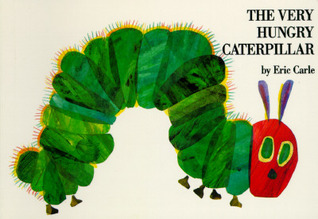
The Very Hungry Caterpillar by Eric Carle

Birthday

A very happy birthday to Eric Carle today, author and illustrator of so many delightful books, who is 84!

Carle was born in 1929 in New York to German parents but went back to Germany when he was six years old. After harrowing experiences through the war, Carle returned to America in 1952 where he got a job as a graphic designer for the New York Times and later at an advertising agency.

The work of Eric Carle is easily recognisable, his artwork and illustrations are unique and his books tell of nature and the world. Carle himself said that with his books  “I attempt to bridge the gap between the home and school. To me home represents, or should represent; warmth, security, toys, holding hands, being held. School is a strange and new place for a child…I believe the passage from home to school is the second biggest trauma of childhood; the first is, of course, being born…The unknown often brings fear with it. In my books I try to counteract this fear, to replace it with a positive message. I believe that children are naturally creative and eager to learn. I want to show them that learning is really both fascinating and fun.”

The way Carle makes his art is fascinating. I had never really thought about it before, I assume it was just paintings but apparently his work is created like a collage using hand painted papers that are cut and layered to form the images. There are also other techniques such as die-cut pages, and actual twinkling lights and noises in some books as well. All very high class compared to the felt puppets and faux fur I remember from my books.

My favourite book of Carle’s is of course The Very Hungry Caterpillar. I read this so many times as a kid it’s great. Yet another example of interaction and creative book creation, there are holes in the book, the pages are different sizes, it is amazing. It seems growing up Carle was familiar with different shaped books in Germany. I understand the reasons why but we need more books here that are weirdly shaped.

The Very Hungry Caterpillar was published in 1969 and the story behind it is rather cool. According to Carle, “One day I was punching holes with a hole puncher into a stack of paper, and I thought of a bookworm and so I created a story called A Week with Willi the Worm.” But how did we get to the caterpillar? Willi was a bookworm, but apparently poor Willi would not be a great protagonist as a green worm (poor Willi), then Carle’s editor suggested a caterpillar, which made Carle think of a butterfly and there you go. So in a sense we can all now say the very hungry caterpillar’s name is Willi. This must be made known to the world.

I must say, this was a fun review to write, short books, especially children’s books can bring out a silliness you really can’t get away with for big, long, serious books. If you don’t know the story of the very hungry caterpillar you may not want to read ahead, but even if it spoils it, which is will because there is nothing much else to talk about in there, then I half apologise and half demand you go read the book.

Published: September 29th 1994
Goodreads badgePublisher: Puffin
Pages: 26
Format: Picture Book
Genre: Children’s Picture Book
★   ★   ★   ★   ★  – 5 Stars

This is a story of suspense and tension. The main character of this story is born into a world in constant hunger and we follow him as he devours food at an alarming rate, never able to quench his hunger. Day after day he does nothing but eat, eating more and more as the days go by. He tries to be healthy in the beginning but as the days progress his hunger drives him to junk food and after all that cake and sugar and cheese…well, that’s right, he becomes ill. The suspense was amazing. Was this finally the way to stop this hunger machine before he ate through his world of food? Could this tummy ache be enough to stop his rampage on the food? Would there still be enough to support the remaining population? I had to read on to find out.

After having eaten so much this character had become so large he hides himself from the world. So large in fact he must built a house around himself to shield the judging eyes of the neighbours and those who come across him. Housebound, and living off the vast amount of food he’d consumed in his lifetime, this character is sheltered from the world. Until one day, after probably taking a good long hard look at what he’d become, had an instinctual desire to change himself, become a new and brighter person. After emerging slowly from his custom built house to this new world he was no longer a very hungry caterpillar, he was a beautiful butterfly (or he’d eaten himself into a food coma and was delusional about his true butterfly abilities. Either way).

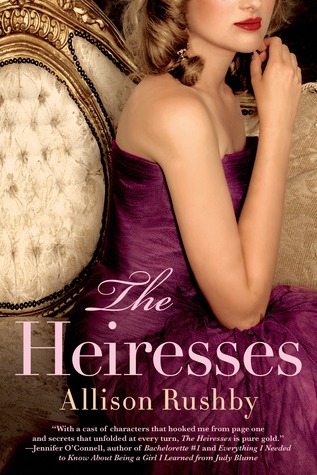
The Heiresses (#1) by Allison Rushby

Published: May 7th 2013
Publisher: St. Martin’s Press
Pages: 352
Format: Book
Genre: New Adult Historical
★   ★   ★   ★   ★  – 5 Stars

When three teenage girls, Thalia, Erato and Clio, are summoned to the excitement of fast-paced London–a frivolous, heady city full of bright young things–by Hestia, an aunt they never knew they had, they are shocked to learn they are triplets and the rightful heiresses to their deceased mother’s fortune. All they need to do is find a way to claim the fortune from their greedy half-brother, Charles. But with the odds stacked against them, coming together as sisters may be harder than they think.

I discovered this book when I read a guest post by Rushby on S.I.K Book Reviews and a giveaway was running for her book. I loved how exciting and intriguing this book sounded and so I entered…and I then maybe went blog stalking where others had the giveaway to enter on their blogs as well. Needless to say this blog stalking and persistence paid off because I won myself copy. And I was so glad I did, it was excellent.

Set in 1920s London, The Heiresses follows these three young women who are growing up, discovering their lives are not what they thought them to be, and fighting to claim what is rightfully theirs. The premise of the story and introduction to the world is done well; within the first few pages you are able to capture a mystery and a great confusion that tells you that there are a lot of answers and things to discover. The prologue sets up the story well, we are shown a snippet of the past, but all of the things that are not said make up for the rest of the novel where you are searching for answers.

The idea of The Heiresses is really good. In an age before DNA, with aristocracy and titles, riches and reputation to consider, making sure the right heirs are given the right privileges is imperative. The process the three girls go through in order to find the truth is very clever but also personal and emotional as well.

The journey the girls have in finding more about this family they knew nothing about and in a new environment of London and society is great. We see how the three react, adjust, and cope in the new life with ties to their former home being severed or being used to pull them back again. There is a lot of history in the book, the suffragettes and the modern age is developing and the social consequences are paramount.

Their aunt, Hestia, is a modern woman with her own ideas and her own home, which helps the girls, but hinders them at the same time. The darker sides of the twenties are also shown but nothing is spelled out exactly which is creative. In a very clever approach Rushby implies a lot, or makes brief references without having to state things outright. This is quite effective because it allows the reader to make connections themselves and gives them credit to read between the lines.

Because of the historical era we are also exposed to the wonderful fashion and technology that 1920s London was experiencing. Rushby uses these things, especially the fashion and the motor cars, as a device to show us not just how London was as a city, but to demonstrate further who these three teenagers are. As a result we get a great sense that these eighteen year olds are starting their adult life and finding their place in this new world.

A lot of the book is the relationship and life the three girls have rather than directly focusing on the Charles issue which was interesting. As the book went on I was unsure where this would lead since there were no dramatic conflicts and strong focus on what I thought was the main reason the girls were brought together for. Of course there are conflicts, and I suppose this reflects the reality aspect a lot, there are times when you cannot go in guns blazing ready to fight. In that regard I think Rushby portrayed it well.

As the pages start to lessen and you start to think that the ending will be rushed or somehow the sequel will have to continue this aspect of the story but no. Rushby manages to wrap up the novel beautifully without rushing. Everything is answered in a satisfactory manner and when it finishes you get a sense of where everyone is going.

We get the sense that these characters will be ok in the lives they have created for themselves and after passing through the mess of jealousy, drama, greed, and secrets, isn’t that all you can hope for for them. I look forward to reading the sequels and seeing what else is in store for these siblings.

You can also read an interview with Rushby did with Bookish Comforts about her book.

Where the Wild Things Are by Maurice Sendak

Birthday

Happy Birthday Maurice Sendak! It was a sad day when the world lost him last year, yet we know his stories will live on. So, in honour of his birthday, I am reviewing my favourite book of his, Where the Wild Things Are.

Maurice Sendak was born in 1928, the same year as Mickey Mouse, and he had an interesting life. His extended family were killed in the Holocaust which naturally exposed him to concepts of mortality and death, and he had health problems as a child. It was these health problems which confined him to his bed that developed his love of reading, and it was watching Disney’s Fantasia that made him want to be an illustrator (who wouldn’t that film was phenomenal).

His first illustrations were published in a textbook called Atomics for the Millions and he spent a lot of time illustrating other people’s works before beginning to write his own. He is quoted as saying “My gods are Herman Melville, Emily Dickinson, Mozart. I believe in them with all my heart”; but there were many other sources of inspiration from painters, musicians, authors, and a key influence was his own father and the stories he told him.

The impact of Sendak is clear when you look at what people said about him when he died last year. The New York Times called Sendak “the most important children’s book artist of the 20th century.”
Darling Neil Gaiman said “He was unique, grumpy, brilliant, gay, wise, magical and made the world better by creating art in it.” And even the delightful Stephen Colbert said that “We are all honoured to have been briefly invited into his world.” I wholeheartedly agree with them all. He did have other books, his final book, Bumble-Ardy, was published eight months before he died, and there was a posthumous picture book, titled My Brother’s Book, published in February 2013, 50 years after Where the Wild Things Are. It is hard sometimes to remember there are more books out there when Where the Wild Things Are is so loved and cherished.

Sendak wrote Where the Wild Things Are in 1963 and from a rocky and critically negative start it has grown to be one of the most beloved stories of all time. Author Francis Spufford said that the book is “one of the very few picture books to make an entirely deliberate and beautiful use of the psychoanalytic story of anger”, and I think this is entirely true, part of what makes it wonderful.

I am not sure how many of you have read Where the Wild Things Are, and it is a fairly short book so I probably will be giving a variation of a spoiler so here it is, the spoilers warning just in case because there is not a lot to cover. But even so, you should read the book regardless of me spoiling it a smidge.

Published: May 4th 2000
Goodreads badgePublisher: Red Fox
Pages: 37
Format: Picture Book
Genre: Children
★   ★   ★   ★   ★  – 5 Stars

One night Max puts on his wolf suit and makes mischief of one kind and another, so his mother calls him ‘Wild Thing’ and sends him to bed without his supper. That night a forest begins to grow in Max’s room and an ocean rushes by with a boat to take Max to the place where the wild things are. 

As a kid, I adored Where the Wild Things Are and I still do. I think everyone needs to read it at some point in their life (I am not telling you not to watch the 2009 film but…I am not 100% convinced about that yet, it made me slightly ill at ease and a bit grumpy when I watched it but I can see what they were doing. It looked nice, that’s something). The book had been adapted several times before the movie, including an animated short in 1974 (with an updated version in 1988) and a 1980 opera.

Where the Wild Things Are tells the story of Max, a boy who puts on his wolf suit and gets into mischief. He was a Wild Thing and so he goes and joins the other Wild Things, sailing away in a private boat until he reaches the land of the Wild Things where his many adventures can begin.

The absolute best bit I think is the ending, and all of it, and really what this whole story is. Sendak shows us the story of Max, but while it looks like we are looking from the outside, it is actually Max who is telling us this story, it is all from Max’s point of view. We see him take control of these Wild Things, he rules them, sends them to bed without supper, he becomes the one in charge. I certainly do not want to be psychologically breaking down this story because that is the first step to ruining something wonderful, but as clear as it is, it shows you the power of Max’s mind, and what is entirely possible if given half the chance.

We need to take a moment to mention the pictures, Sendak did the pictures himself and they are stunning. They are displayed filled with colour, but have a dark mystical element as well. There are pictures that sit on white pages, there are pictures that sit above text strips, and there are wonderful full page and two page illustrations that require no words at all; truly beautiful.

These images, as a lot of children’s illustrated books do, support the story, and tell the story so limited words are needed. There is an argument in the scholarly world that illustrations lead children’s minds and makes them unable to create images on their own but I think there are exceptions, this is one. You can still use the images Sendak gives you to create a fuller story, you can imagine the dancing and the sailing and everything, the illustrations are your starting point.

This is a beautiful book and a great story that lets you enter the world of the Wild Things; and if Max’ mischief isn’t enough fun, than the majesty that Sendak puts into the Wild Things through image alone is pretty darn amazing, I always wanted one based on those illustrations alone. A truly amazing story, by a truly wonderful person, author, and illustrator who wrote and illustrated many more books you should check out, and I think you should all experience Where the Wild Things Are if you haven’t.

Maurice Sendak Goodies

1983 Disney CG Animation of Where the Wild Things Are – it ends abruptly and seemingly in the middle but it is still rather cool

Maurice Sendak reading Where the Wild Things Are

10 Fascinating Interviews via Flavorwire

Another Interview

Artemis Fowl and the Time Paradox (#6) By Eoin Colfer

Note: Minor spoilers regarding the ending of The Lost Colony and the outcome

Goodreads badgePublished: August 7 2008
Publisher: Puffin Books
Pages: 430
Format: Book
Genre: Junior Fiction/Young Adult Fantasy
★   ★   ★   ★   ★  – 5 Stars

 After disappearing for three years, Artemis Fowl has returned to a life different from the one he left. Now he’s a big brother, and spends his days teaching his twin siblings the important things in life, such as how to properly summon a waiter at a French restaurant.

But now his mother is gravely ill and the only hope of a cure lies in the brain fluid of the extinct silky sifaka lemur. Artemis Fowl must travel back through time to steal the lemur. The rules of time travel are far from simple, but to save his mother, Artemis will have to break them all, and outsmart his most cunning adversary yet: Artemis Fowl, age ten.

  This was the book I was most eager to read I think to specifically see the story rather than just general excitement over the overall series. The ending of The Lost Colony opened up a range of questions and with an ending like the one Colfer gave us there was a need to see where the story was going to go or whether we’d be given a chance to see how it got there. So much had changed and Artemis’ world had changed so much that I was eager to see how Colfer handled it. Naturally, being Colfer, and with this entire thing planned to the letter, handled it brilliantly. The transition was seamless, there was no need to awkwardly explain anything, Colfer wove it through the narrative with a smooth fluidity that means as you read you just understood. It was all ok, and you found yourself being engaged and amazed in the new story before you could even think to question anything he had or hadn’t written. Hypnotic and distracting perfection, those are Colfer’s powers.

Thinking about it, new characters have always been welcomed, they added to the expanding world. I think the only question I had, certainly before starting it and not once I had, was about the introduction of the twins and how they would impacted on the Fowl family directly, new Fowl members that made a huge difference compared to the introduction of a new aspect of the Fairy world. But truly, making Artemis a big brother could have failed but it didn’t. Artemis’ character and the fact that the twins have such unique and very Fowl characteristics and unique personalities makes them both a little bit wonderful.

But despite this big change, it is not Artemis’ home life that is especially the focus, yes it is the base reason for the new adventure, but we do not spend the whole novel watching Artemis adjusting to being away for three years and having new siblings quite as directly. Colfer opens the novel in the middle of a situation where we instantly can gauge the relationship between the brothers and the Fowl Manor life. This simple action by Colfer shows us all we need to know, giving us comfortable acceptance over what is happening and what has happened with no need for us to see the missing scenes we know would have taken place. And once we have seen all is well, that is when he takes a sharp turn and sends us on our adventure, this time beginning with Artemis’ mother.

When Artemis’ mother becomes deathly ill and all attempts at curing only make things worse, Artemis enlists the help of the People to try and save his mother. We haven’t seen a lot of Artemis’ parents through the series, sporadically and often with a purpose mainly, and this is similar here but it did not really matter. Angela Fowl is a great character to add to the mix. She gets a little bit more of a role while not really doing anything to begin with, much like Artemis’ father in The Arctic Incident, with the focus more around the intent of healing Artemis’ mother and all the surrounding events, consequences and causalities.

Enlisting the help of Holly, No. 1, as well as Butler, and with no other option at his disposal, Artemis is determined to return to the past to procure the antidote for his mother. The trouble that is it to be retrieved not only in the past from a ruthless young Artemis, but from the Extinctionists he is planning on selling the lemur to. A group of people determined to capture and eat all the rare and endangered animals in the world certainly makes for a different kind of foe than in previous adventures, but naturally not all in as simple as it seems. Time travel soon becomes the least of their problems as new and old dangers appear around each corner.

The Extinctionists are definitely a group that I wasn’t expecting. The idea seems jovial at first but the way their organisation has been developed really can unsettle you if you think too much about it. And reading about these Extinctionists kind of makes you think about where the real ones are in the world, sneaking around with these grossly abused and ill gotten wares, but Colfer manages to raise the issue and bring it to point without harping on about it which is nice.

We see a small part of the old Artemis personality return when he tries to convince the others to travel back through time; this is before we actually see the actual old Artemis of course. With the events following the jump back we are shown a bit more of ten year old Artemis and his life before the events in Book One. I must say ten year old Artemis is almost worse than twelve year of Artemis but only by a little. His childlike compassion is understandable more so than as a twelve year old though. The contrast between young Artemis and his older counterpart is drastic, but having said that we have been gradually seeing an improving Artemis through the series, you do not realise how far he has come until we are forced to see the boy we began the story with side by side. And while we get to see little Artemis and Butler which is fantastic, we also see older Artemis reflect more on who he was and who he is becoming. I always liked tough and no nonsense Artemis but there is room I suppose for caring Artemis as well.

There is a jump between time as we see the present and the past action occur side by side throughout the book, but it is not confusing, at least no more than any other Artemis Fowl novel.  The fact that Colfer is returning to the past is clever, and opens up for a lot of questions about what sparks an adventure, who influenced whom and as Artemis says, if it happened in the past then it has already affected the future.

Paradoxes are hard to manage but Colfer manages this superbly. Going back to the past creates its own issues but the way it links together is fantastic. When authors go back after establishing a certain reality, similar to C. S. Lewis in the Narnia books, there is an advantage to create things and do things that bring about an event or occurrence that’s to come as it were.

This is a terrific story that plays out and it makes you want to keep going if only to see how it could possibly be resolved. In addition there is a reappearance of old characters in large and small ways which is also excellently done. Colfer knows where to have people in a story and where not to. There are reasons people are included and whether they are excluded, no one is anywhere by mistake and nothing is mentioned by chance. There are Artemis’ schemes and sneakiness as per usual but we are also privy to more information, history, and detail about the Fowls than before which is an added bonus. There was even a truly wonderful heartfelt moment with Artemis towards the end which was moving and very brave I thought for him and for Colfer. But as I say, Colfer reveals everything to us marvellously and we are able to appreciate each moment no matter how action filled it is or the circumstance. I even detected an excellent Douglas Adams reference in there somewhere which I sincerely hope was intentional because it made me smile.

You seem to go through multiple adventures at once with this book, just when you think one is over another rises up, and while it seems like a jumbled mess of chaos it works oh so brilliantly you can’t imagine. There certainly seems like a lot of planning involved and I would love to have been there when Colfer realised he could make the connections he does, or even whether it was his plan all along, either way I applaud him.

As per usual there is just so much involved in an Artemis book that you cannot comment on it all, and even then you’d forget something or ruin a surprise so it is mainly emotion here because I am giving nothing else away. The joy is in the experience and unexpectedness as always, not to mention getting swept up in the characters, the chaos, and the pure admiration for the effort Colfer has put into not only each novel but the level of detail in the stories and the worlds in which they’re placed.

Previous Older Entries Next Newer Entries