Different Types of LGBTQIA Picture Books

Just like how there’s no one type of story, there is also no one type of LGBTQIA picture book. Picture books are a great way of exploring different kinds of diverse stories and can introduce kids and families to a variety of different experiences. There are books about different families, books about characters falling in love, and books about characters discovering who they are on the inside. The range of books has grown dramatically in the past few years and it’s wonderful to see so many different books represented both rooted in reality, through animal stories, as well as metaphor and fantasy.

Any search of LGBTQIA picture books will give you a myriad of results and a range of books to look for. I’ve compiled a list of a few different types of picture books that explore LGBTQIA history, identity, and families. There are so, so, many more available, this is obviously a small selection, but is it is a great example of the different approaches to diverse stories and how representation can come in a variety of stories.

Books with LGBTQIA characters

I Am Jazz by Jessica Herthel and Jazz Jennings

Introducing Teddy: A Gentle Story About Gender and Friendship by Jessica Walton

Bunnybear by Andrea J. Loney

King and King by Linda de Haan

Prince & Knight by Daniel Haack

Jerome By Heart by Thomas Scotto

Maiden & Princess by Daniel Haack

When Aidan Became a Brother by Kyle Lukoff

My Shadow Is Pink by Scott Stuart

Born Ready: The True Story of a Boy Named Penelope by Jodie Patterson

From Archie to Zack by Vincent Kirsch

Red: A Crayon’s Story By Michael Hall
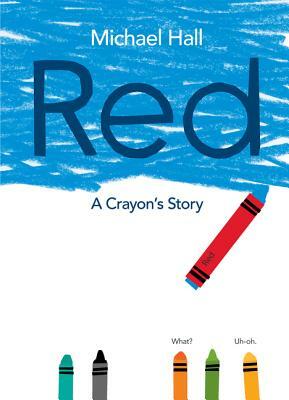
 

Red: A Crayon's Story by Michael Hall

Books Containing Gender Non-Conforming Characters

Jacob’s New Dress by Sarah and Ian Hoffman

Jacob’s Room to Choose by Sarah and Ian Hoffman

Want to Play Trucks by Ann Stot

Morris Micklewhite and the Tangerine Dress By Christine Baldacchino

Pink Is for Boys by Robb Pearlman

Julián Is a Mermaid by Jessica Love

Julián at the Wedding by Jessica Love

Not Every Princess by Jeffrey and Lisa Bone

Téo’s Tutu by Maryann Jacob Macias

My Princess Boy by Cheryl Kilodavis

Except When They Don’t by Laura Gehl

Sparkle Boy by Lesléa Newman

Peanut Goes for the Gold by Jonathan van Ness


About LGBTQIA Parents

My Two Super Dads by Bronny Fallens

My Two Dads and Me by Michael Joosten

And Tango Makes Three by PETER PARNELL AND JUSTIN RICHARDSON

Love Makes a Family by Sophie Beer

My Two Moms and Me by Michael Joosten

My Two Dads by Claudia Harrington 

Mommy, Mama, and Me by Lesléa Newman

Daddy, Papa, and Me by Lesléa Newman

Heather Has Two Mommies by Lesléa Newman

It Takes Love (and some other stuff) to Make a Baby by LL Bird

Uncle Bobby’s Wedding by Sarah S. Brannen

Who’s Your Real Mum?  by Bernadette Green

Stella Brings the Family by Miriam B. Schiffer


History of LGBTQIA

Sylvia and Marsha Start a Revolution!: The Story of the Trans Women of Color Who Made LGBTQ+ History by Joy Ellison

Pride: The Story of Harvey Milk and the Rainbow Flag by Rob Sanders

This Day in June by Gayle E. Pitman

Twas the Night Before Pride by Joanna McClintick

The Meaning Of Pride by Rosie Thor

Two Grooms on a Cake by Rob Sanders

Be Amazing by Desmond is Amazing and Dylan Glynn


Information

It Feels Good to Be Yourself: A Book About Gender Identity by Theresa Thorn and Noah Grigni

What are your Words? by Katherine Locke


There are also great books that have a story entirely irrelevant to any LGBTQIA issue but just happen to have two same-sex parents or characters who are in the LGBTQIA community. I love these ones the best because the book is not about being diverse it just happens to be diverse. These are two examples I have come across but I am always looking out for more. As always, representation matters, but there is something delightful about normalising things so that they aren’t a stand out book because they are diverse.

General books but characters are same sex

Things in the Sea are Touching Me by Linda Jane Keegan

Harriet Gets Carried Away by Jessie Sima


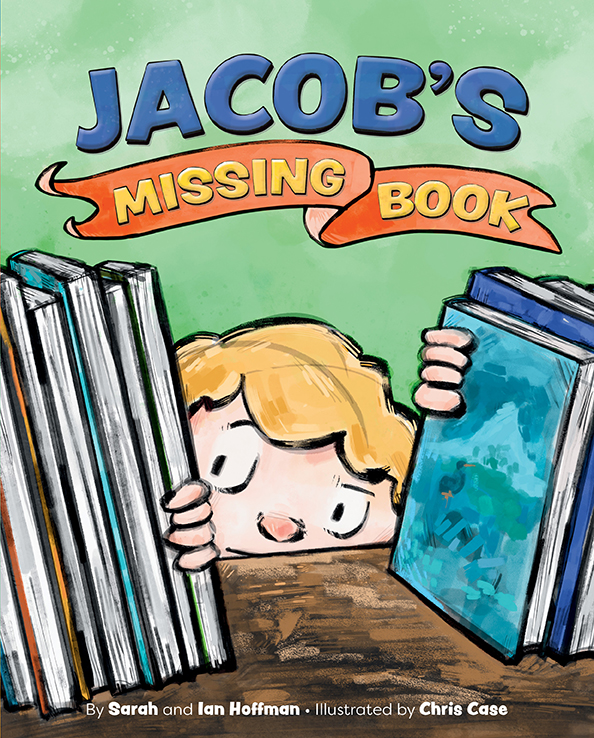
Jacob’s Missing Book by Ian and Sarah Hoffman

Published: 3 September 2024Goodreads badge
Publisher:
Magination Press
Illustrator: Chris Case
Pages: 32
Format: Picture Book
★   ★   ★   ★  – 4 Stars

Jacob–the star of one of the most banned books of the decade–is back in Jacob’s Missing Book, a kid-friendly story about book banning, censorship, and LGBTQIA+ rights.
Noah is confused about Emily’s family, so he asks her―who’s Pop and who’s Dad? Jacob knows just how to explain, but how can he? The penguin book isn’t in the library anymore! As the day goes on, everyone is still talking about the mysterious missing book. Ms. Reeves tries to explain why the book is no longer in the library and what all the fuss is about. In the meantime, Jacob hatches a plan to tell the story about Emily’s family.

I love all the previous Jacob stories and this is a great one about censorship and the effects of censorship. I love how the book in question is referred to as the “penguin book” which between the two famous controversial LGBTQIA picture books there’s Heather’s Two Mummies and And Tango Makes Three. Now of course with more diverse books available there are more books to complain about but that doesn’t stop Tango still being controversial.

Even the illustrations, despite how blurred and abstract they are if you know the cover you know the book in question is And Tango Makes Three. I loved the subtleness while also being very clear about what book is being banned. The way the narrative highlights that it can’t even be talked about in the classroom is depressing but it is also a creative way the authors have tackled talking about censorship without talking about censorship.

The class is made up of familiar faces we’ve met in previous Jacob books and this time we get to learn some more as they learn about each other and their families. How can kids like Emily explore family dynamics like her own – even in a penguin book – without representation? How can people like Noah understand other people’s stories? Sometimes a picture book is a good way to understand different experiences and these kids are being denied that. Jacob’s mum mentions it’s good they have the book at home so it being removed from the library isn’t an issue in terms of access, but it isn’t fair others miss out.

Thankfully censorship isn’t an issue in Australia, book banning isn’t a thing, and while a few small voices have in the past tried, nothing has come of it. I always thought if we reminded people about the idea of censorship, and highlighted what places like the US were doing, it would give them confidence and ideas to try. But I must say, the few times people try and complain about what we have in the library there is a lot of satisfaction shutting them down where they stand.

I loved the different scenarios in which the children imagine how the book was taken from the library, from aliens to penguins they try and work it out. When the teacher explains that people complained it’s sad but also a good reminder of how the effect of book banning affects the people the books are in the library for.

The fact Ms Reeves can’t even discuss it with kids, and Emily’s reaction is a prime example of why representation matters. There are real people who can be affected and made to feel lesser by book bans.

The story is left open to imply that the school and/or parents will fight the book ban and try to get the penguin book back in the library. It is reassuring to see that the community is still empowered the fight back, but I also love that this book isn’t the place to do that. This is a book about how representation matters, and even if people try and deny that representation, kids will find a way and are excellent voices to point out the ludicrousness of it all.

You can purchase Jacob’s Missing Book via the following

QBDDymocks | Booktopia

  Blackwell’s | Angus & Robertson

Fishpond | Amazon | Amazon Aust

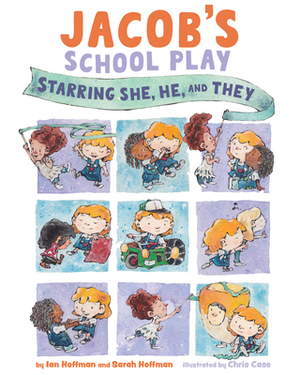
Jacob’s School Play: Starring She, He, and They by Sarah and Ian Hoffman

Published: 1 January 2021Goodreads badge
Publisher:
Albert Whitman Company
Illustrator: Chris Case
Pages: 32
Format: Picture Book
★   ★   ★   ★  – 4 Stars

https://cdn.thestorygraph.com/7f41ycwrs5fd7xrj59lrh313tagoThis new book is a clever way to introduce young readers to non-binary and gender-fluid people. As Ms. Reeves’ class produces a play about a farm, the entire class comes to understand about being true to who you are, as classmate Ari expresses their identity as they, which prompts Jacob to look more deeply about what it means to be who he is, and how others identify. Explaining the use of pronouns of one’s own choosing to kids, while all along reinforcing that an individual is much more layered and unique then how others may see him, her or them, is a developmentally important milestone to help foster respect of one’s self and one’s peers.

I love the Jacob books and I am always keen to see what each one will deliver. With a class full of kids there are a lot of different stories to tell and whether it’s about an individual or a family dynamic the stories are always wonderfully done.

I liked the loose metaphor of the play and Ari’s role in it and how organically these conversations come up about pronouns. These are primary school kids so of course there can be real discussions and still be in a simple term they can understand. Ms Reeves is always a great teacher and helps her class understand one another better.

The explanations and exploration of different pronouns is woven through the prep of the play, the plot remaining largely on organising everything and everyone with Ari’s pronouns not being a major focus. This works well because it isn’t a big deal, and it normalises that these conversations might pop up, but while you may need to learn a few new things, there is still a play to prepare for.

Case’s illustrations are once again delightful. Seeing the kids in their costumes and classroom scenes brings their environment to life and it’s easy to see these conversations playing out in real life. There’s nothing comical or fanciful about it, the down to earth nature of it and the focus on the storytelling really comes through, even in the pictures.

The curiosity of the kids is handled tactfully, and even Jacob, who was the star of the first gender non-conforming book, has to learn about other identities. Technically most of the book is about the play, we even get to go through the life cycle of crops growing at the end and the roles everyone plays more than they discuss Ari and their pronouns. It takes the focus off this being only about Ari and it instead gives a fun story about costumes and storytelling while also having a simple lesson about who people are and how everyone is their own unique person.

You can purchase Jacob’s School Play via the following

Dymocks | Booktopia

WorderyBlackwell’s | Angus & Robertson

Fishpond | Amazon | Amazon Aust

Jacob’s Room to Choose by Sarah and Ian Hoffman

Published: 7th May 2019Goodreads badge
Publisher:
Magination Press
Illustrator: Chris Case
Pages: 32
Format: Picture Book
★   ★   ★   ★  – 4 Stars

The beloved lead character from Jacob’s New Dress is back in an encouraging story about gender expression. When Jacob goes to the boys’ bathroom he is chased out because the boys think he looks like a girl because of the way he is dressed. His classmate, Sophie, has a similar experience when she tries to go to the girls’ bathroom. When their teacher finds out what happened, Jacob and Sophie, with the support of administration, lead change at their school as everyone discovers the many forms of gender expression and how to treat each other with respect.

Jacob is back and once again Sarah and Ian Hoffman have made a nice story that is about acceptance, understanding, and education. We’re introduced to Jacob’s friend Sophie, we aren’t give a backstory on this character but she is Jacob’s friend and dresses in typically masculine dress. She, like Jacob, experience problems when trying to use the bathroom.

Neither Jacob or Sophie are presented as being trans, but their different ways of expressing themselves makes them appear to others like their opposite gender which results in issues when trying to use the bathrooms at school. I loved the exercise the teacher has the class conduct because it is a basic, visual experiment that not everyone looks alike nor does it matter who uses the bathroom because everyone must go at some point. In both stories about Jacob the teacher has been a fighting force which is fantastic, even the small nudges make huge impacts and I love seeing adults so supportive and understanding.

I also love that these books are about gender expression and gender non-conformity. It fills the gap between cisgender and trans books which kids can easily understand and be educated on. The authors are writing from experience and they use this to create a heartfelt story showing that education really works and everyone deserves to feel safe and happy no matter where they are. I loved that these lessons can be taught to kids from an early age, the problems come, as the author’s message at the back states, with those who are older who haven’t been taught these messages of acceptance.

Once again Case’s illustrations help represent the message the story is trying to convey. The pictures are a mix of full page and small patches on the page but they tell the same story with a lot of emotion behind them in the character’s actions and expressions.

I’ll be interested to see if there are future books about Jacob because It’s love to see the Hoffman’s cover other situations and challenges the gender non-conforming kids will face.

You can purchase Jacob’s Room to Choose via the following

QBD | Booktopia | Book Depository

Dymocks | WorderyAngus and Robinson

 Fishpond | Amazon | Amazon Aust


Jacob’s New Dress by Sarah and Ian Hoffman

Published: 1st March 2014Goodreads badge
Publisher:
Albert Whitman Company
Illustrator: Chris Case
Pages: 32
Format: Picture Book
★   ★   ★   ★  – 4 Stars

Jacob loves playing dress-up, when he can be anything he wants to be. Some kids at school say he can’t wear “girl” clothes, but Jacob wants to wear a dress to school. Can he convince his parents to let him wear what he wants? This heartwarming story speaks to the unique challenges faced by boys who don’t identify with traditional gender roles.
I may have cried a little at the start from the simple line of “There are all sorts of ways to be a boy” and also because the conversations between Jacob and his mum are wonderful, and the writing has hit an ideal balance of acceptance and practical reluctance.

The dialogue used is about support and comfortableness. Jacob’s mum and dad don’t dismiss his ideas, but they use language to work around it. His mum is supportive but apprehensive but finds a solution to Jacob’s desires, and his dad compliments Jacob’s outfit while acknowledging it wouldn’t be something he would wear he doesn’t shut down the idea.

It’s a powerful book in that it doesn’t have answers. It was written after the authors son was gender non-conforming and I think this story is a great expression of that. It doesn’t have answers either way whether Jacob wishes he were a girl, or whether he feels weird in his body – he just likes to wear dresses. It is a great story to demonstrate that there is nothing wrong with kids exploring and trying new things. It does no harm to anyone and it gives them a chance to have fun.

There are no big conversations or topics raised, and the story doesn’t go into any further depth but it doesn’t need to. There’s a chance Jacob grows out of it and there is a chance he doesn’t, but that is not the point that is being made. It is about allowing Jacob to do something he is comfortable doing, showing him he has the support of his family, showing that there is nothing wrong with it, and it also shows that an easy conversation can be had that kids and adults alike can understand.

It isn’t all smooth sailing. We see Jacob’s apprehension, especially when it seems he isn’t going to get the support he wants and when he is dismissed by his peers, but there is a silver lining because we also see the acceptance around him and how he grows in himself and how his own pride outweighs the meanness of others.

Case’s illustrations are cartoony but realistic. The pictures are full page and coloured and the text is nestled amongst it as part of the story. The full pages allow for big scenes where entire classrooms and playgrounds can be shown which supports the narrative and shows off the scenes better than simpler or smaller images might. Case captures the emotion and drama in facial expressions and it enhances the fear and joy Jacob feels, as well as the feelings of those in his class.

I like this story because it is sweet and simple, and it shows how easy these kinds of situations can be. There are challenges as shown by the obnoxious child who clearly is repeating the things his parents say, but there are also wonderful moments where everyone else doesn’t see any problem with that and the narrative shapes these arguments in seamless and natural ways.

You can purchase Jacob’s New Dress via the following

Booktopia | Book Depository

Dymocks | WorderyAngus and Robinson

  Amazon | Amazon Aust