Published: June 25th, 2013
 Publisher: Spence City
Pages: 248
Format: Book
Genre: Romance/Fantasy
★ ★ ★ – 3 Stars

Sara had always been careful.
She never spoke of magic, never associated with those suspected of handling magic, never thought of magic, and never, ever, let anyone see her mark. After all, the last thing she wanted was to end up missing, like her father and brother.
Then, a silver elf pushed his way into Sara’s dream, and her life became anything but ordinary.
I was given an ARC copy of this book by the publisher.
Copper Girl is the story of Sara, from the blurb we know nothing except that she had always been careful, never spoken of magic, and never revealed her mark. Then, a silver elf called Micah pushes his way into Sara’s life, a mysterious elf who knows things others don’t, and her life becomes anything but ordinary. We watch as Sara learns more about her family, her world, and herself, and in doing so reveals that the start of something important is about to begin.
The hint of hidden magic draws you in and with no explanation why, aside from a missing father and brother, your mind begins to deduce and create its own answers before you even begin. The answer I was creating was not what I expected from this book. Provost has done a great job in creating this world, this dystopian world where magic has become something to be hidden, something wars have been fought and lost over, and something that is punishable by those who now run the government.
On the opening page we are introduced by a standalone sentence that suggests the coming action has created a problem. This sets you up immediately waiting to see what this problem is, and when it arrives with no clear indication it is a problem, that just creates more mystery, making you keep going. From this beginning though I felt the follow up was a little strange, and as the story began it took me awhile to completely understand what was going on; the explanations are scattered and you have to keep track and recognise what is information that must be remembered and what isn’t. Terms and phrases are used in conversations that are important, and you realise that they are important yet you don’t know what they mean or have any understanding of what they are.
One of the main aspects that I was confused with was the switch between regular and italicised text. The story is told from Sara’s point of view, but while she narrates her life there are also moments where the narrative halts while something is explained, whether it is her job description or telling us about the war. These remain in Sara’s voice, but they definitely feel like it is a paused moment in the story to add information, then the story continues. These italic sections are not always for explanations sometimes they are dreams and memories that are part of the narrative, small tangents like the mind wandering off topic so they seem to hold different purposes; in the end I found it easier to just read them without thinking of them as something separate and I found that after a few chapters the italics sections disappear.
The good news is that after this bump in the beginning a pretty great story emerges. The idea that Provost has created with this dystopian world, hidden and banned magic, and a monotonous and yet highly regulated existence, is rather enticing. The post war environment was not apocalyptic, more highly run with contraband, curfews, and strict regimes and routines that should be adhered to to keep things running smoothly. It is a bother but with Sara being used to it, you get the idea that people just do what they do and get on with it, with just an occasional comment at its unfair nature. The magical aspect with the Otherworld, the concept of ‘Metals’, as well as the secrets and capabilities of those who possess magic is also engaging and leads itself to being explored at greater length and from multiple angles in the series.
Trying to understand the relationship between regular humans and the magic was interesting, but not hard to comprehend. The coexisting worlds were well explained, as was the outcome of the conflict. From what I understood of the War and the world that existed before it was that it seemed to be very similar to the X-Men. Humans and those with magic coexisted until those without became paranoid, fearful, all the usual responses, thus creating war and sending magical people underground or into submission. The resulting society is not explained completely, but we catch glimpses as Sara makes reference or certain events reveal the life they all now lead.
There was uncertainty about the nature of the world, the same with the other parts in the beginning, but the confusion I got is soon smoothed out as the story goes on. The slow reveal technique has its advantages and disadvantages; the key is I think to know what works best and where. Certainly secrets and mysteries can be revealed in the narrative slowly, however the set up of the world and the systems in place perhaps could have been explained earlier than it was. Once we were given this information there was a greater understanding of the society, which in turn supported and aided the characters and plot nicely.
The characters in the novel are good. They are unique, each with their own personalities and peculiarities that are humorous and mystifying. Sara is a great character, she has a wit and a sarcasm about her that makes her enjoyable to read. She is a young adult from what I could determine and she is caught up in these two worlds, all of which bring out her character really well. Micah is a strange character, he is very forward, a tad annoying at times, though his reasons for his behaviour are understandable. As the love interest I felt that his relationship with Sara happened very quickly and with little or no questions. He comes on very strong and she falls fast. The issue I had about their fast affection is explained towards the later part of the book which was ok, having an explanation makes it much more understandable.
Aside from Sara, and partially Micah, most of the remaining characters are not explained with a lot of depth. Their past, history and nature are revealed as the plot requires, or within family dynamics and other relationships, but being the first book in the series one can hope that they are developed further as the series progresses.
When the real world and the other realm truly combine it is quite late in the book, with the relationship between Micah and Sara taking up a lot of the book. The relationship is interesting, Provost explains the emotions and the hold they have over one another, yet a few aspects such as dream walking seemed unexplained, resulting in the idea to be pieced together as the story continued. This was ok, but considering there were clear moments where we’re told a history or something, a longer explanation would not have gone astray.
I did like that Sara existed in a world, and came from a world where magic was known, and she herself was magical. This reduced the level of surprise when it is reintroduced into her life and makes this different than stories where an issue of a non-magical person having to come to terms with being magical or understand magic is hard to do properly. Even with her existing knowledge Sara is still naive, she tells us that she was very young when the war happened, and she grew up with no magic and was not old enough at the time to be introduced to the world entirely. This situation of her being half in the door means that she is learning some things alongside us, but without the need to accept the entire concept, just filling in a few blanks about history and certain elements. I think this is where the unbalance about what is told and what isn’t happens. Having a character knowing so much results in too much telling to catch up the reader and leaves nothing for us to piece together ourselves, but on the other hand without any information we can become lost due to lack of telling. Provost switches between both, some information is unnecessarily included, left out completely, or told at just the right time.
As the reader who knows nothing, a lot still seems a bit unanswered, with enough history given, yet not enough at the same time. I felt like I had missed something or that the fleeting explanations were not enough. It didn’t hinder the story exactly, I knew what was going on, however the information and world Provost hints at seems so rich with history and magic that I wanted a grander introduction to it all. Perhaps slowly revealing bits and pieces throughout is enough, and maybe it was just my desire to have the complete history that was on my mind. I can only assume that more is to be revealed in the coming books.
The ending was very well rounded, there was no direct cliff hanger, but there was enough to see where the story could grow. We are given an introduction into this world and enough to peak curiosity about where it is headed, but we are not left in the middle of a scene or without real answers to leave us unfulfilled and impatient for book two. I look forward to the second in the series to see how this plays out and hopefully to get a greater understanding of the intricacies of the society and otherworld complexities.
Copper Girl comes out 25 June thanks to Spencer Hill Press and Spence City.
GIVEAWAY (US & Aust only)
Thanks to Spencer Hill Press and Spence City I am offering some goodies to celebrate Copper Girl coming out. Those who enter go in the draw to win
A token (replica from the book)
$10 Barnes and Noble gift card
T-Shirt
Update: Now, there is a Rafflecopter widget but WordPress is against them being in posts but I have been fiddling and I think we can get it to work another way, so you can continue with the first tweeting/commenting combo, or you can hopefully click the link and open the widget up and enter that way. Let’s see how that goes. If it doesn’t work, let me know and I will revert back to only original set up. Those already entered via comments are still included in the draw.
Options
1) Enter via the Rafflecopter widget
OR
2) Tweet the book’s Goodreads link and you get two points towards winning. Once you tweet the link, provide your name and your Twitter name in the comments of this post so I can check your entry.
Example tweet:
“Tweet a link to Copper Girl’s Goodreads page to enter the competition over at @lostinagoodbk http://wp.me/p3x8rS-8i http://www.goodreads.com/book/show/16193519-copper-girl?ac=1”
Entries close on 24 July. Good luck!

 Exhausted, cynical, and confused, Anna is always there to report for duty. She’s part of a clandestine government team that defends the nation against supernatural terrorism-which, in all honesty, is enough to drive anyone to drink. Toss in a fear of intimacy with a desire to have friends and lovers like a normal person and, well, Anna is a walking, talking contradiction, albeit one wrapped in a special agent with arcane, magical powers of her own. And at five-thirty in the morning with a zombie-infested apartment building in the heart of Washington, DC, you’ve got the makings of the worst morning…
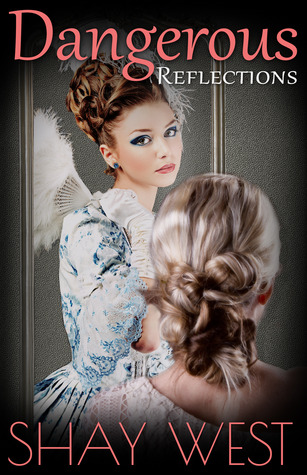 Alexis Davenport wants to go home. She hates her new school, her mother for moving her away from her friends, and her father for walking out.
 For Jasyra, the daughter of the High King, life couldn’t be worse. Her father has been turned to glass, her kingdom has been taken over by the Demon Emperor, and she and her friend, Evooku, have been exiled. The only way to save the land is to reassemble the Dragon Fyre Blade, but the Demon Emperor has hidden all six pieces and each is guarded by great mythical beasts. There is only one person who can help restore peace, but it has been said that he is not of their land.