It’s that time of year again where there is an obvious neglect of the blog. It isn’t intentional yet every year there is one, and despite all the best intensions there are gaps between posts that grow from a few days to a few weeks. I’m not even game to check how long it’s actually been because then I’ll be sad. But I am not here to offer an excuse, but to explain the reason why.
I may have mentioned casually somewhere or other that I’d gotten a job as a librarian about six months ago (I know Twitter gets a lot of random posts about it), and then towards the end of May I got a second job, also in a library which is awesome. With the start of this second job came a lot of adjustments, it worked differently than what I was used to and sudden call ups were common and days I thought I had off I didn’t. With my first month of adjusting behind me I think I’m getting into the swing of things. Then of course, job number one offers me a chance at running a branch myself. Don’t get too excited, it isn’t a promotion, but instead for three days a week I am in charge of this one person library. Also scary and a huge change, and also time consuming. With 12 hour days I can basically wipe those days from my week as a chance to do anything. The good news is the audiobooks keep me going in the car so I get to still read (as it were), though my available audiobook selection isn’t vast and doesn’t help my review request pile (a neglect I will offer a strong apology for).
Having thought a lot about it, and now settled in a bit after my first week at the new job, I think I can start sorting out the blog again. I have reviews I really want to write, features I want to start, and a giveaway for all my Facebook fans to organise (more on that soon), and since July has snuck up on me (seriously June went SO fast) I’m terrified it’s going to suddenly be October tomorrow and I’d’ve missed another huge chunk.
So thank you if you’ve stuck around, thank you for still interacting with me on Facebook, Twitter and Instagram when I get to post on them, and I hope you enjoy the posts I have planned.


 Hamlet’s father has just died. By the time they’ve filled in the grave his mother has remarried. Hamlet suspects foul play, and it’s troubling his spirit. Or maybe he was always troubled. Ophelia is in love with him. His best friend Horatio can’t work him out. Then, on a cold, still night, Hamlet meets the ghost of his father…

 Once upon a time a little girl told her grandmother that when she grew up she wanted to be a writer. Or a lollipop lady. Or a fairy princess fireman. ‘Write, Megan,’ her grandmother advised. So that’s what she did. Thirty-odd years later, Megan is a professional writer and published author by day, and an indie novelist by night. Her fiction – young adult romance with soul – recently earned her the SPR’s Independent Woman Author of the Year award. Megan grew up in the Royal County, a hop, skip and a (very long) jump from Windsor Castle, but these days she makes her home in the village of Standish, Greater Manchester. She lives with her husband, a proud Scot who occasionally kicks back in a kilt; her son, a budding artist with the soul of a palaeontologist; and her baby daughter, a keen pan-and-spoon drummer who sings in her sleep. When she’s not writing, you’ll find her walking someplace green, reading by the fire, or creating carnage in the kitchen as she pursues her impossible dream: of baking something edible.
 he box has opened a door to the dark place where the voice Corbin hears dwells. Not only that, but she’s brought it forth in human form, into her world, into the light. But others have been alerted to her existence, and Six is only the beginning of the imaginary becoming real. Torn between her love for Six and wanting a normal life, Corbin must decide if she should live in the light or hide in the dark.
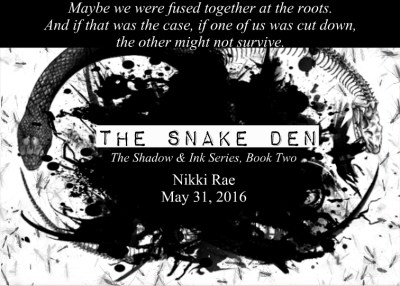

 Nikki Rae is an independent author who lives in New Jersey. She explores human nature through fiction, concentrating on making the imaginary as real as possible. Her genres of choice are mainly dark, scary, romantic tales, but she’ll try anything once. When she is not writing, reading, or thinking, you can find her spending time with animals, drawing in a quiet corner, or studying people. Closely.