Call of the Jersey Devil by Aurelio Voltaire

Published: May 28th 2013

Goodreads badgePublisher: Spence City
Pages: 248
Format: Book
Genre: Horror/Paranormal/Humour Fiction
★   ★   ★   ★   ★  – 5 Stars

Five suburban mall rats and a washed up Goth singer find themselves stranded in the Pine Barrens of New Jersey where they discover two horrifying truths: The Jersey Devil, hellspawn of folklore and legend, is real; and New Jersey (as many already suspected) is the gateway to Hell!

With the help of one lone witch, this small group must face off against their deepest fears and the most unholy monsters in a battle where their very souls, the world they live in, and any chance of returning to Hot Topic in one piece is at stake!

I was given an ARC copy of this book by the publisher.

The idea that the gateway to hell is in a forest in New Jersey is a pretty enticing way to base a novel. As soon as we begin the story we are thrown into the world of a mysterious creature and what it is capable of doing, then as we move on to a different world entirely we know it is just a matter of time before two worlds collide and creates the trouble this causes for those involved.

Call of the Jersey Devil tells the story of five “mall rat” teenagers who travel to the New Jersey Pine Barrens to see Gothic singer Villy Bats, however things are not all they seem, and when all hell starts to break loose (I love that this has become a literal phrase), they are soon faced with an entire underworld itching to get out through the gates of hell. Enlisting the help of a witch the teens and Villy must fight to stop the gates from opening further, and flooding the world with demonic incarnations, one of which is the legendary figure known as the Jersey Devil.
Being a fan of Voltaire’s work and having watched him provide updates on the book’s development for months, I sat here patiently waiting to finally get a chance to read it. After given the chance to read an Advanced Reader Copy I jumped at the opportunity. Having now finished it, almost unable to put down unless I had to, I am so glad it lived up to my expectations and went beyond what I ever thought it would be. It seems wrong to seemingly praise Voltaire for somehow writing such an excellent book as a first time novelist, almost as if it were unexpected, but not only do I know many first time authors who write excellent books, but Voltaire has a long successful creative and storytelling history behind him, this time it has simply descended on the page rather than in a graphic novel, a song, or a film.

But while Voltaire is a good storyteller, there is no doubt he is also a good writer. There are sentences and phrases in this book that are wonderful, all nestled in amongst the joking and the teenagers, and the whole ordeal of this demonic spawn and an opening underworld. The descriptions are excellent as well, whether they are of people, demons, or the environment around them. The way Voltaire writes you can immediately conjure up images and feeling of people and events; especially the scenes in the woods, not to mention the ominous feeling of uncertain darkness and the monsters it hides.

Along with descriptions there are also some very insightful moments in this book, as well as evoking one-liners and entire ideas expressed eloquently, often needing very few words attached to them. Voltaire has a way with words that is very beautiful; perhaps this is the long established creator within, or simply an observant and insightful personality coming through on the page, or perhaps both. Whatever the case it is certainly a talent to create a compelling and engaging story that can make you think, feel, as well as be fearful and grossed out all at the same time.

What I enjoyed about Call of the Jersey Devil is the fact that is has so much in it, but it never seems crowded, nor does it jump and feel fractured as you read. The opening of the book and early chapters are definitely designed to set up our characters and lead us into the oncoming events that connect you to the title. This beginning I feel is needed because it impacts on the remainder of the story, as well as how you perceive and assess the characters themselves.

Whether this was my own over thinking or not, but I felt that we were introduced to these “mall rats” as we were to give us a chance at creating our own preconceptions and assessments on them as people. Certainly other characters and they themselves fed this opinion, but in doing so it gives a lot of power to the rest of the novel which then begins to break down these initial judgements.

Voltaire changes point of view throughout and we are able to see the unfolding events through almost every characters eyes and thoughts. In doing so we are also given the opportunity to gain an insight into their history and back story to show you who they are and how they came to be that way. Aside from providing histories, it is interesting to see how each character treats the circumstances they are in, some relish it, some fear it, while others hate it.

Villy was an interesting character, if not complex. I enjoyed his character more I think because of his complexities and imperfections, that is what makes him real. The same can  be said for the others; these characters, especially the mall rats: Stuey, Prudence, Ari, AJ, and Aleister, are portrayed as real people, all with the quirky, obnoxious, selfish, vain and adoring aspects that is within anybody. Voltaire is very good at showing the readers that there is certainly a ‘group persona’ that is separate from who someone really is. This is why having alternating points of view and providing back stories helps you understand these characters a lot more, you see them as who they are, not only as the face they put on for the public.

You do get to see these characters behave separately from their group persona. This helps you not to instantly dismiss them as selfish teenagers who are loud and obnoxious and rude to one another, they all have a reason and Voltaire shows us, giving us a little more understanding, and yet almost not enough to excuse everything that they do, more to show how it has shaped who they became. This doesn’t always change any opinions or add much sympathy, but we are given an explanation.

Towards the middle of the book the story settles in nicely and it is now that everything begins to unravel, and it isn’t long before it is strange, and is possibly grotesque to some, but it is brilliant. There is a strange absurdness about it that is compelling and wonderful. You can certainly see where the influences came from of the genre films, and yet it does not read as cliché and over done either. The additional elements Voltaire added makes it humorous, and yet still terrifying and clever at the same time.

While it is grotesque in some parts, you cannot ignore the humour, this almost balances out the unpleasant details and descriptions Voltaire gives to the demonic faction within the woods. There is snarky sarcasm, and amusing moments that sit either side of the ‘horror’ aspect, but there is also some that cuts through the horror and breaks up the unpleasant scenes.

There were events in this book that took me by surprise in some cases, and not in others, but all were engaging, and in some cases saddening, all contrasting within a single chapter at times. There are also some very heartfelt moments in this book which was certainly a surprise, but certainly well placed and executed. There is the correct balance between the parody, the horror, and the realism to make it work very well. It isn’t even an equal balance, that is not what the story requires, but where these moments happen and by whom are perfectly placed to suit the character and the narrative.

I loved the ending of this book; I thought it was perfect for where the story began and how it played out. I think the way Voltaire established his characters and how we get to know them, not to mention the situations they get themselves in, helped explain and make the ending scenes and epilogue ideal. What was wonderful was the fact that Voltaire keeps you engaged and laughing throughout and until the end, which is very hard when you have demons, teenagers, witches, and the paranormal to contend with. There is also amazing and detailed artworks that accompany this story, certainly not required as the descriptions do them justice, but by having a startling sketch to illustrate a scene create an impressive impact on the mind when you continue reading. And entire idea can be captured in one of those drawings, there are just the right amount to suit just the right needs.

In his interview Voltaire said he was a storyteller, and he is; but there is also novel here. Within this story there are glimpses and hints of beauty and art, hiding amongst this “storytelling”. So while when you hear storyteller you may think casual conversational tone, there will be a lot that will surprise you with this book. For someone who does not read, Voltaire can write. But we already knew that. You only need to look at his songs or his films, or his other works to know he is talented, and know that reading does not always equate to talent or skill in writing.

You still have time for pre-orders before Call of the Jersey Devil is released on May 28th.
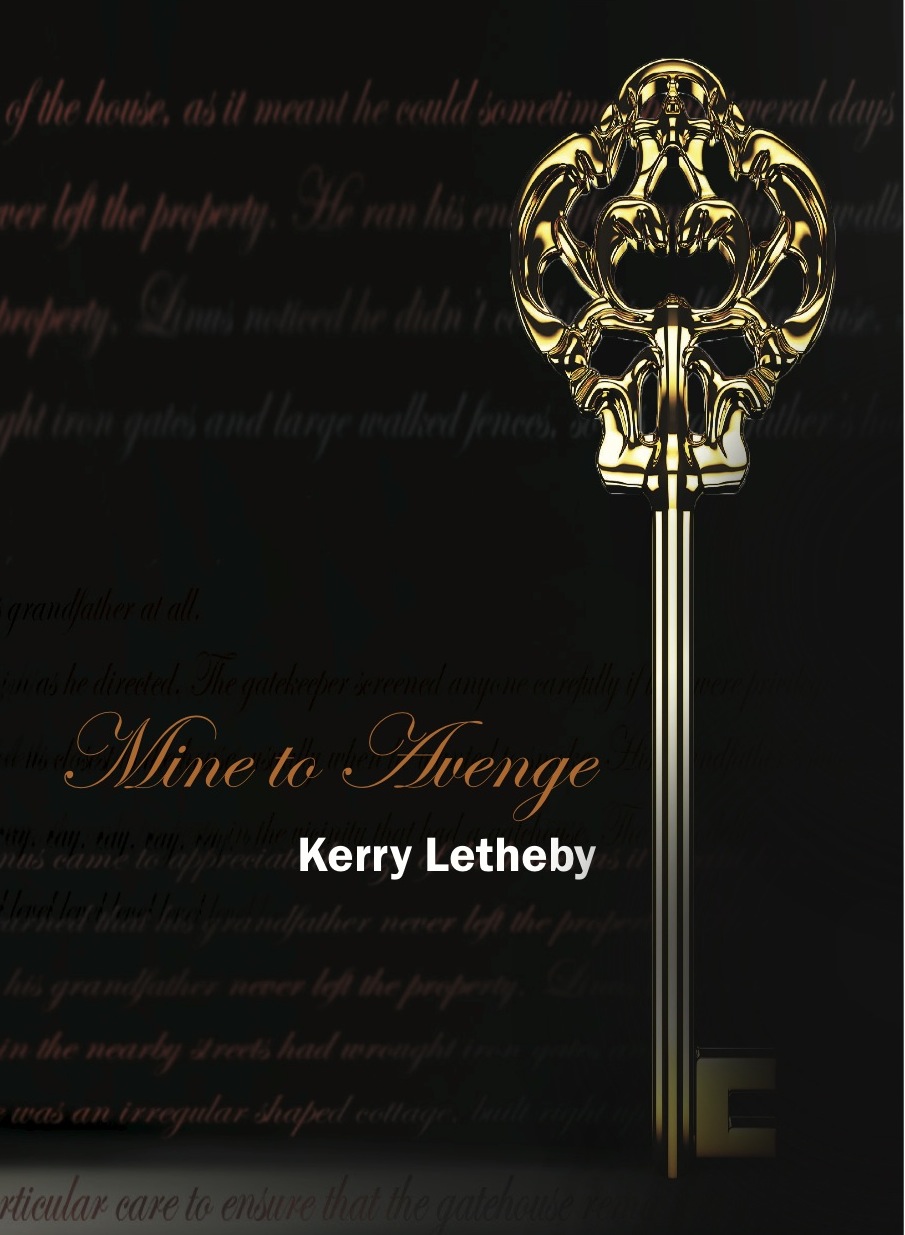
Mine to Avenge by Kerry Letheby

Published: November 1st 2012
Goodreads badgePublisher: Love Of Books
Pages: 488
Format: Book
Genre: Mystery/Suspense
★   ★   ★   ★   ★  – 5 Stars

When Alcandor is blamed for the tragic death of his friend’s sister in Greece in 1940, little does he know of the repercussions this will have for him and his family for the next seventy years. Unable to forgive himself, and wanting to give his young family a new start, Alcandor leaves Greece and brings his family to settle in the Riverland of South Australia in 1948. Although Greece and his past are far behind him, Alcandor harbours a terrible secret and he remains a fearful man. Alcandor subdues his fear, and he and his family adapt to an idyllic life of freedom and opportunity. 

However, eighteen years after leaving Greece, Alcandor learns that his past has caught up with him. His family needs to know the truth, but circumstances tragically intervene before he can warn them. Years later, Alcandor’s sons show signs of odd behavior hinting at possible mental instability, before disappearing without a trace. And in the next generation, Alcandor’s grandson exhibits the same strange behaviour not long before he is killed in the tragedy of September 11, 2001. It is not until 2010 that Alcandor’s great- granddaughter, Alethea, discovers that there is far more behind her family’s tragic history than mental illness, and little does she know that the threat against her family is much closer than she realises, and very far from over.

Mine to Avenge is an excellent book. The amount of work and time and thought Kerry has put into this book is amazing. There are interconnected things everywhere, not to mention the research she has done about the history of Greece and America and Adelaide, and all the other places mentioned in the story. If you followed her blog tour she mentions a few details about where she got her ideas and how she wrote this story, and I always have a great admiration for people who put so much time and effort into their work for others to enjoy. There surely must be a time where they want to just wing it because it is easier, but a lot don’t, they want it to be as accurate as possible, especially if dealing with real times and real places and events.

 When Alcandor Galanos is blamed for the death of his friend’s sister in 1940 Greece, it sets in motion a vendetta that will follow his family for the next seventy years. Kerry takes us on this journey of mystery and a vengeance that haunts the Galanos family, and by the end of the book you close it with so much inside your head about the connections and the lives of all the characters it is extraordinary. We are given multiple points of view and there is a fractured chronology as we get to see everyone’s side of the story as is required. This was evident right from the beginning because Chapter one opens with September 11, 2001, and leaving us on a cliff Kerry then jumps back to 1940 Greece where she shows us how it all began with another side of the story. It is writing like that that makes you eager to keep reading, if not to see where the exciting chapter leads, but also because you know there is still a cliff hanger from the very first chapter that is always on your mind as you are given this new information. But through this novel you get so many moments unanswered with new questions and as you continue you are abuzz with theories and you half read and half try and leap ahead in your mind and connect the dots.

 The way Kerry captured moments of the past was wonderful. With real events like September 11 and World War 2 and conflicts in Greece, she manages to portray the feeling and environment wonderfully, as well as the characters who are embroiled in these events. For September 11, because it was the only real one I had any real connection too; the way the confusion and the environment were captured was done extremely well, without it having to be the main focus of the scene. I especially liked how other characters reacted, even those who were not directly involved, specifically Nina and her children Alethea and Mila. Nina cared for her children and protected them from the scenes outside their window and the way Kerry tells their side of the events, you instantly can establish the fear hidden deep under a need to keep children unafraid, but you also can sense the almost young adult 12 year old Alethea who senses the fear, but wants to help her mother by being calm for her.

 Kerry has thought about everything, she has small details that make all the difference, the fact a mother protects the September 11 news from her kids, and how they treat the situation is very real, and very touching without showing the horrors, but still managing to capture the scene perfectly. The emotions, fear, uncertainty and missing description creates the images for you. This is evident in the other cases of terror with the family, creating the family bond, the family love amidst the destruction of the world around them was insightful and heart warming without a sense of over the top emotion.

There are so many gripping moments in this novel, even away from September 11, which isn’t really a huge part of the novel in the scheme of things, though it has its consequences and influences though which play their role in this interwoven narrative as does everything else. But with these scenes, and gripping moments of curiosity and intrigue, you become very involved in the lives of these characters, you have become so invested in their personal lives over their lifetime and knowing the dangers that surround them your brain works overtime to try and anticipate or deduct what it happening, about to happen, or has already happened.

Through the multiple points of view, as well as the jump between years you get to see the evolution of this family, and see children become fathers, mothers, and great grandmothers. When you read about characters when they are older with their families you also have the knowledge behind you of their childhood and their previous moments up until that point. And by having the same experiences retold from different eyes Kerry has compiled these lives, and this mysteriousness into an exquisite packages that leaves nothing unturned, even if it is still being uncovered in the final pages.

There are wonderful transitions between characters and emotions, nothing is rushed, yet nothing is drawn out unnecessarily with unneeded details. Each character is captured and portrayed so well, with such affection you do see them as real people, or as whole characters with a history and past.

As I reached the halfway mark point the cogs inside my head that had been working overtime to think and deduce started to click into place. When suspicions were confirmed it was as if a curtain had been lifted and the pieces started to fall into place. Of course there is always the missing pieces in the puzzle that magically end up under lounge cushions and under pets, these were yet to come, but that doesn’t stop a small sense of delight at the developing result.

I will not give away any more of this plot as it is too glorious not to experience yourself, but by the end of the book, when we are truly still having things revealed, it is done so wonderfully that you close the book feeling like you have been involved in something amazingly complex that works so well on oh so many levels.

The Viking’s Apprentice (#1) by Kevin McLeod

Published: March 28th 2013
Goodreads badgePublisher: Self published
Pages: 125
Format: eBook
Genre: Junior Fiction/Fantasy
★ ★ ★ ★ ★ – 5 Stars

What happens in Campbell’s Cove, must remain in Campbell’s Cove. 

Campbell’s Cove is a town steeped in a rich history of dragons, witches and brave warriors. History tells of one Viking warrior who rose above them all to claim the ultimate prize. Hundreds of years later strange things start happening in the town. Could the Viking stories be true? Has the evil returned? Who can protect the people?

When school friends Peter and George take their summer holiday with Peter’s Granddad it turns into an adventure that they will never forget. Peter must face a future he could never have dreamed of and learn of a past that has been kept secret for hundreds of years. A fight for friendship and survival and a struggle against an ancient evil that takes them into the Caves of Campbell’s Cove and beyond.

The Viking’s Apprentice is the debut novel for author Kevin McLeod and as soon as I read the plot and saw the cover I went hunting for this book. When I realised it was an ebook only I downloaded the necessary apps and away I went head first. This is an excellent book, just as it looked like it would be. What McLeod does is he has created a world of mystery and magic within our own and even in this first book, for even as I read I could tell there would be a second, is he has engaged readers. He uses stories of an ancient time, seemingly simple, but with so much hidden meaning and history behind it, to reveal the past, explain a story and begin an adventure. However it is the way in which he does this is what was wonderful: by using characters to do the work for him he enables readers to learn alongside the children as they too hear the wild adventures of the past, hearing tales of heroics of Vikings and warriors, dragons and battles.

The story begins with Peter and his friend George going to stay with Peter’s Grandad at Campbell’s Cove for the holidays. We learn that Peter does this often and what we know of Grandad is he is a teller of stories, stories about the Cove’s history, rich in dragons, warriors, and witches. The descriptions in this story are wonderful, but it also allows the reader to create their own images. The images created as you read Grandad’s stories to the boys about when dragons were fought and villages were under threat are excellent. In so few words seemingly complete stories can be told. This is another clever trick by McLeod; readers are given the same position as the children in the beginning, we, as they, sit impatiently while Grandad recounts his stories. This is where our knowledge comes from and we must wait, unless you start speculating like I did, but McLeod gives nothing away until you and the children need to know.

In other books like Fforde or Colfer or Nix where you know the authors like to play with you so readers only get what the author wants them to have until they’re ready, McLeod does this as well, and uses the children wonderfully to do so. They are not exactly withheld information, but within the story characters respect the relationship between the boys and the Grandfather, and when questions are being asked the main response is, ‘I think it would be best for your Grandad to tell you, or ‘he wants to be the one to tell you’. I liked that part, we are being held filled with suspense about what exactly is going on, but there is a reason for it that you know will be better to help gain a full idea of the story.

That is not to say we stick with the children the entire time through this story. McLeod gives us both sides of this saga, and the ambiguity and secretive unspoken and unexplained snippets about the coming danger is very creative. This is where we are treated as a reader away from the children; there is no information though, only secrets and mysterious figures. What I always like is that there are unexplained actions that occur but we see no explanation of meaning we are left to try and figure it out for ourselves. For a book suited at this age and audience, it is rather intricate and mysterious, something I applaud.

Where this story begins to grow in excitement is when these two stories we’ve seen combine and the past seems to return, and perhaps the Vikings and dragons of Grandad’s tales are become less of a story and more of a reality. I am offering no spoilers so don’t even try, but I will say that I adored how this was revealed and how it played out. I really liked though that McLeod was able to capture the urgency in the story with his writing, you definitely feel that things have become chaotic, or have calmed down, or that there is an eerie feeling. This certainly helps create feeling of a story without actually making it blatantly obvious and announcing it to readers. By the end of this book you are hanging out for the next one, McLeod has set up this story very well and he adds just enough to make you want to keep reading about these characters and see the effects and consequences o the events in this book. I look forward to continuing this series.

Waiting for Godot by Samuel Beckett

Birthday

Happy Birthday Samuel Beckett!

In honour of Mr Beckett’s birthday I am reviewing one of his famous works, Waiting for Godot which it itself turned 60 this year. Premiering January 5 1953, Beckett’s play has gone on to become extremely popular, highly debated, and widely interpreted by many. I first read this in 2009 and since then I have adored it. I could read it over and over, and I could watch it being performed all day long. I do not know what it is but there is something in its absurdity that is so engaging and appealling. I loved its obscurity, I loved the fact it goes around in a circle, and I love the meaning and details and messages hidden through it. How people can find this play boring is beyond me.

Published: January 5th 2006
Goodreads badgePublisher: Faber and Faber
Pages: 87
Format: Book
Genre: Play
★   ★   ★   ★   ★  – 5 Stars

“Nothing happens, nobody comes, nobody goes, it’s awful?” Estragon’s complaint, uttered in the first act of “Waiting for Godot”, is the playwright’s sly joke at the expense of his own play – or rather at the expense of those in the audience who expect theatre always to consist of events progressing in an apparently purposeful and logical manner towards a decisive climax. In those terms, “Waiting for Godot” – which has been famously described as a play in which “nothing happens, twice”- scarcely seems recognizable as theatre at all. As the great English critic wrote “Waiting for Godot jettisons everything by which we recognize theatre. It arrives at the custom-house, as it were, with no luggage, no passport, and nothing to declare; yet it gets through, as might a pilgrim from Mars.”

Waiting for Godot is a play, rather on the absurd side, that tells the story of two men, Vladimir and Estragon. We are introduced to these characters as waiting by a tree, for what for we know not. The pair muses the notion that there’s “Nothing to be done”, the implication that nothing is a thing that must be done, and we then go on to watch the pair do it. The cover of this play descibes it as a tragicomedy in two acts, and it is both tragic and comedic in all aspects. The comedy comes from the characters interactions, the dialogue, the mumbling, the circular conversations, the passersby – they are the comedy. And as far as I am concerned the tragedy aspects are the exact same things.

We get our first mention of Godot after Estragon says they should leave – ‘We can’t’ says Vladimir, ‘we’re waiting for Godot’. And thus the cycle begins. The waiting is filled with discussions about religion, hunger, sleeping, hat exchange, and the option of suicide – just to see what happens. The waiting is also interupted by the arrival of visitors through the play, these visitors do little to help the men in their mental assurences about their purpose, past, or Godot, and as a reader you too start to realise that perhaps like Wonderland, every one is mad here. These passerbys help to reveal slightly more about why Vladimir and Estragon are waiting for Godot, but the majority of the time they have their own interests and obscurities to contend with.

To some degree this story is hard to describe, you do have to read it to understand it completely without giving a completely plot breakdown, even then I can’t assure you’ll understand it. But it is well worth it, it gets you thinking, but you also are not entirely sure what about. It’s great. This play has been voted the most significant English language play in the 20th century and I don’t disagree. I know I am not exactly across the ins and outs of what the best of the best, most influential and socially criticising literature works are, but I know that others do, and when you read something you love, that has been acclaimed and loved for 60 years, than who am I to argue? I simply read it, and decided whether I liked it or not. Isn’t that all we can do with any story.

I know people like to think of people like Beckett and Kafka as being some sort of obscurist, high class, meaningful literature that cannot be enjoyed by everyone, but I think they are wrong. People are not so daft that they would not be able to take soemthing away from reading Beckett or Kafka. Whatever the intention and messages woven into these kinds of stories are meaningful, and are often good reflections on ironies and social behaviour, but what you take from any story is going to differ the person beside you, and even in a simple novel people are not always in touch with author intensions to the letter, yet people find their own ideas to take from it.

There are versions of this play being performed on YouTube if you care to see it played out for you, it can give the discussions and the scenes a lot more when you see them being performed. It also can have a greater impact I find. This play is certainly one that stays with you and I will admit, a small laugh escaped me when I say it referenced in a Jasper Fforde book. Good to know Mr Beckett is not being forgotten, happy birthday.

Artemis Fowl and the Lost Colony (#5) by Eoin Colfer

Published: May 31st 2007
Goodreads badgePublisher: Puffin Books
Pages: 376
Format: Book
Genre: Junior Fiction/Young Adult Fantasy
★ ★ ★ ★ ★ – 5 Stars

Ten thousand years ago, humans and fairies fought a great battle for the magical island of Ireland. When it became clear that they could not win, all of the faeries moved below ground—all except for the 8th family, the demons. Rather than surrender, they used a magical time spell to take their colony out of time and into Limbo. There they have lived for decades, planning their violent revenge on humans.

Now the time spell is unraveling, and demons are beginning to materialise without warning on Earth. If humans were to find out about them, all faeries would be exposed. To protect themselves, the faeries must predict when the next demon will materialise. But in order to do so, they will have to decipher temporal equations so complicated even a great brain like Foaly can’t understand them. But he knows someone who can: Artemis Fowl.

So when a confused and frightened demon imp pops appears in a Sicilian theatre, Artemis is there to meet him. But he is not alone. Someone else has unlocked the secrets of the fairy world and managed to solve complex mathematical problems that only a genius could. And she is only twelve years old…

I adore this man, how can you not adore this man!? Why is it that he has the ability with a handful of words to change everything and make everything wonderful and beautiful and spectacular and astonishing and imaginative and poetic all at the same time! No matter what the situation there is time for quick witted jokes which makes it even better, and just when you think you finally have it sorted it out, the narrative is in place, and the ending is near, Colfer, in the space of a few words, changes everything! And I love him for it.

Artemis Fowl and the Lost Colony begins with one thing, moulded into another and then changes completely. You do not even realise this until you finish the book and you think about the incredible journey you have just been on. Every time I picked up this book it was by force I put it down again, especially in the final chapters.

It begins as all Artemis adventures do with the smooth charm that keeps you going, and then we merge into strange fascination, and then you are thrown into this experience where you just keep your eyes on the page, pay attention and use all your willpower not to skip ahead a few lines because as beautiful as Colfer’s sentences are, and how great his story can be, you just want to know what happens.

You know you may have read a few Artemis Fowl books when you start to know what will happen before it is revealed. Not a lot before I assure you, only by a line or so, Colfer isn’t that willing to give up his secrets and twists. In a way I’m proud because I can still enjoy Artemis’ genius in what he has in store and what decisions and risks he takes; it has in no way become predictable.

We are introduced in this book to a possible new foe and competition for Artemis, a younger, equally smart competition called Minerva. Colfer writes on the blurb that he is glad Artemis finally has some competition, I myself was wary, but Colfer handles it well, as does Artemis. Surprisingly, while you think Minerva is going to be the main point through the book, she isn’t.

This introduction and seemingly proposed issue of a new intellectual conflict does not last long and the magical world takes priority once more. I enjoyed how Colfer gave us a new perspective with a new world and characters, as good as it was that he had been changing up the existing world, it was nice to see that there are other worlds out there. Similarly as he had done when we first learned of the LEP and the People, we are given a decent introduction of the world rather than a hurried and fractured welcoming through Artemis’ interaction or some other form.

This new world is known as Hybras where a colony of demons and imps reside, living in isolation, awaiting the day they can take revenge on the humans who it seems are responsible for their exile. Despite all being equal to a degree, Hybras is ruled by Abbot, the wisest and most legendary figure in the land. All adore him and his warrior stories, all except one: No.1. No.1’s story is one we follow and discover that he is different from the others, and he doesn’t know why; that is until Artemis Fowl comes into the picture and changes everything. I liked No1, his innocence and naivety is balanced by enthusiasm and curiosity, and there is a lot plot wise that helps bring out the best in him, which makes him a great character.

Along with the new, the same faces return, though not as frequently. I was rather surprised and excited with Colfer’s approach on this one, phrases and snippets referenced beforehand suddenly make a lot more sense at the end, and it reveals a lot about how important people can be in others’ lives. We had seen this in previous books around other characters but this I was not expecting; it was intricately clever and well done.

The setting of this novel is mainly set in Hybras adding another nice change. With the initial introduction we are given further exposure through the actions of Artemis and friends. The events and risks taken in this novel bring great excitement to the story, as does the continual cryptic puzzles and problems that arise. Magic plays its hand once more in influencing and impacting on Artemis and in a few ways slightly more permanently. I know I am being deliberately vague about this entire thing because first of all, where do you even begin to talk about what happens in this book, and secondly, some of the surprises and twists are too great not to enjoy first hand. There isn’t a lot to talk about without revealing something wonderful so all you’re getting is vagueness and emotion. That hopefully is enticing enough.

You can love these books for Artemis’ wit and charm and everything else but the end of this book I think was so unexpected I think it almost outweighed the delight about everything else. I simply adored the ending! I adored it! It freaked me out, it worried me, it confused me, and I am so eager and anxious to leap into book six I just don’t know whether to wait and calm down or power on through before the curiosity is the end of me. It opens the way well for the following book and the cliff hanger he provides is definitely going to be a game changer I feel. There is something about sudden and dramatic changes that can either change things for the better or worse, but knowing Colfer he has a plan up his sleeve and whatever happens is not going to be ruined or rushed, and handled with excellent care that we have seen before.

As a character I am trying to decide which Artemis I prefer. I can’t say I prefer this Artemis over the ones we see in the earlier books, all are charming (he is always charming!), and as he nears my own age it becomes less weird that I have such an affection for him. Right? Though I do love all the sides of Artemis, especially when he tries to fight the things he can’t change, and how no matter what he is doing he still manages to think systematically and plan ahead. The fact we see Artemis grow and develop through the books is wonderful, you see the child grow emotionally while still keeping the same sharp wit and intellect of the twelve year old. Seeing his character in the next book will be a treat I feel, especially as a result of the events in this book.

A fun thing though I did notice while reading was that on the back of my cover (and now I must check all other covers) is a small disclaimer by Artemis himself. It reads: This man is NOT my biographer. He is a fantasist, writing sensationalist stories about me. I will neither confirm nor deny anything that appears between these covers. However, my lawyers – and my bodyguard – are watching. Signed Artemis Fowl ll. I love this as well, reminds me of the bits in Unfortunate Events where Snickett includes himself in the story.

There is no real, logical reason to stop following Artemis Fowl, you can never tire of him, and Colfer has yet to lose appeal if this book is anything to go by. As long as his imagination, creativity, uniqueness and genius are all in working we have nothing to worry about. Artemis Fowl’s adventures will always be there to document, no matter how unofficial they may be.

Previous Older Entries Next Newer Entries