An Abundance of Katherines by John Green

Published: October 16, 2008

Goodreads badgePublisher: Speak
Pages: 236
Format: Book
Genre: Young Adult
★   ★   ★   ★   ★  – 5 Stars

When it comes to relationships, Colin Singleton’s type is girls named Katherine. And when it comes to girls named Katherine, Colin is always getting dumped. Nineteen times, to be exact. On a road trip miles from home, this anagram-happy, washed-up child prodigy has ten thousand dollars in his pocket, a bloodthirsty feral hog on his trail, and an overweight, Judge Judy-loving best friend riding shotgun – but no Katherines. Colin is on a mission to prove The Theorem of Underlying Katherine Predictability, which he hopes will predict the future of any relationship, avenge Dumpees everywhere, and finally win him the girl.

I liked this book, I really did. For me it was something so very different and peculiar, yet very emotional without possibly intending to be. This is the story of Colin Singleton, a former child prodigy who is now desperate to stop the pain of being dumped by Katherine XIX and to find a way to matter.

To try and recover from being dumped, Colin and his friend Hassan go on a road trip, which ends shortly after in Gutshot Tennessee after a quest to see the Archduke Franz Ferdinand leads them to Lindsey, Hollis, and a town intriguing enough to stay in. The story is in their time there, something I won’t delve too much in, you have to go on it yourself, there is too much and too little to actually describe to make it not just a simple plot breakdown. I know this book is not a favourite by a few people, but I see that as the same reasons why I loved it. There is a lot of judgement at face value, and either a misunderstanding, misinterpretation, or simple inability to understand Colin as a character that people couldn’t connect with.

As a character there is an awkwardness about Colin; he is slightly too quick to judge, but not necessarily in a harsh way, almost logically based on what is presented to him. Though he is not against changing his opinions, he just needs cause to do so. We see through the story histories and flashbacks that this is who Colin has always been, and the struggle Colin has in being who he is can be insightful. He apologises when he is called out on displaying knowledge, that is a bit depressing, but there is enough in Colin’s straightforward character to know he is not too worried. This is the starting point of his character, a place we get to see change begin, in all the right areas but also not too much.

There is a deep thread of intellect in this entire story, and especially through its characters, but not in a way that feels forced. The knowledge and intellect that are displayed fit perfectly with each character and with who they are as people, and as young adults. Whether this seems pretentious to some, I took as being an excellent addition of a story and new approach to characters.

Also the use of footnotes was a new thing I had not seen in a fiction book before and I thought they were an excellent addition, they didn’t distract from the flow of the story or reading at all, often they were additional thoughts regarding Colin, or an explanation of terms and translations, or simply extra commentary. Their role was to add a little bit extra to the story and do what footnotes are designed to do, hold important information but do not need to be in the main body of work. There are also graphs, but these are woven into the story a bit more than the footnotes, they have narrative purpose, but are nonetheless just as intriguing.

John Green as an author likes to give his characters uniqueness about them, whether it is loving an abundance of Katherines and making anagrams, or, like in Looking For Alaska, it is knowing famous people’s last words. What he puts into his characters gives them uniqueness, a quirk that is not something that is obvious and makes them stand out, but it is just like reality, we all have a strange thing we enjoy, and that is just who we are and what we do.

I often find it interesting about people’s relationships in books. Colin’s friend Hassan continuously tells Colin that what he says and knows is not interesting and no one wants to hear it, but the thing is, I actually do. I am interested that Niko Telsa’s hair stood on end for a week after 50000 currents went through his body. That is interesting to know. I do not understand why people do not like to know things. How is knowing things about the past and the world around you uninteresting, even if they are trivial? Why is it such a bad thing to find things interesting? Niko Telsa, the pigeon lover, is interesting.

The sad thing I found is that Colin listens to his friend Hassan where he shouldn’t, and other times he ignores him when he shouldn’t. Just because Hassan thinks Colin shouldn’t be something, doesn’t mean he should try and change it, however there are some aspects of Colin that need improving so it can be complicated. Hassan himself has his own flaws, everyone has their own flaws, this is not an ideal world with magic and perfection, it is a representation of life. Colin is a failed prodigy, unable to figure out what he is doing, what life is about, and what he should be doing with his time. Hassan on the other side is obsessed with Judge Judy, is one of those friends who seemingly bullies his friend and makes it seem like a joke, and he is too is looking for something to do with his life, even if it is in a less scientific way than Colin.

I’d almost say it is not exactly a coming of age story, in the same way that it is. Colin is essentially lost, he does the metaphorical and physical (albeit relatively short) road trip to find answers, and in doing so he learns about himself. The people Colin and Hassan meet influence them, as does the events they get embroiled in, but all the while Colin continues to find his way to matter. The idea of trying to prevent others from being in the same dumped situation he begins working on trying to prove The Theorem of Underlying Katherine Predictability which he hopes will predict the future of any relationship by using the information from his failed relationships.

But despite being set up this way, there is a lot more to this story. Green has not made it the lifetime adventure or two friends who are off to see the world. They always seem to be wandering and looking for something, even when they are not travelling; and when opportunities come you can clearly see the cracks, and the desires to change who they are. The people they meet influence them and offer outside perspectives on who they think they are and perceive themselves to be, while offering a chance to step outside their comfort zones, whether it is for the better or not is almost irrelevant. That is part of a coming of age story, right?

As for the Katherine’s, we are given a less than chronological history of Colin’s past relationships with Katherine 1 through 19 in this story, and all the while we see how they all played out and how it affected Colin and his desire for the Theorem. What Green has done rather well is he introduces us to information, and either in footnotes or through dialogue he essentially tells us that it will all be explained in the end. We are given references and clues, or mentions of the Katherine’s past, and we must read on to see the connections, where these references originate, and why they are important. This is the case not just for the Katherines, but for other information as well.

The characters certainly drive this story, you see how they grow and interact with their surroundings, and with not a lot going on in Gutshot, there is a lot of value placed in the people within the town. This helps because you really get to see the characters as they are, who they are around other people, and who they are desperately trying to be without the weight of an intense and dramatic scene overshadowing those involved. Surely that is the magical part in this story, no matter who you are, everyone tries to be somebody else at some stage before realising that being who they are is just fine.

I know some people say that this is the least impressive John Green book, but I don’t think this is so, the books are all so separate from one another, and trying to compare them is not going to work. These are not works in the same world with the same characters, they are their own stories, and I would certainly not expect to compare a story against another simply because the other was better. Why would Katherines be worse just because it is not like Alaska? This is flawed thinking. As its own book it is what it is, and I enjoyed it. Comparisons are inevitable of course, but see it for what it is, not because of what it isn’t.

I think you should read this book, and even if you don’t like it, dislike it for what is it, not for what it isn’t. Though if you get nothing else from this book, something it does do is make Pi look easy enough to remember if you’re committed enough; I have only been able to get to six decimals, that’s my achievement, it seems I should be able to do more.

The Owl and the Pussycat by Edward Lear

Birthday

The Owl and the Pussy-cat went to sea
In a beautiful pea green boat,
They took some honey, and plenty of money,
Wrapped up in a five pound note.
The Owl looked up to the stars above,
And sang to a small guitar,
‘O lovely Pussy! O Pussy my love,
What a beautiful Pussy you are,
You are,
You are!
What a beautiful Pussy you are!’


 Pussy said to the Owl, ‘You elegant fowl!
How charmingly sweet you sing!
O let us be married! too long we have tarried:
But what shall we do for a ring?’
They sailed away, for a year and a day,
To the land where the Bong-tree grows
And there in a wood a Piggy-wig stood
With a ring at the end of his nose,
His nose,
His nose,
With a ring at the end of his nose.

‘Dear pig, are you willing to sell for one shilling
Your ring?’ Said the Piggy, ‘I will.’
So they took it away, and were married next day
By the Turkey who lives on the hill.
They dined on mince, and slices of quince,
Which they ate with a runcible spoon;
And hand in hand, on the edge of the sand,
They danced by the light of the moon,
The moon,
The moon,
They danced by the light of the moon.

This is one of my favourite Edward Lear works, and one of my favourite poems. What I did not realise was that he actually had another poem called The Children of the Owl and the Pussycat, it is interesting, and told from the perspective of the children. It is unfinished so it is interesting to see how it would have ended up, but it was published posthumously, you can read it here.

Edward Lear’s 201st birthday is today, and as a writer he is known mostly for his nonsense poems and stories and for popularising the limerick. His vast collections of The Old Man from Peru, The Young Lady of Leeds, and all the other people who were absurd and outrageous are long remembered. It is the time to also note that Edward Lear is not responsible for The Man from Nantucket, I just want to put that out in the world. Lear’s Old Men and Women were a lot less ribald and vulgar.

Lear was born in 1812 in England and was the youngest of twenty one children. He was a strange man, apparently he was known to introduce himself with a long pseudonym. It seems the idea came from a game in Aldiborontiphoskyphorniostikos by R. Stennett, which itself is strange. It seems players had to read the snippet for each letter of the alphabet as fast as they could without making a mistake. If you are intrigued there is more information here, but it seems Lear took a fancy to this and introduced himself as “Mr Abebika kratoponoko Prizzikalo Kattefello Ablegorabalus Ableborinto phashyph” or “Chakonoton the Cozovex Dossi Fossi Sini Tomentilla Coronilla Polentilla Battledore & Shuttlecock Derry down Derry Dumps”. Wouldn’t we all want to do that if we could?

But aside from that strangeness he made his living as an artist before moving into the world of wit, word-play, and fantasy in his books of nonsense. He was an avid traveller across the globe, partially to maintain good health, but also to find fresh material. Over the years he wrote many books of nonsense prose and poetry, but he was also an artist and many of his books had illustrations of animals and plants, and there are also music and songs in his collection of works too. The first Book of Nonsense was published in 1846 and was added to with additional volumes. It was originally designed to please the children of an artistic patron but soon became Lear’s calling.

In honour of his birthday I compiled a limerick of my own, if you were on Twitter you would have noticed my attempt to share some of his own works, but it seems that 140 characters does not assist in creating poetry, even a little limerick. I feel a Haiku may have just fit but what can we do, the man wrote limericks. But I managed to get mine in and I will share by creativity here with you. Here is my limerick to honour the man who gave us the wonderful Owl and his adoring Pussycat, and when you are feeling low, just take some time, read a limerick or three and it will do you the world of good.

There once was a blogger in Oz,

Who wrote a limerick because,

It was Eddie Lear’s day, and she wanted to say,

Happy birthday with one of his songs.

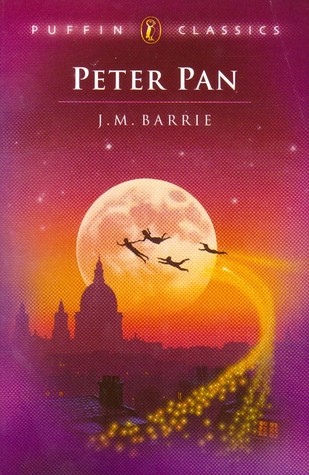
Peter Pan by J. M. Barrie

Birthday

A huge happy birthday to James Matthew Barrie, author of the wonderful Peter Pan! I loved this book, I love that Barrie creates this world and these characters that are wondrous and engaging, but he also writes the story with heart and sometimes blunt truths, there is no real romanticising about life, Neverland is the wonder away from the rest of the world and that is why it is marvellous.

In Kensington Gardens in London there is a status of Peter Pan honouring Barrie. Peter is playing his pipes and has animals at the base; it certainly lends itself to the theory that Peter Pan has a connection somehow to the Greek god Pan. I know him best for the novel Peter Pan, but J. M. Barrie had dozens of others works before and after of both stories and plays, right up until his death in 1937. He was knighted in 1913 for his literary work and in the same year became Rector of St Andrews University. His other successes include becoming the President of the Society of Authors, a title which he took from Thomas Hardy which is cool.

I never knew he was knighted, but I do remember that when I was studying Barrie and Peter Pan at university, it became very clear that he was certainly peculiar, or at least lived a strange life, one that no doubt impacted on him. He was not all strange though, he knew some excellent writers of the time including Robert Bernard Shaw, H. G. Wells, and Robert Louis Stevenson.

He was the ninth child out of ten, two having died before he was born, and as an adult he was only 5″ 1′ (about 155 cm). When he was young his brother David, who was the next eldest and his mother’s favourite, died just before his 14th birthday. It devastated his mother and Barrie then it seems devoted himself to trying to fill David’s place, to the extent that he even dressed in his clothing. Barrie wrote a biography of his mother called Margaret Ogilvy, and in it he discusses his mother’s reaction to David’s death, as well as his attempts to please her afterwards. If you want to read it it is available from Project Guttenberg for free.

There was a wonderful theory that we heard in class that Barrie wanted so badly to be David and be the “son who never grew up” for his mother that he developed psychological problems and even managed to stunt his growth and proper adolescent development. This does not seem to have any grounds in fact I think he was just short, but he was no doubt strange enough that he probably tried. His innocence that he held until adulthood made him the perfect candidate to write a story like Peter Pan, he never properly grew up, and loving to write and tell stories probably helped this, he could stay young and innocent forever through words. He was initially discouraged from becoming a writer, I for one am very glad he chose to write, where would we be without Peter Pan to fill our dreams and fantasies and to fly us to Neverland in the middle of the night?

Peter Pan has many influences, but the main ones that inspired the play and the characters of the Darlings was the connected to Mr and Mrs Llewelyn-Davies and their boys George, John, Peter, Michael, and Nicholas. And before the legends and did you know facts appear, no he did not create Wendy, it was a name prior to the first appearance of Peter Pan, Barrie simply popularised the name.

There is truly so much going on with Barrie, his relationship to the Llewelyn-Davies family that helped create this Peter Pan world, not to mention the sad fate that many of them had. The entire history and environment and life of Peter Pan is absolutely fascinating I could write forever on, but I won’t, I will however review Peter Pan, one of the greatest books, certainly became established in society and popular culture, and definitely a classic for all ages.


Published: January 1st 2002
Goodreads badgePublisher: Puffin
Pages: 242
Format: Book
Genre: Junior Fiction
★   ★   ★   ★   ★  – 5 Stars

The boy who refuses to grow up teaches Wendy and her younger brothers how to fly. Then it’s off to magical Neverneverland for adventures with mermaids, Indians, and wicked Captain Hook and his pirate crew.

Everyone seems to know the story of Peter Pan, the boy who wouldn’t grow up, Tinkerbell and Wendy, and the mystical world of Neverland. I first knew of this story through the Disney version, but I also had a video of an Australian cartoon version which I also loved. Many of the versions of this story keep a lot of the same elements in it, there is no Peter Pan without pirates, Indians, or mermaids, but there are certainly some varying elements compared to the book.

The story of Peter Pan first appears in The Little White bird, a story written in 1902 by Barrie and was intended for adults, not children. The first real sighting of Peter is in the stage play in 1904 where it was titles Peter Pan, or the Boy Who Wouldn’t Grow Up. The novel version, which is probably the most well known version (aside from the movie interpretations), was extended from the original play and published in 1911 as a novel.

With the extended novel there is a chance to expand on character and ideas. There is also a lot more story within the book compared to what people know from the popularised Disney film. There is a lot more involvement of Mr and Mrs Darling in the book, and they come home as their children are flying out the window and know that their children are missing. Wendy, John, and Michael’s visit to Neverland happens in real time, and the time they spend there with the Lost Boys, Peter and Tinkerbell is time passing back in London. We get to see the reaction and life Mr and Mrs Darling have while their children are gone.

Barrie actually opens Peter Pan telling us the story of Mr and Mrs Darling, it is all very sweet. This also helps you understand them as people and parents, they are not just the parents with the story focusing solely on the children and their adventure, it is about the whole story sequence, not just the characters, but in the same wonderful way it is also so much about the characters.

I remember when I first read this story and realising that having a dog as your nanny was not a Disney invention of movie quaintness, it is actually in the book. Nanna it seems gets to have opinions about things and is a very good nanny. There is no first person narration for any of the characters, but Barrie does tell us what everyone thinks when it is required. Though this is not the only strange thing, there are other peculiarities, Mr Darling literally spends time in the doghouse out of guilt for his missing children, neighbours walking by and judging and everything. That was rather strange, but it has its humorous sides as well. It isn’t so much an absurd, only very strange at times.

There are many great moments in this book, even just reading about flying, the journey to Neverland and the adventures that await them. There is a little violence in this book regarding pirates and fairies, but it isn’t described in great detail, but it is still there. Peter helps this a little, in his own childlike way, brushes over things and quickly moves on to the next thing, always chasing another adventure as we are told. Tinkerbell speaks in the book, and there are additional characters and variations of scenes which make it that much better. A lot of Peter’s character is seen in his actions and his leadership. He can change from being proud and selfish to being rather noble and sweet very quickly.

Peter Pan is certainly not the exact character that the movies portray him as; in the book Peter Pan has much more selfish childishness as well as the naivety and cockiness. It is actually mentioned one of the reason Hook hates Peter so much is that he is always so cocky.

Peter is not the only bunt one, Barrie does enough of his own in his narration and explaining, it is very matter of fact, but Barrie expands on what needs to be told and what does not. The voice Barrie uses is one of a storyteller, you get the feeling he is speaking to readers as he recounts the lives and adventures of Peter and Wendy, this certainly adds to the magical nature, like a tale of times that once were.

Barrie definitely brings us some memorable characters in this book, not to mention quotes like “Second star to the right, and straight on till morning” and particularly “To die will be an awfully big adventure”, which is one that has stayed in my mind for years. It is rather telling of Peter’s mind when he says this. He has such a carefree attitude, never worrying and is not typically one to fret over anything. He definitely has a child’s mind, he moves from one thing to another, and quickly forgets things if they are over or no longer concern him. Though the connection and relationship he has with Wendy is sweet, you can feel that he loves the idea of having a mother and being cared for, but he wants things his way in his land, being the child forever.

The ending of Peter Pan and the events in the final chapter I found to be some of the most heartbreaking moments in this book, and certainly was not something I was expecting. I think it is a brilliant ending, but I felt such a pain as I read because it was so innocent, but also so sad at the same time; Barrie did an excellent job. There are entire moments of brilliance in this book, heartfelt, magical, and all round beautiful. You take the abruptness and the selfish Peter and you see him and others in so many other lights that it is all part of the magic and wonder that is Barrie’s story. There is so much to gain from reading this over a movie, the movie can bring you to the book, but the book can give you the soul of the story.

The Bloody Chamber & other Stories by Angela Carter

Birthday

Today is the birthday of author Angela Carter and in honour of that I am looking at her collection of short stories in The Bloody Chamber. It is an excellent collection, if you are a fan of fairytales, or love seeing fairytales reinvented in amazing ways, then I suggest you read these stories.

Born in England in 1940, Angela Carter wrote many books in her lifetime, sadly she only lived until she was 51 years old. However in that time she managed to write a large collection of stories, poems, radio plays, as well as children’s books and much more. What I found interesting was that before she died, Carter was planning on writing a sequel to Jane Eyre. I think this would have been fantastic, it was supposedly going to be told from the perspective of Jane’s step-daughter Adele, that would have been interesting to see.

Carter was listed on The Times “50 greatest British writers since 1945” in 2008, at tenth place it is a position I agree with immensely, what I didn’t agree was that Terry Pratchett didn’t make that list at all, but we can only just forgive that because of the others that were included.

Published: July 13th 2006
Goodreads badgePublisher: Vintage
Pages: 176
Format: Book
Genre: Fairy Tales/Fantasy
★   ★   ★   ★   ★  – 5 Stars

The Bloody Chamber & Other Stories is an anthology of short fiction by Angela Carter. All of the stories share a common theme of being closely based upon fairy tales or folk tales. However, she’s stated: “My intention was not to do ‘versions’ or, as the American edition of the book said, horribly, ‘adult’ fairy tales, but to extract the latent content from the traditional stories.”

The Bloody Chamber was published in 1979 and is a collection of short stories that are dark, sinister, and marvellous all at once. What Carter manages to do is turn the fairytales we know on their head, and she makes us look at them in a new light completely. The book comprises of ten stories, The Bloody Chamber; The Courtship of Mr Lyon; The Tiger’s Bride; Puss-in-Boots; The Erl-King; The Snow Child; The Lady of the House of Love; The Werewolf; The Company of Wolves; and Wolf-Alice.

Carter looks at stories such as Beauty and the Beast, Little Red Riding Hood, Puss in Boots, Bluebeard, as well as folklore tales, and what she has come up with are so unique, and so amazing that it is very hard to think of them as their original stories sometimes. There is definitely so much that that can be read into these stories, I know there are hundreds of references alluded to and mentioned in short story The Bloody Chamber that have scholars running about trying to interpret, but what references that are there does not distract from the story, nor does typically knowing the originals, they are easily enjoyed without understanding the origins, but for well known stories such as Little Red Riding Hood, Beauty and the Beast, or Puss in Boots, then it creates an eye opener for readers.

What is wonderful about these stories is that it isn’t just another version of the traditional telling, Carter brings so much more into these stories, she alternates points of view, and she brings in strong powerful women with highly emotional and intellectual insights that create meaning and force in these tales.

Her story The Werewolf, based on Little Red Riding Hood, had a huge impact on me. Very much like the novels of John Marsden’s when I realised stories did not have to be simple and straight forward; what Carter showed me in this story was that fairytales can be complex and may not be as they appear. From this simple story I suddenly looked at other fairytales like Hansel and Gretel in a whole new light, I realised and embraced that even the simplest stories of the Gingerbread man or Snow White could be recreated in an entirely new light, changing everything it was meant to be.

I already had a huge love for fairytales, and when I read Carter’s reinventions it opened my eyes to a world of interpretation, mixing and transforming these classics into something that is powerful and magical, while still showing signs of the history of the fairytales I knew. Personal favourites would have to be Company of Wolves, Wolf-Alice, and The Werewolf, definitely interesting since they are all variations on Little Red Riding Hood, a story that I didn’t like as a child, and yet has become one that I have enjoyed most in adapted form.

 Company of Wolves was turned into a very good film in 1984. It is classified as a British Gothic fantasy-horror film and director Neil Jordon co-wrote the screenplay with Carter. It is another variation on the Little Red Riding Hood story and is set in the modern day. It is a little gruesome at times, but it is an excellent film all the same.

There is something for everyone with Carter’s works and her writing makes you reconsider writing and storytelling, especially for fairytales. They hark back to the originals where it was more truthful and realistic, certainly told as cautionary tales, but also as a representation of powerful women. To steal from Wikipedia a wonderful synopsis: “By contrasting the barren and horrific atmosphere found typically within the Gothic to the strong heroines of her story, Carter is able to create sexually liberated female characters that are set against the more traditional backdrop of the fairy tale.”

A truly wonderful set of stories that stay with you long after you finish them, I wish Angela Carter a happy birthday and I want to thank her for the influence she has had on my own writing, as well as my ideas about fairytales and the power and possibilities they possess, no matter what the form.

Call of the Jersey Devil by Aurelio Voltaire

Published: May 28th 2013
Goodreads badgePublisher: Spence City
Pages: 248
Format: Book
Genre: Horror/Paranormal/Humour Fiction
★   ★   ★   ★   ★  – 5 Stars

Five suburban mall rats and a washed up Goth singer find themselves stranded in the Pine Barrens of New Jersey where they discover two horrifying truths: The Jersey Devil, hellspawn of folklore and legend, is real; and New Jersey (as many already suspected) is the gateway to Hell!

With the help of one lone witch, this small group must face off against their deepest fears and the most unholy monsters in a battle where their very souls, the world they live in, and any chance of returning to Hot Topic in one piece is at stake!

I was given an ARC copy of this book by the publisher.

The idea that the gateway to hell is in a forest in New Jersey is a pretty enticing way to base a novel. As soon as we begin the story we are thrown into the world of a mysterious creature and what it is capable of doing, then as we move on to a different world entirely we know it is just a matter of time before two worlds collide and creates the trouble this causes for those involved.

Call of the Jersey Devil tells the story of five “mall rat” teenagers who travel to the New Jersey Pine Barrens to see Gothic singer Villy Bats, however things are not all they seem, and when all hell starts to break loose (I love that this has become a literal phrase), they are soon faced with an entire underworld itching to get out through the gates of hell. Enlisting the help of a witch the teens and Villy must fight to stop the gates from opening further, and flooding the world with demonic incarnations, one of which is the legendary figure known as the Jersey Devil.
Being a fan of Voltaire’s work and having watched him provide updates on the book’s development for months, I sat here patiently waiting to finally get a chance to read it. After given the chance to read an Advanced Reader Copy I jumped at the opportunity. Having now finished it, almost unable to put down unless I had to, I am so glad it lived up to my expectations and went beyond what I ever thought it would be. It seems wrong to seemingly praise Voltaire for somehow writing such an excellent book as a first time novelist, almost as if it were unexpected, but not only do I know many first time authors who write excellent books, but Voltaire has a long successful creative and storytelling history behind him, this time it has simply descended on the page rather than in a graphic novel, a song, or a film.

But while Voltaire is a good storyteller, there is no doubt he is also a good writer. There are sentences and phrases in this book that are wonderful, all nestled in amongst the joking and the teenagers, and the whole ordeal of this demonic spawn and an opening underworld. The descriptions are excellent as well, whether they are of people, demons, or the environment around them. The way Voltaire writes you can immediately conjure up images and feeling of people and events; especially the scenes in the woods, not to mention the ominous feeling of uncertain darkness and the monsters it hides.

Along with descriptions there are also some very insightful moments in this book, as well as evoking one-liners and entire ideas expressed eloquently, often needing very few words attached to them. Voltaire has a way with words that is very beautiful; perhaps this is the long established creator within, or simply an observant and insightful personality coming through on the page, or perhaps both. Whatever the case it is certainly a talent to create a compelling and engaging story that can make you think, feel, as well as be fearful and grossed out all at the same time.

What I enjoyed about Call of the Jersey Devil is the fact that is has so much in it, but it never seems crowded, nor does it jump and feel fractured as you read. The opening of the book and early chapters are definitely designed to set up our characters and lead us into the oncoming events that connect you to the title. This beginning I feel is needed because it impacts on the remainder of the story, as well as how you perceive and assess the characters themselves.

Whether this was my own over thinking or not, but I felt that we were introduced to these “mall rats” as we were to give us a chance at creating our own preconceptions and assessments on them as people. Certainly other characters and they themselves fed this opinion, but in doing so it gives a lot of power to the rest of the novel which then begins to break down these initial judgements.

Voltaire changes point of view throughout and we are able to see the unfolding events through almost every characters eyes and thoughts. In doing so we are also given the opportunity to gain an insight into their history and back story to show you who they are and how they came to be that way. Aside from providing histories, it is interesting to see how each character treats the circumstances they are in, some relish it, some fear it, while others hate it.

Villy was an interesting character, if not complex. I enjoyed his character more I think because of his complexities and imperfections, that is what makes him real. The same can  be said for the others; these characters, especially the mall rats: Stuey, Prudence, Ari, AJ, and Aleister, are portrayed as real people, all with the quirky, obnoxious, selfish, vain and adoring aspects that is within anybody. Voltaire is very good at showing the readers that there is certainly a ‘group persona’ that is separate from who someone really is. This is why having alternating points of view and providing back stories helps you understand these characters a lot more, you see them as who they are, not only as the face they put on for the public.

You do get to see these characters behave separately from their group persona. This helps you not to instantly dismiss them as selfish teenagers who are loud and obnoxious and rude to one another, they all have a reason and Voltaire shows us, giving us a little more understanding, and yet almost not enough to excuse everything that they do, more to show how it has shaped who they became. This doesn’t always change any opinions or add much sympathy, but we are given an explanation.

Towards the middle of the book the story settles in nicely and it is now that everything begins to unravel, and it isn’t long before it is strange, and is possibly grotesque to some, but it is brilliant. There is a strange absurdness about it that is compelling and wonderful. You can certainly see where the influences came from of the genre films, and yet it does not read as cliché and over done either. The additional elements Voltaire added makes it humorous, and yet still terrifying and clever at the same time.

While it is grotesque in some parts, you cannot ignore the humour, this almost balances out the unpleasant details and descriptions Voltaire gives to the demonic faction within the woods. There is snarky sarcasm, and amusing moments that sit either side of the ‘horror’ aspect, but there is also some that cuts through the horror and breaks up the unpleasant scenes.

There were events in this book that took me by surprise in some cases, and not in others, but all were engaging, and in some cases saddening, all contrasting within a single chapter at times. There are also some very heartfelt moments in this book which was certainly a surprise, but certainly well placed and executed. There is the correct balance between the parody, the horror, and the realism to make it work very well. It isn’t even an equal balance, that is not what the story requires, but where these moments happen and by whom are perfectly placed to suit the character and the narrative.

I loved the ending of this book; I thought it was perfect for where the story began and how it played out. I think the way Voltaire established his characters and how we get to know them, not to mention the situations they get themselves in, helped explain and make the ending scenes and epilogue ideal. What was wonderful was the fact that Voltaire keeps you engaged and laughing throughout and until the end, which is very hard when you have demons, teenagers, witches, and the paranormal to contend with. There is also amazing and detailed artworks that accompany this story, certainly not required as the descriptions do them justice, but by having a startling sketch to illustrate a scene create an impressive impact on the mind when you continue reading. And entire idea can be captured in one of those drawings, there are just the right amount to suit just the right needs.

In his interview Voltaire said he was a storyteller, and he is; but there is also novel here. Within this story there are glimpses and hints of beauty and art, hiding amongst this “storytelling”. So while when you hear storyteller you may think casual conversational tone, there will be a lot that will surprise you with this book. For someone who does not read, Voltaire can write. But we already knew that. You only need to look at his songs or his films, or his other works to know he is talented, and know that reading does not always equate to talent or skill in writing.

You still have time for pre-orders before Call of the Jersey Devil is released on May 28th.

Previous Older Entries Next Newer Entries