X Y Z by Anna Katharine Green

Published:1883
Goodreads badgePublisher: G. P. Putnam’s Sons
Pages: 52
Format: eBook
Genre: Mystery
★   ★   ★   ★  – 4 Stars

A short detective story

I found this as part of an A-Z reading challenge last year after having little luck tracking down my previous choice for X. I had never read a detective novel at the time and I think this was a very good way to introduce myself into the age old genre. I had of course heard of all the wonderful detective novels and authors but never felt drawn to read them, aside from the feeling that I should read Sherlock Holmes one day. After I finished this short story I did begin looking for other stories of this genre and I am slowly opening myself to this wonderful genre.

X Y Z is a short story written by Anna Katharine Green, and tells the story of a detective who arrives in town in an attempt to investigate counterfeiters possibly connected to a series of mysterious letters addressed only to X Y Z. Set in a small town in Massachusetts, the story takes place in the later parts of the 1800s and begins with one investigation but soon moves into another of mystery and drama. In the course of the investigation an anomaly occurs, tugging at our unnamed detective’s curiosity. This curiosity leads his inquiries and attention to a prominent family in town, who as far as the rumours and secretive nature demonstrate, have mysteries and secrets of their own.

What amused me was that as I started to read I found myself reading it in the voice of the old black and white detective films, including that undeniable accent which made it all the more interesting in my mind. The story is engaging, and despite being short there is a decent well rounded story and character establishment. We are given the details we need for the plot, there is no information in this story that is irrelevant. I am not sure whether this includes the name of our detective, it hardly seems irrelevant, he interacts with enough people in the town, yet Green has omitted his name. Whether to add mystery or to keep her readers in suspense, I don’t know. If you wanted to look deeply into this you could play the idea of the mystery stranger who arrives in town, changes the town and creates a fuss, then leaves again. But isn’t being a stranger enough to do that? Whatever the reason I didn’t find it a bother, you almost forget after a while, there is only one detective to keep track of after all.

The characters in this story are well thought out and planned, and the story unfolded in a way where there were hints and clues and when it all came to a head it was as I imagined it to be. There are just as many gasps and surprises and twists even in a story of this size and there is no doubt it is of the detective genre. The secrets and mysteries are revealed by the end, perhaps not in the way you would imagine, but there are no extravagant twists and turns that make the story more mind bending and complex than it needs to be. Being written in the era it was, it is a basic detective novel where you are given clues and answers with the twists and revelations as you go. It was certainly a good read that certainly sparked my interest in this genre.

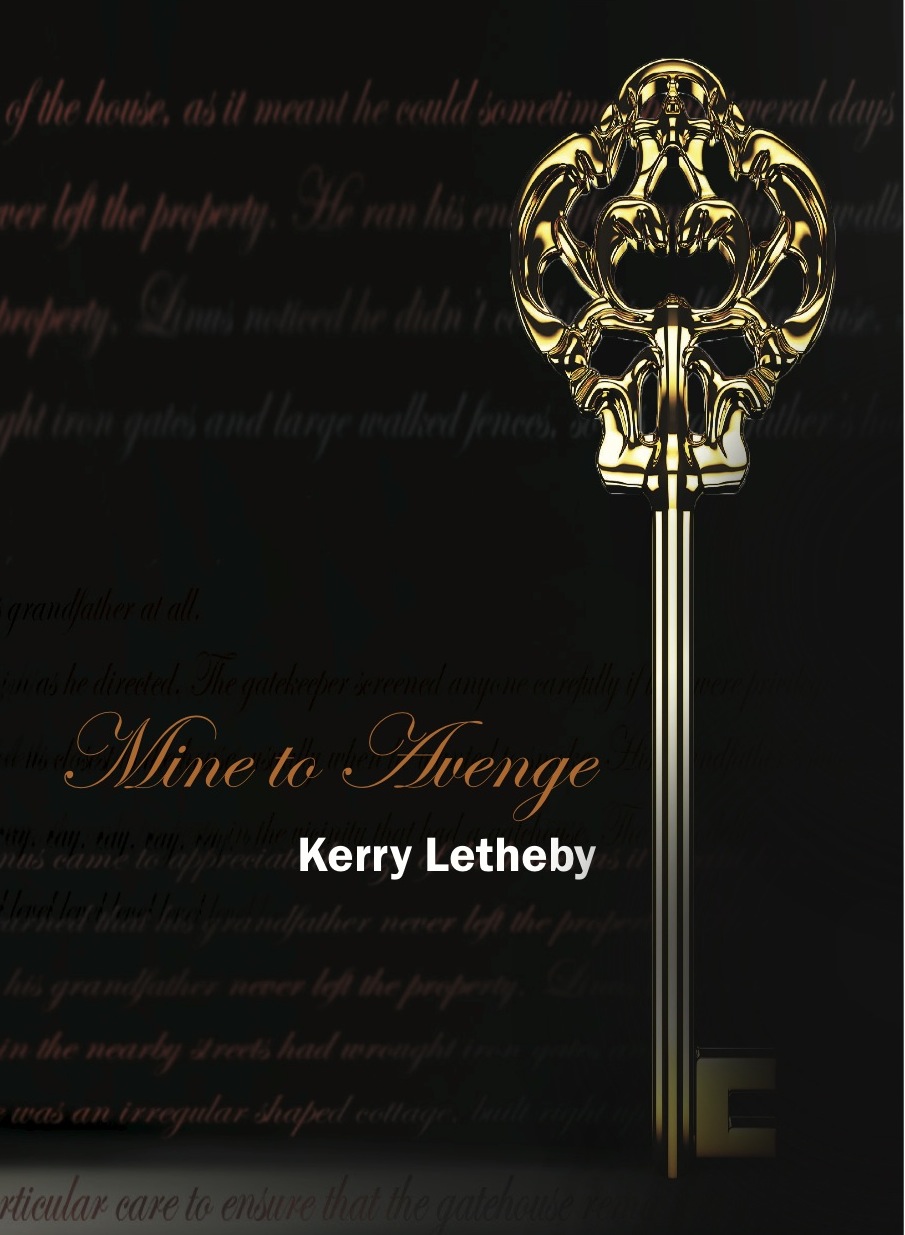
Mine to Avenge by Kerry Letheby

Published: November 1st 2012
Goodreads badgePublisher: Love Of Books
Pages: 488
Format: Book
Genre: Mystery/Suspense
★   ★   ★   ★   ★  – 5 Stars

When Alcandor is blamed for the tragic death of his friend’s sister in Greece in 1940, little does he know of the repercussions this will have for him and his family for the next seventy years. Unable to forgive himself, and wanting to give his young family a new start, Alcandor leaves Greece and brings his family to settle in the Riverland of South Australia in 1948. Although Greece and his past are far behind him, Alcandor harbours a terrible secret and he remains a fearful man. Alcandor subdues his fear, and he and his family adapt to an idyllic life of freedom and opportunity. 

However, eighteen years after leaving Greece, Alcandor learns that his past has caught up with him. His family needs to know the truth, but circumstances tragically intervene before he can warn them. Years later, Alcandor’s sons show signs of odd behavior hinting at possible mental instability, before disappearing without a trace. And in the next generation, Alcandor’s grandson exhibits the same strange behaviour not long before he is killed in the tragedy of September 11, 2001. It is not until 2010 that Alcandor’s great- granddaughter, Alethea, discovers that there is far more behind her family’s tragic history than mental illness, and little does she know that the threat against her family is much closer than she realises, and very far from over.

Mine to Avenge is an excellent book. The amount of work and time and thought Kerry has put into this book is amazing. There are interconnected things everywhere, not to mention the research she has done about the history of Greece and America and Adelaide, and all the other places mentioned in the story. If you followed her blog tour she mentions a few details about where she got her ideas and how she wrote this story, and I always have a great admiration for people who put so much time and effort into their work for others to enjoy. There surely must be a time where they want to just wing it because it is easier, but a lot don’t, they want it to be as accurate as possible, especially if dealing with real times and real places and events.

 When Alcandor Galanos is blamed for the death of his friend’s sister in 1940 Greece, it sets in motion a vendetta that will follow his family for the next seventy years. Kerry takes us on this journey of mystery and a vengeance that haunts the Galanos family, and by the end of the book you close it with so much inside your head about the connections and the lives of all the characters it is extraordinary. We are given multiple points of view and there is a fractured chronology as we get to see everyone’s side of the story as is required. This was evident right from the beginning because Chapter one opens with September 11, 2001, and leaving us on a cliff Kerry then jumps back to 1940 Greece where she shows us how it all began with another side of the story. It is writing like that that makes you eager to keep reading, if not to see where the exciting chapter leads, but also because you know there is still a cliff hanger from the very first chapter that is always on your mind as you are given this new information. But through this novel you get so many moments unanswered with new questions and as you continue you are abuzz with theories and you half read and half try and leap ahead in your mind and connect the dots.

 The way Kerry captured moments of the past was wonderful. With real events like September 11 and World War 2 and conflicts in Greece, she manages to portray the feeling and environment wonderfully, as well as the characters who are embroiled in these events. For September 11, because it was the only real one I had any real connection too; the way the confusion and the environment were captured was done extremely well, without it having to be the main focus of the scene. I especially liked how other characters reacted, even those who were not directly involved, specifically Nina and her children Alethea and Mila. Nina cared for her children and protected them from the scenes outside their window and the way Kerry tells their side of the events, you instantly can establish the fear hidden deep under a need to keep children unafraid, but you also can sense the almost young adult 12 year old Alethea who senses the fear, but wants to help her mother by being calm for her.

 Kerry has thought about everything, she has small details that make all the difference, the fact a mother protects the September 11 news from her kids, and how they treat the situation is very real, and very touching without showing the horrors, but still managing to capture the scene perfectly. The emotions, fear, uncertainty and missing description creates the images for you. This is evident in the other cases of terror with the family, creating the family bond, the family love amidst the destruction of the world around them was insightful and heart warming without a sense of over the top emotion.

There are so many gripping moments in this novel, even away from September 11, which isn’t really a huge part of the novel in the scheme of things, though it has its consequences and influences though which play their role in this interwoven narrative as does everything else. But with these scenes, and gripping moments of curiosity and intrigue, you become very involved in the lives of these characters, you have become so invested in their personal lives over their lifetime and knowing the dangers that surround them your brain works overtime to try and anticipate or deduct what it happening, about to happen, or has already happened.

Through the multiple points of view, as well as the jump between years you get to see the evolution of this family, and see children become fathers, mothers, and great grandmothers. When you read about characters when they are older with their families you also have the knowledge behind you of their childhood and their previous moments up until that point. And by having the same experiences retold from different eyes Kerry has compiled these lives, and this mysteriousness into an exquisite packages that leaves nothing unturned, even if it is still being uncovered in the final pages.

There are wonderful transitions between characters and emotions, nothing is rushed, yet nothing is drawn out unnecessarily with unneeded details. Each character is captured and portrayed so well, with such affection you do see them as real people, or as whole characters with a history and past.

As I reached the halfway mark point the cogs inside my head that had been working overtime to think and deduce started to click into place. When suspicions were confirmed it was as if a curtain had been lifted and the pieces started to fall into place. Of course there is always the missing pieces in the puzzle that magically end up under lounge cushions and under pets, these were yet to come, but that doesn’t stop a small sense of delight at the developing result.

I will not give away any more of this plot as it is too glorious not to experience yourself, but by the end of the book, when we are truly still having things revealed, it is done so wonderfully that you close the book feeling like you have been involved in something amazingly complex that works so well on oh so many levels.

To Kill a Mockingbird by Harper Lee

Birthday

Happy Birthday Harper Lee! Today in celebration of her birthday I am reviewing her only novel, To Kill a Mockingbird. I will admit I enjoyed it but not loved this in high school, but I still managed to see why it was wonderful and a classic. Perhaps it was just being the 15 year old, or maybe it is now I am  older (it always changes most things), but I can see it differently now, similarly, but different. One of those complex emotions.

Harper Lee’s full name is Nelle Harper Lee, she was the youngest of five and was raised in Alabama. Her only book was To Kill a Mockingbird, she did have a second but it was never published. Famously Lee has never extensively discussed her book or any insights about its meaning and the popularity, and has stayed out of the public eye. Growing up Lee was friends with author Truman Capote and together they wrote an article in the New Yorker which Capote then turned into In Cold Blood, his nonfiction masterpiece. It is said that Atticus in her novel is based on her father who was also a lawyer and who once defended two black men accused of murdering a white shopkeeper. She has though played down any real correlations despite there being similarities, however Capote once said he thinks that certain things she wrote were true and being neighbours and friends he initially used similar aspects of their childhood in his own work.

Published: May 23rd 2006

Goodreads badgePublisher: Harper Perennial Modern Classics
Pages: 324
Format: Book
Genre: Adult Fiction
★   ★   ★   ★   – 4 Stars

Tomboy Scout Finch comes of age in a small Alabama town during a crisis in 1935. She admires her father Atticus, how he deals with issues of racism, injustice, intolerance and bigotry, his courage and his love.

To Kill a Mockingbird was finished in 1959 and it won a Pulitzer Prize award and became a best seller. It soon become a classic novel and has become influential, if not a powerful message about race, inequality, and human decency. It is not only its story, but the characters that people admire and idolise, the key figure being Atticus Finch, father of the narrator, Scout. Naturally is also became campaigned against to be removed from classrooms and libraries. We can’t even look down on the past as the list of banned books still rings high and true today for the same idiotic reasons.

Atticus Finch, who is an attorney, and all round upstanding man, is always listed on the top characters of all time, or most influential characters, or most idolised characters, and really, it is probably true. To Kill a Mockingbird is a classic for a reason, and Lee deals with intense issues in this unjust world with one man trying to do the right thing. As a character he presents unwavering morality, strength, and honour, having an impact not only in the books pages, but with the readers as well. He was a hero not for super powers or for saving the world, he was a hero for doing the right thing.

To Kill a Mockingbird opens with a look into history with a Finch ancestor fleeing religious intolerance in England, settling in Alabama. The main story takes place a few years after the Great Depression. The narrator is Scout Finch who is retelling her story of when she was young and the events that unfolded around her in her town of Maycomb. Initially we see nothing about the racial drama that unfolds later on; instead Lee introduces us to Scout, her brother Jemm, and their friend Dill. The trio enjoy their summer but are fascinated, yet terrified, of “Boo” Radley, a reclusive neighbour. This introduction about Boo and the children go on but it isn’t long before the tentative relationship between the children and Boo is replaced by the appointment of Atticus to defend Tom Robinson, a black man accused of raping a white woman.

The descriptions in the book and excellent, the way Lee describes the heat, the people, the town, the naivety of children and the insights they provide, and also the way she portrays characters relationships to one another is well done. She doesn’t shy away from the facts and the details of the town life, the trial, or the social messages and reaction; that is where some power comes from. And her language in doing so makes it what it is as much as the events. Her language is deep and the lessons you take from this book are timeless.

One of my absolute favourite aspects of this novel is the fact that Atticus lets his children call him Atticus instead of father. This is the purest and simplest way to demonstrate him as man, Atticus does it as a sign of respect as he sees every one as equal, despite their age, class, race or authority. Not sure I would do the same, but it is very telling nonetheless. The title of the book comes from Atticus, who tells Jemm it is a sin to kill a Mockingbird. Scout questions this and is told that “Mockingbirds don’t do one thing except make music for us to enjoy. They don’t eat up people’s gardens, don’t nest in corn cribs, they don’t do one thing but sing their hearts out for us. That’s why it’s a sin to kill a mockingbird.”

What I found interesting in this book is Lee’s wonderful way of telling this story. By using Scout, a young girl with very little knowledge of the world, who is always looking for answers and explanations, to tell this story, you get great conversations and relationships between characters. Certainly the best are those with Atticus and Scout, though her own opinions of her father are from the view of a child she has some very insightful words, and not only about him. She uses people she knows to discuss the issues around her, more so since the trial began as the people in the town are less than sympathetic, and they also cannot understand Atticus’ desire to defend Tom.

Scout is feisty and is willing to fight for her father which is admirable and a wonderful representation of her relationship to Atticus, but also of her own personality. While Atticus can defend himself, though in more moral and less violent manners, a wonderful scene is when the three children manage to essentially shame a lynch mob by making them see things from Atticus’ perspective. The wonderful quotes that can be taken from this novel are vast, but “You never really understand a person until you consider things from his point of view…until you climb into his skin and walk around in it” is a key theme among the many.

What this trial demonstrates is how divided the world was, there is a coloured balcony above the courtroom, away from the main area, and the tone, interactions, and outcomes are certainly surprising. Perhaps this is because reading this in 21st century Australia has a separate impact, but that doesn’t stop my knowledge of what it was like to some degree. Even though Lee has denied any strong autobiographical connection, the story of Tom is not a single fictional case. But even though she writes about this injustice and this ill treatment for a man accused, Lee has added so much more into this narrative than it is also about so much more than the colour of his skin essentially, it is about growing up, learning about the world, class and society, and basically loss of innocence.

The trial is detailed and well planned out; Lee keeps it poignant and fiery, while still upholding all the virtues Atticus has in a town that has already condemned Tom. We go through testimonials and cross examinations, Atticus does his job well. Tom’s point of view is not forgotten, we see his sides of things, and you do know right away of his innocence, but that is nothing in the eyes of the law it seems. That is where your investment goes, into the anticipation and hope that this super hero Atticus Finch, with all his deep wisdom and goodness, can help save Tom for a crime of simple being black.

The outcome of the case has consequences for everyone and the victims are far spread. I won’t reveal the ending, there is a lot in it that speaks more volumes than I could convey, but Lee does a wonderful job. She takes us through this journey and this emotional turmoil about these characters but she almost adds some justice at the end, but in a way she doesn’t. Scout pulls this together wonderfully in her voice and as I said, I think that makes so much difference compared to if it were a simple third person, or another characters point of view, you need her innocence, her loss of innocence, and her perspective telling this story. She uses all the wisdom her father has given her and by the end of the book you know it has sunk in.

There is a movie version on this book, with Gregory Pack as Atticus. It is pretty amazing. It would have to be for this book I think. Made in 1962 it is in black and white but do not let that deter you, it manages to bring all the emotion and the drama from the book and make it just as moving and important as the book. It is reported that Lee visited the set during filming and she did do a lot of interviews to support the film. The film was as popular as the book, with eight Oscar nominations and four awards including Best Actor for Gregory Peck.

The quotes from this book are fantastic, I need to list some, for the pure fact they are insightful and so very true, but there are so many more.

“I wanted you to see what real courage is, instead of getting the idea that courage is a man with a gun in his hand. It’s when you know you’re licked before you begin, but you begin anyway and see it through no matter what.”

“Atticus, he was real nice.”
“Most people are, Scout, when you finally see them.”

“Miss Jean Louise, stand up. Your father’s passin’.”

“Before I can live with other folks I’ve got to live with myself.”

So it is today that we wish Harper Lee a very happy birthday, I thank her for this book,  and while To Kill a Mockingbird will give you no useful advice on killing Mockingbirds, it will teach you not to judge a man by the colour of his skin.

The Viking’s Apprentice (#1) by Kevin McLeod

Published: March 28th 2013
Goodreads badgePublisher: Self published
Pages: 125
Format: eBook
Genre: Junior Fiction/Fantasy
★ ★ ★ ★ ★ – 5 Stars

What happens in Campbell’s Cove, must remain in Campbell’s Cove. 

Campbell’s Cove is a town steeped in a rich history of dragons, witches and brave warriors. History tells of one Viking warrior who rose above them all to claim the ultimate prize. Hundreds of years later strange things start happening in the town. Could the Viking stories be true? Has the evil returned? Who can protect the people?

When school friends Peter and George take their summer holiday with Peter’s Granddad it turns into an adventure that they will never forget. Peter must face a future he could never have dreamed of and learn of a past that has been kept secret for hundreds of years. A fight for friendship and survival and a struggle against an ancient evil that takes them into the Caves of Campbell’s Cove and beyond.

The Viking’s Apprentice is the debut novel for author Kevin McLeod and as soon as I read the plot and saw the cover I went hunting for this book. When I realised it was an ebook only I downloaded the necessary apps and away I went head first. This is an excellent book, just as it looked like it would be. What McLeod does is he has created a world of mystery and magic within our own and even in this first book, for even as I read I could tell there would be a second, is he has engaged readers. He uses stories of an ancient time, seemingly simple, but with so much hidden meaning and history behind it, to reveal the past, explain a story and begin an adventure. However it is the way in which he does this is what was wonderful: by using characters to do the work for him he enables readers to learn alongside the children as they too hear the wild adventures of the past, hearing tales of heroics of Vikings and warriors, dragons and battles.

The story begins with Peter and his friend George going to stay with Peter’s Grandad at Campbell’s Cove for the holidays. We learn that Peter does this often and what we know of Grandad is he is a teller of stories, stories about the Cove’s history, rich in dragons, warriors, and witches. The descriptions in this story are wonderful, but it also allows the reader to create their own images. The images created as you read Grandad’s stories to the boys about when dragons were fought and villages were under threat are excellent. In so few words seemingly complete stories can be told. This is another clever trick by McLeod; readers are given the same position as the children in the beginning, we, as they, sit impatiently while Grandad recounts his stories. This is where our knowledge comes from and we must wait, unless you start speculating like I did, but McLeod gives nothing away until you and the children need to know.

In other books like Fforde or Colfer or Nix where you know the authors like to play with you so readers only get what the author wants them to have until they’re ready, McLeod does this as well, and uses the children wonderfully to do so. They are not exactly withheld information, but within the story characters respect the relationship between the boys and the Grandfather, and when questions are being asked the main response is, ‘I think it would be best for your Grandad to tell you, or ‘he wants to be the one to tell you’. I liked that part, we are being held filled with suspense about what exactly is going on, but there is a reason for it that you know will be better to help gain a full idea of the story.

That is not to say we stick with the children the entire time through this story. McLeod gives us both sides of this saga, and the ambiguity and secretive unspoken and unexplained snippets about the coming danger is very creative. This is where we are treated as a reader away from the children; there is no information though, only secrets and mysterious figures. What I always like is that there are unexplained actions that occur but we see no explanation of meaning we are left to try and figure it out for ourselves. For a book suited at this age and audience, it is rather intricate and mysterious, something I applaud.

Where this story begins to grow in excitement is when these two stories we’ve seen combine and the past seems to return, and perhaps the Vikings and dragons of Grandad’s tales are become less of a story and more of a reality. I am offering no spoilers so don’t even try, but I will say that I adored how this was revealed and how it played out. I really liked though that McLeod was able to capture the urgency in the story with his writing, you definitely feel that things have become chaotic, or have calmed down, or that there is an eerie feeling. This certainly helps create feeling of a story without actually making it blatantly obvious and announcing it to readers. By the end of this book you are hanging out for the next one, McLeod has set up this story very well and he adds just enough to make you want to keep reading about these characters and see the effects and consequences o the events in this book. I look forward to continuing this series.

Happy Birthday Shakespeare

Birthday

Happy Birthday William Shakespeare!

Instead of trying to review one, or discuss all his works and poems and influence I am instead going to do some mini reviews/discussing of some favourites, my association with Shakespeare, and talk about where Shakespeare keeps popping up.

The actual birthday of Shakespeare is not actually known, but many scholars believe it is on or around the 23rd April. He was baptised on the 26th so it is definitely in the right area. I know in high school when I first started learning about Shakespeare I found is rather spooky that he died on the day he was born. Like some strange circle that he was in and out on the same day. So we shall go with the scholars on this and say today is his birthday for all intents and purposes. Option B is of course to just say we are here celebrating his death? But that sounds a tad sombre and crass so perhaps not.
In his life he wrote numerous plays and sonnets, and has sparked quite a large conspiracy theory about whether he actual wrote the things he wrote. This is not the time to get into this but it is interesting what people find to claim his fraudulence. I think I only know his 18th Sonnet which is the infamous ‘Shall I compare thee to a Summer’s day?’ and being not all that keen on poetry that may have to do me. But I am not adverse to a play. Of course like most things if you research you might find you actually know a lot more but never realised they came from Shakespeare.

A lot of people tend to quote Shakespeare in everyday life and certainly in popular culture which is interesting, considering how many people seem to dislike him and find his works hard and annoying to read. There are certainly the main handfuls that get referenced and adapted over and over, while others are rarely seen outside the theatre. Luckily, and thankfully really, movies can help bring the interest back around. Films like Romeo + Juliet certainly, but also She’s the Man and 10 Things I Hate About You are sneaky retellings of Shakespeare plays, Twelfth Night and Taming of the Shrew respectively. If you peak an interest in the story by a film, then you can bring people back to the play.

Romeo and Juliet ★   ★   ★   ★  – 4 Stars

Probably the most idealised relationship that from memory lasted for three days between a 13 year and a possibly a 17 year old (no one really knows) and resulted in 6 deaths. How sweet. But what Shakespeare manages to do is show the consequences of how feuds and hatred can impact on people in ways you never thought possible. What Romeo and Juliet did just because of their family feud is extreme. The mere mention of the opposite family is enough to spark anger, and hatred for generations simply because it is instilled from an early age. ‘My only love sprung from my only hate’, as it goes.

I remember my first introduction to this was through the Brady Bunch and Marsha was Juliet and she let it go to her head. It certainly imprinted ‘Deny thy father and refuse thy name; Or if thou wilt not, be but sworn my love and I’ll no longer be a Capulet’  in my brain as she announced it from atop the stairs over and over.

The second was in the film Romeo + Juliet where it made it cool and exciting, while still keeping Shakespeare’s words true. I adored this film. I remember watching the 1968 version a few years ago and it is still Shakespeare, but it is also a lot stranger, though they do use the right ages for their actors. Perhaps that is part of the unsettling nature. Moving on from modern views on historic works!

Macbeth ★   ★   ★   ★  – 4 Stars

I wrote a review for Macbeth on Goodreads late last year, what is interesting when I revisited it I was surprised to see I had said I wouldn’t read Shakespeare on my own accord, it has always been for school or uni that I read them. Considering I gave Macbeth four stars didn’t seem to change this opinion, I have also given Shakespeare works two stars. But that isn’t what was interesting; what is was is that now, only a few months later, I find myself actually wanting to read his plays. Those I have read I have both loved and hated, but I feel like I need to read them, almost like the feeling of you should read the classics, but it is also in part an individual want to read them, not just the entertaining popular ones. And anything can be entertaining if you adapt it the right way of course, but in the play format you have to be determined. And I think if you choose to read them by your own will, then you probably will enjoy them more. But as I say, I liked many I had to read, it does depend on the story too. I don’t know, perhaps I am just getting older and this is what people do when they are six months older.

The thing about doing a Shakespeare course at uni meant I also watched a few film adaptations. There were the traditional ones where we stayed in era and costume and language, but there was one that I loved was a television show that retold Macbeth using a restaurant with the Chef being Joe Macbeth and Lady Macbeth was Ella, his wife and the hostess. It was part of a series called ShakespeaRe-Told by Peter Moffet. It was really great, there were a lot of very clever references that were woven into the story that made sense in the new modern context, but also tied in to the play and theatre origins.

A Midsummer Night’s Dream ★   ★   ★   ★   ★ – 5 Stars

This is one of my favourite plays; it was also one of the few I remember understanding pretty much straight away. There was nothing in there that confused me, and the jovial nature of it was rather amusing. It also wasn’t that familiar to me and I didn’t have any existing knowledge of the story like Romeo and Juliet, Macbeth, or Hamlet.

What I enjoyed about A Midsummer Night’s Dream was the magical element of it. It wasn’t set in some cold castle, and wasn’t about killing and revenge, it was about mystical and magical fairies who controlled the love and lives of people who entered their forest.

The story tells of the marriage of the Duke of Athens, Theseus and Hippolyta, and the events that surround it. These include the adventures of four Athenian loves and six amateur actors, all interwoven and running about in this forest, unaware of the fairies who influence their night. There are three interlocking plots all up within this play, connected by the marriage. I do remember learning that this was the origin of the famous Wedding March. Composed by Felix Mendelssohn for the play it has been used to introduce the bride pretty much ever since. The other is the Bridal March composed by Wagner. Both are used nowadays hence the confusion between them, but it was Mendelssohn’s that came out of Shakespeare. So that’s rather cool.

The greatest film adaptation, and by far favourite, was the 1935 version with a very young Mickey Rooney playing Puck. What also came from this play are more wonderful quotes: Lord, what fools these mortals be!;  Cupid is a knavish lad, Thus to make poor females mad;  and the always wonderful,  ‘If we shadows have offended, Think but this, and all is mended, That you have but slumbered here, While these visions did appear’.

Puck was always a favourite, though the antics of Bottom and the interaction between the characters are wonderful as well. I think this story works well as a film adaptation because so much of the magic can be shown on the screen, and because it is so magical it is beautiful as well. While Macbeth or Othello have a strong story presence and a foreboding and darker scene to portray, A Midsummer Night’s Dream can have a jovial story with an elegant setting.

I realise a lot of talk of these plays is through films, but I think once you have read the play, seeing it in film, or as a play live, can help you appreciate the story better, especially when it comes to the language of Shakespeare. As I mentioned, there is Shakespeare in popular culture whether we notice it or not. Tim Minchin uses Shakespeare in his song Storm, Horrible Histories did an excellent song about the words and phrases we get from Shakespeare, He gave us a myriad of words and phrases and this song is a prime example and it is brilliant. They also do a lot on Shakespeare in generally about his exsquisit insults, trying to debunk myths about Richard lll told in song and funny skits. They are a lot better than reading that play, was not a favourite that is for sure.

Even words you never knew all seem to come back to Shakespeare, and of course a lot never caught on, like this QI clip shows. The full Shakespeare dedicated episode can be watched here, always a laugh and with costumes!

In terms of the Shakespeare doubt, Jasper Fforde’s Thursday Next series (yes that again), has a wonderfully reoccurrence of Shakespeare and this idea of his authenticity. If you don’t read it for the obvious reasons to start this series, it may be for the Shakespeare angle. There is even a Doctor Who episode about him and he pops up elsewhere with the Doctor as well. There is no escaping him really.

No matter what you believe in terms of his authenticity or whether you loathe him because you had to study him, you do not like the language, or you are simply not a play and sonnet type of person, you still have to acknowledge and admit that the Bard has done a lot for language and society in terms of the influence he has had over so much of what do and say and how we interact with the world. So with that substantial affect and power he has had on the world, I wish him a happy birthday, marvel at his works no matter what I think of them, and rather wish we had more concrete answers so we could spend less time debating and know all the facts to offer the best appreciation.

Previous Older Entries Next Newer Entries