World Poetry Day with Jack Prelutsky and Lewis Carroll

Today is World Poetry Day and I wasn’t going to post something, but I’ve been inspired by Allvce over at What I Like…& Why You Should Too who posted her favourite Emily Dickinson poem on her Facebook page so I’ve decided to share with you two of my favourite poems. I don’t read a lot of poetry so I am sure there are much grander poems out there, but these are the ones I love.

The first is Today is Very Boring by Jack Prelutsky. I first heard this poem in a 1997 episode of Arthur. In the episode called “I’m A Poet“, Fern challenges everyone to enter a poetry contest judged by poet Jack Prelutsky, and anyone who doesn’t win has to join the Poetry Club for a whole year. Being 9 I hadn’t heard of Jack Prelutsky, being 9 I couldn’t pronounce Jack Prelutsky, but I loved his poem. I can’t find the full episode but here is the clip of him reading the poem on Arthur. Arthur often has famous people on the show, Neil Gaiman was there (who could forget the grand line “Neil Gaiman what are you doing in my falafel), as well Art Garfunkel and many others (check out the buzzfeed list), but I always remembered this poem from Prelutsky, even if I have never looked up any more of his work since, may need to change that.


Today is very boring.

it’s a very boring day,
there is nothing to much to look at,
there is nothing much to say,
there’s a peacock on my sneakers,
there’s a penguin on my head,
there’s a dormouse on my doorstep,
I am going back to bed.

 Today is very boring,
it is boring through and through,
there is absolutely nothing
that I think I want to do,
I see giants riding rhinos,
and an ogre with a sword,
there’s a dragon blowing smoke rings,
I am positively bored.

 Today is very boring,
I can hardly help but yawn,
there’s a flying saucer landing
in the middle of my lawn,
a volcano just erupted
less than half a mile away,
and I think I felt an earthquake,
it’s a very boring day.

My favourite favourite poem has to be The Walrus and the Carpenter by Lewis Carroll. I mentioned in my Through the Looking Glass review that I fell in love with this through the Harriet the Spy movie as a kid and I have only grown to love it more and more.

The sun was shining on the sea,
Shining with all his might:
He did his very best to make
The billows smooth and bright–
And this was odd, because it was
The middle of the night.

The moon was shining sulkily,
Because she thought the sun
Had got no business to be there
After the day was done–
“It’s very rude of him,” she said,
“To come and spoil the fun!”

The sea was wet as wet could be,
The sands were dry as dry.
You could not see a cloud, because
No cloud was in the sky:
No birds were flying overhead–
There were no birds to fly.

The Walrus and the Carpenter
Were walking close at hand;
They wept like anything to see
Such quantities of sand:
“If this were only cleared away,”
They said, “it would be grand!”

“If seven maids with seven mops
Swept it for half a year.
Do you suppose,” the Walrus said,
“That they could get it clear?”
“I doubt it,” said the Carpenter,
And shed a bitter tear.

“O Oysters, come and walk with us!”
The Walrus did beseech.
“A pleasant walk, a pleasant talk,
Along the briny beach:
We cannot do with more than four,
To give a hand to each.”

The eldest Oyster looked at him,
But never a word he said:
The eldest Oyster winked his eye,
And shook his heavy head–
Meaning to say he did not choose
To leave the oyster-bed.

But four young Oysters hurried up,
All eager for the treat:
Their coats were brushed, their faces washed,
Their shoes were clean and neat–
And this was odd, because, you know,
They hadn’t any feet.

Four other Oysters followed them,
And yet another four;
And thick and fast they came at last,
And more, and more, and more–
All hopping through the frothy waves,
And scrambling to the shore.

The Walrus and the Carpenter
Walked on a mile or so,
And then they rested on a rock
Conveniently low:
And all the little Oysters stood
And waited in a row.

“The time has come,” the Walrus said,
“To talk of many things:
Of shoes–and ships–and sealing-wax–
Of cabbages–and kings–
And why the sea is boiling hot–
And whether pigs have wings.”

“But wait a bit,” the Oysters cried,
“Before we have our chat;
For some of us are out of breath,
And all of us are fat!”
“No hurry!” said the Carpenter.
They thanked him much for that.

“A loaf of bread,” the Walrus said,
“Is what we chiefly need:
Pepper and vinegar besides
Are very good indeed–
Now if you’re ready, Oysters dear,
We can begin to feed.”

“But not on us!” the Oysters cried,
Turning a little blue.
“After such kindness, that would be
A dismal thing to do!”
“The night is fine,” the Walrus said.
“Do you admire the view?

“It was so kind of you to come!
And you are very nice!”
The Carpenter said nothing but
“Cut us another slice:
I wish you were not quite so deaf–
I’ve had to ask you twice!”

“It seems a shame,” the Walrus said,
“To play them such a trick,
After we’ve brought them out so far,
And made them trot so quick!”
The Carpenter said nothing but
“The butter’s spread too thick!”

“I weep for you,” the Walrus said:
“I deeply sympathize.”
With sobs and tears he sorted out
Those of the largest size,
Holding his pocket-handkerchief
Before his streaming eyes.

“O Oysters,” said the Carpenter,
“You’ve had a pleasant run!
Shall we be trotting home again?’
But answer came there none–
And this was scarcely odd, because
They’d eaten every one.

So they’re my favourite poems, enjoy World Poetry Day and read something spectacular!

Tiddas Talking: Good friends and writers Anita Heiss and Lisa Heidke in conversation

This afternoon I went to the wonderful author event at Charlestown Library with Anita Heiss and Lisa Heidke who were talking about writing for women and the importance and joys of friendship. Anita Heiss, author of the new release Tiddas as well as Avoiding Mr Right and  Not Meeting Mr Right teamed up with fellow author and friend Lisa Heidke, author of Stella Makes Good, Claudia’s Big Break , and What Kate Did

Lisa Heidke

I will admit I have not read a lot/any “Chick Lit” but I am starting to, I had read about Lisa and Anita’s books though and they grabbed by attention, and having just purchased one of each I am looking forward to diving in. I grew more eager the longer I listened to them chat and I especially liked that Anita’s were summed up as “social justice, Australian national identity, in the friendship guise”.

Even before the pair started to discuss their books it was wonderful listening to the friendly banter and jesting between them. I saw a few similarities with myself and friends, and I’m looking forward to still acting like that and being that close years down the track.

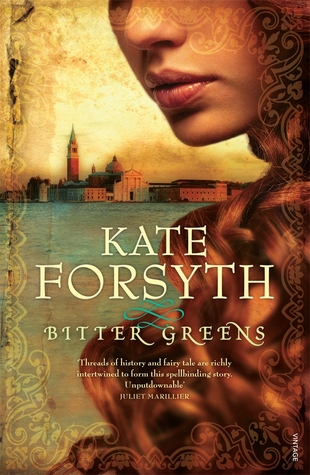
Lisa started the conversation talking about Anita and her work with themes like social justice, the human condition, women, friendship and relationships in her books, as well as a few interesting opening scenes and passages from both their books. This of course resulted in the question being raised of the amount of research that is done. This was something I have always thought about, you can look at books like Kate Forsyth’s Bitter Greens which obviously has been researched over many years, but then there are others that you just can’t tell whether anything was researched or not. What is classed as research anyway? Studying facts and history to make things correct, or just visiting a certain location to get an insight into where you characters are walking and living. Everything and anything can be research if you want it to be.

Anita raised the question of how important research was in writing. She explained how she does a lot of research, often writing snippets and scenes along the way meaning that when a scene of location is needed later on she has one ready to go. The other thing she does is visit locations where she sets her stories and tries to work out what her characters would do/say if they were there. I found this approach interesting, I’ve always thought about and written scenes based on what I have seen/experienced/imagined, but never really thought about how my characters would interact in said location. I’ve just put the character in the location without really putting them in the location (does that make as much sense as I think it does?).

This of course led to the plotter vs pantser discussion. With Lisa a pantser and Anita a plotter it was a great insight to see how both sides work. For those who don’t know, a plotter is someone who basically writes out an outline and knows exactly what they’re writing about before it is written, a pantser on the other hand is someone who ‘writes by the seat of their pants’, so no plan, no outline, just writing and seeing what happens. These are basic explanations and there would be varying degrees I would assume, I myself am mainly a plotter but have been known to merge into a pantser in some moments.

Anita Heiss

As a self confessed panster, Lisa starts her story with no prior research, just a character and an idea and starts writing from there. She did admit though once a first draft is done, she will return and add in research to make sure her facts are correct and flesh out any sagging scenes. An advantage she mentioned was that it enabled you to add scenes as you wish, only needing to add hints and foreshadowing in earlier scenes if need be. The process of not knowing was one that works well for Lisa, the spontaneity is something that can help develop idea, though it can lead to long drafts and many tangents that may need to be reigned in. Anita on the other side said she does not start unless everything is planned out, and breaks down her story like one would an essay plan. Breaking it down into chapters and looking at what’s the weather? Who are the characters? Where are they going? Then major plot points and dramas can be woven through. The “map it out – research it – write it” approach.

A very interesting turn was when the discussion turned to reviews and whether they get noticed. A wonderful quote from Anita was that she “writes for readers not newspapers”, getting multiple reviews on GoodReads for example was more important than having one being published in a big newspaper.  The question of “who do you write for?” pops up a lot in author talks and I never tire of the answers. Anita said that she writes for herself, kind of, but she also writes for people like her. Having been unable to read stories about herself or anything Aboriginal in a contemporary setting, she set out to write one instead. I’m not sure if this was the quote you were thinking of Anita, and may have credited to Maya Angelo, but Toni Morrison said “If there’s a book that you want to read, but it hasn’t been written yet, then you must write it.” Either that or option 2 is Carol Shields who said, “Write the book you want to read, the one you cannot find.”

I liked Lisa’s answer, Lisa writes for herself. After realising you cannot write a book for other people to suit what needs you think they want, she asked herself “what do I like to read?” and started from there. Women overcoming adversity, women like her, women with problems, teenagers, aging parents, infidelity, real life and a hopeful ending. The worst thing, Lisa says, is trying to write “the next big thing” because no one knows what that is going to be so you may as well enjoy writing what you like and not worry.

The other discussion point was about honesty and sparked the discussion not just about honesty in books but honesty as a person. The older we get it seems the more honest we become, especially with friendships. Blow ups are just a “small drop in the bucket of friendship”, this is something I think more people need to remember. The relationships in your 20s, 30s, and 40s are all different and lasting friendships are about more than one fight. As Anita noted, when you are older, your core group of friends are people who don’t judge, and are people you can be honest with and feel safe, where you can disagree but keep the friendship.

There was a whole lot more discussed that was not only excellent advice but allowed a small peek inside the mind of a writer and where inspiration and problems can lie, not just in narrative but ethical and legal matters as well. I won’t go on forever because as much as I’d like to discuss the entire session I won’t, but I will say that there were some wonderful lessons and messages to take from the hour long talk. A few great ones were:

Books are a very gentle way to learn…a safe way [for people] to learn or engage, by themselves.”

We’ve more in common as women than differences. All feel the same thing – it’s not about socio economics it’s about being human beings, about being women. Instead of sitting on the bus looking at someone thinking about differences, think about the sames.”

And one of my favourites, “Write for people to think about how their behaviour impacts other people.”

Even among all the technical writing talk, the entire talk demonstrated just how valuable friendships can be, in fiction and otherwise. There is a lot of power in good friendships and banding women together as one.

I look forward to reading more from these great authors and women and know I have come away with a few more writing lessons and life lessons as a result of my afternoon.

All Your Bits and Pieces Needs
Lisa Heidke website
Lisa Heidke – Upcoming Events
Lisa on Goodreads

Anita Heiss website
Anita Heiss – Upcoming appearances
Anita on Goodreads

The Very Hungry Caterpillar Day

caterpillarMarch 20th has become The Very Hungry Caterpillar Day which I think is just beautiful. This year marks the 45th anniversary of Eric Carle writing The Very Hungry Caterpillar and in that time that little caterpillar has become much loved all over the world.

The Very Hungry Caterpillar was published in 1969 and the story behind it is rather cool. According to Carle, “One day I was punching holes with a hole puncher into a stack of paper, and I thought of a bookworm and so I created a story called A Week with Willi the Worm.” But how did we get to the caterpillar? Willi was a bookworm, but apparently Willi would not be a great protagonist as a green worm, then Carle’s editor suggested a caterpillar, which made Carle think of a butterfly and there you go. So in a sense we can all now say that very hungry caterpillar’s name is Willi.

On his 84th birthday last year I did a Birthday Book Bonanza with Carle, I also reviewed The Very Hungry Caterpillar, a very fun review to write for such a short children’s book. What I always loved about the book was not just the story, but it was the first time I remember seeing a book be more than just normal pages. This book had holes in it, and you could interact with the book itself in a new way. Of course there would be more and better interactive books as I got older, like Patrick and the Hungry Puppy, Karen and the Little Lost Kitten, and The Jolly Pocket Postman series which was brilliant, but they came later.

What was good about The Very Hungry Caterpillar was it taught you things while being fun, gorgeously colourful, and a great little story. Fun fact! Carle does his own illustrations, and those gorgeous illustrations are the result of tissue paper, paint, and a skill at collages. On his official website (link below) you can find out all about how he does it, as well as all the other Eric Carle books that get overshadowed by The Very Hungry Caterpillar, plus a whole heap more. I’ve linked in the video of Carle discussing The Very Hungry Caterpillar where he talks about the 40th anniversary and also tells you about Willi the worm’s brief moment in the sun.

So to celebrate this great little day you could read The Very Hungry Caterpillar, relive the delight, introduce it to someone new, or even try making your own tissue paper collage. It’s hard to imagine a book so seemingly simple could still be here 45 years later. But just where would we be if that little egg on the leaf, sitting in the light of the moon, had not gone POP and given us the tiny, very hungry caterpillar. I wouldn’t want to know.

Goodies
Official Eric Carle website
Eric Carle discussing The Very Hungry Caterpillar on its 40th anniversary
Eric Carle Museum of Picture Book Art
Eric Carle’s Blog


Cover Reveal: MARTYR by A.R. Kahler

Reveal

Today I get to reveal to you the great looking cover for A R Kahler’s book, MARTYRMARTYR is due to be released in October by Spencer Hill Press so add it to your To Read list and make note to look out for it come October! Maybe take a look at Kahler’s other books in the meantime.

About the Author

AP2_smallAlex is many things, but first and foremost, he’s a Sagittarius.

 In the past few years he’s taught circus in Amsterdam and Madrid, gotten madly lost in the Scottish wilderness, drummed with Norse shamans, and received his Masters in creative writing from Glasgow University. And that’s the abbreviated list.

He is the author of the tantalizing CIRQUE DES IMMORTELS trilogy, which debuted in 12/12 from 47North. MARTYR, the first book in his post-apocalyptic YA fantasy series, THE HUNTED, will be published 10/14 by Spencer Hill Press.

When he’s not writing or climbing in the rafters, he’s probably outside, staring at the clouds. And seeing as he now resides in Seattle, there are clouds aplenty.

Book Blurb

MARTYRcover_FINALThree years have passed since magic destroyed the world.

Those who remain struggle to survive the monsters roaming the streets, fighting back with steel and magic—the very weapons that birthed the Howls in the first place.

Tenn is one such Hunter, a boy with the ability to harness the elements through ancient runes. For years, the Hunters have used this magic to keep the monsters at bay, but it’s never been enough to truly win the war. Humans are losing.

When Tenn falls prey to an incubus named Tomás and his terrifying Kin, Tenn learns there’s more to this than a fight for survival. He’s a pawn in a bigger game, one with devastating consequences. If he doesn’t play his part, it could cost him his life, his lover and his world.

MARTYRjacket_edited-1

A. R. Hahler is donating a portion of his proceeds from MARTYR to a charity. Click the link below (got a link now! Yay!) to take the poll and help decide where to send the money.

 To which charity should A.R. Kahler donate a portion of his proceeds from MARTYR?


All Your Bits and Pieces Needs

Alex’s website
Alex’s twitter profile
Alex’s GoodReads profile
MARTYR Goodreads link

Shakespeare Week 17th-23rd March


shakespeare week

17th to 23rd March 2014 will see the first Shakespeare Week taking place across the UK and a few places around the world in celebration of the 450th anniversary of the bard’s birth. Celebrations are held each year but being the 450th anniversary big things are happening. This is certainly a big deal in Britain, I haven’t so far seen anything for Australia but that isn’t to say there aren’t any celebrations, just perhaps not as grand. Toby’s gotten into the spirit here so that’s how we’re celebrating.

Shakespeare Owl

Despite the festivities, this is not the week Shakespeare was born though. William Shakespeare was born on 23rd April 1564 in Stratford-upon-Avon, and actually died in 1616 on this same date. This was one of my favourite facts as a child, that Shakespeare died on his birthday. I did think it was a bit spooky, but it was a nice circular way to go, out the same day you came in; though it would be slightly depressing to die on your birthday. There is actually no exact date recorded of his birthday, though based on christening records historians have worked out when he would have most likely been born, giving us the 23rd April. He is buried in Stratford-Upon-Avon and you are still able to see his grave at the Holy Trinity Church.

According to Stratford Vision’s website, the aim of Shakespeare Week is to “bring Shakespeare’s stories, language, historical backdrop and creative influence vividly to life for more than 3 million children in the UK and ensure that his cultural legacy is a central part of the primary school learning experience”. While there is a school and children focus for Shakespeare Week, there are other things for everyone, especially in Stratford-Upon-Avon. Being the centre of all things Shakespeare, Stratford-Upon-Avon have a multitude of festivities to enjoy including parades and other activities. This isn’t the first celebration either, there have been birthday celebrations for hundreds of years, dating all the way back to 1824 for the bard, though with the 450th anniversary it is possibly going to be bigger and better than ever.  I think it is wonderful that people are celebrating so much, even after 450 years there is still a place for Shakespeare in the world.

There are a lot of interesting facts about Shakespeare, he invented so many words and phrases we still use today in the English language, he was loved by Queen Elizabeth I (which influenced the script and events depicted in his play Richard III), and he spelt his name at least six different ways. That is another fun fact, in the Tudor era there was no formalised way of spelling so anything went really. This could have advantages, but you would know there would be a time when you spell something a bit too much on pronunciation alone there is going to be some long and strange looking words you have to decipher. Though really, I would have thought being his own name he may have found one way he liked and stuck with it. Makes you wonder whether we’d have “Shakespeare” looking differently if he did.

There are so many other wonderful things to learn about Shakespeare too, and you can’t ignore just how influential to language and to theatre he was. I really wish I could be in Stratford-Upon-Avon this week to see these events because I think it would be amazing. When I was in the UK last year I got to go there and it was pretty amazing. When I was in London I also went to the Globe Theatre and for those who haven’t been, let me tell you it was amazing! This was Globe No. 3 mind you. The first Globe was built but then because it was too expensive in that location, Shakespeare moved to the other side of the river. Then this rebuild actually got burned down during a performance. The new and current version was built by Sam Wanamaker, American actor and director, and it stands only a few hundred metres from its original location. Based on the original design and layout and historically accurate as possible, the new Globe is a wonder. There are tours given and a museum/display section, but the best part is that it still puts on plays. And with everything historically right you can experience what it was like to see a play as Shakespeare wanted. When I was there I sat in on a rehearsal for Henry VI and it was amazing, I only wish I had been able to see something performed there properly, but alas it wasn’t to be. 

P1130681

The Globe Theatre

I could talk about all things Shakespeare for days if given the chance but I shan’t. I will just insist that you check out some sites about his life, his works, and about the Globe itself. As for the celebrations, the few links I’ve given show you the grand fan fair in Stratford-Upon-Avon with some links to other places, I can’t say I know of anything happening in Australia, I haven’t seen anything from the Australian Shakespeare Company, but that isn’t stopping you from having your own celebrations. Also, there are bound to be events throughout the year to celebrate this 450th anniversary, so look out for them as well. I believe the Stratford Vision site mentioned that the Royal Shakespeare Company and the Shakespeare Birthplace Trust will run other events and exhibitions through 2014 to celebrate the legacy. Yet another reason I wish I was in Britain, they get all the fun.

For now I must enjoy from a distance. I’ve put some links below for all things Shakespeare Week, no doubt I have missed some but I found what I could to start you off. And if you want some fun Shakespeare things, I’ve added some QI clips as well as some skits and a song from the show Horrible Histories which are simply divine, plus I’ve added in Shakespeare’s Birthday Bonanza that I did last year for his birthday where I have a bit more information and  look  briefly at a few of my favourite plays. Who knows, with all this excitement and information at your disposal, you may learn something new and wonderful about the bard and have an ‘oohhh, didn’t know that’ moment, they’re always fun.

Have a wonderful Shakespeare Week wherever you are. If you’re in Britain I hope you enjoy it and get to go to some celebrations, if not, maybe grab a copy of a play or sonnet and appreciate some of the great works Shakespeare has contributed to the world in your own way.

Shakespeare Week

Shakespeare’s Birthday Celebrations

Stratford Division – Shakespeare’s 450th birthday

About Shakespeare

Shakespeare’s Globe

Happy Birthday Shakespeare

QI episode ‘The Immortal Bard’

QI clip – Words of Shakespeare that didn’t catch on

Horrible Histories – William Shakespeare song

Horrible Histories – Shakespeare insults

Horrible Histories – Shakespeare invented words

Horrible Histories – Shakespeare’s Globe

Previous Older Entries Next Newer Entries