Jane Eyre by Charlotte Brontë

Birthday

Today we wish
Charlotte Brontë happy birthday, she would have been the ripe old age of 197 so we are honouring this with a look at Jane Eyre.
Brontë was born on April 21 1816 and there were six Brontë’s altogether, five daughters and a brother. Charlotte was one of the three Brontë sisters who tried their hand at writing, and set forth the future where I forever get names mixed up. When I was younger I could never remember if Jane Eyre or Charlotte Brontë was the name of the book (I blame Jane Austen for adding to this confusion, but I am in part thankful for the other Brontë sisters for making me remember there was multiple Brontë’s) But that was teenage me, adult me read this book and was able to see Brontë has encapsulated rather well the life and thoughts of Jane.

It is interesting to see who gets remember from the family and for why. I must say I always forget about dear Anne, who had works published like her sisters, yet she does not seem to be as remembered. The sad thing about the Brontë family is that out of the six children, three died within ten months of one another. This was after the two eldest girls Maria and Elizabeth did not make it to adulthood. After that tragedy brother Branwell and sisters Emily and Anne all passed away, they were only in their late 20s or early 30s at the time.

Charlotte had Jane Eyre published in 1847, two years before the death or her siblings. What I found interesting about Brontë when I first was introduced to her was that she wrote Jane Eyre under the pen name Currer Bell. You don’t get many people using pen names these days, though I can name exceptions. But there is also not as much need these days, certainly not for the simple fact that a woman was writing a book. This was not her only pen name she had others as well, as did her sisters. Charlotte did reveal hers later on though, apparently as rumours spread the sister’s works were written by the same person.

Published: February 4th 2003

Goodreads badgePublisher: Penguin
Pages: 507
Format: Book
Genre: Literature
★   ★   ★  – 3 Stars

Orphaned into the household of her Aunt Reed at Gateshead, subject to the cruel regime at Lowood charity school, Jane Eyre nonetheless emerges unbroken in spirit and integrity. 
She takes up the post of governess at Thornfield, falls in love with Mr. Rochester, and discovers the impediment to their lawful marriage in a story that transcends melodrama to portray a woman’s passionate search for a wider and richer life than Victorian society traditionally allowed.

The novel is written as a first person autobiography of a young girl through her years at school and to her older years working as a governess. Jane tells her story from her child years where she lived with her aunt and cousins and was abused, her education at Lowood school, her work as a teacher in the same school, and her move to become a governess at Thornfield Hall; all with the social commentary, emotional reactions, and themes of family, religion, forgiveness, and gender relations woven in-between.

I didn’t love this book and think it was amazing, but I enjoyed it and I can see how everyone says how powerful it is. People say being forced to read Jane Eyre is the worst way to be introduced to it, and really appreciate it. I didn’t study this in school, I studied it at University, so technically that was by choice. And I enjoyed all, well most, books I had to study so that can’t be why I don’t seem to adore it. Perhaps a reread will be needed to give it more appreciation, who knows.

Jane Eyre has also been classed as a romance novel and I do not see this at all. It is a realism novel and what little romance in this novel, is barely romance. What it is is a weird relationship between Jane and Rochester that has a strange affection and romance about it, but I still wouldn’t classify it as a romance novel. Besides, the ending seems like Brontë had to find a way to finish it with the conclusion she wanted, despite the peculiarness of it.

Jane writes, “Most true is it that ‘beauty is in the eye of the gazer.’ My master’s colourless, olive face, square, massive brow, broad and jetty eyebrows, deep eyes, strong features, firm, grim mouth, — all energy, decision, will, — were not beautiful, according to rule; but they were more than beautiful to me”. For Jane, Rochester had an effect on her in a different way, his features were full of interest, an interest that overcame her.

I won’t be too harsh, they do have a good relationship, it is honest and classy and proper. It is a relationship about who you are as a person rather than the idea of you or what you look like. There is a line in there that says “I am not an angel, and I will not be one till I die: I will be myself”, and that is what these characters are: they are themselves. That is why I find this a realism novel, it is a snippet of Jane’s life and who she meets and what she does, all the thoughts and feeling of a diary entry with Jane’s knowledge that people are reading it. She is writing her story for us, and that is more wonderfully grand than romantic in my mind.

Anyone who has read The Eyre Affair by Jasper Fforde and the early sequels can see an excellent discussion about the ending of Jane Eyre, along with the fact Fforde can confuse the life out of you and what you thought you knew about Jane Eyre. He makes you doubt your own memories of the book, that is part of its brilliance, but he also addresses an excellent explanation for the end of this book, filling in the gaps of the mystery and, magically I suppose, part of the ending, which to me felt like a deus ex machina without the presence of a deity. But I do understand how it was supposed to be powerful and “romantic” but it just was weird.

What I found remarkable when I first read this book was that Brontë/Jane addresses the reader in her work. Jane is writing her story and she is writing it as if people are reading it (are they not?) but I remember thinking how at the time of publication that it must have been different, or perhaps reading at that time was different and that acknowledging your reader was normal, however I have found it in few others to see this possible. To give it credit, there are some amazing quotes that can be taken from this novel, the one that I always remember is the first line of the last chapter, won’t tell, big spoiler, however there are others, a favourite was always “I would always rather be happy than dignified”.

As a character and love interest Rochester isn’t the most handsome of people, this is brought up through the novel, about his looks. This I think holds a lot because of how Jane and Rochester’s relationship develops from her arrival to Thornfield. She sees him as a person, she is never smitten on his looks, and she is there for her job. I particularly liked Jane’s first meeting of Rochester, the way they meet gives nothing about their positions held, their duty to one another, or at least her to him. Jane never said he is unattractive however she says say of their first encounter “I felt no fear of him, and but little shyness.  Had he been a handsome, heroic-looking young gentleman, I should not have dared to stand thus questioning him against his will, and offering my services unasked”. He even asks her later if he is hideous and she tells him “Very, sir: you always were, you know”. This simple act of Brontë’s shows the kind of person Jane is very well, she is strong, honest,  and independent of course, but she is also not afraid to speak what she thinks, and yet not in an obnoxious and forward manner either.

Jane narration is very descriptive; she has an excellent turn of phrase about her environment and the people she meets. This helps you create a rounded image of where Jane is at all the stages described in her life, as well as the people she interacts with. And of course must remember she narrates her whole life, the stories of her life with her aunt, and at school are a little bit confronting and painful, also a bit emotionally and confronting, but they are her memories, it was her life and that makes it easier to read, she is telling her story, and being a first person narration lets Brontë get away with giving her character a hard life. I didn’t intend on making this just about Jane and Rochester, there are so many more characters and stories she tells, but in the end I suppose it does come down to the pair of them. But I want you to know there are other characters and stories in jane’s life that make her who she is and influence her life. I may need another review one day to cover them, but for now we fell into the Jane/Rochester trap.

So it is on this day we say happy birthday Charlotte Brontë once more, thank you for Jane Eyre, it is a great book, people have loved it, I’m sure there are those out there who did not, but there is no mistaking it is a classic. We are here for the review but also for Charlotte, for the tough life she had losing all her siblings but she powered on, she kept writing and she has instilled herself in our minds, with characters that hold power and influence in the messages she was promoting, however intentional they were.
Guest Post: Kerry Letheby – Justice or Vengeance – what’s the difference?

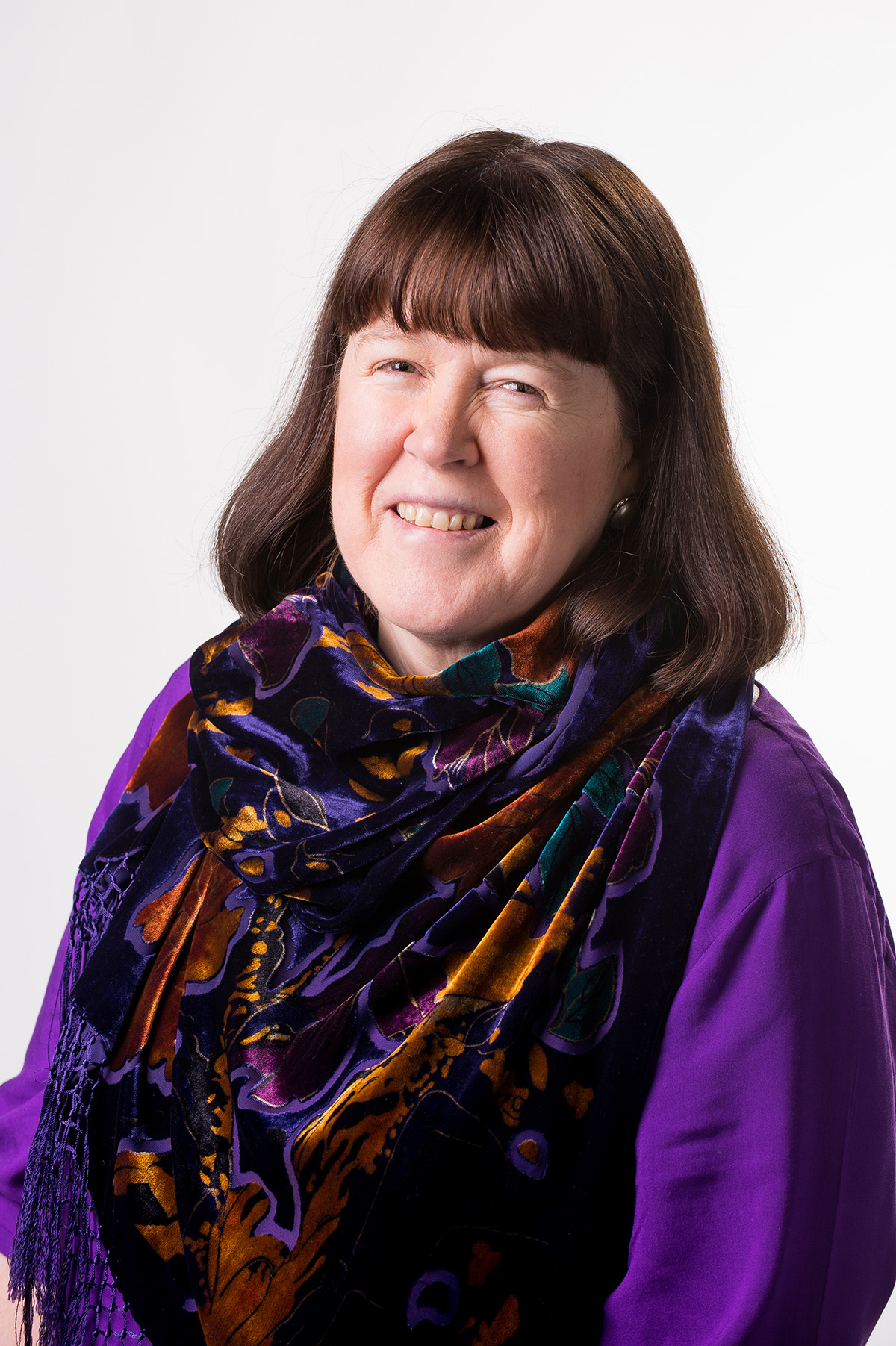
I am very glad to be able to hand the reins over to author Kerry Letheby for a guest post as part of her blog tour for her wonderful book Mine to Avenge. There are links at the bottom about where you can find out more information, keep following the tour, or better yet to buy a copy! It’s gotten a 5 Star average on Goodreads at the moment, and it is worth it I assure you.

Justice or Vengeance – what’s the difference?

What is the difference between justice and vengeance? I have often asked myself this over the past few years while writing Mine to Avenge, with the themes of justice and vengeance bound inextricably within the plot.

The dictionary defines justice as ‘the administering of deserved punishment or reward’. It defines vengeance as ‘infliction of injury, harm or humiliation on a person by another who has been harmed by that person’.

In Mine to Avenge, I tell the story of a vendetta, where one man seeks justice for his family when he believes a wrong has been committed against them. At least, that is his motive – to seek justice, but my question is, does he achieve justice by his actions, or does he only hurt those who wronged him? I can’t tell you what his actions are, as that would be a plot spoiler for those who haven’t yet read the book.

If you think carefully about it, a person might commit a certain act, maintaining that it was done to achieve justice where a wrong was committed. However, you would need to closely examine that person’s motive to determine whether the action was done with a desire for fairness, or whether the motivation of the act was more accurately driven by the desire to hurt, or get even.

When you seek to return a wrong for a wrong that was done to you, it is highly likely that you are not unbiased in your actions. The very fact of a wrong being committed against you presupposes that the act has had some impact on you, most likely negative. In that instance, what is the chance that your punishment will be truly just and fair? Likewise if another relative, or a family friend sought justice on your behalf, could they truly be just? They, too, would most likely have been impacted by the harm done to those they love. I think such a person would be driven more by their emotions than a desire for fairness.

Is it possible for you to seek true justice for yourself, in the sense of determining what that justice should be and administering it yourself, or is the outcome more likely to be vengeance? Can you honestly admit your true motive – would you be truly seeking justice for yourself or vengeance towards someone who hurt you?

What about seeking justice for someone else? I believe that only someone who is completely impartial, with no direct interest in the committed wrong, can dispense fair justice in any given situation. Anyone who seeks to dispense justice while having a direct interest in the event, risks acting from the motive of vengeance – seeking to return pain for pain rather a fair and just punishment for the act. Perhaps the difference between the justice and vengeance is just a matter of motive.

With Mine to Avenge, the lines between vengeance and justice are blurred. We have Constantine Anastos seeking what he believes to be justice for his sister, but another character from the same family perceives it to be a quest for vengeance. And on the other hand, the family being targeted by this man also seeks justice for their family for the wrongs committed against them, but there is doubt as to whether this is what they truly achieve.

To complicate things, both the protagonist family and the antagonist family can be said to have the same goal – a quest for justice, but even as the reader is permitted to read the thoughts of each man as he seeks justice, you might well question whether his motives are truly a pursuit of justice or a quest for vengeance.

If I were guilty of committing a wrong against someone, I wouldn’t feel comfortable if I was told that the wronged person was the one to determine what was just and fair. Nor would I feel comfortable if it was to be one of their family members or friends. Justice denotes a degree of fairness. I don’t think the wronged person or their family or friends could be trusted to dispense justice because they are personally involved. Their response would most likely be driven by hate and anger.

In Mine to Avenge, I don’t venture to conclude whether it was vengeance or justice that motivated the avenging family. I deliberately leave that to the reader, and look forward to hearing readers’ thoughts once they have read the story.

     CONNECT                                               PURCHASE

      Email                                                                Amazon
Blog: A Novel Journey
                                  Kobo
Facebook                                                         Barnes & Noble
Twitter                                                              eBookPie
Goodreads                                                        ibookstore

OTHER

Mine to Avenge Book Trailer
AUTHORSdB

Newcastle Writers Festival 2013: Creating Character

Finally the adventures continue! I attended the inaugural Newcastle Writers Festival at the beginning of the month and it was absolutely wonderful. The first session I attended of the day was titled Getting to Know You: Creating Character, hosted by Ed Wright with Courtney Collins, Ryan O’Neill, and Patrick Cullen on the panel.
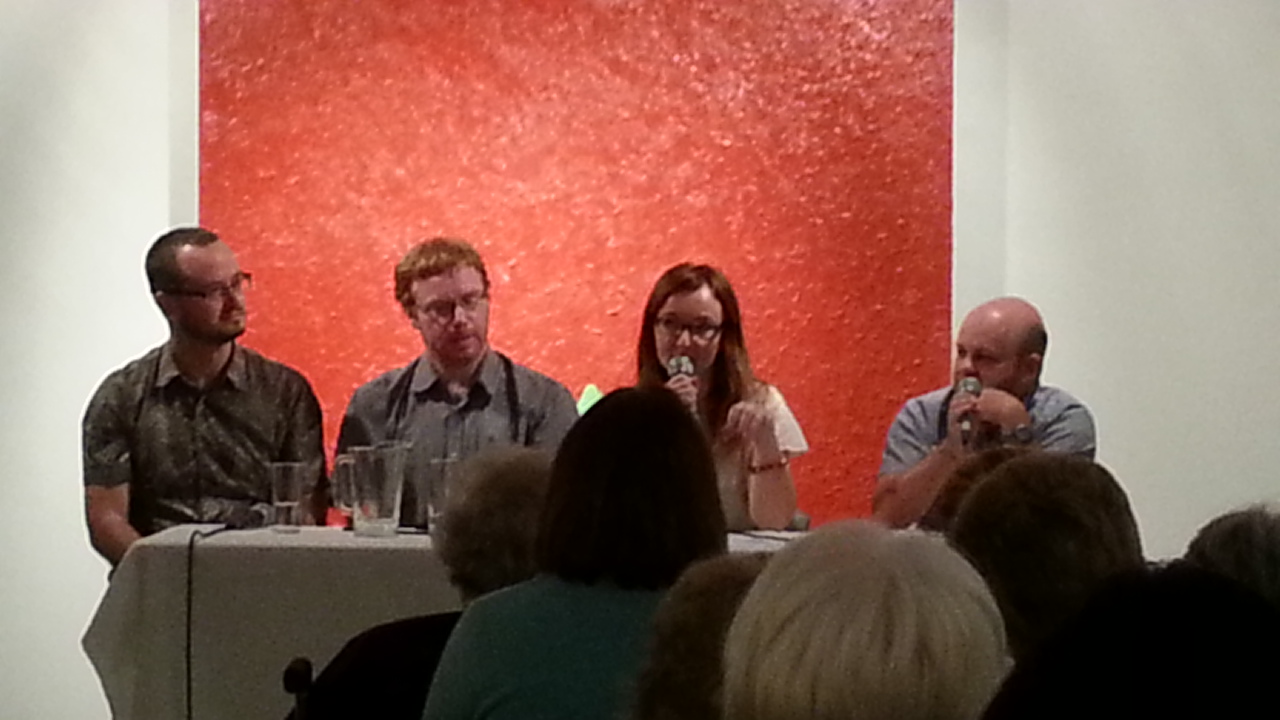
Aside from Ed Wright I had not heard of any of these authors, though I had been eying off their books moments earlier in the bookstore. Courtney Collins is a debut author who was discussing her book The Burial; Patrick Cullen talked a bit about his book of stories What Came Between, while short story author and new favourite Scotsman turned Novocastrian, Ryan O’Neill introduced his book of short stories The Weight of a Human Heart? Each of these authors managed to provide insightful and useful advice about how you come up with and develop characters, whether they are based on real people like Courtney’s, or whether you are trying to start fresh like Patrick and Ryan.

Everyone was a very good speaker; they handled Ed’s questions well. I do not know whether these authors could do this before the writing process, or whether once you write a book the ability to talk about it is easier. They all sounded so confident and fluid in their ability to discuss things on a panel. I can’t say I would be able to find half the intelligence and meaningful things they said if I was up there. I have to say though I do find it easier to discuss my work when I have worked on it a lot and become proud of it. The same most certainly applies here, even more so.

The hour long talk focused on the concept of creating character, and how and what characters become in the writing process. Courtney told us she used nature and the placing of a scene in order to reveal more about a character, this is a very interesting technique. She said that her characters were formed through their relationship with the landscape and their actions around it; characters can discover themselves through the landscape, as well as the readers discovering the character. I can’t say I had ever thought of it consciously, or really noticed it, but we all know about the notion we must show and not tell, but to show through the setting rather than action or consequence was enlightening.

For Patrick, his said he liked to represent and develop characters by their psychology rather than their physical characteristics. In a world where stories are prone to having the “description paragraph”, or odd references such as “flicking my long brown hair” jutting out of sentences, it was wonderful to see this continuing to be challenged. Patrick said something that I thought was rather wonderful; he said there’s reality in the representation of characters through psychology over appearance. Of course, in real life you must find out who a person actually is by discovering who they are as a person, not just about their green eyes and height, why is it it not the same for characters?

Ryan’s approach is that the story comes first. He told us that if you have an interesting storyline, then that can create interesting characters. Quirks and obsessions, whether their lives are going to be miserable or happy can develop through how the story is going to treat them. Ryan also notes it is easier, or at least more fun, to write stories with miserable characters rather than happy ones. I agree with this idea, there is a lot more you can work with as well when life is not going that well. 

The talk naturally drifted to where characters come from, as well as how they are represented and Ed asked where inspiration comes from. The responses where very interesting: Patrick helps create his characters using his own experience, with an added twist, while Ryan draws his characters from his plot. Patrick said that his character interactions can actually define the plot, and this I understand completely. How characters interact with one another can shape your plot in ways you hadn’t thought, these expeditions of discovery are great.

Patrick, Ryan, Cassandra, and Ed

Patrick, Ryan, Courtney, and Ed

What is always wonderful about talks and seminars like this is that you are always exposed to a range of techniques and styles. Whatever ideas and systems you had in place for your own writing, hearing about other authors makes you realise that there are many directions and you do not need to be stuck with one way of writing if you do not want to. I certainly don’t think you could then set out to essentially adapt another writer’s character voice and style as your own, but you can examine the angle they have approached for this character’s story, what their lives were and their history, how has it shaped the voice they are showing in the story. By studying how someone has managed to find their writer’s voice, and the voice and manner of their character, you too can try and start placing the right voice with the right character.

Ryan said that you should not expect to have found a voice in your first draft, and voice has the ability to create itself in a way that is needed for the kind of story you are writing, changing and developing as the story continues to grow. He agrees with Patrick that complicated is more interesting than simple, but naturally most things are.

Ryan also talked about his short stories and how a writer needs to know about balance. There is not a lot of room to develop complete characters in short stories and writers need to know the balance between the right amount and making the story too long, running the risk of boring your reader who wanted the story to end three pages earlier.

I have always been an admirer of people who write short stories, I have tried a few over the years, but when I read authors like Neil Gaiman or Angela Carter, or now Ryan O’Neill, I wonder how they manage to say so much, with such intensity, such humour, in such limited space. This is one of the key reasons why having good characters and story can tell the narrative for you, without the need for complex and long descriptions and character back stories. I am now inspired to go find more to read, also to start writing my own again. Too many Nano’s and ideas for novels has neglected the art of the short story in my life I think.

What I love about listening to authors talk is I get to sit there gaining ideas and inspiration, but also I get a small confirmation that I am not alone. Not to get all existential and wondrous about humanity at this time, but knowing other people do the things you do, and think the things you do is a very comforting thought. I am not all for creating duplicates for us all, we need people who try and tell stories with graphs, and we need people who will bring history alive in fictional reality, but when you are beginning and unsure about whether any one will ever read anything you write, seeing someone successful have even the smallest similarity to you is a big boost and encourager.

So as I sat and listened to these authors discuss where they find their characters and what they like to do with them I was reflecting back on the hundreds of people and ideas I have created and journeyed with in my stories. I have written about a girl who wanted to own a lion cub in the African savannah, I have had a man who tried to encapsulate the writing process for a bet, twisted fairy tale characters of the past, I have created young romance and torn apart a family, explored torment and the delusion of obsession, and I have made mafia dwarfs. All of these characters have come from somewhere, where? I had never sat down and thought about it exactly.

I know a few stories in the early years of my life were pretty much my young primary school self, putting all her hopes and desires on a page, tea parties with Eeyore and Winnie the Pooh, finding a lion cub to raise as my own, winning the lottery and buying a mansion to fill with all the dogs I wanted, even the approach I took as I grew older of putting my own opinions and values through certain characters. This I now see as slightly impractical and it doesn’t give you a chance to expand your sights and see things from another person’s point of view. I understand what Patrick was saying though, you are the writer, of course there is inevitably going to be some elements of yourself in these characters, no matter how much you may feel they are your opposite or someone who you never would be. This should not stop you from trying, the greatest joy is embodying these people who are nothing like you, giving you a chance to be someone else and feel what it is like to see things through their eyes, the same as reading about various people and lives. Even now as I write I still occasionally slip in parts of myself through a character or a memory turned to plot, but I have learnt in the years following those early stories, that the ability to alter what you already know is a greater challenge than just plucking something from thin air, or simply dictating who you are onto a page.

Ryan offered some interesting advice on this; he said you should write about your experiences, but you should also put yourselves in other people’s shoes. Don’t limit yourself to what you want to or can write about. Courtney agreed that you should go out and live your life and then give some of that life to your story. This is a beautiful notion but I think though Patrick put an end to this conflict once and for all when he said he owed it to himself to write about what he wants to write about. I may have to add that to my collection of writing inspiration quotes.

By the time the hour was over I felt like I had gained a whole wealth of knowledge and I still had two more sessions to go. I didn’t think this day was going to be about collecting new authors to fall in love with but it happened. It is one thing to know and love a book but when you are moved and inspired by the author, then that is an open invitation to love their works from the beginning. I look forward to exploring their novels and stories in the future.

News!

So it’s come to news, not that we don’t have news, we have a lot of news, and an update on my failure to deliver isn’t required but it is still sad. Server issues all week, a very hectic life, a wandering notebook and little sleep (like super little sleep), have put a damper on my plans of excitement sharing about the super awesome fun times I have been having, but rest assured I will be boasting! Not only do I have the continuing adventures of my Newcastle Writers Festival to get up where I was inspired and enthralled by the likes of Courtney Collins, Ryan O’Neill, Patrick Cullen, and so many more I could list them forever but I won’t, but I also got to meet one of my authorial heroes.

On Friday I was lucky enough to go to a talk by Australian author and personal idol, John Marsden and it was absolutely wonderful. I would like to think I behaved in a terribly adult manner when I got to meet him but I feel that would be a lie. As I stood in line with my pile of books ready to be signed I could feel my heart pounding and the realisation that the man who wrote Checkers, So Much To Tell You, Winter, and The Tomorrow Series was mere metres away was almost too much. I did have enough control to have a proper conversation with him, but I have witnesses that the before and after I was ‘fangirling’ (Googled it, seems to fit). I do not mind for one simple reason: for me John Marsden was, and is, the author who made me realise books have a lot of power over a reader, he can engage you with his words and with his stories, and in doing so he has the ability to twist everything you every thought about writing, about books, and even about the story you just read. I started reading his books at 13 and I haven’t stopped. I will talk more when I get the post up in a few days (*fingers crossed*), but it was truly one of the best moments I have had.

Then on Saturday the Sydney Writers Festival program was released after an excellent launch on Thursday night. I have already made my schedule and booked what needs to be booked. It is going to wonderful. Dates are 20-26 May, but there are events on before as well, all details are on their site.

Other news that is more pressing than news that is going to be gushed about later is the fact that Kerry Letheby’s blog tour began today over on Time 2 Blog. She will be providing Lost in a Good Book with a post on Friday and you can follow where the tour will be next and the find the other blogs here. Kerry might even drop by to answer any questions you may have as well. Her book is very good, it is suspenseful, mysterious, and very touching, a great read.

Reminder with the shameless self promotion, Lost in a Good Book has a Facebook page and a Twitter where you can get loads (maybe not loads), but a lot of book, reading, and other related things that don’t get put on the blog. So head on over there and click all the appropriate buttons to start finding all the goodies. I’m also on Goodreads if you wanted to check out other reviews that are not on here, always forget about my poor Goodreads despite the fact I live on it.

Also I was nominated for a second Liebster Award by the delightful Jess at The Never Ending Bookshelf! So that post will also be going up soon as well. So much time and so little to see post! Strike that, reverse it. (Woo, Willy Wonka for the funnies!)

Despite still being very much in April I do have secret news that I can reveal in May but that is all I am saying. Super secret news is for my ecstatic squeals and joy only for now, but your turn will come.

Ok! Well I think that is finally all the news, check out all the links and get excited about all the upcoming things, enjoy your remaining Monday night, and read something spectacular.

Liebster Blog Award Nomination

The other night I was browsing the web as one does on a Thursday night, and discovered I had been nominated for a Liebster Award by the lovely Kerry Letheby. I will admit I was ecstatic, I didn’t even know what it was but I was thrilled. I headed straight to Google and managed to find a post by Sopphey Vance who had created a post last year trying to uncover the same answers I was. Having read Sopphey’s post I realised it is a popular but still very mysterious blogging award. According to Sophey’s extensive research this award has changed criteria in a short time. I think Kerry describes it well in her post when she says it is like Chinese whispers, and as people omit details or have slight variations it gets changed each time it is passed around. I did love from my research that so many people begin their posts on this as “From what I understand…”, and I have also seen many variations. Though I am not sure we need a solid idea, I like that it evolves and changes; keeps the mystery origins alive.

 People who are nominated are not required to respond or keep this cycle going, it is just a bit of fun where you can branch out and find some other wonderful people in this little interweb world. From its mysterious origins to today any Google search will tell you it is widespread thing and is a sweet recognition and award for bloggers to let another blogger know they are being pretty amazing with what they’re doing. Alas, there is no physical award, it is essentially a figurative internet delight, but still worthy of brag rights. Following this game of whispers, I will repeat what information I have been given. Who knows, in another year they may have changed again.

Key criteria of the Liebster Blog Award

 1. The nominated blogger must post 10 facts about themselves.

2. They must then answer 10 questions from the blogger who nominated them.

3. Then nominate 10 bloggers and give them 10 questions to answer.

4. Link to your ten bloggers in your blog post.

5. Let the bloggers know you have nominated them.

6. Don’t nominate the blogger who nominated you.


Ten facts about me

1. In high school I was the only one of my friends who was the youngest sibling, yet between my friends I was the oldest

2. I play music very loudly when I am home alone

3. I am slowly collecting one of each of the bad driving experiences

4. I tend not to wear shoes if I can get away with it

5. I do and will always love Disney films

6. If I had a better memory I’d be an astronomer (still a writer too, of course)

7. I am afraid of the dark, and my imagination when I am in that dark

8. I sing when no one is around

9. I get as excited over an author as people do over movie stars

10. Having a Scottish accent pretty much bypasses my filtering system of whether I am going to like you or not.

Kerry Letheby’s Questions

What is your favourite city in the world and why?
I’m tempted to say Edinburgh for no other reason than it is in Scotland, but it also has the comedy festival which I dream of going to one day, and yes, because it is in Scotland.

What was your first job after you left school?
I was working with a maintenance branch of the Department of Housing following up with customers about any work that had been done in their homes. It was…interesting if nothing else.

What was your favourite toy?
I was given a stuffed toy rabbit when I was one and I loved it from that moment pretty much, I played with him so much over the years I have replaced the majority of his original stitching with my own to patch up seam tears.

If you could choose any animal as a pet what would it be and why?
I would have a lion because not only are they adorable as cubs, they are so majestic and powerful as adults, and being able to touch and cuddle in their mane would be amazing.

Which season is your favourite and why?
Summer, because you can feel it; not just being hot, but in part there is a Christmas feel, it brings out your awareness of nature, and the smell of rain on burning road is one of the greatest smells in the world.

Which fictional character would you like to invite to dinner and why?
Just because Billy Connolly is in a book I don’t think that classes him as a fictional character, so I will have to pick Granny Next from the Thursday Next series. She is always so wise and knowledgeable in the books and she has her own secrets that would be wonderful to hear about, plus just learning more about the alternate world she lives in would be great.

Who is your favourite film star?
I am a sucker for Jude Law, but Johnny Depp is also high on the list. But he isn’t Jude Law.

Do you ever lend books to your friends?
Of course, I practically throw books at them demanding they read them because they are remarkable and had an impact on my life and I want to share that with them.

What is your favourite place to have a picnic?
A park would probably be the best place, just some grass, some trees, some cloud watching.

Describe your ideal day in twenty words or less.
Home alone, reading books all day back to back with no chance of being interrupted.


Keeping the mystery going! These are my ten nominated blogs if they choose to accept

The Write Stuff

The Awkward-ness

Drugs Called Books

S.I.K. Book Reviews

What I Like…

Rather Be Reading

Out of This World Book Reviews

Adventures of Life and Literature

Epic Reads

The Creative Forum

Their ten questions

1. What is something you have learnt recently?

2. Have you started reading different books since you started blogging?

3. What was the one book you hated that everyone raved about?

4. What is one of your reading pet peeves?

5. What did you want to be when you were younger?

6. What is the best and worst thing about blogging?

7. Who inspires you and why?

8. What makes you excited?

9. Do you collect anything?

10. Do you have any autograph of any one you admire?

Have fun with your answers if you choose to accept this challenge, keep up the wonderfulness, and read something spectacular!


Previous Older Entries Next Newer Entries