The Sword in the Stone (#1) by T. H. White

Birthday

Today is T.H White‘s birthday, the man who wrote the series The Once and Future King, about the legend of Arthur, Merlyn, and the knights of Camelot. Terence Hanbury White was born in Bombay in 1906, and was 32 when he published The Sword in the Stone, which was initially meant as a prequel to Sir Thomas Malory‘s famous 1485 Le Morte d’Arthur. Two sequels were published, The Witch in the Wood (later rewritten as The Queen of Air and Darkness) in 1939, and The Ill-Made Knight in 1940. But when the complete collection was compiled there were five stories in total and the order was altered a bit. The version of The Sword in the Stone included in the complete text The Once and Future King differs from the earlier version. It is darker, and White’s indirect experience of World War II had a profound effect on these tales of King Arthur, which include commentaries on war and human nature. This is certainly evident in the later books as well.

I knew nothing about T.H White and reading up on him he certainly was interesting, there are speculations he was a homosexual sadomasochist; into small girls; not a homosexual, all these things. Good ol’ Wikipedia has the theories and the references if you wish to explore his life a bit more, I’ll admit I am only here for the wonderful stories. He revised Sword in the Stone a few times, which resulted in a few stories being added and removed and all sorts of things. I read a couple versions and trying to figure out what went where and who was left out does your head in, so I won’t try and explain how that went down and what stayed in or not.

Published: December 2nd, 1996 (As part of The Once and Future King complete edition)

Goodreads badgePublisher: Harper Collins
Pages: 223
Format: Book
Genre: Junior Fiction
★   ★   ★  – 3 Stars

In old Merry England weather behaves. In the Castle of Forest Sauvage, Wart (rhymes with Art for Arthur) follows Sir Ector’s ‘proper son’ Kay, two years older. Wizard Merlyn, fewmets from talking owl familiar Archimedes, turns boy into perch, hawk, owl, stone, and badger for their lessons and stories – until King Uther dies without heirs.

The Sword in the Stone is the first book as part of what became ‘The Once and Future King’ series, and my first criticism is that I can see why there are sequels, you can’t get it in one book, and because White starts from the very beginning it would hardly do it justice. I read the version that ended up in the collection, so I don’t think I got to experience the lighter version as it were, but it was still great. This first story is about a young orphan named Arthur living in medieval Great Britain. Arthur is nicknamed Wart, and works as a page for his guardian Sir Ector. With his companion and foster brother Kay, he leads an ok existence, but the true adventure begins when he stumbles across Merlyn, a time travelling wizard, and Arthur soon becomes the student, alongside Kay, to Merlyn’s tutelage. Merlyn guides Arthur and teaches him about the world through magic, and trains him in the ways of the world.

So much of this book is setting up Arthur and his life as a child and his adventures, the known aspects of the story are not a main focus, instead we see Arthur and his relationship to Sir Ector, Kay, and the Merlyn. Kay does have a few roles to play in this early tale, and while Merlyn focuses on Arthur, Kay is not left out of the loop much, either that or Merlyn concocts some distraction to find some time to play with magic.

With Merlyn’s help, Arthur is turned into animals of all kinds to gain a sense of their life, and he has many adventures with other humans such as Robin Hood (Wood in the book) and Maid Marian, King Pellinore in his quest for the Beast, and many more. These adventures seem trivial and fun at first, but with Merlyn’s knowledge of the future, he is essentially training Arthur to be the King, teaching him about the world, nature, and man’s duty in the world.

It was a pretty good book, especially some of the explanations and science behind why things are what they are. I think having Merlyn be a magical character who knew more than most was a great advantage because you had modern knowledge in the medieval setting. And White’s knowledge of the medieval era was excellent, his attention to detail about the sports, dress, and other aspects added to this sense of reality, however there are clear indications that no real effort was made for some aspects of historical accuracy, as well as the fact that Merlyn was a wizard, a wizard that experienced time backwards rather than forwards.

After accidentally starting an abridge version, when I switched to a full copy I realised a few good stories had been removed which I thought was a shame because in the version included in the complete collection they all kind of return in the end and come full circle so I am not sure how the edited text would have covered that.

The animal stories White explores when Arthur is transformed by Merlyn, are very sweet, and give you a great look at the inner workings of the animals and their lives. The way White explores the life and manner of the animals, and Arthur’s uneasy and new presence in there, it is pretty spectacular, it balances out the anachronisms. There is some realistic and detail science and observation evident, and manages to teach you things.

The Sword in the Stone is such a famous story and I did not know there was more than one, and waiting as I read to find the familiar scenes I knew was interesting because it is a very drawn out story. I guess in a way the extra novels means that it is not condensed into one, and there is no hanging unexplained conclusion about what happened, but it is interesting that the key moment is such a small part of the first novel in terms of pages. The effect of course would be seen in the sequels.

There was a Disney version in 1963, because there always is, and it is rather good. This only covers the first book and sticks to the general plot, and a lot of the fleshed out substance is removed, but a lot of the scenes are similar to what is found in White’s. Perhaps there are just some elements of this story that will be kept true, even if other aspects are reimagined.

So Happy Birthday T. H. White, and I thank him for writing this series. I know everyone upon everyone has done an Arthur story and made a version, or told a story about it, but I loved White’s telling. You get drawn into the life of this kid, who started out small and became so big. By the time I had finished all the books I was so enthralled and amazed it was simply divine. I do recommend that you read Sword in the Stone and the sequels because it is well written and as I say, manages to teach you about things you never really thought about before, not just about animals, but about humanity, war, education and even a little bit of history.
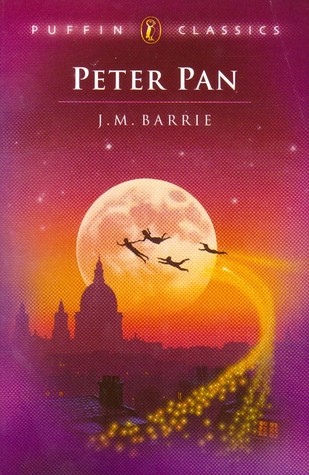
Peter Pan by J. M. Barrie

Birthday

A huge happy birthday to James Matthew Barrie, author of the wonderful Peter Pan! I loved this book, I love that Barrie creates this world and these characters that are wondrous and engaging, but he also writes the story with heart and sometimes blunt truths, there is no real romanticising about life, Neverland is the wonder away from the rest of the world and that is why it is marvellous.

In Kensington Gardens in London there is a status of Peter Pan honouring Barrie. Peter is playing his pipes and has animals at the base; it certainly lends itself to the theory that Peter Pan has a connection somehow to the Greek god Pan. I know him best for the novel Peter Pan, but J. M. Barrie had dozens of others works before and after of both stories and plays, right up until his death in 1937. He was knighted in 1913 for his literary work and in the same year became Rector of St Andrews University. His other successes include becoming the President of the Society of Authors, a title which he took from Thomas Hardy which is cool.

I never knew he was knighted, but I do remember that when I was studying Barrie and Peter Pan at university, it became very clear that he was certainly peculiar, or at least lived a strange life, one that no doubt impacted on him. He was not all strange though, he knew some excellent writers of the time including Robert Bernard Shaw, H. G. Wells, and Robert Louis Stevenson.

He was the ninth child out of ten, two having died before he was born, and as an adult he was only 5″ 1′ (about 155 cm). When he was young his brother David, who was the next eldest and his mother’s favourite, died just before his 14th birthday. It devastated his mother and Barrie then it seems devoted himself to trying to fill David’s place, to the extent that he even dressed in his clothing. Barrie wrote a biography of his mother called Margaret Ogilvy, and in it he discusses his mother’s reaction to David’s death, as well as his attempts to please her afterwards. If you want to read it it is available from Project Guttenberg for free.

There was a wonderful theory that we heard in class that Barrie wanted so badly to be David and be the “son who never grew up” for his mother that he developed psychological problems and even managed to stunt his growth and proper adolescent development. This does not seem to have any grounds in fact I think he was just short, but he was no doubt strange enough that he probably tried. His innocence that he held until adulthood made him the perfect candidate to write a story like Peter Pan, he never properly grew up, and loving to write and tell stories probably helped this, he could stay young and innocent forever through words. He was initially discouraged from becoming a writer, I for one am very glad he chose to write, where would we be without Peter Pan to fill our dreams and fantasies and to fly us to Neverland in the middle of the night?

Peter Pan has many influences, but the main ones that inspired the play and the characters of the Darlings was the connected to Mr and Mrs Llewelyn-Davies and their boys George, John, Peter, Michael, and Nicholas. And before the legends and did you know facts appear, no he did not create Wendy, it was a name prior to the first appearance of Peter Pan, Barrie simply popularised the name.

There is truly so much going on with Barrie, his relationship to the Llewelyn-Davies family that helped create this Peter Pan world, not to mention the sad fate that many of them had. The entire history and environment and life of Peter Pan is absolutely fascinating I could write forever on, but I won’t, I will however review Peter Pan, one of the greatest books, certainly became established in society and popular culture, and definitely a classic for all ages.


Published: January 1st 2002
Goodreads badgePublisher: Puffin
Pages: 242
Format: Book
Genre: Junior Fiction
★   ★   ★   ★   ★  – 5 Stars

The boy who refuses to grow up teaches Wendy and her younger brothers how to fly. Then it’s off to magical Neverneverland for adventures with mermaids, Indians, and wicked Captain Hook and his pirate crew.

Everyone seems to know the story of Peter Pan, the boy who wouldn’t grow up, Tinkerbell and Wendy, and the mystical world of Neverland. I first knew of this story through the Disney version, but I also had a video of an Australian cartoon version which I also loved. Many of the versions of this story keep a lot of the same elements in it, there is no Peter Pan without pirates, Indians, or mermaids, but there are certainly some varying elements compared to the book.

The story of Peter Pan first appears in The Little White bird, a story written in 1902 by Barrie and was intended for adults, not children. The first real sighting of Peter is in the stage play in 1904 where it was titles Peter Pan, or the Boy Who Wouldn’t Grow Up. The novel version, which is probably the most well known version (aside from the movie interpretations), was extended from the original play and published in 1911 as a novel.

With the extended novel there is a chance to expand on character and ideas. There is also a lot more story within the book compared to what people know from the popularised Disney film. There is a lot more involvement of Mr and Mrs Darling in the book, and they come home as their children are flying out the window and know that their children are missing. Wendy, John, and Michael’s visit to Neverland happens in real time, and the time they spend there with the Lost Boys, Peter and Tinkerbell is time passing back in London. We get to see the reaction and life Mr and Mrs Darling have while their children are gone.

Barrie actually opens Peter Pan telling us the story of Mr and Mrs Darling, it is all very sweet. This also helps you understand them as people and parents, they are not just the parents with the story focusing solely on the children and their adventure, it is about the whole story sequence, not just the characters, but in the same wonderful way it is also so much about the characters.

I remember when I first read this story and realising that having a dog as your nanny was not a Disney invention of movie quaintness, it is actually in the book. Nanna it seems gets to have opinions about things and is a very good nanny. There is no first person narration for any of the characters, but Barrie does tell us what everyone thinks when it is required. Though this is not the only strange thing, there are other peculiarities, Mr Darling literally spends time in the doghouse out of guilt for his missing children, neighbours walking by and judging and everything. That was rather strange, but it has its humorous sides as well. It isn’t so much an absurd, only very strange at times.

There are many great moments in this book, even just reading about flying, the journey to Neverland and the adventures that await them. There is a little violence in this book regarding pirates and fairies, but it isn’t described in great detail, but it is still there. Peter helps this a little, in his own childlike way, brushes over things and quickly moves on to the next thing, always chasing another adventure as we are told. Tinkerbell speaks in the book, and there are additional characters and variations of scenes which make it that much better. A lot of Peter’s character is seen in his actions and his leadership. He can change from being proud and selfish to being rather noble and sweet very quickly.

Peter Pan is certainly not the exact character that the movies portray him as; in the book Peter Pan has much more selfish childishness as well as the naivety and cockiness. It is actually mentioned one of the reason Hook hates Peter so much is that he is always so cocky.

Peter is not the only bunt one, Barrie does enough of his own in his narration and explaining, it is very matter of fact, but Barrie expands on what needs to be told and what does not. The voice Barrie uses is one of a storyteller, you get the feeling he is speaking to readers as he recounts the lives and adventures of Peter and Wendy, this certainly adds to the magical nature, like a tale of times that once were.

Barrie definitely brings us some memorable characters in this book, not to mention quotes like “Second star to the right, and straight on till morning” and particularly “To die will be an awfully big adventure”, which is one that has stayed in my mind for years. It is rather telling of Peter’s mind when he says this. He has such a carefree attitude, never worrying and is not typically one to fret over anything. He definitely has a child’s mind, he moves from one thing to another, and quickly forgets things if they are over or no longer concern him. Though the connection and relationship he has with Wendy is sweet, you can feel that he loves the idea of having a mother and being cared for, but he wants things his way in his land, being the child forever.

The ending of Peter Pan and the events in the final chapter I found to be some of the most heartbreaking moments in this book, and certainly was not something I was expecting. I think it is a brilliant ending, but I felt such a pain as I read because it was so innocent, but also so sad at the same time; Barrie did an excellent job. There are entire moments of brilliance in this book, heartfelt, magical, and all round beautiful. You take the abruptness and the selfish Peter and you see him and others in so many other lights that it is all part of the magic and wonder that is Barrie’s story. There is so much to gain from reading this over a movie, the movie can bring you to the book, but the book can give you the soul of the story.

To Kill a Mockingbird by Harper Lee

Birthday

Happy Birthday Harper Lee! Today in celebration of her birthday I am reviewing her only novel, To Kill a Mockingbird. I will admit I enjoyed it but not loved this in high school, but I still managed to see why it was wonderful and a classic. Perhaps it was just being the 15 year old, or maybe it is now I am  older (it always changes most things), but I can see it differently now, similarly, but different. One of those complex emotions.

Harper Lee’s full name is Nelle Harper Lee, she was the youngest of five and was raised in Alabama. Her only book was To Kill a Mockingbird, she did have a second but it was never published. Famously Lee has never extensively discussed her book or any insights about its meaning and the popularity, and has stayed out of the public eye. Growing up Lee was friends with author Truman Capote and together they wrote an article in the New Yorker which Capote then turned into In Cold Blood, his nonfiction masterpiece. It is said that Atticus in her novel is based on her father who was also a lawyer and who once defended two black men accused of murdering a white shopkeeper. She has though played down any real correlations despite there being similarities, however Capote once said he thinks that certain things she wrote were true and being neighbours and friends he initially used similar aspects of their childhood in his own work.

Published: May 23rd 2006
Goodreads badgePublisher: Harper Perennial Modern Classics
Pages: 324
Format: Book
Genre: Adult Fiction
★   ★   ★   ★   – 4 Stars

Tomboy Scout Finch comes of age in a small Alabama town during a crisis in 1935. She admires her father Atticus, how he deals with issues of racism, injustice, intolerance and bigotry, his courage and his love.

To Kill a Mockingbird was finished in 1959 and it won a Pulitzer Prize award and became a best seller. It soon become a classic novel and has become influential, if not a powerful message about race, inequality, and human decency. It is not only its story, but the characters that people admire and idolise, the key figure being Atticus Finch, father of the narrator, Scout. Naturally is also became campaigned against to be removed from classrooms and libraries. We can’t even look down on the past as the list of banned books still rings high and true today for the same idiotic reasons.

Atticus Finch, who is an attorney, and all round upstanding man, is always listed on the top characters of all time, or most influential characters, or most idolised characters, and really, it is probably true. To Kill a Mockingbird is a classic for a reason, and Lee deals with intense issues in this unjust world with one man trying to do the right thing. As a character he presents unwavering morality, strength, and honour, having an impact not only in the books pages, but with the readers as well. He was a hero not for super powers or for saving the world, he was a hero for doing the right thing.

To Kill a Mockingbird opens with a look into history with a Finch ancestor fleeing religious intolerance in England, settling in Alabama. The main story takes place a few years after the Great Depression. The narrator is Scout Finch who is retelling her story of when she was young and the events that unfolded around her in her town of Maycomb. Initially we see nothing about the racial drama that unfolds later on; instead Lee introduces us to Scout, her brother Jemm, and their friend Dill. The trio enjoy their summer but are fascinated, yet terrified, of “Boo” Radley, a reclusive neighbour. This introduction about Boo and the children go on but it isn’t long before the tentative relationship between the children and Boo is replaced by the appointment of Atticus to defend Tom Robinson, a black man accused of raping a white woman.

The descriptions in the book and excellent, the way Lee describes the heat, the people, the town, the naivety of children and the insights they provide, and also the way she portrays characters relationships to one another is well done. She doesn’t shy away from the facts and the details of the town life, the trial, or the social messages and reaction; that is where some power comes from. And her language in doing so makes it what it is as much as the events. Her language is deep and the lessons you take from this book are timeless.

One of my absolute favourite aspects of this novel is the fact that Atticus lets his children call him Atticus instead of father. This is the purest and simplest way to demonstrate him as man, Atticus does it as a sign of respect as he sees every one as equal, despite their age, class, race or authority. Not sure I would do the same, but it is very telling nonetheless. The title of the book comes from Atticus, who tells Jemm it is a sin to kill a Mockingbird. Scout questions this and is told that “Mockingbirds don’t do one thing except make music for us to enjoy. They don’t eat up people’s gardens, don’t nest in corn cribs, they don’t do one thing but sing their hearts out for us. That’s why it’s a sin to kill a mockingbird.”

What I found interesting in this book is Lee’s wonderful way of telling this story. By using Scout, a young girl with very little knowledge of the world, who is always looking for answers and explanations, to tell this story, you get great conversations and relationships between characters. Certainly the best are those with Atticus and Scout, though her own opinions of her father are from the view of a child she has some very insightful words, and not only about him. She uses people she knows to discuss the issues around her, more so since the trial began as the people in the town are less than sympathetic, and they also cannot understand Atticus’ desire to defend Tom.

Scout is feisty and is willing to fight for her father which is admirable and a wonderful representation of her relationship to Atticus, but also of her own personality. While Atticus can defend himself, though in more moral and less violent manners, a wonderful scene is when the three children manage to essentially shame a lynch mob by making them see things from Atticus’ perspective. The wonderful quotes that can be taken from this novel are vast, but “You never really understand a person until you consider things from his point of view…until you climb into his skin and walk around in it” is a key theme among the many.

What this trial demonstrates is how divided the world was, there is a coloured balcony above the courtroom, away from the main area, and the tone, interactions, and outcomes are certainly surprising. Perhaps this is because reading this in 21st century Australia has a separate impact, but that doesn’t stop my knowledge of what it was like to some degree. Even though Lee has denied any strong autobiographical connection, the story of Tom is not a single fictional case. But even though she writes about this injustice and this ill treatment for a man accused, Lee has added so much more into this narrative than it is also about so much more than the colour of his skin essentially, it is about growing up, learning about the world, class and society, and basically loss of innocence.

The trial is detailed and well planned out; Lee keeps it poignant and fiery, while still upholding all the virtues Atticus has in a town that has already condemned Tom. We go through testimonials and cross examinations, Atticus does his job well. Tom’s point of view is not forgotten, we see his sides of things, and you do know right away of his innocence, but that is nothing in the eyes of the law it seems. That is where your investment goes, into the anticipation and hope that this super hero Atticus Finch, with all his deep wisdom and goodness, can help save Tom for a crime of simple being black.

The outcome of the case has consequences for everyone and the victims are far spread. I won’t reveal the ending, there is a lot in it that speaks more volumes than I could convey, but Lee does a wonderful job. She takes us through this journey and this emotional turmoil about these characters but she almost adds some justice at the end, but in a way she doesn’t. Scout pulls this together wonderfully in her voice and as I said, I think that makes so much difference compared to if it were a simple third person, or another characters point of view, you need her innocence, her loss of innocence, and her perspective telling this story. She uses all the wisdom her father has given her and by the end of the book you know it has sunk in.

There is a movie version on this book, with Gregory Pack as Atticus. It is pretty amazing. It would have to be for this book I think. Made in 1962 it is in black and white but do not let that deter you, it manages to bring all the emotion and the drama from the book and make it just as moving and important as the book. It is reported that Lee visited the set during filming and she did do a lot of interviews to support the film. The film was as popular as the book, with eight Oscar nominations and four awards including Best Actor for Gregory Peck.

The quotes from this book are fantastic, I need to list some, for the pure fact they are insightful and so very true, but there are so many more.

“I wanted you to see what real courage is, instead of getting the idea that courage is a man with a gun in his hand. It’s when you know you’re licked before you begin, but you begin anyway and see it through no matter what.”

“Atticus, he was real nice.”
“Most people are, Scout, when you finally see them.”

“Miss Jean Louise, stand up. Your father’s passin’.”

“Before I can live with other folks I’ve got to live with myself.”

So it is today that we wish Harper Lee a very happy birthday, I thank her for this book,  and while To Kill a Mockingbird will give you no useful advice on killing Mockingbirds, it will teach you not to judge a man by the colour of his skin.

Black Beauty by Anna Sewell


Birthday

In honour of Anna Sewell‘s birthday today I am reviewing the only book she wrote: Black Beauty. Sewell began writing in 1871 aged 51 but as she grew more ill she was painfully writing notes that her mother typed up, or she was dictating to get her story finished. It is always a little bit wonderful when you read about authors who are still trying to get their story out as they are ill, dying, or incapacitated; it means that they want their story out in the world so much that they will keep going until the end, not give up and leave it unfinished in a pile because it became too hard while they were sick.

Published: March 1st 2003
Goodreads badgePublisher: Scholastic
Pages: 245
Format: Book
Genre: Junior Fiction
★   ★   ★   ★   ★  – 5 Stars

Black Beauty is handsome and spirited, with a sweet temper. When he is four years old he is sold to a new owner who gently breaks him in. He is no longer free to gallop around the fields yet there is happiness and adventure among the hardship as his station changes from being a carriage horse on a country estate to a cab horse in town. At the same time he is aware that his well-being and future depend very much on the kindness or cruelty of his various masters.

Black Beauty‘s original title was Black Beauty: The Autobiography a Horse, translated from the original equine. I love this, and Sewell’s approach of using the animal autobiography genre is apparently considered the first of its type. Written over several years, Black Beauty was finally published in 1877. This creates a great setting for the history not only of the use of horses, but the society as well. The way people talk about horses, and using horse driven cabs is a wonderful image to have as the story progresses.

Black Beauty’s story is a gripping yet simple, complex, touching and achingly sad all at once. This is the story of a horse who goes through life working for many people, doing and seeing many things, and understanding the life, hardships, and joys of being a horse. It is a beautiful story, nothing is hidden and everything is laid bare, and that is why it is amazing.

I liked the way that Sewell did not shy away from the facts about life and about horses; facts are facts and the era of writing does play a role, but Sewell also set out to write a story directed at all those who worked with horses. I read that her intention was to promote the humane treatment of horses, and apparently Black Beauty is credited with having the greatest effect on the treatment of animals of any publication in history, resulting in changing the public attitude, as well as creating legislation to protect horses. That’s pretty amazing for her only book, and she didn’t even live to see the full impact it had.

People often get upset and mention how horrified they were about certain parts in this book, and I won’t lie, there are some bad moments where horse mistreatment is shown to various levels. However, as shocking and blunt these sometimes can be, they are not an ongoing focus. There is a lot of talk about cruelty, but there are equal amounts that show kindness and compassion. The sentiments mentioned in this story may seem cruel, but this book was also written in a time when this was the way of the world; and Sewell spends just as much time telling us that if horses were treated better than these situations would not be called for.

And while there is abuse, there is also a strong sense of justice for that cruelty that is more important. Throughout Black Beauty people are being reprimanded for whipping too much, jailed for mistreatment of horses, and people on the street have no issue pulling up riders or drivers who are being cruel. That is why this book is powerful, it shows the cruelty but also the consequences.

Black Beauty begins his story in a loving home where he is taught the ways of the world by his mother. She tells him to be “gentle and good, and never learn bad ways; do your work with good will.” Throughout this book he uses this advice to be the best horse he can be no matter what his situations and what he is required to do. As he changes home and he experiences new things he keeps this in mind, always trying his best.

What I found very interesting is that Black Beauty is given many names through this book, he begins his life as Darkie, and as he grows older and sold he is renamed Black Beauty, as well as Jack, Black Auster and others. But there is a reason the book is called Black Beauty, I never could figure out why but when I finished it this time I realised and understood, and that made it so much more wonderful.

What I also found heartbreaking but terribly sweet was when he was being sold once more at a horse fair. Being an older horse with injury and having recently come from a hard life, it was moving but beautiful as he says that his new owners “made as much of me as if I had been the ‘Black Beauty’ of olden time.” There is so much said in those words. He never lets his spirits down and he remains as good a horse as his mother wished through all he has been through, yet he knows why he is not as glamourous as he was. It is a true testament that he keeps his head high and makes the best of it all, but in the flickering moment he remembered his past with the meadow, his friends, and the love and affection he received from his master. Sewell manages to mean so much by saying so little, it is beautifully touching some of the things in this book.

Sewell is also very good a segues, Beauty’s voice is telling us his story and Sewell paces it right and places everything where it needs to be to make the story flow smoothly. Nothing is interrupted, yet nothing is left out either. She captures all parts of life, other horse experiences and their own stories. Through a horse’s eyes a person is judged in many ways in terms of their character. Beauty often gives people a well assessed judgement and we are shown why that judgement stands. Even in short paragraphs and a few lines Sewell can make it seem like we’ve gotten all we need to know about a person based on how a horse sees them.

The details in this story are also amazing, whether it is in the narrative or listening to another horse tell their story. Horses notice everything, the feeling of the human touch, kindness and pain. Sewell captures these beautifully and demonstrates that horses base their opinions on people not by who they are so much, but by how well they treat their horse. Through this technique you also see the horses reactions to war, ill-treatment, old age, and illness.

Other people have kept writing the Black Beauty story, but I can’t imagine ever wanting to read these other adventures, or read extended version about what occurred in the book, leaving the beautiful story as it is is enough for me, there is so much heart in the original that by adding to it will spoil it. There have also been multiple movie and television versions of Black Beauty, and I have never seen a film version I didn’t like, and only a handful I’ve seen have made minor changes to the plot as far as I could tell. I think with a story like this either reading it or watching it can be hard. It is really up to the individual, but when it is done well, it can be equally as wonderful as the book.

Happy Birthday Anna Sewell, it is sad you did not live long enough to see the effect your book had on the world, but I thank you for writing it.

A Bear Called Paddington by Michael Bond

Published: November 3rd 2003
Goodreads badgePublisher: HarperCollins
Pages: 159
Format: Book
Genre: Junior Fiction
★   ★   ★   ★   ★  – 5 Stars

Mr. and Mrs. Brown first met Paddington, a most endearing bear from Darkest Peruon a railway platform in London. A sign hanging around his neck said, “Please look after this bear. Thank you” So that is just what they did.

 From the very first night when he attempted his first bath and ended up nearly flooding the house, Paddington was seldom far from imminent disaster. Jonathan and Judy were delighted with this havoc and even Mr. and Mrs. Brown had to admit that life seemed to be more filled with adventure when there was a bear in the house

From the very first pages I loved Paddington. There is just something about his sweet, well mannered and innocent nature that makes him special. While there are many books dedicated to the adventures of Paddington this is the first, and the one that explains his arrival in England. Found on the platform of Paddington Station he is taken in by the friendly Mr and Mrs Brown and he soon becomes part of the family.

The adventures in this book are very different from those in darkest Peru and Paddington marvels at everything he sees. His innocent and almost naive nature are a delight, but he isn’t so naive that he gets taken advantage of. He is a very well meaning bear and tries to do what is right, but I do love that he has a very persistent stare when he cares to use it, something that he brings out only for special occasions.

The book is a collection of the adventures Paddington has ranging from buying a coat (the coat) and going to the theatre or the beach. Reading how Bond explains these new experiences is a real joy, Paddington isn’t a child and so his reactions are very logical and reasoned. He says what he sees and he tries to understand as best he can but is not shy from pointing out each and all of his issues. Having come from darkest Peru even the little things we do and take for granted are new, watching him take a bath or ride the escalator and lift are very amusing and the way he handles it is terribly sweet.

This is classed as a children’s classic but I firmly believe this is a book that can be read and loved by everyone. Bond does not talk down to the reader as if he is writing for children, and despite there being two children in the book a lot of the conversation and content is directed at the adults, Paddington appears to have a much better relationship with the adults than the children. He is never once seen as a child but he is a young sort of bear which is different again entirely.

The 50th edition copy I have has a postscript by Bond explaining the impact Paddigton has had on himself and the world. He talks about where the idea came from and what it means to everyone. I do not think reading this changes the story in anyway, in a sense it is almost as if Paddington was sitting at the station, enjoying his life already and Bond simply wrote it down. As Garth Nix said, “Often, I get the feeling that the story is really happening somewhere and all I’m doing is trying to work out the best way to tell it.”

Bond wrote this in 1958 so people have grown up with Paddington for years, and I just need to take one look at Winnie the Pooh to realise that growing older does not mean you do not have an affection for the stories you read as a child. Paddington is practically a national treasure, even Stephen Fry loves him and how can you not adore someone that even the darling Stephen Fry has the greatest respect for.

Please don’t shy away from this book because you think it is for children, it can be read by children, adults and the elderly for eternity with equal love and affection. This is why it has become a timeless classic.

Previous Older Entries Next Newer Entries