Molly Lee by Andrew Joyce

Published: 29th March 2015Goodreads badge

Publisher:
Self Published
Pages: 317
Format: ebook
Genre: Historical fiction
★   ★   ★   ★  – 4 Stars

It’s 1861 and the Civil War has just started. Molly is an eighteen-year-old girl living on her family’s farm in Virginia when two deserters from the Southern Cause enter her life. One of them—a twenty-four-year-old Huck Finn—ends up saving her virtue, if not her life.

Molly is so enamored with Huck, she wants to run away with him. But Huck has other plans and is gone the next morning before she awakens. Thus starts a sequence of events that leads Molly into adventure after adventure; most of them not so nice.

We follow the travails of Molly Lee, starting when she is eighteen and ending when she is fifty-six. Even then Life has one more surprise in store for her.

Molly Lee is the sequel to the best-selling novel REDEMPTION: The Further Adventures of Huck Finn and Tom Sawyer. It is the story of a woman who knows what she wants and starts out to get it. Molly is about to set off on the quest of a lifetime . . . of two lifetimes.

Note: I was provided with a copy of this book from the author for review.

Initially I found it hard to believe and get into, especially since it practically opens with Molly abandoning her family and running after Huck. But as the novel progressed and you see Molly change and grow, you take the story for what it is, instead of trying to mould it to your expectations.

The narration mimics the voice of the south which brings Molly’s background to light, and you see her voice gradually refine itself as she travels more and is exposed to new things, her experiences shaping who she becomes. Being set in the 19th century there are a few phrases and events that help place the novel, with only a few modern phrases standing out. Overall Joyce has done a solid job in capturing the historical feeling while still remaining focused on Molly.

I liked the era it was set in, it was at times very convenient for Molly, but it felt real and it worked. The focus is very much on Molly and her life, but around her there is a brief exploration of the changes America was undergoing at the time, making it feel more historical. Knowing nothing much about the life of settlers in early America it was interesting to see the development of towns and the culture of not just the settlers, but the Native Americans as well.

The story flows easily, once Molly leaves her home she gets caught up in one thing or another which moves the story on. In the beginning it seems like she moves from one drama to the next, but these calm down and the story settles into a stronger narrative. While the continual problems and drama remain, it no longer reads as problematic with better narration to support it. Each new incident is spaced much better time wise for the most part, and they are varied enough from one another and realistic for the environment and era which makes it alright.

With the amount of things that happen to Molly it is interesting to see her reaction. She takes things in her stride most of the time, things fall in her lap and while bad things happen she picks herself up fairly quickly and trudges on. For someone her age and inexperience she accepts changes reasonably well, and she soon learns to listen and make things turn to her advantage.

She is a bright enough girl, she reads like a naïve and love struck child at first with a few smarts but not many, but she seems to know what she is doing, even if her strengths and weaknesses aren’t spelled out for the reader. To understand a lot of who Molly is Joyce makes us read between the lines, her determination and decision to make herself a new woman is what drives her and she makes her life her own.

Joyce paces the narrative well, capturing three decades with the right speed, jumping when necessary and skipping the right amount of time, making it work with the story with style. Having this long time span also allows a great comparison between the Molly who starts and the one who finishes the story. Seeing her life and the person she has become is great, and it is good to see there are still traces of the teenager all those years later.

This is a sequel but it is of little consequence. The story reads well on its own, and the ending can be read as a prelude into a third, but also as a nice ending with possibilities open to readers. Joyce brings the female voice to life and makes Molly’s evolution from a teen to a middle aged woman gracefully and with surprising insight.

You can purchase Molly Lee via the following
Amazon

Amazon Aust

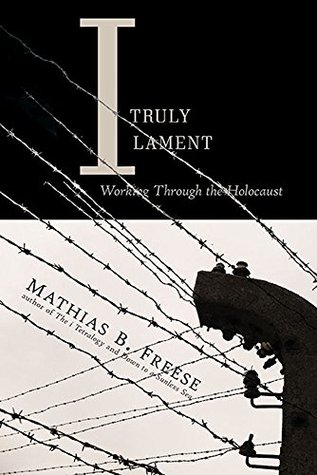
I Truly Lament by Mathias B. Freese

Published: 15th September 2014Goodreads badge
Publisher:
 Wheatmark
Pages: 230
Format: Paperback
Genre: Short Stories/Historical fiction
★   ★   ★  – 3 Stars

I Truly Lament—Working Through the Holocaust is a varied collection of stories: inmates in death camps; survivors of these camps; disenchanted Golems complaining about their designated rounds; Holocaust deniers and their ravings; collectors of Hitler curiosa (only recently a few linens from Hitler’s bedroom suite went up for sale!); an imagined interview with Eva Braun during her last days in the Berlin bunker; a Nazi camp doctor subtly denying his complicity; and the love story of a Hungarian cantor, among others.

Note: I was provided with a copy of this book for review

The stories in this anthology are not real accounts or experiences, they are fictionalised stories, and yet Freese does manage to capture a small part about what life was like for those during the war. Stories about starving in camps, being dragged away from villages and mistreated by guards, as well as the tales and haunting memories by survivors are all expressed through numerous stories and Freese explores these emotions really well.

Freese does not take one side or viewpoint in his stories, instead he uses a variety of perspectives from prisoners, guards, adults and children, and uses settings and moments that take place before, during, and after the war. Each narrative voice is good at expressing the required level of emotion and feelings, suitable depending on the character and the circumstance, and despite somewhat restricted descriptions, a vivid image of the various environments is possible.

Even though the topic is quite intense, not every story is haunting or depressing; some are humorous and light-hearted, some are certainly strange, and even those from prisoner points of view are fairly philosophical and reflective, yet don’t distract from the serious topic at hand. There are stories that explore falling in love in the early days of the war, about life within the camps, and stories that change the tone completely with humour, absurdity, and intense philosophical and psychological evaluations. For those stories of a darker nature, the details about life in the camps and the abuse suffered at the hands of guards is realistic but have limited detail or gruesome accounts. Freese does not make light of the treatment or shy away from the facts, but he also does not spend time describing it in great detail. There is a great deal of authenticity in many of these stories but Freese is restraining on making it too brutal to read about.

Despite being fictional, there is a ring of truth and real emotion in many of these stories that expresses the despair and torment of living in the camps, the justification by the Nazis, and even demonstrating that coming out a survivor does not always mean total liberation from the memories or the suffering. I liked that Freese chose to have many points of view from all parts of the war and from both sides involved. It balanced out the collection and it added a wonderful range of views and experiences of the same situation.

Admittedly not every story was up to the same calibre with some of greater quality and more enjoyable than others. Some were emotive and insightful and were wonderful at evoking feelings and circumstance while others were a tad bland and seemed to be lacking something. Having said that I did find a lot of the stories fascinating, not in a morbid way, but as someone who cannot even fathom what it was truly like, for prisoners or guards. There is no real way to wrap your head around these experiences and no matter how much you read you can never truly capture what it was like. Freese has tried to get inside the minds of people who experienced all sides of the war and has managed to reflect the numerous and various experiences rather well.

There is no denying the topic is one that is haunting and possibly uncomfortable for many, but this is not an anthology filled totally with heavy stories about sorrow and despair. Freese mixes up the styles and the tones and with a mixture of humour and reflection and tells touching stories that try and explore what people went through as a result of World War II. Certainly not all stories will be to everyone’s taste, and some are more serious and respectful than others, but what Freese has done in trying to take new approaches in discussing the Holocaust is certainly commendable.

You can purchase I Truly Lament via the following

Amazon

Amazon Aust

Where Freedom Rings: A Tale of the Underground Railroad by Steven Donahue

Published: 28th January 2015Goodreads badge
Publisher:
 Self Published
Pages: 192
Format: ebook
Genre: Historical fiction
★   ★   ★   ★ – 4 Stars

The thrilling story of four slaves who try to escape to the northern area of the United States along the Underground Railroad in 1853.

Kelsa Colver leads her husband and two young sons on the dangerous trek after a fellow slave is murdered by a vindictive slave owner. Along the way, the Colvers are assisted by various abolitionists, including a neighboring farmer, a progressive priest, a sympathetic lawman, and notable figures Harriet Tubman and William Still. However, their efforts are impeded by a dark family secret, and the interventions of a corrupt clergyman, vicious outlaws and greedy slave hunters.

Note: I was provided a copy of this book for review.

The story Donahue has written about Kelsa and her family is a captivating tale and one that depicts the hardships people had to endure and the risks people like the Colvers took in order to have a better life. The life the Colver family on the plantation is hard and the tension is evident, each of them ever fearful of something happening to them. This fear is made worse by hearing stories from other slaves and knowing little mistakes can have major consequences.

While the Colvers personal experiences were not as horrific as those around them, the fear of their daily lives is enough to push Kelsa and her family into escaping and join up with the Underground Railroad in an effort to secure their freedom. There is a lot of danger surrounding the Colvers during their escape and Donahue makes it clear the ongoing jeopardy the family is in. The fact that they are being helped by a network of people doesn’t mean their journey is any less perilous and that their covers may be blown at any time.

Only knowing a small amount of information about Harriet Tubman and the Underground Railroad it was really interesting to see how it worked and the secrecy of those involved. Operating by travelling through various means with the help of white people, as well as freed slaves, and reading about the effort they went through to ensure the survival and freedom of those in their care is pretty astounding.

The narrative manages to capture the tension and the immense pressure that is on the family as well as the abolitionists which adds wonderful drama to the story, never knowing what will happen. The fear Kelsa has about their journey is evident and Donahue expresses her worry in a realistic and very maternal manner. The harrowing journey from the south is filled with intolerance, vagabonds and thieves, as well as disasters that foil the best-laid plans. Quick thinking helps Kelsa navigate her family through the danger but the desire to survive is strong and sometimes self-defence is the only solution.

Kelsa is a wonderful character, she is strong willed and determined to give her family a better life, and she stands up for what is right, though ever wary of her circumstance. Everything she does is for the good of her family and she teaches her boys maths and how to read in order to give them a better chance at life. Her family is occasionally the reason they get in trouble but Kelsa handles it well, reprimanding them when needed and protecting them from others.

Donahue manages to express some of the reasons as well as the many risks slaves and abolitionists took in fighting against the law. The story demonstrates the dangers that faced those escaping and it shows that the journey to freedom was one fraught with danger and one that many took at risk to their own lives. Donahue never makes the lives of slaves or their escape seem simple, nor does he make it seem safe. The goal is always the north but the message is clear that crossing those borders is not always going to mean salvation or security and there may never be an end to the running.

One thing I liked about this story is while the story deals with slavery and living on a plantation, Donahue limits the graphic details about life for slaves without taking away its importance or the brutality. The experiences Kelsa and her family have are harsh but not explicitly shown, and many of the more gruesome and horror stories are told to them by people they meet or mentioned in passing, meaning the realities of their life and others are not ignored, but the details are kept brief and not too graphic.

Being based in a real part of history makes this story quite profound in a way. It demonstrates the hardships of life for slaves and Donahue approaches it with respect and understanding, never trying to make light of America’s past. The journey Kelsa takes with her family is a touching story that brings to life a fictionalised account of a journey that many real people took in hopes for a better life and is a reminder of the goodness of humanity but also the darkness.

You can purchase Where Freedom Rings via the following

Amazon

Amazon Aust

Amazon UK

Dark Southern Sun by Shaun J McLaughlin

Published: 1st December 2014Goodreads badge
Publisher:
 Raiders and Rebels Press
Pages: 284
Format: ebook
Genre: Historical Fiction
★   ★   ★   ★   ★  – 5 Stars

Dark Southern Sun is a story about love, friendship, and honour in the goldfields of old Australia.


 In this sequel to Counter Currents, Ryan washes up on the southern shore of Australia near death in 1845. Rescued by two Wathaurung native children and nursed to health by their parents, his life and theirs are entwined through good and sorrow for the next ten years. Set against the historical backdrop of Australia’s formative years, Ryan witnesses the displacement of the Aboriginal people, and he faces the chaos of the world’s largest alluvial gold rush and the bloodshed of Australia’s only armed uprising.

Throughout, two very different women—one white, one black—tug at his heart as he struggles from penury to prosperity. As he rises in social esteem as an astute businessman and cunning street fighter, Ryan creates two bitter enemies—one white, one black. In time, they set aside their vast racial and emotional hatreds and combine forces. Can Ryan survive their vicious attempt to destroy him and save the good life he has built?

Note: I was provided a copy of this book for review

Across ten years and coinciding with the gold rush, McLaughlin’s story is a beautiful and tragic story about life in Australia and the expansion of one culture and the decline of another. This is not the sole focus of course, at the heart there is a fantastic tale about the power of friendship and the life and successes of a former convict.

While this is a sequel to McLaughlin’s other work Counter Currents, it can also be read as a standalone. Counter Currents tells the story of how Ryan came to be sent to Australia and Van Diemen’s Land but these reasons and his story are adequately covered in this novel to make it understandable.

There are a few varying points of view but Ryan’s is the main viewpoint we are given. Ryan is an admirable character and someone who is proud and honest, and who stands up for what he believes in. His past makes him streetwise and clever but he is also fair and honourable.

It is not just Ryan who is shown to have honourable strengths and weaknesses, each one of McLaughlin’s characters is depicted as their own person; they are complicated, unique, and not just a background figure to Ryan’s life. Having such detailed characters draws you into their lives easily and adds emotion and affection to each of their actions. By staying alongside many of these characters for the ten year period you are able to see them grow and develop, understanding who they are people and what they represent. Such an approach is brilliant on McLaughlin’s part because it makes every event and action that happens hold a lot more meaning and deeper importance than it may not have if the characters were not as understood as much as they are.

The downside of the strong attachments that develop is that you become quite invested in each and every character. With the rejoicing of successes and the mourning of losses there are a lot of unexpected and multiple emotions to experience. Within this story that looks relatively innocent on the surface, lies a deeper and darker one lurking in the background. Given the context and era such a story was expected, but the way McLaughlin uses words and emotions as well as his characters to bring this story to life is marvellous.

One of my favourite discoveries about this story was just how many historical elements had been included and McLaughlin’s attention to detail and creativity for bringing together so many stories, lives, and events is astounding. The Eureka Stockade, Aboriginal culture, and life in 1800s Australia are brought to life, intertwining with Ryan’s story and there are also historical people dotted throughout adding an additional element of reality and history.

With McLaughlin’s writing there is never a moment where he begins to preach or demonise, and yet by capturing the society and conflicts so wonderfully within a brilliant story, it cannot help but highlight the issues of the era. He shows a lot of respect for both cultures and with impressive skill cleverly and effortlessly weaves many aspects of the turmoil of the time into the narrative such as bushrangers, settlement expansion, abuse and cruelty to Aborigines, as well as the legal and social laws of the time.

Knowing this story is based deeply on history and real events it can be quite a depressing and melancholic read. McLaughlin’s story captures beautifully and tragically the takeover of the Aborigine’s land and culture and seeing the opinions expressed by characters towards them is painful. But at the same time it is strangely fascinating and captivating to see it play out before you, knowing this is so close to what happened and how the arrival of white culture eradicated and erased much of the indigenous culture.

McLaughlin is a great storyteller and someone who manages to encapsulate the lives of people in a way that breaks your heart and fills you with admiration, sometimes even at the same time. Dark Southern Sun brings a moment of Australia’s past to life in its glory and its failings and offers up a stunning tale filled with strong friendships and unbreakable bonds making it a story that will stay with you for a long time.


You can purchase Dark Southern Sun via the following

Ebook

Amazon          Amazon AU

Amazon CA          Amazon UK

Smashwords

Paperback

Amazon         Createspace

Amazon CA          Amazon UK

Fishpond

Book Bingo Book Historical

Revenge and Retribution (#6) by Anna Belfrage

Published: 29th June 2014
Goodreads badgePublisher: Silverwood Books
Pages: 371
Format: ebook
Genre: Historical Fiction
★   ★   ★   ★  ★  – 5 Stars

 Life in the Colony of Maryland is no sinecure – as Alex and Matthew Graham well know. But nothing in their previous life has prepared them for the mayhem that is about to be unleashed upon them. Being labelled a witch is not a good thing in 1684, so it is no wonder Alex Graham is aghast at having such insinuations thrown at her. Even worse, it’s Matthew’s brother-in-law, Simon Melville, who points finger at her. Not that the ensuing hearing is her main concern, because nowadays Alex’s entire life is tainted by the fear of what Philip Burley will do to them once he gets hold of them.

As if all this wasn’t enough, Alex also has to cope with the loss of one of her sons. Forcibly adopted by the former Susquehannock, Samuel is dragged from Alex’s arms to begin a new life in the wilderness. How is Alex to survive all this? And will she be able to put her damaged family back together?

Note: I was provided a copy of this book for review

I definitely thought I was at a disadvantage when reading this book by not realising it was the sixth in the series, but Belfrage writes in such a way that if you pay close attention you do get told the key moments in their story and past that you have missed. By piecing together references and casual remarks the story and events of the previous books are made clear. Granted this isn’t in any detailed or complicated way, but it is enough, enabling you to enjoy and understand the current one.

Belfrage works it into the story seamlessly as well and while the references are often small and fleeting, they are enough to help you work out what has happened in the past, enabling you to understand how the events and situations in the current book came to be. As a result, even if you haven’t read the others, you still get intensely involved in the story and being so far into the series it could almost be a novel on its own, with only a more detailed back story required. As a continuation on the other hand, I can see it as a great addition to the saga, continuing the story of Alex and her family with real situations, events, continuity, and consequences.

Being the sixth book, there is a sense of it being another chapter in the Graham family saga rather than one that introduces anything new. A lot assumedly has been established in the earlier books and there is an investment in the family already. However even though it was my first introduction, by the end of the book I too was invested in the family, with the brief catch up to their past and the nature and honest reality of their lives, it is hard not to get involved.

There are great, complicated, and detailed characters that bring this story to life. Each character has their own story to tell and their own life to lead but they are all connected together so well. Belfrage manages to be detailed but not overbearing with information and despite the numerous characters, there is no confusion and it is fairly easy to keep track of who everyone is and what their role is.

Despite being from the future, by the time the sixth book occurs, Alex has spent many decades in the past and has established a life there. This means that there is a lot of focus on the current life, rather than her former, though there are occasional references and mentions about her life from the 21st century. Few people are privy to her secret, and it is great to see how those in the know cover when an issue arises and learn how she has hidden it so well. There is a fascination about each of these characters, not just Alex and her secret, and I got immense pleasure from reading about them and seeing their struggles and joyous moments.

The conflicts and dramas reflect the era but there are many similarities to the present day as well, reflecting what has changed and what has stayed the same. Seeing the Graham family live and survive without any of the modern comforts was part of the enjoyment and you realise just how clever and innovative the early settlers were. It also gives credit to Alex who is able to use her modern knowledge and adapt it to the different era successfully.

From the beginning of the book there is a feeling of something big developing and it grows steadily, snowballing to a gripping end through a narrative that is engaging, fast-paced, and at times emotional for numerous reasons. There are shocks and harsh realities, and some things that are very adult, brutal, and violent, something that may not appeal to everyone, but it is not without purpose and all of varying degrees. The characters are tough though and you see their strength and determination shine through with every obstacle that is thrown at them, no matter the size or severity. I don’t think you need to have been invested in these characters for five books beforehand to understand who they are, Belfrage demonstrates their strength and vulnerability so well, whether it is for simple things, the brutal, or the heartbreaking.

There is also a beautiful mixture of the present and the past, and even though Alex has become accustomed to her new life, there is still evidence of the old life shining through, making her stand out amongst the other characters. This is another reason to return to the beginning of the series, to see the gradual adjustment to this different life.

The historical aspects are well researched, and while I know little of American history, especially colonial times, there are minute details that bring this story together and add realism to the time travelling aspect. With so much happening there is never any real certainty of what will happen next, and with so many characters, each with their own troubles it means that surprises are always in store.

Belfrage has created a fascinating and captivating story filled with characters that you come to know, admire, and love. It is definitely a story that makes me want to go back to the start of the series and be introduced to Alex from the very beginning. From what is hinted at and mentioned in this book it is certainly a unique and mysterious journey but with an added danger as well, and one that is never truly forgotten.


Previous Older Entries Next Newer Entries