Artemis Fowl and the Time Paradox (#6) By Eoin Colfer

Note: Minor spoilers regarding the ending of The Lost Colony and the outcome

Goodreads badgePublished: August 7 2008
Publisher: Puffin Books
Pages: 430
Format: Book
Genre: Junior Fiction/Young Adult Fantasy
★   ★   ★   ★   ★  – 5 Stars

 After disappearing for three years, Artemis Fowl has returned to a life different from the one he left. Now he’s a big brother, and spends his days teaching his twin siblings the important things in life, such as how to properly summon a waiter at a French restaurant.

But now his mother is gravely ill and the only hope of a cure lies in the brain fluid of the extinct silky sifaka lemur. Artemis Fowl must travel back through time to steal the lemur. The rules of time travel are far from simple, but to save his mother, Artemis will have to break them all, and outsmart his most cunning adversary yet: Artemis Fowl, age ten.

  This was the book I was most eager to read I think to specifically see the story rather than just general excitement over the overall series. The ending of The Lost Colony opened up a range of questions and with an ending like the one Colfer gave us there was a need to see where the story was going to go or whether we’d be given a chance to see how it got there. So much had changed and Artemis’ world had changed so much that I was eager to see how Colfer handled it. Naturally, being Colfer, and with this entire thing planned to the letter, handled it brilliantly. The transition was seamless, there was no need to awkwardly explain anything, Colfer wove it through the narrative with a smooth fluidity that means as you read you just understood. It was all ok, and you found yourself being engaged and amazed in the new story before you could even think to question anything he had or hadn’t written. Hypnotic and distracting perfection, those are Colfer’s powers.

Thinking about it, new characters have always been welcomed, they added to the expanding world. I think the only question I had, certainly before starting it and not once I had, was about the introduction of the twins and how they would impacted on the Fowl family directly, new Fowl members that made a huge difference compared to the introduction of a new aspect of the Fairy world. But truly, making Artemis a big brother could have failed but it didn’t. Artemis’ character and the fact that the twins have such unique and very Fowl characteristics and unique personalities makes them both a little bit wonderful.

But despite this big change, it is not Artemis’ home life that is especially the focus, yes it is the base reason for the new adventure, but we do not spend the whole novel watching Artemis adjusting to being away for three years and having new siblings quite as directly. Colfer opens the novel in the middle of a situation where we instantly can gauge the relationship between the brothers and the Fowl Manor life. This simple action by Colfer shows us all we need to know, giving us comfortable acceptance over what is happening and what has happened with no need for us to see the missing scenes we know would have taken place. And once we have seen all is well, that is when he takes a sharp turn and sends us on our adventure, this time beginning with Artemis’ mother.

When Artemis’ mother becomes deathly ill and all attempts at curing only make things worse, Artemis enlists the help of the People to try and save his mother. We haven’t seen a lot of Artemis’ parents through the series, sporadically and often with a purpose mainly, and this is similar here but it did not really matter. Angela Fowl is a great character to add to the mix. She gets a little bit more of a role while not really doing anything to begin with, much like Artemis’ father in The Arctic Incident, with the focus more around the intent of healing Artemis’ mother and all the surrounding events, consequences and causalities.

Enlisting the help of Holly, No. 1, as well as Butler, and with no other option at his disposal, Artemis is determined to return to the past to procure the antidote for his mother. The trouble that is it to be retrieved not only in the past from a ruthless young Artemis, but from the Extinctionists he is planning on selling the lemur to. A group of people determined to capture and eat all the rare and endangered animals in the world certainly makes for a different kind of foe than in previous adventures, but naturally not all in as simple as it seems. Time travel soon becomes the least of their problems as new and old dangers appear around each corner.

The Extinctionists are definitely a group that I wasn’t expecting. The idea seems jovial at first but the way their organisation has been developed really can unsettle you if you think too much about it. And reading about these Extinctionists kind of makes you think about where the real ones are in the world, sneaking around with these grossly abused and ill gotten wares, but Colfer manages to raise the issue and bring it to point without harping on about it which is nice.

We see a small part of the old Artemis personality return when he tries to convince the others to travel back through time; this is before we actually see the actual old Artemis of course. With the events following the jump back we are shown a bit more of ten year old Artemis and his life before the events in Book One. I must say ten year old Artemis is almost worse than twelve year of Artemis but only by a little. His childlike compassion is understandable more so than as a twelve year old though. The contrast between young Artemis and his older counterpart is drastic, but having said that we have been gradually seeing an improving Artemis through the series, you do not realise how far he has come until we are forced to see the boy we began the story with side by side. And while we get to see little Artemis and Butler which is fantastic, we also see older Artemis reflect more on who he was and who he is becoming. I always liked tough and no nonsense Artemis but there is room I suppose for caring Artemis as well.

There is a jump between time as we see the present and the past action occur side by side throughout the book, but it is not confusing, at least no more than any other Artemis Fowl novel.  The fact that Colfer is returning to the past is clever, and opens up for a lot of questions about what sparks an adventure, who influenced whom and as Artemis says, if it happened in the past then it has already affected the future.

Paradoxes are hard to manage but Colfer manages this superbly. Going back to the past creates its own issues but the way it links together is fantastic. When authors go back after establishing a certain reality, similar to C. S. Lewis in the Narnia books, there is an advantage to create things and do things that bring about an event or occurrence that’s to come as it were.

This is a terrific story that plays out and it makes you want to keep going if only to see how it could possibly be resolved. In addition there is a reappearance of old characters in large and small ways which is also excellently done. Colfer knows where to have people in a story and where not to. There are reasons people are included and whether they are excluded, no one is anywhere by mistake and nothing is mentioned by chance. There are Artemis’ schemes and sneakiness as per usual but we are also privy to more information, history, and detail about the Fowls than before which is an added bonus. There was even a truly wonderful heartfelt moment with Artemis towards the end which was moving and very brave I thought for him and for Colfer. But as I say, Colfer reveals everything to us marvellously and we are able to appreciate each moment no matter how action filled it is or the circumstance. I even detected an excellent Douglas Adams reference in there somewhere which I sincerely hope was intentional because it made me smile.

You seem to go through multiple adventures at once with this book, just when you think one is over another rises up, and while it seems like a jumbled mess of chaos it works oh so brilliantly you can’t imagine. There certainly seems like a lot of planning involved and I would love to have been there when Colfer realised he could make the connections he does, or even whether it was his plan all along, either way I applaud him.

As per usual there is just so much involved in an Artemis book that you cannot comment on it all, and even then you’d forget something or ruin a surprise so it is mainly emotion here because I am giving nothing else away. The joy is in the experience and unexpectedness as always, not to mention getting swept up in the characters, the chaos, and the pure admiration for the effort Colfer has put into not only each novel but the level of detail in the stories and the worlds in which they’re placed.

The Wonderful Wizard of Oz by L. Frank Baum

Birthday

L. Frank Baum, the mind behind The Wonderful Wizard of Oz, was born today in 1856. Baum was the seventh of nine, and grew up in New York. He began writing at an early age, and with the help of a printing press his father gave him, he started publishing newspapers and small journals with his brother.

By the time Baum would come to write the story of Dorothy he was 46 years old and having tried many occupations before in newspapers, theatre, and even fancy poultry breeding which apparently was a thing at the time. The book became a best seller for two years after it was published, and was soon turned into a musical stage version. A lot of the novel was altered for the stage, including the removal of the Wicked Witch of the West, and was aimed at adults more than children. The plot is almost nothing like the original, though Dorothy landing on the witch ends up in there, as does the Scarecrow, Tinman, and Cowardly Lion, though the Tinman and Scarecrow look like characters in a horror film. A summary of this play can be read here.
There have been many adaptations of The Wizard of Oz in many formats (the book and musical Wicked and the film The Great and Powerful Oz the most recent), and Baum himself wrote many more adventures for Dorothy and the Land of Oz. Initially Baum only intended on writing the one book, but the popularity and request for more Oz adventures made him write more. In some ways it is a bit like the Chronicles of Narnia, each book looks at the same area, but different sides of it, and new characters and places are explored, but it is still Oz. Dorothy even goes to live in Oz for a while which would be interesting to read about.

Baum died aged 63, and the final Oz book, Glinda of Oz, was published in 1920, a year after his death. Other writers continued the Oz series though, most notably Ruth Plumly Thompson, who wrote another nineteen in the series. When I learnt this I was rather glad I only even knew of one book. Similarly to Black Beauty, I think the story is very nice on its own, but I do understand where more stories could be added and sometimes prequels can work better than sequels.

Out of all the stories of Dorothy people remember the original book the most, possibly trumped only by the Judy Garland movie in 1939. It is very hard to review this book without comparing it to the classic movie, but I will try my best not to do it as much. The movie is very different from the book in some parts, while other parts are the same. The book has a bit more danger and violence, though it is only mild.

Published: October 3rd 2006
Goodreads badgePublisher: Signet Classics
Pages: 220
Format: Book
Genre: Junior Fiction
★   ★   ★   ★  – 4 Stars

A cyclone hits Kansas and whirls away Dorothy and her little dog Toto to the magical Land of Oz, where wild beasts talk, silver shoes have magic powers, and good witches offer protection with a kiss. But Dorothy has made an enemy of the Wicked Witch of the West. With her new friends the Scarecrow, the Tin Woodman, and the Cowardly Lion, they brave many dangers in search of the Wonderful Wizard in his Emerald City at the heart of Oz to ask him to grant each of them what they most desire.

Baum wrote in 1900, “the story of The Wonderful Wizard of Oz was written solely to please children of today. It aspires to being a modernised fairy tale, in which the wonderment and joy are retained and the heartaches and nightmares are left out.” And I think it lives up to this immensely; there are the heroes that can be identified with, and the villains that need defeating. This brings the wonder of the fairytale to life in a new way and in a magical land that is far from the reality of the real world.

The story opens on Dorothy, a young orphaned girl living in Kansas with her Aunt Em and Uncle Henry and the scene is set. Baum describes Aunt Em and Uncle Henry as being grey, with sullen looks with a stern face and no reason to be merry anymore. The Kansas landscape is also described as grey, grey prairie on every side, the ploughed land is a grey mass, the house had turned grey, and even the grass was not green, burned by the sun to turn it grey as well.

This description makes Dorothy’s arrival in Oz so much more wonderful; the colours describes gives an obvious contrast to the life she saw at home. The sequence of getting Dorothy to Oz is a simple one: Uncle Henry feels a cyclone coming but before Dorothy could get herself and Toto to safety in the cellar with her aunt, a great wind shakes the house causing Dorothy to fall over. The cyclone arrives suddenly and picks up the house, with Dorothy and Toto still inside.

When the house lands, Baum shows us the difference of Oz compared to Kansas instantly, as the bright colours and sunshine are our first introductions. As Dorothy leaves the house we are then introduced to the Munchkins, the people who live in the land. When the house fell, the Munchkins called for the Witch of the North and it is through the Munchkins and the witch we are told a little about the land.

The Munchkins explain about the four regions and who lives there, while the Witch of the North explains that Oz is an uncivilised country, and as such it still has witches and wizards amongst them, four witches in total, two good and two bad. Having crushed one with her house, Dorothy has freed the land from one of these witches. Dorothy is given the Witch of the East silver slippers as a gift, slippers that hold magical properties but no one knows what they are.

The Witch of the North is introduced as a little old woman, and when Dorothy is faced with the prospect of living with the Munchkins forever, the witch uses her magic to find a solution; this is of course to go to the City of Emeralds and seek help from the Great Wizard, Oz.  What I found was interesting was that the slippers were not a key focus initially; in fact Dorothy puts them on the kitchen table at first and forgets about them. Only as she is about to leave she puts the slippers on mainly because her current footwear would be unacceptable for the walk she was about to do.

I enjoyed Baum’s descriptions in this book of characters and of the land; they are simple but very telling at the same time. He uses descriptions well and in the right places, so while the story may change quickly in some places, other parts are prolonged and drawn out. But all the while a lot of it does not delve into anything too deep and emotional; it has the air of practicality and doing what needs to be done.

Through her journey to the city Dorothy gathers companions by the way of a scarecrow, a tinman, and a lion, all choosing to come with Dorothy and ask the Wizard for their own desires. As the four travellers continue, they face many obstacles including deadly poppies, vicious Kalidahs (a monster with the head of a tiger and the body of a bear, oh my!), and a river.

The city itself is described as being beautiful, and Baum captures the feeling of its splendour well. The next stage in the journey begins when, upon meeting the Great Wizard, he gives Dorothy and her companions a mission, only then will he help them. The dangers and mild violence come from the Wicked Witch of the West herself, sending wolves, bees, soldiers, and crows after the group; these however are either killed or scared off by one of the party. The story with the Witch and Dorothy is so different from the movie is what makes it wonderful. There is a plan and a scheme from the Witch’s perceptive and she takes her time.

The act of getting Dorothy home is a long and complex process, we are shown almost all the regions of Oz, and Dorothy and her companions meet all three remaining witches in the land. There are many tasks and quests undertaken before Dorothy can get herself and Toto home, and it is through these journeys that Baum provides us with the fate of the companions and what is to become of them once Dorothy returns.

There are so many more characters and adventures in this book than in the movie it really makes the journey seem a lot more challenging, and puts a lot more emphasis on Dorothy and her friends in their actions and saving themselves. There is magic, but there is also a lot more simple bravery and saving oneself.

When Dorothy eventually returns home we are given the impression that her absence has been in real time, and it was not a dream. That is the best part; I often felt the movie made things too simple by simply having her wake up. The ending is abrupt, but the point is clear: it’s good to be home.

There is no indication of what happens now she has returned, whether things return to their normal grey selves or not, but this is where looking into the sequels helps if you wanted to know, it enables you to see what happens next to Dorothy and her family. It is definitely an excellent story, and one that has been loved by everyone, and often when something has been remade and recreated so often, it is nice to go back and see where it all began.

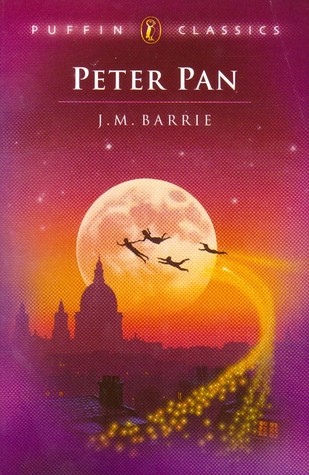
Peter Pan by J. M. Barrie

Birthday

A huge happy birthday to James Matthew Barrie, author of the wonderful Peter Pan! I loved this book, I love that Barrie creates this world and these characters that are wondrous and engaging, but he also writes the story with heart and sometimes blunt truths, there is no real romanticising about life, Neverland is the wonder away from the rest of the world and that is why it is marvellous.

In Kensington Gardens in London there is a status of Peter Pan honouring Barrie. Peter is playing his pipes and has animals at the base; it certainly lends itself to the theory that Peter Pan has a connection somehow to the Greek god Pan. I know him best for the novel Peter Pan, but J. M. Barrie had dozens of others works before and after of both stories and plays, right up until his death in 1937. He was knighted in 1913 for his literary work and in the same year became Rector of St Andrews University. His other successes include becoming the President of the Society of Authors, a title which he took from Thomas Hardy which is cool.

I never knew he was knighted, but I do remember that when I was studying Barrie and Peter Pan at university, it became very clear that he was certainly peculiar, or at least lived a strange life, one that no doubt impacted on him. He was not all strange though, he knew some excellent writers of the time including Robert Bernard Shaw, H. G. Wells, and Robert Louis Stevenson.

He was the ninth child out of ten, two having died before he was born, and as an adult he was only 5″ 1′ (about 155 cm). When he was young his brother David, who was the next eldest and his mother’s favourite, died just before his 14th birthday. It devastated his mother and Barrie then it seems devoted himself to trying to fill David’s place, to the extent that he even dressed in his clothing. Barrie wrote a biography of his mother called Margaret Ogilvy, and in it he discusses his mother’s reaction to David’s death, as well as his attempts to please her afterwards. If you want to read it it is available from Project Guttenberg for free.

There was a wonderful theory that we heard in class that Barrie wanted so badly to be David and be the “son who never grew up” for his mother that he developed psychological problems and even managed to stunt his growth and proper adolescent development. This does not seem to have any grounds in fact I think he was just short, but he was no doubt strange enough that he probably tried. His innocence that he held until adulthood made him the perfect candidate to write a story like Peter Pan, he never properly grew up, and loving to write and tell stories probably helped this, he could stay young and innocent forever through words. He was initially discouraged from becoming a writer, I for one am very glad he chose to write, where would we be without Peter Pan to fill our dreams and fantasies and to fly us to Neverland in the middle of the night?

Peter Pan has many influences, but the main ones that inspired the play and the characters of the Darlings was the connected to Mr and Mrs Llewelyn-Davies and their boys George, John, Peter, Michael, and Nicholas. And before the legends and did you know facts appear, no he did not create Wendy, it was a name prior to the first appearance of Peter Pan, Barrie simply popularised the name.

There is truly so much going on with Barrie, his relationship to the Llewelyn-Davies family that helped create this Peter Pan world, not to mention the sad fate that many of them had. The entire history and environment and life of Peter Pan is absolutely fascinating I could write forever on, but I won’t, I will however review Peter Pan, one of the greatest books, certainly became established in society and popular culture, and definitely a classic for all ages.


Published: January 1st 2002
Goodreads badgePublisher: Puffin
Pages: 242
Format: Book
Genre: Junior Fiction
★   ★   ★   ★   ★  – 5 Stars

The boy who refuses to grow up teaches Wendy and her younger brothers how to fly. Then it’s off to magical Neverneverland for adventures with mermaids, Indians, and wicked Captain Hook and his pirate crew.

Everyone seems to know the story of Peter Pan, the boy who wouldn’t grow up, Tinkerbell and Wendy, and the mystical world of Neverland. I first knew of this story through the Disney version, but I also had a video of an Australian cartoon version which I also loved. Many of the versions of this story keep a lot of the same elements in it, there is no Peter Pan without pirates, Indians, or mermaids, but there are certainly some varying elements compared to the book.

The story of Peter Pan first appears in The Little White bird, a story written in 1902 by Barrie and was intended for adults, not children. The first real sighting of Peter is in the stage play in 1904 where it was titles Peter Pan, or the Boy Who Wouldn’t Grow Up. The novel version, which is probably the most well known version (aside from the movie interpretations), was extended from the original play and published in 1911 as a novel.

With the extended novel there is a chance to expand on character and ideas. There is also a lot more story within the book compared to what people know from the popularised Disney film. There is a lot more involvement of Mr and Mrs Darling in the book, and they come home as their children are flying out the window and know that their children are missing. Wendy, John, and Michael’s visit to Neverland happens in real time, and the time they spend there with the Lost Boys, Peter and Tinkerbell is time passing back in London. We get to see the reaction and life Mr and Mrs Darling have while their children are gone.

Barrie actually opens Peter Pan telling us the story of Mr and Mrs Darling, it is all very sweet. This also helps you understand them as people and parents, they are not just the parents with the story focusing solely on the children and their adventure, it is about the whole story sequence, not just the characters, but in the same wonderful way it is also so much about the characters.

I remember when I first read this story and realising that having a dog as your nanny was not a Disney invention of movie quaintness, it is actually in the book. Nanna it seems gets to have opinions about things and is a very good nanny. There is no first person narration for any of the characters, but Barrie does tell us what everyone thinks when it is required. Though this is not the only strange thing, there are other peculiarities, Mr Darling literally spends time in the doghouse out of guilt for his missing children, neighbours walking by and judging and everything. That was rather strange, but it has its humorous sides as well. It isn’t so much an absurd, only very strange at times.

There are many great moments in this book, even just reading about flying, the journey to Neverland and the adventures that await them. There is a little violence in this book regarding pirates and fairies, but it isn’t described in great detail, but it is still there. Peter helps this a little, in his own childlike way, brushes over things and quickly moves on to the next thing, always chasing another adventure as we are told. Tinkerbell speaks in the book, and there are additional characters and variations of scenes which make it that much better. A lot of Peter’s character is seen in his actions and his leadership. He can change from being proud and selfish to being rather noble and sweet very quickly.

Peter Pan is certainly not the exact character that the movies portray him as; in the book Peter Pan has much more selfish childishness as well as the naivety and cockiness. It is actually mentioned one of the reason Hook hates Peter so much is that he is always so cocky.

Peter is not the only bunt one, Barrie does enough of his own in his narration and explaining, it is very matter of fact, but Barrie expands on what needs to be told and what does not. The voice Barrie uses is one of a storyteller, you get the feeling he is speaking to readers as he recounts the lives and adventures of Peter and Wendy, this certainly adds to the magical nature, like a tale of times that once were.

Barrie definitely brings us some memorable characters in this book, not to mention quotes like “Second star to the right, and straight on till morning” and particularly “To die will be an awfully big adventure”, which is one that has stayed in my mind for years. It is rather telling of Peter’s mind when he says this. He has such a carefree attitude, never worrying and is not typically one to fret over anything. He definitely has a child’s mind, he moves from one thing to another, and quickly forgets things if they are over or no longer concern him. Though the connection and relationship he has with Wendy is sweet, you can feel that he loves the idea of having a mother and being cared for, but he wants things his way in his land, being the child forever.

The ending of Peter Pan and the events in the final chapter I found to be some of the most heartbreaking moments in this book, and certainly was not something I was expecting. I think it is a brilliant ending, but I felt such a pain as I read because it was so innocent, but also so sad at the same time; Barrie did an excellent job. There are entire moments of brilliance in this book, heartfelt, magical, and all round beautiful. You take the abruptness and the selfish Peter and you see him and others in so many other lights that it is all part of the magic and wonder that is Barrie’s story. There is so much to gain from reading this over a movie, the movie can bring you to the book, but the book can give you the soul of the story.

The Viking’s Apprentice (#1) by Kevin McLeod

Published: March 28th 2013
Goodreads badgePublisher: Self published
Pages: 125
Format: eBook
Genre: Junior Fiction/Fantasy
★ ★ ★ ★ ★ – 5 Stars

What happens in Campbell’s Cove, must remain in Campbell’s Cove. 

Campbell’s Cove is a town steeped in a rich history of dragons, witches and brave warriors. History tells of one Viking warrior who rose above them all to claim the ultimate prize. Hundreds of years later strange things start happening in the town. Could the Viking stories be true? Has the evil returned? Who can protect the people?

When school friends Peter and George take their summer holiday with Peter’s Granddad it turns into an adventure that they will never forget. Peter must face a future he could never have dreamed of and learn of a past that has been kept secret for hundreds of years. A fight for friendship and survival and a struggle against an ancient evil that takes them into the Caves of Campbell’s Cove and beyond.

The Viking’s Apprentice is the debut novel for author Kevin McLeod and as soon as I read the plot and saw the cover I went hunting for this book. When I realised it was an ebook only I downloaded the necessary apps and away I went head first. This is an excellent book, just as it looked like it would be. What McLeod does is he has created a world of mystery and magic within our own and even in this first book, for even as I read I could tell there would be a second, is he has engaged readers. He uses stories of an ancient time, seemingly simple, but with so much hidden meaning and history behind it, to reveal the past, explain a story and begin an adventure. However it is the way in which he does this is what was wonderful: by using characters to do the work for him he enables readers to learn alongside the children as they too hear the wild adventures of the past, hearing tales of heroics of Vikings and warriors, dragons and battles.

The story begins with Peter and his friend George going to stay with Peter’s Grandad at Campbell’s Cove for the holidays. We learn that Peter does this often and what we know of Grandad is he is a teller of stories, stories about the Cove’s history, rich in dragons, warriors, and witches. The descriptions in this story are wonderful, but it also allows the reader to create their own images. The images created as you read Grandad’s stories to the boys about when dragons were fought and villages were under threat are excellent. In so few words seemingly complete stories can be told. This is another clever trick by McLeod; readers are given the same position as the children in the beginning, we, as they, sit impatiently while Grandad recounts his stories. This is where our knowledge comes from and we must wait, unless you start speculating like I did, but McLeod gives nothing away until you and the children need to know.

In other books like Fforde or Colfer or Nix where you know the authors like to play with you so readers only get what the author wants them to have until they’re ready, McLeod does this as well, and uses the children wonderfully to do so. They are not exactly withheld information, but within the story characters respect the relationship between the boys and the Grandfather, and when questions are being asked the main response is, ‘I think it would be best for your Grandad to tell you, or ‘he wants to be the one to tell you’. I liked that part, we are being held filled with suspense about what exactly is going on, but there is a reason for it that you know will be better to help gain a full idea of the story.

That is not to say we stick with the children the entire time through this story. McLeod gives us both sides of this saga, and the ambiguity and secretive unspoken and unexplained snippets about the coming danger is very creative. This is where we are treated as a reader away from the children; there is no information though, only secrets and mysterious figures. What I always like is that there are unexplained actions that occur but we see no explanation of meaning we are left to try and figure it out for ourselves. For a book suited at this age and audience, it is rather intricate and mysterious, something I applaud.

Where this story begins to grow in excitement is when these two stories we’ve seen combine and the past seems to return, and perhaps the Vikings and dragons of Grandad’s tales are become less of a story and more of a reality. I am offering no spoilers so don’t even try, but I will say that I adored how this was revealed and how it played out. I really liked though that McLeod was able to capture the urgency in the story with his writing, you definitely feel that things have become chaotic, or have calmed down, or that there is an eerie feeling. This certainly helps create feeling of a story without actually making it blatantly obvious and announcing it to readers. By the end of this book you are hanging out for the next one, McLeod has set up this story very well and he adds just enough to make you want to keep reading about these characters and see the effects and consequences o the events in this book. I look forward to continuing this series.

The Scarecrow and His Servant by Philip Pullman

Published: November 3rd 2005
Goodreads badgePublisher: Corgi Yearling
Pages: 230
Format: Book
Genre: Junior Fiction
★   ★   ★   ★ – 4 Stars

One night there was a thunderstorm. A tattered scarecrow stood in the wind and rain, taking no notice . . . until a bolt of lightning struck his turnip head. The scarecrow blinked with surprise and came to life.
So begins the story of the Scarecrow, a courteous but pea-brained fellow with grand ideas. He meets a boy, Jack, who becomes his faithful servant, and they set out to journey to Spring Valley together. Along the way there’s no end of excitement – battle and shipwreck, brigands and tricksters – and it’s up to Jack time after time to save the day.

After yesterdays grand post I feel a nice short one is in order. I also cannot believe I haven’t reviewed a Pullman book yet! This must be rectified. And since we are making it nice and short, no Dark Materials this time, but they will come I assure you; maybe not today, maybe not tomorrow, but someday.

The Scarecrow and His Servant is an absurd story but it is fun and light-hearted even when it covers the occasional unpleasant topic. These unpleasant topics are not adult or grotesque in any way, but rather have the ability to be blunt on occasions. This is masked I suppose by the madness and jovial absurdness in characters, and also in the occasional sentimental and touching moments as well, all combining to make the story realistic (as it can be) within the created narrative.

The story starts with the creation of a scarecrow and the discovery of this scarecrow by a young boy. Together they have adventures and get into trouble and become friends. The scarecrow is a combination of grand optimism, ignorance and simple dimwittedness. The young boy Jack has some sense in him, and is often having to talk the scarecrow out of trouble he’s gotten in to. And, naturally because everyone is as mad and absurd as each other, his strange explanations are perfectly acceptable.

There is a fairytale quality about this story which Pullman is brilliant at doing, he adds magic and surrealism to real life places and circumstances that tweaks reality a little but keeps everything else alone. I rather enjoyed this book, it was different and curious, but there was moments in the story that seemed so obscure and strange that you just had to go along with it. Some moments in the scarecrow and Jack’s adventures are heartwarming, while others are dangerous and seems quite stupid. It is best to remember that this is in fact a scarecrow and a child, no matter how in control either of them seem to be. And the fact no one notices/minds the walking talking scarecrow is another thing you don’t really notice until you think about it and then it just becomes something you accept.

I particularly liked the ending, after the mystery and tangents and questions it was nice to see some form of resolution. With all the characters and friends the scarecrow and Jack come across it is a fitting ending given their strange journey, and Pullman manages to bring the story round from its madness very well indeed. Despite being a children’s book I think with its twists and turns, adventure and suspense the story is engaging for everyone and it adds a bit of silliness which, when done as well as this, is never a bad thing.

Previous Older Entries Next Newer Entries