Andy Smithson: Blast of the Dragon’s Fury (#1) by L.R.W. Lee

Published: April 13th 2013

Goodreads badgePublisher: Createspace
Pages: 220
Format: eBook
Genre: Junior Fiction/Fantasy/Adventure
★   ★   ★  – 3 Stars

From the After Life, ten-year-old Andy Smithson’s relatives initiated a curse 500 years ago. Now they no longer agree it should continue and one is willing to sacrifice Andy’s life to end it. Unaware of the disagreement and with no say in the matter, Andy is unexpectedly and magically transported from his home. He finds himself in the Land of Oomaldee, facing mortal danger at every turn as he seeks to find a scale from a rare red dragon, the most ferocious of dragon species, to break the curse and save his life.

I was given a free ebook by the author for review purposes.

Andy Smithson: Blast of the Dragon’s Fury is the first book in L. R. W. Lee‘s series and is the story about Andy, a ten year old kid who is trying to live a normal life, however when he is drawn towards a trunk in the attic everything changes. Dragged from his home he is transported to the mysterious Land of Oomaldee where he is told he is the one who will break a curse, find a dragon, and rescue a kingdom.

I enjoyed reading this book, I think the idea behind the narrative is very clever, and certainly leaves room to be developed further through a series. We are introduced to this curse but we are not given the exact nature aside from snippets of information. This makes you very curious about what is happening and certainly makes you eager to find more about the curse. This is a good tactic, and one Lee does well, while we are not privy to everything going on, we learn with Andy about the land, the curse, and what his role is to save the King and the kingdom.

The story opens with a prologue, and while some people dislike prologues, I don’t mind them when they are done right. I don’t think of them as a set up or explanatory back story exactly, I think they can sometimes be something that just gives you a glimpse of the story or the world even before you know what is going on. Then once the story starts you can dive deeper and read the rest, maybe even have a moment in the middle where a detail from the prologue makes the story make a bit more sense and brings clarity to a scene. The prologue in Andy Smithson does show us a history, but also does not give a lot of answers either. Once you get involved in the story you know certain things, but there is still a lot unsaid.

Lee gives us a great idea of the world Andy finds himself in, the descriptions are just right, without being too bogged down with detail, and there is enough the create a great image in your mind of the land and the people. Like a true fantasy novel, a map of the land if given at the start of the book showing the regions of the Oomaldee land as well as the surrounding lands. Through the novel a lot of regions are mentioned, and as Andy begins his quest it is a good focal point to understand where he is and where he needs to be, but Lee uses words well and as Andy travels around the land the pace and detail used is enough to make sure a clear image is created in your mind. With more books in the series no doubt we will get to explore more of the land, as well as those surrounding it, but what Lee has already provided is an enticing teaser.

The characters in Andy Smithson are unique, and have their own quirks and characteristics. There is the King of Oomaldee who is tired of the curse and wishes to free his kingdom, and by his side is Mermin, Mermin apparently being the brother of the great Merlin, and who has a speech impediment. Another character is Alden, a servant boy in the castle who becomes friends with Andy. Alden is a good character, he is bright and helps Andy find his way around the land.

Certain characters of course get more padding, but there is still plenty to gain an understanding of their character, especially through other character’s eyes and in their actions. This reduces the need for complicated histories and analysis of minor characters. This is almost true for the main characters as well, there is not a lot of intentional describing or catch up histories, instead, as Lee focuses on them a lot more, we see who they are, the life they lead, as well as the person they are through the narrative. This works well as a book for this age bracket because it is woven into the story, and the character of a person is developed through the story and readers can see it for themselves rather than be told how a character is as a person.

The only thing that caught my eye was the strong moral messages that were throughout. I can see that reading it as a child these may not be as noticeable, one of the disadvantages of reading as an adult I suppose, but they could have been less obvious I felt. They come and go quite quickly but they stood out. Even if a moral message was intended, perhaps weaving it into the story a bit better would be better rather than having Andy experience inner conflict and resolve it almost within the same page. Perhaps this is connected to the fact we see so much of this world through Andy’s perspective, as a child we are shown things through the eyes of a child and therefore we are exposed to the feelings and emotions that come along with this perspective.

I think that these lessons are good, they show kids a range of issues such as keeping secrets, controlling jealousy, and dealing with other issues that arise in a kid’s life, but whether they were too deliberate may be a disadvantage. There are some excellent moments where you can read between the lines with relationships and gain a lot of insight into characters and relationships, especially what is said and not said, those moments can speak volumes compared to what is spelled out. These were the moments I thought Lee did very well, a great example was Alden and Andy towards the end of the book; a lot could be said by what Alden did and especially did not say and lessons are shown as well as an insight into his character.

Even given the small insights in the prologue we still learn alongside Andy, we uncover things as he does, and while we may have theories or figure things out before him, it doesn’t always mean we necessarily know things he doesn’t. There is drama and friendship, and the fairytale notion of the child hero that is trying to save the world.  As I say, the premise is quite good, an adventure story with secrets, mysteries, and curses to keep you engaged. This story goes back to the long adventure stories where there are dragons to fight, kingdoms to save, and travellers wandered the lands with bags on their back with everything in it, seeking help from people they meet or in villages. It is ideal for a kid to read about this kind of adventure and imagine the world Andy fell into.

With the ending Lee gives us it is enough of a cliff hanger to make you want to get right into book two, yet still manages to feel like the book was finished right, a bit like the last chapter was more of a teaser into book two rather than an ending to book one, it is done quite well. I look forward to seeing where it goes next.

The Sword in the Stone (#1) by T. H. White

Birthday

Today is T.H White‘s birthday, the man who wrote the series The Once and Future King, about the legend of Arthur, Merlyn, and the knights of Camelot. Terence Hanbury White was born in Bombay in 1906, and was 32 when he published The Sword in the Stone, which was initially meant as a prequel to Sir Thomas Malory‘s famous 1485 Le Morte d’Arthur. Two sequels were published, The Witch in the Wood (later rewritten as The Queen of Air and Darkness) in 1939, and The Ill-Made Knight in 1940. But when the complete collection was compiled there were five stories in total and the order was altered a bit. The version of The Sword in the Stone included in the complete text The Once and Future King differs from the earlier version. It is darker, and White’s indirect experience of World War II had a profound effect on these tales of King Arthur, which include commentaries on war and human nature. This is certainly evident in the later books as well.

I knew nothing about T.H White and reading up on him he certainly was interesting, there are speculations he was a homosexual sadomasochist; into small girls; not a homosexual, all these things. Good ol’ Wikipedia has the theories and the references if you wish to explore his life a bit more, I’ll admit I am only here for the wonderful stories. He revised Sword in the Stone a few times, which resulted in a few stories being added and removed and all sorts of things. I read a couple versions and trying to figure out what went where and who was left out does your head in, so I won’t try and explain how that went down and what stayed in or not.

Published: December 2nd, 1996 (As part of The Once and Future King complete edition)
Goodreads badgePublisher: Harper Collins
Pages: 223
Format: Book
Genre: Junior Fiction
★   ★   ★  – 3 Stars

In old Merry England weather behaves. In the Castle of Forest Sauvage, Wart (rhymes with Art for Arthur) follows Sir Ector’s ‘proper son’ Kay, two years older. Wizard Merlyn, fewmets from talking owl familiar Archimedes, turns boy into perch, hawk, owl, stone, and badger for their lessons and stories – until King Uther dies without heirs.

The Sword in the Stone is the first book as part of what became ‘The Once and Future King’ series, and my first criticism is that I can see why there are sequels, you can’t get it in one book, and because White starts from the very beginning it would hardly do it justice. I read the version that ended up in the collection, so I don’t think I got to experience the lighter version as it were, but it was still great. This first story is about a young orphan named Arthur living in medieval Great Britain. Arthur is nicknamed Wart, and works as a page for his guardian Sir Ector. With his companion and foster brother Kay, he leads an ok existence, but the true adventure begins when he stumbles across Merlyn, a time travelling wizard, and Arthur soon becomes the student, alongside Kay, to Merlyn’s tutelage. Merlyn guides Arthur and teaches him about the world through magic, and trains him in the ways of the world.

So much of this book is setting up Arthur and his life as a child and his adventures, the known aspects of the story are not a main focus, instead we see Arthur and his relationship to Sir Ector, Kay, and the Merlyn. Kay does have a few roles to play in this early tale, and while Merlyn focuses on Arthur, Kay is not left out of the loop much, either that or Merlyn concocts some distraction to find some time to play with magic.

With Merlyn’s help, Arthur is turned into animals of all kinds to gain a sense of their life, and he has many adventures with other humans such as Robin Hood (Wood in the book) and Maid Marian, King Pellinore in his quest for the Beast, and many more. These adventures seem trivial and fun at first, but with Merlyn’s knowledge of the future, he is essentially training Arthur to be the King, teaching him about the world, nature, and man’s duty in the world.

It was a pretty good book, especially some of the explanations and science behind why things are what they are. I think having Merlyn be a magical character who knew more than most was a great advantage because you had modern knowledge in the medieval setting. And White’s knowledge of the medieval era was excellent, his attention to detail about the sports, dress, and other aspects added to this sense of reality, however there are clear indications that no real effort was made for some aspects of historical accuracy, as well as the fact that Merlyn was a wizard, a wizard that experienced time backwards rather than forwards.

After accidentally starting an abridge version, when I switched to a full copy I realised a few good stories had been removed which I thought was a shame because in the version included in the complete collection they all kind of return in the end and come full circle so I am not sure how the edited text would have covered that.

The animal stories White explores when Arthur is transformed by Merlyn, are very sweet, and give you a great look at the inner workings of the animals and their lives. The way White explores the life and manner of the animals, and Arthur’s uneasy and new presence in there, it is pretty spectacular, it balances out the anachronisms. There is some realistic and detail science and observation evident, and manages to teach you things.

The Sword in the Stone is such a famous story and I did not know there was more than one, and waiting as I read to find the familiar scenes I knew was interesting because it is a very drawn out story. I guess in a way the extra novels means that it is not condensed into one, and there is no hanging unexplained conclusion about what happened, but it is interesting that the key moment is such a small part of the first novel in terms of pages. The effect of course would be seen in the sequels.

There was a Disney version in 1963, because there always is, and it is rather good. This only covers the first book and sticks to the general plot, and a lot of the fleshed out substance is removed, but a lot of the scenes are similar to what is found in White’s. Perhaps there are just some elements of this story that will be kept true, even if other aspects are reimagined.

So Happy Birthday T. H. White, and I thank him for writing this series. I know everyone upon everyone has done an Arthur story and made a version, or told a story about it, but I loved White’s telling. You get drawn into the life of this kid, who started out small and became so big. By the time I had finished all the books I was so enthralled and amazed it was simply divine. I do recommend that you read Sword in the Stone and the sequels because it is well written and as I say, manages to teach you about things you never really thought about before, not just about animals, but about humanity, war, education and even a little bit of history.

Of Poseidon (#1) by Anna Banks

Published: June 1st 2012
Goodreads badgePublisher: Hardie Grant Egmont
Pages: 324
Format: Book
Genre: Young Adult/Fantasy
★   ★   ★  – 3 Stars

Galen is strong, protective and gorgeous, with striking violet eyes and a body to make you shiver – and that’s just when he’s in human form. He’s from the House of Triton, god of the sea, and he’s searching for a girl with the gift of Poseidon to save his brother from marrying a fraud. Emma is a human. Or so she thinks. When Emma meets Galen on the beach, they both sense a sizzling chemistry. But can Galen convince her that she holds the key to his kingdom – without letting on that he’s falling for her?

The second installment in this series is due to be released later this month so I feel an introduction of the series is in order. Of Poseidon is a novel by Anna Banks, and mixes in the mythic with the real. When I finished this book I was rather at a loss of what to say about it. I read it extremely quickly, it dragged me along and I didn’t want to stop, but when I put it down at whatever hour of the morning it was, I actually couldn’t figure out what to say.

This is the story of Emma, an ordinary girl who finds out that she has an extraordinary gift. When Galeb, prince of the underwater kingdom Syrena, is sent on to land to seek out a mysterious girl who it is rumoured to have the ability to speak to fish, he find Emma and a connection is felt between the pair. Convinced she is the girl to save his kingdom Galen sets out to convince Emma of her abilities. Banks tells us this story from both Emma’s and Galen’s point of view allowing us to see both sides of the story and see reasons and secrets for the events, as well as the consequences on both sides.

I had read a summary in a magazine and had been looking forward to reading this for months. I liked the thought of it concerning Greek mythology which is never a bad thing, and similar to Percy Jackson I suppose it brings it into the modern era. From page one I could tell this was going to be written with the voice and thoughts of a very typical teenager. The language and narration screams teenage girl with all the attitude and colloquial approach. What struck me at the time was the mention of Google and some other things. I knew the day would have to come, but everyone had been so good (in everything I had read) as to set something in the modern world without referencing everything from Google to Facebook or modern TV shows. Where was the modern but alternate universe where these things were not there and the best we got was generic email mention and a mobile use? It was a fleeting reference but it still stood out from the story having it there.

I felt that the pace was rather fast, everything happened over a short period of time and everything was accepted fairly quickly. Emma accepts her changing life and everything around it well but not without conflicts and problems mind you. Sometimes you forget she is suppose to be eighteen when you read how she sometimes speaks and acts, more towards the mid teen range I thought until I remembered. Banks gives us the unbelieving side, but as soon as she accepts what is going on everything seems perfectly normal once more.

Minor characters are unique in their own way, with Emma being new to their lives and with every one having long histories helped those interactions seem real. She was introduced to their world and no one was trying to learn everything together, nor did they try recapping more than needed. Some characters like Emma’s mother and Rayna stood out for me throughout the book for their own reasons, but everyone has key elements of their back stories explained and how they came to be where and how they are, even if it appears in odd places.

The mystery in the book, as well as Emma and the underwater conflict is slowly revealed but by the end, I had already figured it out. Which wasn’t a bad thing, the clues are there, Banks wasn’t trying to hide anything. It is just up to the reader to either follow along with Emma and Galen or work it out alone by themselves.

I really did like the book, the story was great, it wwas very engaging and easy to read, the mystery was good and was dealt with in a logical and reasonable way given the situation. As I write this I realise what bugged me ever so slightly. It was more the little things like moving on so quickly from the events at the start no matter how hard Banks tried to portray them, and also the peculiarity that Emma displayed at times. I enjoyed the interaction and conversations between all the characters when Emma wasn’t around. They were strong, in-depth and believable, very adult. When she was involved everything became a trifle strange and a bit childish and unbelievable regarding everyone’s actions and conversations. There were glimpses of great moments from Emma where you thought she’d had an enlightened moment and would strong and powerful from then on but they were unfortunately fleeting. I think if she had been a strong character with the wit and an independent personality she would have been ok, but more often than not she doesn’t seem to act her age.

The sequel is definitely on the cards to read given the conclusion, but also the fact that it is a great story concept no matter what faults it has in execution, and until there is a short story prequel that was released as well. It is briefly mentioned in this book but it goes into greater detail apparently story wise. Not a necessity but for those wanting more from the unseen and passing characters it might be of interest.

Jane Eyre by Charlotte Brontë

Birthday

Today we wish
Charlotte Brontë happy birthday, she would have been the ripe old age of 197 so we are honouring this with a look at Jane Eyre.
Brontë was born on April 21 1816 and there were six Brontë’s altogether, five daughters and a brother. Charlotte was one of the three Brontë sisters who tried their hand at writing, and set forth the future where I forever get names mixed up. When I was younger I could never remember if Jane Eyre or Charlotte Brontë was the name of the book (I blame Jane Austen for adding to this confusion, but I am in part thankful for the other Brontë sisters for making me remember there was multiple Brontë’s) But that was teenage me, adult me read this book and was able to see Brontë has encapsulated rather well the life and thoughts of Jane.

It is interesting to see who gets remember from the family and for why. I must say I always forget about dear Anne, who had works published like her sisters, yet she does not seem to be as remembered. The sad thing about the Brontë family is that out of the six children, three died within ten months of one another. This was after the two eldest girls Maria and Elizabeth did not make it to adulthood. After that tragedy brother Branwell and sisters Emily and Anne all passed away, they were only in their late 20s or early 30s at the time.

Charlotte had Jane Eyre published in 1847, two years before the death or her siblings. What I found interesting about Brontë when I first was introduced to her was that she wrote Jane Eyre under the pen name Currer Bell. You don’t get many people using pen names these days, though I can name exceptions. But there is also not as much need these days, certainly not for the simple fact that a woman was writing a book. This was not her only pen name she had others as well, as did her sisters. Charlotte did reveal hers later on though, apparently as rumours spread the sister’s works were written by the same person.

Published: February 4th 2003
Goodreads badgePublisher: Penguin
Pages: 507
Format: Book
Genre: Literature
★   ★   ★  – 3 Stars

Orphaned into the household of her Aunt Reed at Gateshead, subject to the cruel regime at Lowood charity school, Jane Eyre nonetheless emerges unbroken in spirit and integrity. 
She takes up the post of governess at Thornfield, falls in love with Mr. Rochester, and discovers the impediment to their lawful marriage in a story that transcends melodrama to portray a woman’s passionate search for a wider and richer life than Victorian society traditionally allowed.

The novel is written as a first person autobiography of a young girl through her years at school and to her older years working as a governess. Jane tells her story from her child years where she lived with her aunt and cousins and was abused, her education at Lowood school, her work as a teacher in the same school, and her move to become a governess at Thornfield Hall; all with the social commentary, emotional reactions, and themes of family, religion, forgiveness, and gender relations woven in-between.

I didn’t love this book and think it was amazing, but I enjoyed it and I can see how everyone says how powerful it is. People say being forced to read Jane Eyre is the worst way to be introduced to it, and really appreciate it. I didn’t study this in school, I studied it at University, so technically that was by choice. And I enjoyed all, well most, books I had to study so that can’t be why I don’t seem to adore it. Perhaps a reread will be needed to give it more appreciation, who knows.

Jane Eyre has also been classed as a romance novel and I do not see this at all. It is a realism novel and what little romance in this novel, is barely romance. What it is is a weird relationship between Jane and Rochester that has a strange affection and romance about it, but I still wouldn’t classify it as a romance novel. Besides, the ending seems like Brontë had to find a way to finish it with the conclusion she wanted, despite the peculiarness of it.

Jane writes, “Most true is it that ‘beauty is in the eye of the gazer.’ My master’s colourless, olive face, square, massive brow, broad and jetty eyebrows, deep eyes, strong features, firm, grim mouth, — all energy, decision, will, — were not beautiful, according to rule; but they were more than beautiful to me”. For Jane, Rochester had an effect on her in a different way, his features were full of interest, an interest that overcame her.

I won’t be too harsh, they do have a good relationship, it is honest and classy and proper. It is a relationship about who you are as a person rather than the idea of you or what you look like. There is a line in there that says “I am not an angel, and I will not be one till I die: I will be myself”, and that is what these characters are: they are themselves. That is why I find this a realism novel, it is a snippet of Jane’s life and who she meets and what she does, all the thoughts and feeling of a diary entry with Jane’s knowledge that people are reading it. She is writing her story for us, and that is more wonderfully grand than romantic in my mind.

Anyone who has read The Eyre Affair by Jasper Fforde and the early sequels can see an excellent discussion about the ending of Jane Eyre, along with the fact Fforde can confuse the life out of you and what you thought you knew about Jane Eyre. He makes you doubt your own memories of the book, that is part of its brilliance, but he also addresses an excellent explanation for the end of this book, filling in the gaps of the mystery and, magically I suppose, part of the ending, which to me felt like a deus ex machina without the presence of a deity. But I do understand how it was supposed to be powerful and “romantic” but it just was weird.

What I found remarkable when I first read this book was that Brontë/Jane addresses the reader in her work. Jane is writing her story and she is writing it as if people are reading it (are they not?) but I remember thinking how at the time of publication that it must have been different, or perhaps reading at that time was different and that acknowledging your reader was normal, however I have found it in few others to see this possible. To give it credit, there are some amazing quotes that can be taken from this novel, the one that I always remember is the first line of the last chapter, won’t tell, big spoiler, however there are others, a favourite was always “I would always rather be happy than dignified”.

As a character and love interest Rochester isn’t the most handsome of people, this is brought up through the novel, about his looks. This I think holds a lot because of how Jane and Rochester’s relationship develops from her arrival to Thornfield. She sees him as a person, she is never smitten on his looks, and she is there for her job. I particularly liked Jane’s first meeting of Rochester, the way they meet gives nothing about their positions held, their duty to one another, or at least her to him. Jane never said he is unattractive however she says say of their first encounter “I felt no fear of him, and but little shyness.  Had he been a handsome, heroic-looking young gentleman, I should not have dared to stand thus questioning him against his will, and offering my services unasked”. He even asks her later if he is hideous and she tells him “Very, sir: you always were, you know”. This simple act of Brontë’s shows the kind of person Jane is very well, she is strong, honest,  and independent of course, but she is also not afraid to speak what she thinks, and yet not in an obnoxious and forward manner either.

Jane narration is very descriptive; she has an excellent turn of phrase about her environment and the people she meets. This helps you create a rounded image of where Jane is at all the stages described in her life, as well as the people she interacts with. And of course must remember she narrates her whole life, the stories of her life with her aunt, and at school are a little bit confronting and painful, also a bit emotionally and confronting, but they are her memories, it was her life and that makes it easier to read, she is telling her story, and being a first person narration lets Brontë get away with giving her character a hard life. I didn’t intend on making this just about Jane and Rochester, there are so many more characters and stories she tells, but in the end I suppose it does come down to the pair of them. But I want you to know there are other characters and stories in jane’s life that make her who she is and influence her life. I may need another review one day to cover them, but for now we fell into the Jane/Rochester trap.

So it is on this day we say happy birthday Charlotte Brontë once more, thank you for Jane Eyre, it is a great book, people have loved it, I’m sure there are those out there who did not, but there is no mistaking it is a classic. We are here for the review but also for Charlotte, for the tough life she had losing all her siblings but she powered on, she kept writing and she has instilled herself in our minds, with characters that hold power and influence in the messages she was promoting, however intentional they were.

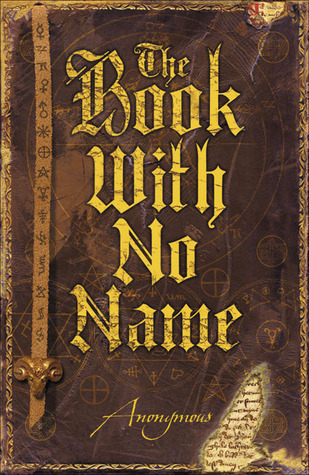
The Book With No Name (#1) by Anonymous

Published: May 28th 2008
Goodreads badgePublisher: Michael O’Mara Books
Pages: 379
Format: Book
Genre: Fantasy/Paranormal
★   ★   ★  – 3 Stars

Detective Miles Jensen is called to the lawless town of Santa Mondega to investigate a spate of murders. This would all be quite ordinary in those rough streets, except that Jensen is the Chief Detective of Supernatural Investigations. The breakneck plot centers around a mysterious blue stone — The Eye of the Moon—and the men and women who all want to get their hands on it: a mass murderer with a drinking problem, a hit man who thinks he’s Elvis, and a pair of monks among them. Add in the local crime baron, an amnesiac woman who’s just emerged from a five-year coma, a gypsy fortune teller, and a hapless hotel porter, and the plot thickens fast. Most importantly, how do all these people come to be linked to the strange book with no name? This is the anonymous, ancient book that no one seems to have survived reading. Everyone who has ever read it has been murdered. What can this mean?

The Book With No Name, by Anonymous. The title alone made me pick this book up from a book sale and while it wasn’t the greatest book I have read, it was creative, interesting, and definitely unique.

This is the first book in a series called The Bourbon Kid, and I have to say, while I wouldn’t rush out to get the sequels, if I came across them I would read them. Maybe if I leave it long enough my curiosity will peak and I will track down a sequel and see what happens next, but for now I am enjoying that it was a rather good story.
As soon as the story begins we are introduced to the mystery that is the Bourbon Kid, this prologue starts the novel off as the mystery and foreboding doom this man brings haunts a town. Meanwhile, Detective Miles Jensen has arrived in town to investigate a spate of unusual murders, two monks have left their monastery, a mysterious blue stone begins to cause havoc for all those who wish to possess it, there is also a hitman in town who thinks he is Elvis, an amnesiac woman who has woken from a coma, the boyfriend, and the local crime boss. What could possibly go wrong?

There are a lot of people involved in this narrative, and the author switches character perspectives quite a bit so we get to see the story from everyone’s perspective. I’d say seamlessly but I say with caution. Certainly there are no jarring moments, but you can find yourself reading a new paragraph and become confused, only to realise that you’re following a new character with different thoughts.

These switches occur a lot, and truly not always in a confusing manner, but you do have to pay attention and you will get used to it after awhile. I did find, which was quite clever, that because there were so many characters and storylines to follow, by breaking it up for each character and moment you get these kinds of mini scenes, almost like a collection of short stories which are connected to one another in terms of the bigger picture and have been woven together.

In terms of narrative it was drawn out considerably. Not a lot actually happens for the first 3/4 or so of the book, however you did have a sense that it was all necessary by the time you’ve finished. As you read you kept thinking that the next chapter would be where it all erupted and everything fell into place. This does happen in the end but it is a lot to remember and keep track of while you’re getting there. A lot of it was also character introductions, having so many people involved it does start to fill up pages. And while we never get any real back story or history on a lot of the characters, you are provided with a clear representation of their personality and character that eliminates a need for a history to understand them.

Surprisingly with so many characters in play you do not get lost which I thought was amazing, but you do have more people to become potential suspects in whatever is going on which does your head in if you try and figure it out on your own. Of course everyone basically in this novel is suspicious, as well as guilty of many a thing, but whether they are guilty of what you think they are is where the mystery lies.

I will give credit to the author, I liked the reveal when it came, and I liked that after such a long wait the ending was ideal. I didn’t think that anything had been wrapped up quickly, all the pieces suddenly fell into place and started to make perfect sense, just when you didn’t think there could possibly be a reason and connection for everything. That part was rather impressive.

There is violence in this book, but while describing scenes of death and brutality I didn’t find myself revolted or turned off. I put this down to clever writing and the ability to tell a gruesome scene without having to go in explicit detail which can push it into the grotesque and unreadable. But yes, be warned there is a large amount of violence in the book, and swearing, but swearing goes with the setting of the novel, whereas the violence goes with the narrative.

One way around the amount of violence is the supernatural element, not an overbearing amount, but it is there and, like everything and everyone, it is connected as well. It was worrying in the beginning when the possibility was first brought up because I was unsure how it would fit within the established narrative, but as more information was revealed it turned out alright, and you begin to accept that this is just how it is, and you do not spend a lot of time focused on these supernatural elements. This could be because there are so many extreme moments and aspects of unrealism that the extra dose does not really make that much difference.

Two of my favourite quotes, both obscure and seem rather bizarre, but like the book there are plenty of sentences and aspects of dialogue that feel awkward but not enough to be a real concern.

He had been shot in the stomach at point blank range by a man toting a double barrel shotgun. It had hurt terribly, and the wound was still bleeding a little, but it would heal. His wounds always healed, although he had come to accept the fact that gunshots did tend to leave a mark.”

Audrey had no tolerance for mess, but today there was blood everywhere.”

It is these kinds of sentences that make this book charming amongst its faults, quirky lines that seem obvious and almost unworthy of comment, yet it is provided anyway. Some of the phrasing seems a bit awkward but over the course of the book you do not really notice it after awhile, the story gets you in, despite the ambiguity and prolonged revelations.

Finally, we must briefly mention the title and author. I loved that it was mysterious and when I finished the book I loved it even more. I will say no more about it.

Welcome to Santa Mondega, enjoy the ride.

Previous Older Entries Next Newer Entries