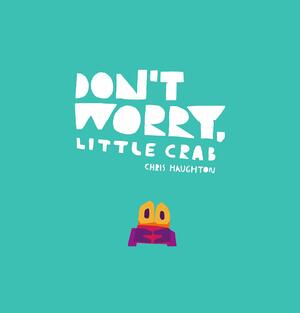
Don’t Worry, Little Crab by Chris Haughton

Published: 1st June 2019Goodreads badge
Publisher:
Walker Books
Illustrator: Chris Haughton
Pages: 43
Format: Picture Book
★   ★   ★  – 3 Stars

Little Crab and Very Big Crab live in a tiny rock pool near the sea. Today they’re going for a dip in the big ocean. “This is going to be so great,” says Little Crab, splish-splashing and squelch-squelching along, all the way to the very edge. Then comes a first glance down at the waves. WHOOSH! Maybe it’s better if they don’t go in?
Haughton has written a wonderful story about taking chances and trusting new experiences. Big Crab tells Little Crab they are going to the sea and it’s clear this will be Little Crab’s first time and they are keen to go on this adventure.

The story is a great exploration about being excited for a new adventure or experience but when faced with the reality being a little apprehensive. Putting their trust in Big Crab we see Little Crab gain confidence as they slowly embrace a new experience.

It’s also a great book for sounding out onomatopoeic words and puts you in the scene vividly, especially when the illustrations are minimal. The focus is on the squishing of seaweed and the tapping of claws which shows the journey they take with few words.

The illustrations are adorable, though basic. They are bold and simple and set the scene, changing a little to suit the story but remaining striking solid colours that fill the page. The contrast between on land and sea was great and it’s another way to highlight what Little Crab would have missed if they weren’t brave and trusting.

Drawn in by a cute cover and the prospect of a tiny version of an animal I was rewarded with an adorable story. It has a wonderful message that new experiences can be great but you’ll never know if you don’t take the plunge.

You can purchase Don’t Worry, Little Crab via the following

QBD | Blackwell’s

Dymocks | Wordery | Angus & Robertson

 Fishpond | Amazon | Amazon Aust

Gideon the Ninth by Tamsyn Muir (#1)

Published: 10 September 2019(print)/ 10 September 2019 (audio) Goodreads badge
Publisher:
Tor/Recorded Books
Pages: 448/16 hrs and 50 mins
Narrator: Moira Quirk
Format: Audiobook
Genre: Fantasy
★   ★   ★ – 3 Stars

Gideon the Ninth is the most fun you’ll ever have with a skeleton.
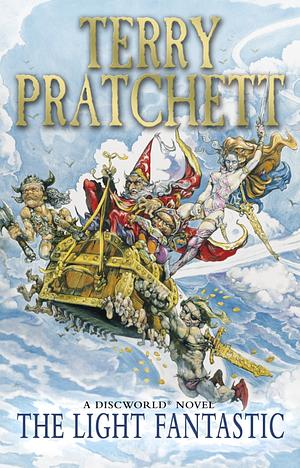
The Emperor needs necromancers.

The Ninth Necromancer needs a swordswoman.

Gideon has a sword, some dirty magazines, and no more time for undead bullshit.

Tamsyn Muir’s Gideon the Ninth unveils a solar system of swordplay, cut-throat politics, and lesbian necromancers. Her characters leap off the page, as skillfully animated as necromantic skeletons. The result is a heart-pounding epic science fantasy.

Brought up by unfriendly, ossifying nuns, ancient retainers, and countless skeletons, Gideon is ready to abandon a life of servitude and an afterlife as a reanimated corpse. She packs up her sword, her shoes, and her dirty magazines, and prepares to launch her daring escape. But her childhood nemesis won’t set her free without a service.

Harrowhark Nonagesimus, Reverend Daughter of the Ninth House and bone witch extraordinaire, has been summoned into action. The Emperor has invited the heirs to each of his loyal Houses to a deadly trial of wits and skill. If Harrowhark succeeds she will become an immortal, all-powerful servant of the Resurrection, but no necromancer can ascend without their cavalier. Without Gideon’s sword, Harrow will fail, and the Ninth House will die.

Of course, some things are better left dead.

Everyone has been talking about this book and after reading it I can say it was…ok. I liked it, it is an interesting premise: necromancers, interplanetary adventures, and swordfights all with a modern aesthetic in terms of language, swearing, and attitudes of the kick arse characters. That probably made it a bit more accessible to a non-fantasy reader like myself, but it is still a heavy fantasy with guilds and the art of necromancy to wrap your head around.

Gideon is an intriguing character and as you meet others who have been summoned to this trial they are their own kind of unique which makes for an eclectic group which brings its own challenges and delights.

Harrowhark’s goals and intentions and clear, as are Gideon’s, and seeing the pair interact is amusing since it’s initially begrudging and one of servitude. After a while the pair soften towards one another, especially as the perils around them become clear and they grow closer.

I will say one of the downsides was it is long, or at least it felt long, and I got a smidge bored. I wasn’t very invested in what was happening after a while, despite the strong start and our introduction to Gideon. I will say I enjoyed the fighting at the end, it was enjoyable and engaging after the saggy middle.

I agree Muir is a good writer and you can easily picture what plays out on the page. The writing is vivid and when there are fight scenes or action it’s hard not to become intrigued. I did it as an audio and ?? was a good narrator, they definitely helped me get through it, I think reading it I would have put it down a lot more.

I can see why people enjoy it, it is certainly different and has great magical elements. The guilds and factions, the war etc are all a lot that could be further explored and probably are in the rest of the series. I do not read a lot of fantasy so I am probably not the best judge, and I have definitely read a lot worse.

With three stars I didn’t hate it, it was good, but I will say I wasn’t invested enough to pick up the next one, despite the very creative cliff hanger.

You can purchase Gideon the Ninth via the following

QBDDymocks |Wordery

Blackwell’s | Fishpond

Amazon | Amazon Aust | Audible


Long Long Review: The Light Fantastic (#2) by Terry Pratchett

Long Lost Reviews is a monthly meme created by Ally over at Ally’s Appraisals which is posted on the second Thursday of every month. The aim is to start tackling your review backlog. Whether it’s an in-depth analysis of how it affected your life, one sentence stating that you only remember the ending, or that you have no recollection of reading the book at all. 

Published: 1st January 1986 Goodreads badge
Publisher:
Corgi
Pages: 285
Format: Paperback
Genre: Fantasy
★   ★   ★  – 3 Stars

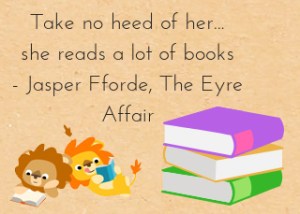
In this sequel to the much-acclaimed The Colour of Magic, Rincewind, Twoflower and the many-legged luggage return to the Discworld with the help of the Octavo and overcome the attempts by the wizards of the Unseen University to capture them, and then save the Discworld from an invasion from the Dungeon Dimensions.

I didn’t mean to make the first two books in the Discworld series long lost reviews, but I found them on audio and was reading them one after the other (intent on charging through the series) and then got stuck when I couldn’t source book three. Then of course life happened and here we are trying to remember the plot and my opinion of it.

I read this in 2019 and recall absolutely none of it except maybe Rincewind and Twoflower on a raft/boat near a waterfall which may or may not be the very first scenes or the very final scene. I have a lot of Discworld to get through so I’m not in a mind to reread it, though it is reasonably short.

I know people say the Rincewind ones aren’t the best, and I recall it being a bit boring. I don’t remember anything to even rate it, which also feels like a sign I should reread it. For now I will give it three stars, since that’s what I did the first time, and if I reread it I will reassess and adjust my rating. Maybe I could be sacrilegious and watch the movie?

The Fat Girl by Marilyn Sachs

Published: 1 January 1984 (print)/20 April 2021 (audio) Goodreads badge
Publisher:
Flux/Everand Publications
Pages: 226/4 hrs and 15 mins
Narrator: Trever Goble
Format: Audiobook
Genre: Young Adult
★   ★   ★ – 3 Stars

Jeff Lyons can’t stand Ellen de Luca, the fat girl in his ceramics class. She’s huge, clumsy, can’t throw a pot to save her life, and stares at Jeff all the time. But he’s a “nice guy” and feels terrible when Ellen overhears his hurtful remarks about her. The “crumbs of kindness” he tosses her way soon turn into advice on weight loss, college, clothes, hair . . . and, to everyone’s surprise, good-looking Jeff actually dumps his pretty girlfriend to be with the fat girl Re-creating Ellen is a labor of love, Jeff thinks. But as her pounds melt away, Jeff resents the happy, independent young woman he has unleashed. Where is the gratitude for all he’s done for her? With this darkly ironic take on the classic Pygmalion tale, Marilyn Sachs offers young readers a candid portrayal of what happens when the intoxicating thrill of control is confused with love.

I know we’re meant to hate Jeff.

I know we are meant to hate Jeff.

I have to keep reminding myself we are meant to hate Jeff.

I don’t know why I chose to read this book. Reverse Pygmalion grabbed my attention. Being a short read grabbed my attention. I was curious. But my god, the willpower it takes to push through the hatred is incredible. Kudos to Sachs for writing someone I wanted to punch more than Holden Caulfield.

Jeff is shallow, he is openly shallow. He is unashamedly shallow. I liked seeing Jeff get called out, his mother thinks he’s selfish, he is petulant and a baby. It’s great when he is called out. But the rest is rough.

Jeff is the kind of guy who would be murdered and there’d be no one to miss him.

Sachs goes hard. Jeff is almost hateful in his treatment towards Ellen (or as he frequently refers to her ‘the fat girl’). He is openly hostile and detests her mere existence, even once saying he was turning her “into a human being.”

It is a short read but it is a fascinating study into people like Jeff. People who feel they are superior to those around them and anyone beneath them needs punishing. That when they have their egos bruised even a tiny bit they retaliate, or worse, when they feel they aren’t being appreciated enough, or praised enough for doing the bare minimum, retaliate.

Ellen is the stereotypical overweight person. She eats too much, she’s clumsy, she bumps into things and Sachs really digs it in deep by mentioning Jeff thinks she smells. Everyone other than Ellen is referred to as ‘normal’, Jeff thinks he is a ‘nice guy’ and blames Ellen for him being mean and not making him a good person. It’s incredible.

We see a lot from Ellen’s side, we see her home life and explore her enjoyment of hobbies but we also see her vulnerabilities. Jeff’s mission is to improve Ellen, and she wants his help, she doesn’t want to be the way she is, but she lets Jeff control her. Even when he’s being nice he’s being horrible. His ego grows and he makes Ellen’s achievements about himself.

You see Jeff’s shift at the halfway point. If it took guilt and fear to change him then that’s a start. The great thing is Sachs doesn’t let him off that easy.

It is a fantastic book about making you aware of people like Jeff. If you come across someone like Jeff, run for your life.

Weirdly I didn’t hate the book, but with Jeff behind the wheel I didn’t like reading it. But Sachs points out people’s flaws well, despite the fast pace and the minimal detail and depth. You get a sense of who these characters are and even though the story rushes through days and events, you can see the characters in their elements succinctly.

We have no idea what is happening with other characters further than Jeff’s observations because he is so up himself.

¾ of the way in you see Ellen’s confidence grow, and my own desire for Ellen to drop kick him increased. I needed Jeff to be dealt with. The only shining light in his whole irredeemable life is she scares him into being a decent human being.

The blurb mentions the confusion of control vs love, and Jeff 100% loves being in control, and controlling Ellen. He patronises her, controls how she looks and acts. He dismisses her opinions and thoughts, he is belittling and tells her what she thinks. He ignores her protests, she begs him not to make her do things but he convinces her to do them.

The worst part is Jeff isn’t an idiot, he knows when he mistreats people, but he doesn’t seem to be bothered by it. It’s interesting to see the similarities between Jeff and his family: emotionally manipulative who get their kicks from degrading others.

The good news is you still get to hate Jeff by the end. I was worried, but no. Ellen and another character Norma escape, and we still get to hate Jeff, doomed forever with his mother and their desires to control other people to becoming the people they think they should be.

I was initially going to give this book 1.5 stars, the .5 because Ellen and Norma were the only sensible people in there. But then I remembered you can’t mark a book down because you dislike a character who is designed to be unlikable. So I had another think through and while I disliked Jeff, Sachs tells him in a way we’re supposed to dislike him, supposed to see he is wrong. Not pity him, certainly not. But we see his flaws, his mother’s flaws, see them trapped by their own making. Be grateful to those who escape it. I had to look at the other characters, not through Jeff’s eyes but through their actions.

Writing wise it’s quick, it’s basic detail, jumping quickly through days, but that isn’t a deal breaker. I’m happy with the three. I liked the story it told, but it a different liking the story than anything I have ever read. I hated the story but I liked what happens. I’m going to be confused about this one for a while.

You can purchase The Fat Girl via the following

QBD | Blackwell’s

 Amazon | Amazon Aust | Audible

Repeat by Neal Pollack

Published: 24 March 2015 (print)/24 March 2015 (audio) Goodreads badge
Publisher:
Amazon Lake Union Publishing/Brilliance Audio
Pages: 229/7 hrs and 06 mins
Narrator: Jeff Cummings
Format: Audiobook
Genre: Fiction
★   ★   ★ – 3 Stars

Back on my time loop stories and this is a curious one. So many time loops are single days, usually the worst days of a character’s life but Pollack has brought the story of Brad, and makes him relive the first forty years of his life, resetting the night before his fortieth birthday.

I liked the story, it wasn’t the best time loop story I’d read but at the same time it was captivating, even if it was a rough read. Brad is a terrible person, through cycle after cycle he becomes amazingly an even worse person. Of course there has to be a lesson learnt otherwise I think we’d all reach into the book and strangle Brad on our own. His language and humour is crude, and Pollack drives his character and personality really well in that as understanding as we are, you certainly suffer no sympathy for him.

The fact Brad goes through over “forty, fifty, sixty or seventy five” versions of his forty years, he never learns his lesson. One would think having forty years to work with you’d reflect a bit more, single day loops learn their lessons faster but as Brad ends up hundreds of years old he’s not trying his hardest to escape.

I was fascinated by how long it takes Brad to learn his lesson, and even then I was surprised by the conclusion. I expected Pollack to change more than he did, and even then he made the right choice. Brad changes but at the same time he doesn’t, which given the emotional and crushing journey he’s been on, it might have been the only way.

Pollack drops hints towards the end of the novel about how Brad came to be in his cycle. An inherently cruel time loop given forty years is an incredibly long time. I was curious at how he’d cycle through so many loops with such a long time span but he does a decent job introducing us to a new loop at interesting moments or towards the end and have the story backfill from there.

There are a few inconsistencies but they are forgivable, and as deserving as Brad is for his situation, you do feel sorry for him after a while but never too much. He is someone who feels his problems are the fault of everyone else, and while he knows he plays a part in his own misfortune, I never felt he was grateful for what he had. Especially when he had so many loops to improve the life he had he chooses so many different paths instead it makes you wonder what his commitment is to the family he leaves behind. Brad’s focus is so much on improving his life rather than himself.

There is an unsubtle author self-insert which was interesting, but Pollack included it well narratively speaking. It provides an external perspective on how the world sees Brad after thousands of years. Especially given the capacity for the human brain and the undue stress he places it under. I was glad Pollack address the brain’s capacity to keep memories straight and every version clear given the overlap. That was an interesting approach and one you can’t address in single day loops.

Overall it was an interesting read and a fascinating premise. I can’t say I wasn’t expecting more from having such an extensive loop, but at the same time I was intrigued by the chance to redo your life and how many choices would stay and which would change. Sometimes even with hundreds of chances to redo your life you can’t fully change the character of a person.

You can purchase Repeat via the following

 Booktopia | Amazon | Amazon Aust | Audible

Previous Older Entries Next Newer Entries