Aurelio Voltaire Interview

I have been excited about this for weeks. I was given the opportunity by the amazing Spence City Publishing to interview Aurelio Voltaire about his new book Call of the Jersey Devil and I am finally able to share it with you all! Now as we know from my previous post, I am a huge Voltaire fan so I was ecstatic and freaking out all at once. Now, I don’t want my dreams crushed by the revelation that it was via email, and I probably wasn’t the only one, but I will not have these dreams squandered. So, as we get the air of faux professionalism about us we can stop reducing our minor credibility we inflict upon ourself and get on with it.

Call of the Jersey Devil is Voltaire’s first fiction novel, one which is classified as a horror/comedy style, and is filled with wonderful artwork and an entertaining story about a Goth singer, five teenagers, and a legendary figure from Jersey known as the Jersey Devil. This is the story of these five suburban mall rats and the washed up Goth singer who find themselves stranded in the Pine Barrens of New Jersey where they discover two horrifying truths: The Jersey Devil, hellspawn of folklore, is in fact real; and New Jersey is the gateway to Hell.

As a homage to 80s horror and genre films I think what I liked most was this book has been described as having “Frankensteined together elements of Evil Dead, The Breakfast Club, Poltergeist, and This is Spinal Tap”, and this creation has created something that is funny, as well as terrifying at the same time. Fans and followers of Voltaire have been kept updated on the novel’s development via Facebook, Twitter, as well as Voltaire’s Nooseletters and website, and those lucky enough to attend shows have already been privy to an author reading of a chapter or so. I myself have been awaiting its release and I am over the moon to be able to participate in its promotion.

Once again I thank Spence City for giving me this opportunity, and thank you Voltaire for taking the time out of your hectic schedule to reply to my questions.

Did any of your music or film history influence the way you wrote Call of the Jersey Devil?

V: Absolutely! For starters, the book is populated by a handful of Gothic mall rats and so there are many songs from the genre that are referenced. They have conversations about The Cure, Black Sabbath, Danny Elfman.. there’s lots of stuff like that. And in general, the book is really an homage to the films I grew up loving in the 80s. Films like Evil Dead, The Rocky Horror Picture Show, The Breakfast Club. I think that someone who is familiar with those references is going to get a big kick out of this book.

A few years ago your advice to aspiring authors was “First you have to create the art; once the art is created the rest will come.” Is this still the case?

V: Yes, it still holds true. LOL! Unfortunately, having written a couple of books, I get a non stop stream of aspiring writers asking me how to get published (and for the record, I still don’t really know the answer). The problem is that the great majority of these people have NOT YET WRITTEN A BOOK! It’s kind of crazy. It’s like calling NASA and asking them to tell you in full detail the correct way to exit a lunar lander. Why should they waste their time? First you have to put in the work and become an astronaut. Then you have to go out in space a few times and THEN.. maybe someday, you get to land on the moon. But many people are not really interested in putting in the work. Sometimes they are not even interested in the art form itself.. They have no passion for writing or storytelling, they just like the idea of being a published author. They romanticize the idea of it. Honestly, I can’t even wrap my brain around it. For me, the most basic part is that I like to create, I live to create. If I was homeless and had no occupation, I would still be creating. I know this to be true because I’ve been homeless and I’ve been unemployed and I spent my days creating! LOL! The concept of being successful at it, making a living from it, that needs to come AFTER the deep seated desire to… create. Of course this is just my personal opinion. There are many people who are very successful who see it as a formula. They consider what’s popular. They write something that fits comfortably into the current trend and they find out how to get it published quickly. Those people suck.

So many other authors tell aspiring writers that they must read in order to write. You’ve mentioned before that you are not a reader of books, and yet reading Slaughterhouse-Five made you want to begin writing yourself. Did you find it more of a challenge because you were not a reader, or do you think a good story can be written regardless if you work hard enough on it and have a great story to tell?

V: I think the easy to answer to that is that there is a difference between writing and storytelling. I’m a storyteller. I have always been one. I’ve told stories all of my life. In my songs, in my comic books, in my films. Being a writer is different. There are rules to being a writer that you must follow, trends in writing you should know and perhaps emulate. Taking my storytelling and turning it into what people think of as writing today was a challenge, but not a huge one. I had an amazing editor, Trisha Wooldridge who was stern but kind and she guided me. I learned a lot from her and her input made for a much better book.

The reason Slaughterhouse Five inspired me to write, in short, was because when I read it, I instantly thought.. hey, this is how I speak! I imagined that if I already speak in a similar tone, that I could write a book, too. I was not aware at the time that you have to be Kurt Vonnegut to get away with it! LOL!

I think the end result on Call of the Jersey Devil is a book that’s written in a way that won’t startle anyone but still has enough of my irreverence coming through to perhaps have a unique slant. That’s my hope, anyway.

You have another book in the works with Mezco Toys, The Legend of Candy Claws, what is it about legendary figures that appeals to you, if there is any appeal at all?

V: Well, I guess you’ll be the first to know, but that deal fell through. Apparently Mezco bit off more than they could chew this year and sadly, my book was one of the casualties of them scaling back. It simply means that I’m back to where I was in the start, which was having what I think is a really great story on my hands and needing to figure out how to bring it to the world. It’s nothing that doesn’t happen all of the time in the world of business and nothing I’m not accustomed to.

As to the second part of your question… what’s not to love about legends? There is an inherent epic quality to legendary creatures and hey, when you can invent one of your own… it’s even better! I think Candy Claws or ‘Hargoyle the Christmas bat’ as he’s known to his friends, will see the light of day one way or the other and I think there will be people in the world who will fall in love with this giant, black furry bat the way I have.

 Despite your music typically being categorised as “dark cabaret”, you recently said your music does not have any particular style, is this true of your writing as well or is there a general dark humour similar to that of your albums?

V: My writing, like my music is, I like to think, multi-faceted. There is definitely going to be dark humor, there is going to be pathos, there are going to be moments of true terror, moments of levity, moments of tenderness. I don’t find any of this odd. This is how life is and for one to ONLY write comedy or only write tragedy, to me, seems alien and strange. For me, realism and truth is found in a place where comedy and tragedy live side by side at all times.

 You are very interactive with your fans on YouTube, as well as on Facebook and Twitter, do you look for inspiration from them in your work or is any inspiration you get from them purely serendipitous?

V: My fans play a big part in what I do. I mean, I talk to them pretty much all day long on the internet and all night long at the shows. They tell me what they like, what they don’t like. As I converse with them I learn about the things that move them, the things that bother them, etc… Now, consciously, when it comes time to make art, whether it be music, writing, films, etc… I am in my own head. My philosophy is that if I’m true to myself, if I write something that makes ME laugh or makes ME cry, there will be people in the world who will get the same thing out of the work. I really believe that. I think nothing resonates more strongly with people than honesty. But I’d be a fool to believe that all of the things I’ve experienced with my fans don’t trickle in. No man is an island. We are, in the end, subconsciously if nothing else, a product of our experiences, our interactions and conversations with the world around us.

You mentioned recently that a song on your upcoming album refers to one mentioned in Call of the Jersey Devil, did you plan the entire album based on the story, or was the new album written into the narrative?  

V: It’s a symbiotic relationship. When I set out to write a book about a washed up Goth singer, I drew from some of the early songs I wrote, ironically, songs from a decade before I started recording music. Primarily, because back then I actually wrote what one might call “Goth” music (as opposed to the dark folk/cabaret sound I eventually became known for). However, writing a book is a very time consuming process and in the months it took to write Call of the Jersey Devil, I spent a lot of time thinking about those early songs. Somewhere along the line, I got really excited about the idea of making the only album Raised By Bats (the band in the book) had ever released. And so… that’s the album I’m making. And I have to tell you, giving myself a reason to record and release the songs I wrote when I was seventeen years old has been one of the most surprisingly beautiful turn of events in my life. I have truly revisited all of the pain and hope from that time in my life. It’s been like finding an old scrap book from high school. It’s been… an experience.

What made you move to novels from graphic novels and nonfiction? Was it a natural progression?

V: Well, while it wasn’t really a conscious decision, I do have to point out that my experience is that no one cares about comic books! My graphic novels rank right up there with the most labor intensive and ironically thankless endeavors in my life. I worked for no less than eight hours a day (above and beyond what I was doing to pay the rent) to draw the pages of my Chi-chian then Oh My Goth! then Deady graphic novels. As far as I could tell, based on sales, people really didn’t care that much for them. However, I could never keep the toys in stock! Eventually, I stopped making comic books and only made the toys of the characters. To this day, I can’t keep the toys in stock. They are always the first things to sell out. I honestly don’t even want to think about it because I will get very misanthropic if I let myself believe that people don’t appreciate the thousands of hours that go into telling the stories and drawing the pages, but go bananas to get their hands on a plush toy that took ten minutes to design. LOL! Okay, yeah, let’s just stop talking about it.

You are a dedicated fan of Star Trek and Star Wars, do you read or secretly write any fan fiction about either franchise?

V: Nope. An ex-girlfriend bought me a Deep Space Nine novel as a joke from the gift shop of a hotel at which we stayed when we were on some tropical island many years ago. And when a monsoon hit, I did actually read it. It was… pretty bad. LOL! But no, I can’t see myself investing time in writing fan fiction. I have far too many ideas of my own and if I live to be a hundred, I will not have anywhere near enough time to bring them all to light.

How is your other story The Nothing going?

V: Terribly! LOL! I’m presently writing an album, touring, promoting Call of the Jersey Devil, preparing five different toy releases for this year, wrapping up my children’s book, writing a script for a feature film and doing another dozen things I can’t even think of right now. So, sadly The Nothing has really fallen behind. I don’t even have a full chapter written yet. But like everything else in the pipeline, I will eventually get to it and I will eventually finish it.
It’s just a matter of… time.

You can find out more about Aurelio Voltaire, his other equally amazing works, and any additional antics by visiting his website, Facebook, Twitter, Goodreads profile, or his Youtube channel: The Lair of Voltaire

You also still have time for pre-orders before Call of the Jersey Devil is released on May 28th, 2013.

X Y Z by Anna Katharine Green

Published:1883
Goodreads badgePublisher: G. P. Putnam’s Sons
Pages: 52
Format: eBook
Genre: Mystery
★   ★   ★   ★  – 4 Stars

A short detective story

I found this as part of an A-Z reading challenge last year after having little luck tracking down my previous choice for X. I had never read a detective novel at the time and I think this was a very good way to introduce myself into the age old genre. I had of course heard of all the wonderful detective novels and authors but never felt drawn to read them, aside from the feeling that I should read Sherlock Holmes one day. After I finished this short story I did begin looking for other stories of this genre and I am slowly opening myself to this wonderful genre.

X Y Z is a short story written by Anna Katharine Green, and tells the story of a detective who arrives in town in an attempt to investigate counterfeiters possibly connected to a series of mysterious letters addressed only to X Y Z. Set in a small town in Massachusetts, the story takes place in the later parts of the 1800s and begins with one investigation but soon moves into another of mystery and drama. In the course of the investigation an anomaly occurs, tugging at our unnamed detective’s curiosity. This curiosity leads his inquiries and attention to a prominent family in town, who as far as the rumours and secretive nature demonstrate, have mysteries and secrets of their own.

What amused me was that as I started to read I found myself reading it in the voice of the old black and white detective films, including that undeniable accent which made it all the more interesting in my mind. The story is engaging, and despite being short there is a decent well rounded story and character establishment. We are given the details we need for the plot, there is no information in this story that is irrelevant. I am not sure whether this includes the name of our detective, it hardly seems irrelevant, he interacts with enough people in the town, yet Green has omitted his name. Whether to add mystery or to keep her readers in suspense, I don’t know. If you wanted to look deeply into this you could play the idea of the mystery stranger who arrives in town, changes the town and creates a fuss, then leaves again. But isn’t being a stranger enough to do that? Whatever the reason I didn’t find it a bother, you almost forget after a while, there is only one detective to keep track of after all.

The characters in this story are well thought out and planned, and the story unfolded in a way where there were hints and clues and when it all came to a head it was as I imagined it to be. There are just as many gasps and surprises and twists even in a story of this size and there is no doubt it is of the detective genre. The secrets and mysteries are revealed by the end, perhaps not in the way you would imagine, but there are no extravagant twists and turns that make the story more mind bending and complex than it needs to be. Being written in the era it was, it is a basic detective novel where you are given clues and answers with the twists and revelations as you go. It was certainly a good read that certainly sparked my interest in this genre.

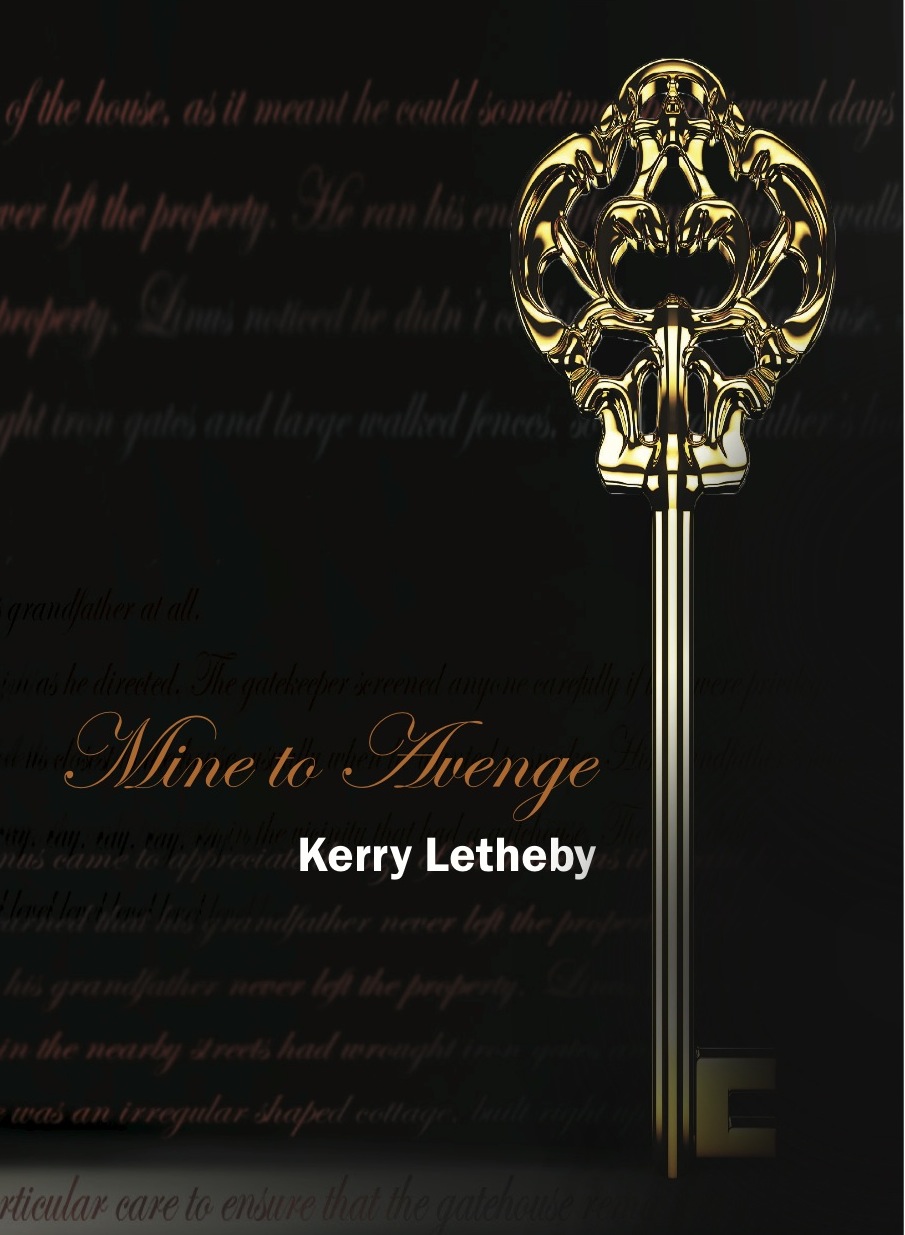
Mine to Avenge by Kerry Letheby

Published: November 1st 2012
Goodreads badgePublisher: Love Of Books
Pages: 488
Format: Book
Genre: Mystery/Suspense
★   ★   ★   ★   ★  – 5 Stars

When Alcandor is blamed for the tragic death of his friend’s sister in Greece in 1940, little does he know of the repercussions this will have for him and his family for the next seventy years. Unable to forgive himself, and wanting to give his young family a new start, Alcandor leaves Greece and brings his family to settle in the Riverland of South Australia in 1948. Although Greece and his past are far behind him, Alcandor harbours a terrible secret and he remains a fearful man. Alcandor subdues his fear, and he and his family adapt to an idyllic life of freedom and opportunity. 

However, eighteen years after leaving Greece, Alcandor learns that his past has caught up with him. His family needs to know the truth, but circumstances tragically intervene before he can warn them. Years later, Alcandor’s sons show signs of odd behavior hinting at possible mental instability, before disappearing without a trace. And in the next generation, Alcandor’s grandson exhibits the same strange behaviour not long before he is killed in the tragedy of September 11, 2001. It is not until 2010 that Alcandor’s great- granddaughter, Alethea, discovers that there is far more behind her family’s tragic history than mental illness, and little does she know that the threat against her family is much closer than she realises, and very far from over.

Mine to Avenge is an excellent book. The amount of work and time and thought Kerry has put into this book is amazing. There are interconnected things everywhere, not to mention the research she has done about the history of Greece and America and Adelaide, and all the other places mentioned in the story. If you followed her blog tour she mentions a few details about where she got her ideas and how she wrote this story, and I always have a great admiration for people who put so much time and effort into their work for others to enjoy. There surely must be a time where they want to just wing it because it is easier, but a lot don’t, they want it to be as accurate as possible, especially if dealing with real times and real places and events.

 When Alcandor Galanos is blamed for the death of his friend’s sister in 1940 Greece, it sets in motion a vendetta that will follow his family for the next seventy years. Kerry takes us on this journey of mystery and a vengeance that haunts the Galanos family, and by the end of the book you close it with so much inside your head about the connections and the lives of all the characters it is extraordinary. We are given multiple points of view and there is a fractured chronology as we get to see everyone’s side of the story as is required. This was evident right from the beginning because Chapter one opens with September 11, 2001, and leaving us on a cliff Kerry then jumps back to 1940 Greece where she shows us how it all began with another side of the story. It is writing like that that makes you eager to keep reading, if not to see where the exciting chapter leads, but also because you know there is still a cliff hanger from the very first chapter that is always on your mind as you are given this new information. But through this novel you get so many moments unanswered with new questions and as you continue you are abuzz with theories and you half read and half try and leap ahead in your mind and connect the dots.

 The way Kerry captured moments of the past was wonderful. With real events like September 11 and World War 2 and conflicts in Greece, she manages to portray the feeling and environment wonderfully, as well as the characters who are embroiled in these events. For September 11, because it was the only real one I had any real connection too; the way the confusion and the environment were captured was done extremely well, without it having to be the main focus of the scene. I especially liked how other characters reacted, even those who were not directly involved, specifically Nina and her children Alethea and Mila. Nina cared for her children and protected them from the scenes outside their window and the way Kerry tells their side of the events, you instantly can establish the fear hidden deep under a need to keep children unafraid, but you also can sense the almost young adult 12 year old Alethea who senses the fear, but wants to help her mother by being calm for her.

 Kerry has thought about everything, she has small details that make all the difference, the fact a mother protects the September 11 news from her kids, and how they treat the situation is very real, and very touching without showing the horrors, but still managing to capture the scene perfectly. The emotions, fear, uncertainty and missing description creates the images for you. This is evident in the other cases of terror with the family, creating the family bond, the family love amidst the destruction of the world around them was insightful and heart warming without a sense of over the top emotion.

There are so many gripping moments in this novel, even away from September 11, which isn’t really a huge part of the novel in the scheme of things, though it has its consequences and influences though which play their role in this interwoven narrative as does everything else. But with these scenes, and gripping moments of curiosity and intrigue, you become very involved in the lives of these characters, you have become so invested in their personal lives over their lifetime and knowing the dangers that surround them your brain works overtime to try and anticipate or deduct what it happening, about to happen, or has already happened.

Through the multiple points of view, as well as the jump between years you get to see the evolution of this family, and see children become fathers, mothers, and great grandmothers. When you read about characters when they are older with their families you also have the knowledge behind you of their childhood and their previous moments up until that point. And by having the same experiences retold from different eyes Kerry has compiled these lives, and this mysteriousness into an exquisite packages that leaves nothing unturned, even if it is still being uncovered in the final pages.

There are wonderful transitions between characters and emotions, nothing is rushed, yet nothing is drawn out unnecessarily with unneeded details. Each character is captured and portrayed so well, with such affection you do see them as real people, or as whole characters with a history and past.

As I reached the halfway mark point the cogs inside my head that had been working overtime to think and deduce started to click into place. When suspicions were confirmed it was as if a curtain had been lifted and the pieces started to fall into place. Of course there is always the missing pieces in the puzzle that magically end up under lounge cushions and under pets, these were yet to come, but that doesn’t stop a small sense of delight at the developing result.

I will not give away any more of this plot as it is too glorious not to experience yourself, but by the end of the book, when we are truly still having things revealed, it is done so wonderfully that you close the book feeling like you have been involved in something amazingly complex that works so well on oh so many levels.

The Ruby in the Smoke (#1) by Philip Pullman

Published: November 12th 1988
Goodreads badgePublisher: Scholastic
Pages: 373
Format: Book
Genre: Young Adult/Historical Fiction/Mystery
★   ★   ★   ★  – 4 Stars

Sally is sixteen and uncommonly pretty. Her knowledge of English literature, French, history, art and music is non-existent, but she has a thorough grounding in military tactics, can run a business, ride like a Cossack and shoot straight with a pistol.

When her dear father is drowned in suspicious circumstances in the South China Sea, Sally is left to fend for herself, an orphan and alone in the smoky fog of Victorian London. Though she doesn’t know it, Sally is already in terrible danger. Soon the mystery and the danger will deepen – and at the rotten heart of it all lies the deadly secret of the ruby in the smoke.

This book certainly starts off unexpectedly, I will give you that. In what is a crime/detective type story, we are immediately introduced to a Miss Sally Lockhart and the mysteries around herself and her father. The novel opens with 16 year old Sally visiting her father’s place of business after his death to inquire about a letter she received and Pullman instantly sucks you in by the second paragraph by saying “in fifteen minutes she was going to kill a man”. If that doesn’t make you keep reading then what will?

As a character, Sally is has had little conventional education, but she does know her fair share about running a business, military tactics, and how to shoot a pistol. The world she knew is changed when her father is drowned in suspicious circumstances and now must live as an orphan in 1872 Victorian London, living with her aunt who does not approve of her and how she lives her ‘unladylike’ life.
The letter mentions something called the Seven Blessings, and when her initial inquiries go awry Sally tries to find an alternative way. However while she continues to investigate Sally learns her life is in danger, and with the help of friends of her father and helpful strangers turned friends, Sally tries to solve the growing mystery and keep herself from harm. As readers we are not given much to go on ourselves about what these are and we must learn with Sally as she investigates these Seven Blessings that no one wants to talk about despite the chaos they create, though we are given an advantage as we are shown where this possible danger lies, as well as hopes for Sally finding some answers.

With the help of people like 13 year old office boy Jim, as well as brother and sister Frederick and Rosa Garland, Sally continues her journey for answers. After leaving her aunts house she lives with Frederick and Rosa, helping them to improve their business as payment for their help. As a photographerand actress, Frederick and Rosa are very enjoyable characters, they have quirks, as does their employee Theophilus ‘Trembler’ Molloy, ex-pick pocket with a nervous disposition. There are dangers and fear through this story, which makes it seem real and demonstrates the danger that really is present. People are selfish and ruthless when they want something, and there are suffers because of this, but Pullman offers enough hope and goodness to counteract this.

This is only the first book in the series so not a lot is given away, yet a lot is revealed, and that is not to say there is no curiosity sparked about characters and their circumstances. Pullman ends on a wonderful cliffhanger, as cliffhangers go, with new mysteries on top of the half solved old ones to bring readers into the second book. I had been wanting to read this series for about ten years and I am really glad I have finally gotten around to it. The way Pullman writes is for the Young Adult reader, but there is just as must grit, violence, death and intrigue as any other book. Perhaps not as well described, but there is drug use and violence throughout which I found rather charming in a book for this age group. The way Pullman uses it is certainly for the pot movement and isn’t exactly shown in the best light, though it does suit the era, and by doing so, amidst this crime and mystery, there is a nice little moral address about the dangers of drugs for the younger readers; but with full credit to Mr Pullman he weaves it in almost seamlessly with the narrative and it is certainly well placed.

The fact this is set in the Victorian era just adds to this charm. Reading about old England and the inventions emerging and the technologies is great. Seeing how people react to new things could pretty much be suited to anything at any time, but the fact this is the past makes you realise just how some things just don’t change, and how people don’t like it when it does. Another joy of being in this era is how proper and adult these 16 and 21 year olds can be. Not to mention the society, which I think Pullman captures well, especially around Sally. Somehow I think through capturing the society and the era, it adds a little more to the characters and who they are. It makes them more believable, rather than some one who could be living anywhere or any time. You certainly get the feeling of walking through London and its surrounding areas in the later 19th century, it’s rather enjoyable.

There are twists in this book, and enough intrigue and unanswered questions to get you into the second book. And while we may not call  it an actual cliffhanger per se, but the characters introduced, what happens to them and their lives and personalities are so engaging that you do want to keep reading and see what happens. It certainly ends very differently from where it begins, and all for the better I feel.

To Kill a Mockingbird by Harper Lee

Birthday

Happy Birthday Harper Lee! Today in celebration of her birthday I am reviewing her only novel, To Kill a Mockingbird. I will admit I enjoyed it but not loved this in high school, but I still managed to see why it was wonderful and a classic. Perhaps it was just being the 15 year old, or maybe it is now I am  older (it always changes most things), but I can see it differently now, similarly, but different. One of those complex emotions.

Harper Lee’s full name is Nelle Harper Lee, she was the youngest of five and was raised in Alabama. Her only book was To Kill a Mockingbird, she did have a second but it was never published. Famously Lee has never extensively discussed her book or any insights about its meaning and the popularity, and has stayed out of the public eye. Growing up Lee was friends with author Truman Capote and together they wrote an article in the New Yorker which Capote then turned into In Cold Blood, his nonfiction masterpiece. It is said that Atticus in her novel is based on her father who was also a lawyer and who once defended two black men accused of murdering a white shopkeeper. She has though played down any real correlations despite there being similarities, however Capote once said he thinks that certain things she wrote were true and being neighbours and friends he initially used similar aspects of their childhood in his own work.

Published: May 23rd 2006
Goodreads badgePublisher: Harper Perennial Modern Classics
Pages: 324
Format: Book
Genre: Adult Fiction
★   ★   ★   ★   – 4 Stars

Tomboy Scout Finch comes of age in a small Alabama town during a crisis in 1935. She admires her father Atticus, how he deals with issues of racism, injustice, intolerance and bigotry, his courage and his love.

To Kill a Mockingbird was finished in 1959 and it won a Pulitzer Prize award and became a best seller. It soon become a classic novel and has become influential, if not a powerful message about race, inequality, and human decency. It is not only its story, but the characters that people admire and idolise, the key figure being Atticus Finch, father of the narrator, Scout. Naturally is also became campaigned against to be removed from classrooms and libraries. We can’t even look down on the past as the list of banned books still rings high and true today for the same idiotic reasons.

Atticus Finch, who is an attorney, and all round upstanding man, is always listed on the top characters of all time, or most influential characters, or most idolised characters, and really, it is probably true. To Kill a Mockingbird is a classic for a reason, and Lee deals with intense issues in this unjust world with one man trying to do the right thing. As a character he presents unwavering morality, strength, and honour, having an impact not only in the books pages, but with the readers as well. He was a hero not for super powers or for saving the world, he was a hero for doing the right thing.

To Kill a Mockingbird opens with a look into history with a Finch ancestor fleeing religious intolerance in England, settling in Alabama. The main story takes place a few years after the Great Depression. The narrator is Scout Finch who is retelling her story of when she was young and the events that unfolded around her in her town of Maycomb. Initially we see nothing about the racial drama that unfolds later on; instead Lee introduces us to Scout, her brother Jemm, and their friend Dill. The trio enjoy their summer but are fascinated, yet terrified, of “Boo” Radley, a reclusive neighbour. This introduction about Boo and the children go on but it isn’t long before the tentative relationship between the children and Boo is replaced by the appointment of Atticus to defend Tom Robinson, a black man accused of raping a white woman.

The descriptions in the book and excellent, the way Lee describes the heat, the people, the town, the naivety of children and the insights they provide, and also the way she portrays characters relationships to one another is well done. She doesn’t shy away from the facts and the details of the town life, the trial, or the social messages and reaction; that is where some power comes from. And her language in doing so makes it what it is as much as the events. Her language is deep and the lessons you take from this book are timeless.

One of my absolute favourite aspects of this novel is the fact that Atticus lets his children call him Atticus instead of father. This is the purest and simplest way to demonstrate him as man, Atticus does it as a sign of respect as he sees every one as equal, despite their age, class, race or authority. Not sure I would do the same, but it is very telling nonetheless. The title of the book comes from Atticus, who tells Jemm it is a sin to kill a Mockingbird. Scout questions this and is told that “Mockingbirds don’t do one thing except make music for us to enjoy. They don’t eat up people’s gardens, don’t nest in corn cribs, they don’t do one thing but sing their hearts out for us. That’s why it’s a sin to kill a mockingbird.”

What I found interesting in this book is Lee’s wonderful way of telling this story. By using Scout, a young girl with very little knowledge of the world, who is always looking for answers and explanations, to tell this story, you get great conversations and relationships between characters. Certainly the best are those with Atticus and Scout, though her own opinions of her father are from the view of a child she has some very insightful words, and not only about him. She uses people she knows to discuss the issues around her, more so since the trial began as the people in the town are less than sympathetic, and they also cannot understand Atticus’ desire to defend Tom.

Scout is feisty and is willing to fight for her father which is admirable and a wonderful representation of her relationship to Atticus, but also of her own personality. While Atticus can defend himself, though in more moral and less violent manners, a wonderful scene is when the three children manage to essentially shame a lynch mob by making them see things from Atticus’ perspective. The wonderful quotes that can be taken from this novel are vast, but “You never really understand a person until you consider things from his point of view…until you climb into his skin and walk around in it” is a key theme among the many.

What this trial demonstrates is how divided the world was, there is a coloured balcony above the courtroom, away from the main area, and the tone, interactions, and outcomes are certainly surprising. Perhaps this is because reading this in 21st century Australia has a separate impact, but that doesn’t stop my knowledge of what it was like to some degree. Even though Lee has denied any strong autobiographical connection, the story of Tom is not a single fictional case. But even though she writes about this injustice and this ill treatment for a man accused, Lee has added so much more into this narrative than it is also about so much more than the colour of his skin essentially, it is about growing up, learning about the world, class and society, and basically loss of innocence.

The trial is detailed and well planned out; Lee keeps it poignant and fiery, while still upholding all the virtues Atticus has in a town that has already condemned Tom. We go through testimonials and cross examinations, Atticus does his job well. Tom’s point of view is not forgotten, we see his sides of things, and you do know right away of his innocence, but that is nothing in the eyes of the law it seems. That is where your investment goes, into the anticipation and hope that this super hero Atticus Finch, with all his deep wisdom and goodness, can help save Tom for a crime of simple being black.

The outcome of the case has consequences for everyone and the victims are far spread. I won’t reveal the ending, there is a lot in it that speaks more volumes than I could convey, but Lee does a wonderful job. She takes us through this journey and this emotional turmoil about these characters but she almost adds some justice at the end, but in a way she doesn’t. Scout pulls this together wonderfully in her voice and as I said, I think that makes so much difference compared to if it were a simple third person, or another characters point of view, you need her innocence, her loss of innocence, and her perspective telling this story. She uses all the wisdom her father has given her and by the end of the book you know it has sunk in.

There is a movie version on this book, with Gregory Pack as Atticus. It is pretty amazing. It would have to be for this book I think. Made in 1962 it is in black and white but do not let that deter you, it manages to bring all the emotion and the drama from the book and make it just as moving and important as the book. It is reported that Lee visited the set during filming and she did do a lot of interviews to support the film. The film was as popular as the book, with eight Oscar nominations and four awards including Best Actor for Gregory Peck.

The quotes from this book are fantastic, I need to list some, for the pure fact they are insightful and so very true, but there are so many more.

“I wanted you to see what real courage is, instead of getting the idea that courage is a man with a gun in his hand. It’s when you know you’re licked before you begin, but you begin anyway and see it through no matter what.”

“Atticus, he was real nice.”
“Most people are, Scout, when you finally see them.”

“Miss Jean Louise, stand up. Your father’s passin’.”

“Before I can live with other folks I’ve got to live with myself.”

So it is today that we wish Harper Lee a very happy birthday, I thank her for this book,  and while To Kill a Mockingbird will give you no useful advice on killing Mockingbirds, it will teach you not to judge a man by the colour of his skin.

Previous Older Entries Next Newer Entries