The Other Tree by D.K. Mok

Today I have a review for The Other Tree by D. K. Mok as part of her blog tour thanks to Spence City!

Published: 28th January 2014

Goodreads badgePublisher: Spence City
Pages: 400
Format: ebook via Edelweiss
Genre: Fantasy
★   ★   ★   ★  – 4 Stars
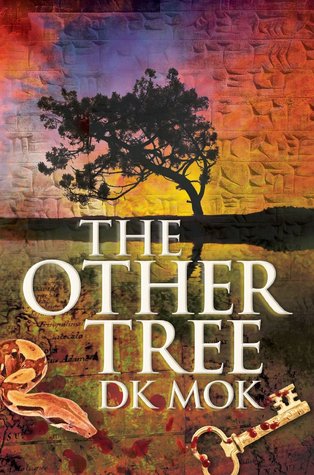
It’s been four years since Chris Arlin graduated with a degree that most people think she made up, and she’s still no closer to scraping up funding for her research into rare plants. Instead, she’s stacking shelves at the campus library, until a suspiciously well-dressed man offers her a lucrative position on a scientific expedition.

For Chris, the problem isn’t the fact that they’re searching for the Biblical Tree of Life. Nor is it the fact that most of the individuals on the expedition seem to be fashionably lethal mercenaries. The problem is that the mission is being backed by SinaCorp, the corporation responsible for a similar, failed expedition on which her mother died eleven years ago. However, when Chris’s father is unexpectedly diagnosed with inoperable cancer, Chris sees only one solution.

Vowing to find the Tree of Life before SinaCorp’s mercenaries, Chris recruits Luke, an antisocial campus priest undergoing a crisis of faith. Together, they embark on a desperate race to find Eden. However, as the hunt intensifies, Chris discovers growing evidence of her mother’s strange behaviour before her death, and she begins to realise that SinaCorp isn’t the only one with secrets they want to stay buried.

The Other Tree is a story that is clever, secretive, and mysterious. It is about two regular people trying to do something extraordinary, driven by determination and personal motives, all the while having a dangerous enemy biting at their heels who is also after the same prize: the Tree of Life. Both parties are after the Tree for very different reasons and we watch as Chris and Luke race against SinaCorp to decipher ancient texts and solve riddles to find the location of the other mystical tree from the Garden of Eden.

One of my weaknesses in reading is being given questions early on that don’t get answered; it will pretty much guarantee I will keep reading just to find out the answer, and find out why I wasn’t told the answer at the time. Mok implements this technique from the start. Asking questions at the beginning of a story that go unanswered for a little bit gets you interested and it keeps you reading because even if nothing has actually happened yet plot wise, you still are left with a question that is dangling in front of you. You want to know why this character thought that the perfect stranger standing in a courtyard was peculiar even if you know nothing else.

Admittedly even with these questions the story started off slowly but it was not without some interest. It picks up in the middle and as the story progressed it gradually became more engaging, as all good adventure stories should. This has been catagorised as a fantasy but surprisingly I kept thinking of it not just as an adventure style story, but one that actually seemed quite realistic. I know that sounds strange considering it is a story about the hunt for the Tree of Life and the Garden of Eden, but so much of this novel made me happy because it played out like reality would. Chris and Luke are not professionals, they aren’t even part of an organisation, they are a botanist and a priest trying to beat a massive corporation, a corporation who have access to the latest technologies, unlimited funding, and specially trained mercenaries, and Mok doesn’t forget that. It’s slowness in part makes it realistic, being untrained and slightly unskilled, the way Chris and Luke tackle the adventure is believable, as another character mentions, they keep stopping regularly for food, they also sleep in motels, have to drive long distances and catch commercial flights to other countries. There is no fast solution, and how they gain their information differs from SinaCorp because it cannot just be bought or analysed with equipment. However, being unskilled doesn’t make them unprepared and a lot of their own unique skills come in handy during their search.

Another great part of the story is the relationship between Chris and Luke. Their friendship is enjoyable and as a result makes the story enjoyable to read. The realism in their relationship becomes more profound as the book continues and the banter, dialogue and support between them are what make it special; it’s natural and reflects how people behave with one another. This realism is also shown with other character relationships. While Chris often jokes to herself about making grand declarations liked heroes do against their foe, she knows it doesn’t happen in reality and while you are making sweeping statements they will most likely turn and shoot you without a second thought. People get hurt, money buys power, and there isn’t always justice.

This doesn’t mean there is no fun in this book. There is a lot of great humour, jokes between friends, great banter between characters and a great mix of sarcasm and fear that makes for an interesting read. Throughout this story Mok balances the seriousness, humour, religion, mystery, and adventure elements perfectly meaning each aspect is evident at the appropriate time and nothing is too overbearing. Mok also includes some great profound statements, not just by characters but also in the narrative, each time never feeling out of place or unwelcome, and offering that serious nature amongst what could be mistaken as a jovial quest in parts.

I am not a religious person, I don’t know much about it and what I do know comes from multiple and various pop culture references and general exposure that occurs from daily life. Having said that, I liked the approach Mok takes with this story and how religion is dealt with. And while it does centre on these religious elements, The Other Tree is more action based story involving religion rather than solely an in-depth religious analysis in itself. What religious aspects that are present are presented in a way that is respectful yet basic, while also being realistic, well placed, and properly used. This presentation is helped a lot by the characters, something that not only brought out the story and the themes really well, but got you to know who these characters were.

Both Chris and Luke are people with something in their past and through their ordeal we slowly see this come to light and see them face what they have been hiding from and who they are a people. But while they are a lot of the main focus, all of Mok’s characters are highly unique, and in their own way they are quite observant and profound, and many have secrets of their own. As you read, and as you see what each character does and what they think, you are able to gain a great sense of who they are as people, sometimes even a simple observation from a third party gives you invaluable insight into who they are and what drives them.

With no spoilers I will say I liked the way Mok ends the book. While I had a few theories running on how it would pan out I think how it was concluded leaves you satisfied. Mok has rounded off this mass adventure and ordeal with respect not just to the characters, but to the reader; it is done without rushing, without being unrealistic for the reality it has created, and it also stays true to the characters and what we’ve come to expect from them. Overall The Other Tree is an adventurous and enjoyable story that gives you the unexpected, the unique, and the unusual all in an interesting story about faith, humanity, and botany.


About the Author

DK Mok lives in Sydney, Australia, and writes fantasy and science fiction novels and short stories. DK’s urban fantasy novel, The Other Tree, was released in 2014 by Spence City, and her short story ‘Morning Star‘ was shortlisted for an Aurealis Awards. DK’s new epic fantasy novel, Hunt for Valamon, is scheduled for release in January 2015 by Spence City.

DK grew up in libraries, immersed in lost cities and fantastic worlds, populated by quirky bandits and giant squid. She graduated from UNSW with a degree in Psychology, pursuing her interest in both social justice and scientist humour.

She’s fond of cephalopods, androids, global politics, rugged horizons, science and technology podcasts, and she wishes someone would build a labyrinthine library garden so she could hang out there. Her favourite fossil deposit is the Burgess Shale.


All Your Bits and Pieces Needs
Website
Facebook
Twitter

Cover Reveal: MARTYR by A.R. Kahler

Reveal

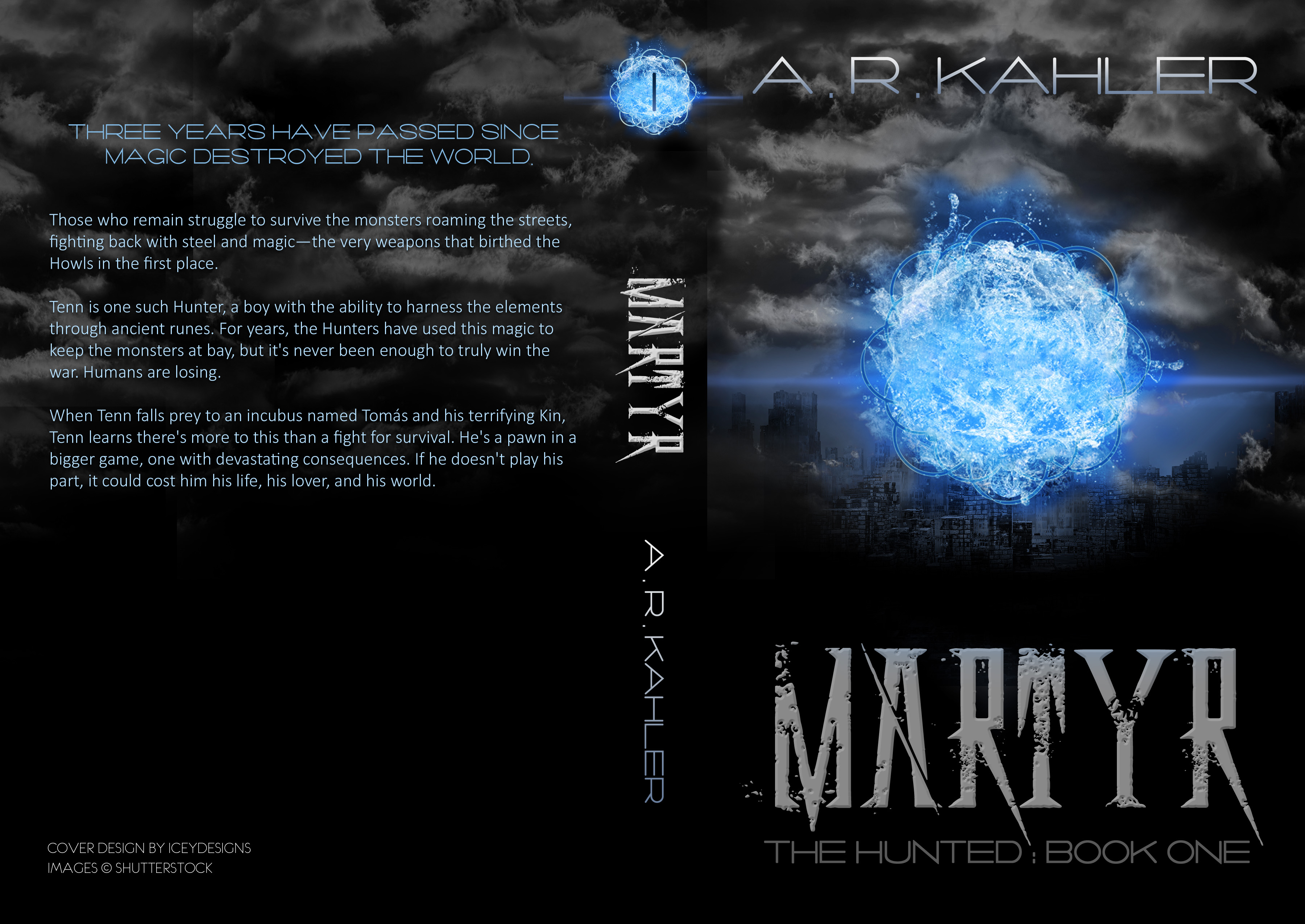
Today I get to reveal to you the great looking cover for A R Kahler’s book, MARTYRMARTYR is due to be released in October by Spencer Hill Press so add it to your To Read list and make note to look out for it come October! Maybe take a look at Kahler’s other books in the meantime.

About the Author

AP2_smallAlex is many things, but first and foremost, he’s a Sagittarius.

 In the past few years he’s taught circus in Amsterdam and Madrid, gotten madly lost in the Scottish wilderness, drummed with Norse shamans, and received his Masters in creative writing from Glasgow University. And that’s the abbreviated list.

He is the author of the tantalizing CIRQUE DES IMMORTELS trilogy, which debuted in 12/12 from 47North. MARTYR, the first book in his post-apocalyptic YA fantasy series, THE HUNTED, will be published 10/14 by Spencer Hill Press.

When he’s not writing or climbing in the rafters, he’s probably outside, staring at the clouds. And seeing as he now resides in Seattle, there are clouds aplenty.

Book Blurb

MARTYRcover_FINALThree years have passed since magic destroyed the world.

Those who remain struggle to survive the monsters roaming the streets, fighting back with steel and magic—the very weapons that birthed the Howls in the first place.

Tenn is one such Hunter, a boy with the ability to harness the elements through ancient runes. For years, the Hunters have used this magic to keep the monsters at bay, but it’s never been enough to truly win the war. Humans are losing.

When Tenn falls prey to an incubus named Tomás and his terrifying Kin, Tenn learns there’s more to this than a fight for survival. He’s a pawn in a bigger game, one with devastating consequences. If he doesn’t play his part, it could cost him his life, his lover and his world.

MARTYRjacket_edited-1

A. R. Hahler is donating a portion of his proceeds from MARTYR to a charity. Click the link below (got a link now! Yay!) to take the poll and help decide where to send the money.

 To which charity should A.R. Kahler donate a portion of his proceeds from MARTYR?


All Your Bits and Pieces Needs

Alex’s website
Alex’s twitter profile
Alex’s GoodReads profile
MARTYR Goodreads link

The Graveyard Book by Neil Gaiman

Published: September 30th 2008
Goodreads badgePublisher: Bloomsbury
Pages: 289
Format: Book
Genre: Junior Fiction/Fantasy
★   ★   ★   ★   ★  – 5 Stars 

Nobody Owens, known to his friends as Bod, is a normal boy. He would be completely normal if he didn’t live in a graveyard, being raised and educated by ghosts.

There are dangers and adventures for Bod in the graveyard. But it is in the land of the living that real danger lurks for it is there that the man Jack lives and he has already killed Bod’s family.

Sometimes there are five star books that change your world and make you cry and move you so much you think nothing could ever be compared to it. Then there are other five star books like this that are just so so well written, not always complicated or deep, but just with such beauty and honesty and with characters that are so amazing and sincere and complicated that you fall in love with them immediately. You get absorbed into their story and their life and while there aren’t life changing moments or anything too grand that makes you get overly excited, you just get attached in the beauty of the basics and a good, proper, well written story. And if that experience is going to happen to you then it is definitely going to happen with one of Neil Gaiman’s. This type of reaction isn’t limited to Gaiman or The Graveyard Book, there have been many books that have such complex simplicities that they are just wonderful reads without needing to be grand, but it is especially wonderful when it is compacted into a supposedly simple “children’s book”.

The Graveyard Book opens with a few different perspectives given; including a very clever second person point of view from the baby which blends back into third person seamlessly, and it is also a rather dark start but one that doesn’t address or dwell too much on the darker elements. We start almost in the middle of a scene with the man Jack, one we get almost no explanation for and as story unfolds we are thrust into this strange set of circumstances and we are introduced to the graveyard and a few residents through the events that unfold.

While the beginning is slightly dark and strange and…not confusing but with a few omissions that make you feel like you’re missing something, it actually fills in nicely as it starts to fall into place. What was great about this story is that we are shown not told in many instances and scenes and characters are brought to life (no pun intended) allowing you to capture each character and who they are not just from how their described, but how they are portrayed in their actions. Gaiman tells us a lot about his characters through their actions and how others see them which in turn reflect how they are seen by us.

Adopted baby Bod’s life in the graveyard is aided by his new ghost parents Mr and Mrs Owens as well as Bod’s guardian, Silas, who looks out for Bod and provides for him where the other ghosts cannot. Bod loves his parents certainly, but Silas is someone he looks up to and reveres. The admiration small children can have for an adult is truly wonderful and Gaiman captures it well. Silas is someone who Bod admires for his skills, his knowledge, his secrets, and he is someone in Bod’s life that he never wants to let down or disappoint. Their relationship is one of the highlights in the story, and while Bod’s view shifts as he gets older, it never strays far from the wonder and admiration he had a child.

So much of Bod’s story is written beautifully, not just the events he experiences but as a person. As a character he is very confident, he speaks his mind, and he speaks wisdom far above his age. He is a smart kid considering how he has been raised, he has a great manner and he deals with people and conflict well. He offers lessons to readers as well as those around him, and he isn’t afraid to stand up for what he feels is right or what he wants.

Bod grows up through the chapters and often as they change we have moved forward in time. The story does move away from Bod’s life on occasion and we’re shown other events away from the graveyard. These extras allow for story progression and occasionally provide additional information but we mainly follow Bod through his life. You see his life in the graveyard and you see the adventurous and amazing experiences he has there as well as watching him learn about the world around him and the ways of the graveyard. You also see his occasional struggle as he desires to escape and venture into the world beyond the graveyard gates. These moments are when we see the great character in Bod and how even when things are not going well, his emotions and nature shines through excellently.

As a human he does well in his constricted world. There is a point at the start where you think there shall be limitations but Gaiman works it through wonderfully. We do not get the full history of Bod’s circumstances straight away but that isn’t a problem. As you read you get involved in what is happening that you forget that there is a reason Bod is living in the graveyard, you get caught up in his little life and you forget that someone is hunting him.

In terms of the “threat” I have read some criticism about the man Jack and his reason for hunting Bod, and without giving anything away I think that the reasoning suits the story and intended audience well, it is actually rather clever and very well done. When it is revealed, Gaiman writes about it and surrounding events brilliantly, it is clever and mysterious and you have no idea what is going to happen and it is a great moment of suspense to read. That is not the problem though, the issue I think people see is the overall reason why it happened, whether they feel it is too basic, perhaps, but given the intended audience it is ample. Besides a lot is implied through other aspects to warrant the reader to figure out what the man Jack is part of and who he is. But what I take from this is that we are not there to necessarily follow the man Jack, we are there for Bod and Bod’s life. Yes his life is as a result of the man Jack and it is an ongoing problem, but we aren’t pulled along by the mystery of the man Jack, we are pulled along by Bod and really it is all you need. I think that even if we knew the reason from the first page I believe we could have the same story and it would be just as exquisite.

It took me a couple of chapters to realise that Bod has appeared before. Last year I read M is for Magic by Gaiman and it was an excellent book, ten short stories that were all wonderful and sad and haunting. As I read The Graveyard Book and I realises that our dear Bod is none other than the delightful Bod who appeared in one of those short stories. I remember how much that short story unsettled me and was just so sweet but eerie, and now that it has been turned into a complete book made the whole experience better and it is a truly amazing story. The ending alone is wonderful, and probably works so well because it has been built up brilliantly beforehand with each of the characters and their lives.

The way Gaiman ends this story is wonderful, absolutely heartbreaking and beautiful and just perfect, it was the right way to finish the story I think. There are different avenues Gaiman could have taken but he didn’t, and there is an excellent feeling as you finish the book of sadness and happiness and hope. In a way it is almost a sense of ambivalence, but it is also rather bittersweet and it stays with you even after you’ve finished. All the excellent things books should make you feel.

Artemis Fowl and the Last Guardian (#8) by Eoin Colfer

Published: July 10 2012
Goodreads badgePublisher: Puffin Books
Pages: 306
Format: Book
Genre: Junior Fiction/Young Adult Fantasy
★   ★   ★   ★   ★  – 5 Stars

Opal Koboi, power-crazed pixie is plotting to exterminate mankind and become fairy queen.

 If she succeeds, the spirits of long-dead fairy warriors will rise from the earth, inhabit the nearest available bodies and wreak mass destruction. But what happens if those nearest include crows, or deer, or badgers, – or two curious little boys by the names of Myles and Beckett Fowl?

 Yes, it’s true. Criminal mastermind Artemis Fowl’s four year old brothers could be involved in destroying the human race. Can Artemis and Captain Holly Short of the Lower Elements Police stop Opal and prevent the end of the world?

Finishing The Last Guardian was like finishing Looking for Alaska and The Book of Lost Things. It is just so divinely written, perfectly executed in its story, storytelling and structure, and just leaves you so emotional and filled with joy and feelings of sadness and happiness and all those half-half emotions, that you just have to stop and sit and just recover for about half an hour to a fortnight.

This final story in the Artemis series and one that exits with a lot of grace, a lot of action, a lot of laughter, as well as suspense and adventure, just like we have come to expect from Colfer and all his characters. As the blurb reveals, an old foe has returned to seek power and most likely world destruction, and once again it is Opal Koboi. There is a point where you do start to marvel at Opal, her plans are extremely clever and complicated, and they are not basic smash and grabs, there is an eerie patience in her that adds to her danger. She is willing to wait for what she wants and doesn’t really care who gets in her way.

Her intent this time around is to bring ancient fairy warriors back from their long-dead state and wreak havoc on the land to bring about the end of humanity. So a little more smash and grab than before but with a great level of complexity attached. After seemingly escaping a paradox in the previous book, Opal creates a new one, this time one that impacts not only on the Underworld, but the human world as well. With the human world in total chaos, and the Underworld trying to stay standing, there is a lot of pressure for Artemis to fix things before they get any worse.

I liked the idea behind Opals plan, it was a great, grand, last book plot, one that I think Opal was ideal at leading. There are so many small details and connections throughout that make it work. Being Opal’s plan there are many individual factors that must work, but there are limitations when stage one events do not always go to plan which creates the suspense and drama.

Colfer leads us into the story and main events with an even pace where we see the resolution of the previous book, one I was very glad about, and then we’re lulled into a nice rhythm and safety before everything erupts. Then you relish as you try and keep track of the multiple storylines that are running simultaneously, all eventuating in the inevitable collision where your anxiety and suspense really develop the further you read.

It is hard not to make this sound like a fast paced action book, and in a way it is, but it also isn’t. If you know the previous Fowl books you know the pace Colfer provides. It is one where there is a lot happening, a lot of drama and action, but while it seems you are racing through things you really aren’t. You get caught up in the emotion and the theories running through your mind about what is going to happen next and you get so involved that it doesn’t matter how Colfer paces it, it flows seamlessly and you just ride it along, opened eyed and mouth agape from what has happened and what on earth possible will next.

We are shown a lot more of the twins Myles and Beckett this time around, as well as Juliet which is nice, though not always as we’d expect. As characters the twins really do grow on you, even in this book when they are not always themselves, there is a strange charm displayed by a four year old possessed by an ancient fairy spirit. When they are not possessed the true Fowl nature and Artemis influence emerges again which either delights you, or you could just think they are already that pretentious at four, where will they go from here? It could go either way. Though Colfer’s decision about the differences between Beckett and Myles is interesting, while it appears one is much further advanced, there are moments when they are both as formidable and intellectual as each other.

What I also enjoyed what that even as the series comes to an end we are still learning about The People, their history and humanity’s role in their past, not to mention more secrets of the Fowls and their estate.  It just goes to show that even in the final book there are still things to learn.

There also seems to be a lot more humour and strange comments from characters this time around. With the stakes so high and with the excitement almost continual in some places, the comments made sound extremely confusing out of context and certainly are abnormal at the best of times. There is something about Artemis and the others that the more peril they are in and the worse things become, the more sarcasm that escapes their mouths. Always a bonus I must say, but even the less sarcastic simple statements of fact can be fairly humorous at times.

Colfer writes in much the same way he always has, it is essentially just another Artemis Fowl book, but with everything that happens in this book that really isn’t true. It is the ultimate Artemis Fowl book. The outcome of seven previous books, watching that little twelve year old grow up through the pages and marvelling at all his antics, not to mention the world of The People, all comes together in 306 pages of bliss.

Moving away from the general drama of Opal and her grand plan, there are some gorgeous moments about the characters. We really see just what the past eight books have done not only to themselves, but to their friendships and outlook on the world. Half the wonderfulness of this book is the characters and who they have become.

As usual Colfer connects to his previous works, and the events in the previous book are not forgotten, not by a long shot. What is wonderful is that even all the emotion we had for Artemis in the previous book resurfaces and we see that even though he is cured, there remains a fear of the Complex returning. It is only happens occasionally but there is a certain moment I adored, it is almost a throw away sentence that you could miss, but in that simple sentence you know that under the chaos around him and the confidence he projects, you know the lingering fear remains that he will return to what he was. In the previous book we s how he saw himself, saw how he saw the world and the people around it, and it rightly terrified him. And in that simple moment where he has to double check he hasn’t reverted you see that he is truly petrified of it returning, and Butler sees it and it is just something that makes Artemis so much more beautiful as a person.

The close friendship of all the characters really shines here, especially the relationship between Artemis and Butler, and Holly and Artemis. With both worlds on the verge of collapsing Colfer keeps the focus well on Opal and certain key characters, drifting only when necessary. You almost forget that humanity is falling apart in the distance, but the relationships really help drive this narrative as much as the events.

As a final book the sense that things are being wrapped up is there, but you do not even notice at the time. Colfer weaves it in from the beginning so we gradually see how things have changed and where characters are in their lives. Familiar faces return, new faces are introduced and you’re almost lulled into thinking it is just another Fowl novel but there is too much emotion and joy and wonderment to ignore that this is Artemis’ finest hour and Colfer is going to make it tug at your emotions through the entire thing, laughing, crying or otherwise. I am giving nothing else away but emotion and vagueness as it is customary, because as another reviewer rightly put it, “to give anything away would be far more criminal than anything Artemis has got up to in the past”.

It is a bit sad to have finished the series, but I couldn’t think of a better way to go out. This book, its beginning, the middle, the ending (oh god the ending!), the detail, the conflicts, the development, the reflection, the references you only just remember in the nick of time, it is utter perfection and an excellent way to conclude a series.

Total, utter, perfection.

Artemis Fowl and the Atlantis Complex (#7) by Eoin Colfer

Published: July 20th 2010
Goodreads badgePublisher: Puffin Books
Pages: 322
Format: Book
Genre: Junior Fiction/Young Adult Fantasy
★   ★   ★   ★   ★  – 5 Stars

Criminal mastermind Artemis Fowl has summoned an elite group of high-tech fairies to Iceland. But when he presents his invention to save the world from global warming, he seems different. Something terrible has happened to him.

Artemis Fowl has become nice.

The fairies diagnose Atlantis Complex (aka multiple personality disorder)—dabbling in magic has damaged his mind, with symptoms including obsessive-compulsive behaviour, paranoia, and multiple personality disorder.

 Unfortunately, Atlantis Complex has struck at the worst possible time. A deadly foe from Holly’s past is intent on destroying the actual city of Atlantis. Can Artemis escape the confines of his mind in time to save the underwater metropolis and its fairy inhabitants?

The general reaction upon finishing this book went something like ‘Oh my gosh I need the next one now. Colfer you have got to stop doing this to me. I don’t even have the next book yet!!! *rushes out to find a copy somewhere, anywhere, like now!*’

This is the seventh book in the Artemis Fowl series and it has not lost its momentum, its wonderful storytelling, nor has it forgotten where it has come from.  The story continues from book six in the same way it doesn’t really. From book six we see the paradox created and Artemis and old foes facing off in a completely unpredicted twist of organised chaos, and now there is a whole other set of new things to deal with as a result.

Due to his years of dealing with and lying about The People and his actions, Artemis has developed Atlantis Complex, something similar to OCD, delusional dementia, and multiple personality disorder. In something of a definite new direction Colfer makes Artemis the problem that requires solving, something inside his own mind that can’t be controlled. There is a wonderful line from Butler about how when Artemis is under threat he just needs to know who to shoot, but when the problem is Artemis’ own mind he is at a loss. I think that is beautiful, and it certain shines a light onto just how close and protective Butler is of Artemis.

What was also wonderful was the pace we’re exposed to Artemis’ condition, nothing was rushed into and while we may not have seen the beginnings of the Complex, Butler describes its slow emergence and how he noticed small things at first until it developed into something that has taken over Artemis completely, something that becomes noticeable to Holly and Foaly. Artemis does well to cover it up, but little things like counting and his paranoia seep through the disguise, things he can’t control and it only gets worse as the story progresses and manifests in different ways. The Artemis way of trying to conceal it and use his own intellect to solve it become slowly overpowered as his reasoning and his behaviour cannot be helped, and he is fully aware of it happening which allow a great insight into Artemis’ mind and the affect the Complex is having on himself, even when he is not exactly sure what is happening.

The blurb makes light of it and almost trivialises it, and I’m not saying having this Complex doesn’t produce some very funny moments, but the way we watch Artemis and those around him deal with this Complex is on occasion so moving and saddening and while the story tries to stay light, it only adds to the magic of the whole situation and Colfer’s unveiling. This is where Colfer’s writing works and we’ve seen it in other books, he offers a seemingly light story that is full of hidden darker meaning with a few obvious serious moments thrown in, mixed through with jokes and humour to fool you into thinking things aren’t as serious as they are.

This approach isn’t relevant just to the Complex however; the other storyline is the threat to Atlantis and the scheme of Turnball Root, former commander Julius Root’s reprobate brother. This brings up its own deeper meaning and serious nature under a cloak of light heartedness. And with multiple events intertwined and connected with Artemis’ condition there are also many other aspects that come into play. As the blurb reveals, the enemy is an old foe of Holly’s, but the attention goes to more than just her, and interestingly, unlike past enemies there is a chance for a lot more sympathy to be given regarding the whole situation.

While you disagree with Turball’s actions for a lot of the book, by the end it leaves you with this pathetic feeling (see original definition of ‘exciting pity or sympathetic sadness’) and you really don’t blame him for anything, which is truly terrible feeling because a lot of bad stuff happens in this book along with the good and you come out the end of it without seeing a real winner or victory. The whole ending is strange, and certainly a little bit darker if you look behind the light heartedness that tries to take the focus. It is like there is a solution but it does not feel like a regular conclusion, things are different than before. Though having said that, the entire book feels different, one enemy is from within the hero’s mind, while the other enemy makes you pity and admire him, it’s a complicated emotion and one Colfer causes and executes wonderfully.

Restricted by avoiding spoilers here because everything is connected and everything is something, but there are a few fun things to talk about to entice and be vague about such as giant squids, interspecies love, Orion, zombies, wrestling, and giant blobs of doom, not to mention the wonderful and typical banter that goes on between all the characters. It really is a nice group effort this time around, characters from all books coming together, all having their part to play both individually and as a team.

There are a lot of things happening, and as I say it all connects, but until it does there are some wonderful moments and scenes where a few characters have a seemingly dangerous but very fun time on their own, people pair up who you do not expect and smaller players get bigger roles this time around. Even away from the sympathy of his condition, Artemis has some wonderful and hilarious moments where the Complex impacts and influences certain situations so it isn’t all serious, and even then the serious moments are filled with humour.

The fact Colfer makes you laugh through this entire book really brings the whole thing together. If not I think the risk of having it too serious and out of sync with the other books would be a failing. It could be seen a serious side step from the normal story trend but I think if you follow the series from the start you see how it is evolving and developing via the characters. Character development means new situations and focuses and really, the entire Complex focus is a key result of all past books coming to a head. Each book is connected and you really can’t have one without the other, like real life where past events influence new ones and Colfer never forgets where his characters have been and how this affects where they should go.

And having past enemies returning is something that works much better I feel than a new enemy appearing each book, people and fairies alike hold grudges and when the moment comes, who wouldn’t take it. That is the angle Colfer is taking. For the reality of the world he’s created it isn’t prone to ongoing villainy and grand master plans all the time, it is the few conniving and manipulative people who keep trying to achieve what they want and then take revenge on those who stopped them before.

I really loved Artemis in this though; I like how different he was. It is like in previous books where he reverts briefly back to the person he was in the beginning and you see this completely new side, but it’s nothing like it at the same time. I adored watching Artemis in his confused and altered state; it was something completely different and certainly unexpected. You knew from the blurb that he wasn’t going to be himself, but all you’re told is that Artemis Fowl has become nice, that does not prepare you whatsoever for what Colfer has in store, it so much more than that. It is so beautifully done, well planned out, well spaced out and so believable it is almost heartbreaking at times when you think too hard about it.

What was fantastic about this book is that you can see the fear in Artemis, not the comic fear from past books where you see him out of his comfort zone, but proper fear from himself and what is happening to him. It is some of the greatest story telling and excellent execution I’ve seen. You get a sorrow for Artemis that you didn’t have before, you fear for him, you are scared for him and you worry about him in such a serious way you didn’t know you could worry for a character before. Colfer is magnificent with this book, Artemis is like we’ve never seen him before and it just works so wonderfully. There is a new side that clashes with the old side, and while we know Artemis is exceptional, he is only human, only a teenager, and after all that he has seen and been scared of, his mind terrifies him the most and you can see it and feel it in the way Colfer tells us his story. It’s simply magnificent and by far one of my favourite Artemis stories.

Previous Older Entries Next Newer Entries