Sun Poisoned (Sunshine #2) by Nikki Rae

Published: June 28, 2013

Goodreads badgePublisher: Self Published
Pages: 229
Format: Ebook
Genre: Young Adult/Paranormal/Romance
★   ★   ★   ★  – 4 Stars

Note: I was asked for a review by the author

Sophie’s life has changed. She’s moved to New York, she’s playing music for new people, and she’s making new friends. Then there’s Myles, and the fact that he is now her boyfriend—and everyone knows it. There are a lot of new things to take in, but Sophie has no problem adjusting. 

She’s not exactly normal, living in a half-human, half-vampire world, but she’s finally, truly happy. But some parts of Sophie and Myles’ old life still hide in the dark, waiting for the right opportunity to strike.

Sophie’s having nightmares again, but they aren’t about her; Myles is hiding something that she’s not sure she wants to know. And one lie will change everything.

No matter how hard she tries to cover up the marks her monsters have left behind, they never truly go away, and Myles’ monsters are no different. Once again, Sophie’s caught between life and death, but this time, only she can save herself.

Rae did a wonderful job building up my affections and emotions towards her characters…and then she goes and brutally crushes them. But alas, spoilers. But honestly, my emotions were totally and brutally crushed in this book.

In the second book in the Sunshine series we see Sophie living in New York, playing at Midnight with her band, and working at the club selling merchandise. She has escaped her mother, she is doing what she loves, and she has boyfriend Myles plus her friends Boo and Trei to enjoy life with.

But Sophie is still haunted by her past and now she is also now haunted by other people’s as well. The incident with Michael has brought Sophie into Myles’ world even more and she is resisting as much as she can. With Myles’ help she tries to forget the events six months ago and tries to focus on her new exciting life, but the past is never far behind.

We learn a bit more about the supernatural world this time around, Sophie learns more from Myles and situations that she becomes involved in reveal additional rules and elements of the vampire world, though this time she tries to stay away from it, unprepared to become involved after what happened last time.

The events from the first novel are not forgotten and are revisited, and we also see Sophie become more involved with the paranormal side of her life. What was done well was that those who have not read the first book are explained a few things in fractured recaps throughout the second. While some things are explained, others are simply hinted at and require construction from various comments and references. This is good because while you are left in the dark about a lot of things that occur in the first book, especially specific details or certain characters and histories, the reminders are there, keeping the timeline in check, while also filling in a few gaps and questions at the same time. This also acts as a reminder to readers that the past events are still vivid and that they have not been forgotten. Book two is not a new adventure, it is a continuing saga that began in Sunshine and will continue in this book and through the lives of Sophie and her friends and family.

The plot style is curious, the element of mystery is not strong per se, but the drawn out nature and untold information keeps you going to try and find the answers. There is a curiosity that has been created to get you involved with these characters once again, and I did find myself getting further attached to these characters, I will say not to all of them, but it did not entirely matter. Each character is unique in their own way, all with stable development behind them that is adequate to their needs in the story and ours, even if it is revealed slowly or straight away. As with Sunshine the characters drive the story and their experiences and lives keep you wanting more and whether that is day to day life and struggles, or whether it is something phenomenal is unimportant.

As a result of this curiosity and mystery it does make you a tad suspicious as you try and work out if people have ulterior motives and where the story is possibly leading to. As we follow Sophie we again only learn as she does, and when events happen around her we only catch glimpses and must piece things together or be patient until they are revealed. There was the slightest hint in Sunshine I thought that there may be something special about Sophie, these theories were reignited and annoyingly and skilfully only hinted at again in Sun Poisoned which leaves a lot to the imagination.

There are again various incidents and events in this book that occur, some are more complicated and severe compared to those in the first book and Rae writes about these and the experience just as well as before. There are descriptions and emotions used that are excellent at helping us to see and understand them from Sophie’s perspective, even if they are not always about her specifically. This adds to the nice uncertainty because we only know what Sophie knows and what people tell her. I think, especially for the latter half of the book, this is incredible important and something that third person could not achieve with the same level of satisfaction. There needs to be an emotional connection in this story and these books because characters are the key and readers need to understand them more than a third person point of view could adequately provide.

The beginning feels a little bit slow but we get a lot of information in the first half. We learn more about Myles’ life and world, as well as a few outcomes of the events in the last book. Characters are being re-established, a few new ones are introduced, and there is development of Myles and Sophie’s relationship.

The good thing about this development we see of Sophie and Myles’ relationship is how Rae has approached it. Instead of focusing on the romance element on its own, instead it is shown through other events and the actions of others. This is a clever move because it protects the story from being purely about their romance with other things happening around them, or having moments of story, and then moments of their romance. This is where their connection shines, intertwined through life and the people around them.

There is a defining halfway point where it feels a switch is flipped, but it isn’t sudden either. It is like things have gradually been getting more intense without you realising and then all of a sudden something happens and you never come back down. I really enjoyed the story from this point, there was a lot of investment with what was happening and Rae writes drama so well, especially for characters so it was highly emotional to read.

Similarly to the first book, the language is casual on occasion; the tone Sophie uses connects with the continual descriptive nature of the story. She recounts what she does and she describes almost exactly what she sees and feels. In that sense it works together. There is a consistence in the writing style which doesn’t make anything stick out in particular as you read, but certain elements can be identified looking at the story as a whole.

Rae has again created a wonderful slow reveal story with a thread of hidden secrets, and while it may not feel gripping initially it is by the ending I assure you, the suspense and uncertainty that fills most of the last half of the book keeps you on edge as you are eager and impatient to see where it leads. And in between then you still get intrigued and involved with these characters, this is what keeps you going to the excitement and excellent ending that inevitable develops. I could easily reread this series right away. This is a strong temptation stopped only by the pile of other books I have to read. I impatiently wait for book three.


Sunshine (Sunshine #1) by Nikki Rae

Published: January 28, 2013
Publisher: Self Published
Pages: 330
Format: Ebook
Genre: Young Adult/Paranormal/Romance
★   ★   ★   ★  – 4 Stars

18 year old Sophie Jean is pretty good at acting normal. Sure, she’s not exactly happy, but happiness is nothing compared to being like everyone else. She can pretend she’s not allergic to the sun. She can hide what her ex-boyfriend did to her. She can cover up the scars she’s made for herself. Ignore anything. Forget anything. Then Myles enters her life, and he has more than a few secrets of his own. When accident after accident keeps happening to Sophie, she can’t help noticing that he’s everywhere. That he knows too much. That she’s remembering too much.

 Suddenly, those who were monsters before are just people, and the monsters? They’re real. Now being a normal human being is the least of her problems. Now she has to stay alive.

Note: I was asked for a review by the author.

I was interrupted by so many things reading this book (apologies Nikki it took so long!) but by the end of it I was engrossed, and that was something I was not expecting. This was an excellent book, and if we’re honest it was extremely hard to find the words to review it. I did so many drafts, the ability to ramble about what makes this a great story seem endless, and the fact I was trying not to simply describe the book to you was hard, hence the multiple retries.

Sunshine is about a girl called Sophie who has Solar Urticaria, meaning she is allergic to the sun. She lives her life as best she can, as she always has, trying to be normal when she constantly feels abnormal. As the story begins we’re introduced to Sophie and we’re immediately introduced to her condition and how she deals with it. In these opening chapters we see an insight into Sophie’s life through her eyes, about her condition, her mother, her sisters Laura and Leena, as well as her brother, Jade.

As a character Sophie is an anxious girl, she is wary of relationships and trusting people and that comes across clearly. It is mentioned a lot, especially around her developing friendship and relationship with Myles, but her reasons are explained and you can understand it more as the thought process of what goes through her mind when it happens. Where we see more of the real Sophie is around her friends Boo and Trei, when Sophie is around them there is a different side to her, one who jokes and rocks out in a band. The difference between the two levels is evident and we get a feeling of how Sophie feelings change through Rae’s descriptions and Sophie’s reactions.

The introduction Rae’s given us to the world as a whole is not flawless but it is done quite well, and the paranormal and supernatural elements in this book are there but not an overbearing feature. Having read nothing else similar as a comparison, I enjoyed the pace and the balance between the regular and the paranormal. Nothing is rapidly sprung on reader (or character) with no real instance of instant acceptance and understanding by characters which can be a downfall when colliding reality and the supernatural, but Rae manages this balance well.

The various relationships in this book are well written and diverse. The relationship Sophie has with her mother is tense, but her affection for her stepfather is wonderful. Rae captures the family dynamic between Sophie, her brother and sisters quite well and there is a strong sibling connection that shows even through the arguments as well as the love and support.

I really adore some of these characters. Myles is a character I was surprised to like almost instantly. His own secrets and uncertainty make him quite wonderful as he tries so hard to fit in himself, while still trying to be there for Sophie, make new friends and try and make sure everything is going to be ok.

He and Sophie are very similar which is why their relationship works. They both are people who have close friends but feel separated from the rest of the world as well. Their relationship moves from constantly waiting for the other one to realise how strange they believe themselves to be and run off, until finally understanding that they can help one another.

You have to pity Myles for his initial meeting with Sophie but when we get to see her side of things it balances things out. Embarrassment and defense mechanisms are hard defaults to override and the way we see Sophie break these down over the course of the book are excellent. There is a slow emergence after numerous hasty retreats and second thoughts and seeing her character grow is really nice.

Other characters I adored are Stevie and Jade. Jade’s relationship as Sophie’s brother and the relationship he has with his boyfriend Stevie is wonderful. What makes Jade and Stevie exceptional characters is that Rae doesn’t make them imposing but they show understanding and support in other ways and in simple gestures like being there at key moments and helping Sophie when she doesn’t even ask. The sibling relationship is beautiful; it makes and develops Jade’s character and position as a brother by how he sees Sophie and how he acts with her. Rae uses their conversations and gestures as a way to show not tell and while it seems basic, it actually shows much more than if they were more prominent.

Content wise there are some serious personal issues shown and discussed in this book but Rae does it without making it an overbearing factor, but she also doesn’t shy away or glorify it either. The way it is shown and talked about seems to be handled with care and realism, something that brings the emotions and understanding to the surface and reduces the risk of making it dramatic or flippant.

What I love particularly is the ending and the way Rae has written it, especially the moments of confusion and uncertainty. The fact we see all of this from Sophie’s point of view we experience everything she does and with the chaos of the concluding chapters I love that we don’t really know what is going on because Sophie doesn’t know what is going on.

Rae writes these moments of confusion very well, and the emotions and feelings and moments of fading and unconsciousness Sophie experiences are well described. What Sophie goes through is captured without telling or rushing. Again, the length of time that passes in this book makes the story better. Nothing is brushed over or rushed and this adds to the reality and the suspense the story generates. Because we are seeing this through Sophie’s eyes we gain a lot more than if it was a third person narrative. The room for deeper emotions adds more meaning to the story, especially crucial in one that explores things Rae does in this novel.

In terms of writing there are a few description sentences where things like clothing is explained, they stand out slightly but not in an annoying way but perhaps there is room for a more fluid inclusion as they occasionally have purpose behind their mention. Though really, with her writing and storytelling Rae draws you in with character and plot so well that the rest is pretty much unimportant. Characters drive this story and they bring the intrigue, mystery, and excitement along with them that leave you hanging out for the next book.

To learn more about Nikki and her work here are the usual suspects
Goodreads
Twitter
Blog
Author page
The Sunshine Series page
Tumblr

Where to find her books
Sunshine on Amazon
Sun Poisoned (Book #2) on Amazon
Smashwords
Barnes and Noble 

Call of the Jersey Devil by Aurelio Voltaire

Published: May 28th 2013
Goodreads badgePublisher: Spence City
Pages: 248
Format: Book
Genre: Horror/Paranormal/Humour Fiction
★   ★   ★   ★   ★  – 5 Stars

Five suburban mall rats and a washed up Goth singer find themselves stranded in the Pine Barrens of New Jersey where they discover two horrifying truths: The Jersey Devil, hellspawn of folklore and legend, is real; and New Jersey (as many already suspected) is the gateway to Hell!

With the help of one lone witch, this small group must face off against their deepest fears and the most unholy monsters in a battle where their very souls, the world they live in, and any chance of returning to Hot Topic in one piece is at stake!

I was given an ARC copy of this book by the publisher.

The idea that the gateway to hell is in a forest in New Jersey is a pretty enticing way to base a novel. As soon as we begin the story we are thrown into the world of a mysterious creature and what it is capable of doing, then as we move on to a different world entirely we know it is just a matter of time before two worlds collide and creates the trouble this causes for those involved.

Call of the Jersey Devil tells the story of five “mall rat” teenagers who travel to the New Jersey Pine Barrens to see Gothic singer Villy Bats, however things are not all they seem, and when all hell starts to break loose (I love that this has become a literal phrase), they are soon faced with an entire underworld itching to get out through the gates of hell. Enlisting the help of a witch the teens and Villy must fight to stop the gates from opening further, and flooding the world with demonic incarnations, one of which is the legendary figure known as the Jersey Devil.
Being a fan of Voltaire’s work and having watched him provide updates on the book’s development for months, I sat here patiently waiting to finally get a chance to read it. After given the chance to read an Advanced Reader Copy I jumped at the opportunity. Having now finished it, almost unable to put down unless I had to, I am so glad it lived up to my expectations and went beyond what I ever thought it would be. It seems wrong to seemingly praise Voltaire for somehow writing such an excellent book as a first time novelist, almost as if it were unexpected, but not only do I know many first time authors who write excellent books, but Voltaire has a long successful creative and storytelling history behind him, this time it has simply descended on the page rather than in a graphic novel, a song, or a film.

But while Voltaire is a good storyteller, there is no doubt he is also a good writer. There are sentences and phrases in this book that are wonderful, all nestled in amongst the joking and the teenagers, and the whole ordeal of this demonic spawn and an opening underworld. The descriptions are excellent as well, whether they are of people, demons, or the environment around them. The way Voltaire writes you can immediately conjure up images and feeling of people and events; especially the scenes in the woods, not to mention the ominous feeling of uncertain darkness and the monsters it hides.

Along with descriptions there are also some very insightful moments in this book, as well as evoking one-liners and entire ideas expressed eloquently, often needing very few words attached to them. Voltaire has a way with words that is very beautiful; perhaps this is the long established creator within, or simply an observant and insightful personality coming through on the page, or perhaps both. Whatever the case it is certainly a talent to create a compelling and engaging story that can make you think, feel, as well as be fearful and grossed out all at the same time.

What I enjoyed about Call of the Jersey Devil is the fact that is has so much in it, but it never seems crowded, nor does it jump and feel fractured as you read. The opening of the book and early chapters are definitely designed to set up our characters and lead us into the oncoming events that connect you to the title. This beginning I feel is needed because it impacts on the remainder of the story, as well as how you perceive and assess the characters themselves.

Whether this was my own over thinking or not, but I felt that we were introduced to these “mall rats” as we were to give us a chance at creating our own preconceptions and assessments on them as people. Certainly other characters and they themselves fed this opinion, but in doing so it gives a lot of power to the rest of the novel which then begins to break down these initial judgements.

Voltaire changes point of view throughout and we are able to see the unfolding events through almost every characters eyes and thoughts. In doing so we are also given the opportunity to gain an insight into their history and back story to show you who they are and how they came to be that way. Aside from providing histories, it is interesting to see how each character treats the circumstances they are in, some relish it, some fear it, while others hate it.

Villy was an interesting character, if not complex. I enjoyed his character more I think because of his complexities and imperfections, that is what makes him real. The same can  be said for the others; these characters, especially the mall rats: Stuey, Prudence, Ari, AJ, and Aleister, are portrayed as real people, all with the quirky, obnoxious, selfish, vain and adoring aspects that is within anybody. Voltaire is very good at showing the readers that there is certainly a ‘group persona’ that is separate from who someone really is. This is why having alternating points of view and providing back stories helps you understand these characters a lot more, you see them as who they are, not only as the face they put on for the public.

You do get to see these characters behave separately from their group persona. This helps you not to instantly dismiss them as selfish teenagers who are loud and obnoxious and rude to one another, they all have a reason and Voltaire shows us, giving us a little more understanding, and yet almost not enough to excuse everything that they do, more to show how it has shaped who they became. This doesn’t always change any opinions or add much sympathy, but we are given an explanation.

Towards the middle of the book the story settles in nicely and it is now that everything begins to unravel, and it isn’t long before it is strange, and is possibly grotesque to some, but it is brilliant. There is a strange absurdness about it that is compelling and wonderful. You can certainly see where the influences came from of the genre films, and yet it does not read as cliché and over done either. The additional elements Voltaire added makes it humorous, and yet still terrifying and clever at the same time.

While it is grotesque in some parts, you cannot ignore the humour, this almost balances out the unpleasant details and descriptions Voltaire gives to the demonic faction within the woods. There is snarky sarcasm, and amusing moments that sit either side of the ‘horror’ aspect, but there is also some that cuts through the horror and breaks up the unpleasant scenes.

There were events in this book that took me by surprise in some cases, and not in others, but all were engaging, and in some cases saddening, all contrasting within a single chapter at times. There are also some very heartfelt moments in this book which was certainly a surprise, but certainly well placed and executed. There is the correct balance between the parody, the horror, and the realism to make it work very well. It isn’t even an equal balance, that is not what the story requires, but where these moments happen and by whom are perfectly placed to suit the character and the narrative.

I loved the ending of this book; I thought it was perfect for where the story began and how it played out. I think the way Voltaire established his characters and how we get to know them, not to mention the situations they get themselves in, helped explain and make the ending scenes and epilogue ideal. What was wonderful was the fact that Voltaire keeps you engaged and laughing throughout and until the end, which is very hard when you have demons, teenagers, witches, and the paranormal to contend with. There is also amazing and detailed artworks that accompany this story, certainly not required as the descriptions do them justice, but by having a startling sketch to illustrate a scene create an impressive impact on the mind when you continue reading. And entire idea can be captured in one of those drawings, there are just the right amount to suit just the right needs.

In his interview Voltaire said he was a storyteller, and he is; but there is also novel here. Within this story there are glimpses and hints of beauty and art, hiding amongst this “storytelling”. So while when you hear storyteller you may think casual conversational tone, there will be a lot that will surprise you with this book. For someone who does not read, Voltaire can write. But we already knew that. You only need to look at his songs or his films, or his other works to know he is talented, and know that reading does not always equate to talent or skill in writing.

You still have time for pre-orders before Call of the Jersey Devil is released on May 28th.

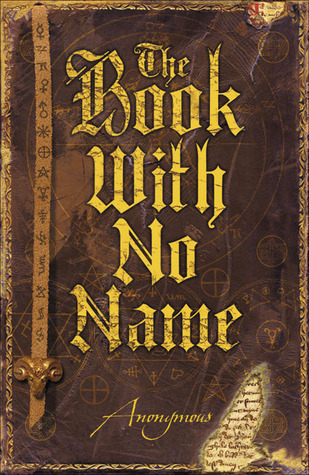
The Book With No Name (#1) by Anonymous

Published: May 28th 2008
Goodreads badgePublisher: Michael O’Mara Books
Pages: 379
Format: Book
Genre: Fantasy/Paranormal
★   ★   ★  – 3 Stars

Detective Miles Jensen is called to the lawless town of Santa Mondega to investigate a spate of murders. This would all be quite ordinary in those rough streets, except that Jensen is the Chief Detective of Supernatural Investigations. The breakneck plot centers around a mysterious blue stone — The Eye of the Moon—and the men and women who all want to get their hands on it: a mass murderer with a drinking problem, a hit man who thinks he’s Elvis, and a pair of monks among them. Add in the local crime baron, an amnesiac woman who’s just emerged from a five-year coma, a gypsy fortune teller, and a hapless hotel porter, and the plot thickens fast. Most importantly, how do all these people come to be linked to the strange book with no name? This is the anonymous, ancient book that no one seems to have survived reading. Everyone who has ever read it has been murdered. What can this mean?

The Book With No Name, by Anonymous. The title alone made me pick this book up from a book sale and while it wasn’t the greatest book I have read, it was creative, interesting, and definitely unique.

This is the first book in a series called The Bourbon Kid, and I have to say, while I wouldn’t rush out to get the sequels, if I came across them I would read them. Maybe if I leave it long enough my curiosity will peak and I will track down a sequel and see what happens next, but for now I am enjoying that it was a rather good story.
As soon as the story begins we are introduced to the mystery that is the Bourbon Kid, this prologue starts the novel off as the mystery and foreboding doom this man brings haunts a town. Meanwhile, Detective Miles Jensen has arrived in town to investigate a spate of unusual murders, two monks have left their monastery, a mysterious blue stone begins to cause havoc for all those who wish to possess it, there is also a hitman in town who thinks he is Elvis, an amnesiac woman who has woken from a coma, the boyfriend, and the local crime boss. What could possibly go wrong?

There are a lot of people involved in this narrative, and the author switches character perspectives quite a bit so we get to see the story from everyone’s perspective. I’d say seamlessly but I say with caution. Certainly there are no jarring moments, but you can find yourself reading a new paragraph and become confused, only to realise that you’re following a new character with different thoughts.

These switches occur a lot, and truly not always in a confusing manner, but you do have to pay attention and you will get used to it after awhile. I did find, which was quite clever, that because there were so many characters and storylines to follow, by breaking it up for each character and moment you get these kinds of mini scenes, almost like a collection of short stories which are connected to one another in terms of the bigger picture and have been woven together.

In terms of narrative it was drawn out considerably. Not a lot actually happens for the first 3/4 or so of the book, however you did have a sense that it was all necessary by the time you’ve finished. As you read you kept thinking that the next chapter would be where it all erupted and everything fell into place. This does happen in the end but it is a lot to remember and keep track of while you’re getting there. A lot of it was also character introductions, having so many people involved it does start to fill up pages. And while we never get any real back story or history on a lot of the characters, you are provided with a clear representation of their personality and character that eliminates a need for a history to understand them.

Surprisingly with so many characters in play you do not get lost which I thought was amazing, but you do have more people to become potential suspects in whatever is going on which does your head in if you try and figure it out on your own. Of course everyone basically in this novel is suspicious, as well as guilty of many a thing, but whether they are guilty of what you think they are is where the mystery lies.

I will give credit to the author, I liked the reveal when it came, and I liked that after such a long wait the ending was ideal. I didn’t think that anything had been wrapped up quickly, all the pieces suddenly fell into place and started to make perfect sense, just when you didn’t think there could possibly be a reason and connection for everything. That part was rather impressive.

There is violence in this book, but while describing scenes of death and brutality I didn’t find myself revolted or turned off. I put this down to clever writing and the ability to tell a gruesome scene without having to go in explicit detail which can push it into the grotesque and unreadable. But yes, be warned there is a large amount of violence in the book, and swearing, but swearing goes with the setting of the novel, whereas the violence goes with the narrative.

One way around the amount of violence is the supernatural element, not an overbearing amount, but it is there and, like everything and everyone, it is connected as well. It was worrying in the beginning when the possibility was first brought up because I was unsure how it would fit within the established narrative, but as more information was revealed it turned out alright, and you begin to accept that this is just how it is, and you do not spend a lot of time focused on these supernatural elements. This could be because there are so many extreme moments and aspects of unrealism that the extra dose does not really make that much difference.

Two of my favourite quotes, both obscure and seem rather bizarre, but like the book there are plenty of sentences and aspects of dialogue that feel awkward but not enough to be a real concern.

He had been shot in the stomach at point blank range by a man toting a double barrel shotgun. It had hurt terribly, and the wound was still bleeding a little, but it would heal. His wounds always healed, although he had come to accept the fact that gunshots did tend to leave a mark.”

Audrey had no tolerance for mess, but today there was blood everywhere.”

It is these kinds of sentences that make this book charming amongst its faults, quirky lines that seem obvious and almost unworthy of comment, yet it is provided anyway. Some of the phrasing seems a bit awkward but over the course of the book you do not really notice it after awhile, the story gets you in, despite the ambiguity and prolonged revelations.

Finally, we must briefly mention the title and author. I loved that it was mysterious and when I finished the book I loved it even more. I will say no more about it.

Welcome to Santa Mondega, enjoy the ride.

Wander Home by Karen A. Wyle

Published: October 10th 2012
Goodreads badgePublisher: Karen A. Wyle via Smashwords
Pages: 373
Format: eBook
Genre: Fantasy/Paranormal
★   ★   ★   ★  – 4 Stars

Death is what you make it. . . .

Eleanor never wanted to leave the daughter she loved so much. The overpowering urge to wander — to search, without knowing what she sought — drove her away. She left little Cassidy in her family’s loving care. But Cassidy and the others died in an accident before Eleanor could find her way home.

Now, they are all reunited, in an afterlife where nothing is truly lost: places once loved may be revisited, memories relived and even shared. Surely this is a place where they can understand and heal. And yet, the restlessness that shaped Eleanor’s life still haunts her in death — and now, she find herself dreaming of a man she never met. 

Somehow, she must solve the mystery of her life — or none of them will be at peace.

Note: I was given a copy of this book by the author to review

Wander Home opens with a great description of a day at the beach, and instantly we get a sense of something different. Wyle doesn’t stop the story to explain though, she just keeps the scene going, choosing her moment to tell us about it, not when we ask for it. I have known many an author to do this to readers and I have to say I rather like the mystery if there is a chance it gets revealed to us later.

There is no real surprise this book is about death and the afterlife, Wyle’s preface tells readers that it is set in the afterlife, but the way she has chosen to write about it gives it a new perspective, and does actual make you forget this is supposed to be death. In that sense there was a Lovely Bones feel about it all. There was no connection to earth like Susie Salmon had, yet the ability to change “heaven” to be what you wanted and see people you once knew or even wanted to meet was similar. Not to lessen the impact of Wander Home mind you, it has been very well constructed as a reality and through description and detail it adds depth and truth.

We are first introduced to Cassidy, her grandparents Sarah and Jack, and her great grandmother Amanda playing on the beach. We are given no real answers about what is going on, not only regarding their situation, but also to the rules of this reality. You can only assume that this is how the world works and accept it, and then hope it is going to be revealed later on. The initial mystery does not remain long as the arrival of Cassidy’s mother Eleanor starts a chain reaction of clarification. As things are explained to Eleanor, we too are given an explanation. This is often the case, we learn as they learn. In well written stories it makes the necessary information parts smoother without the need of long paragraphs where entire worlds are broken down for reader understanding before the story can continue.

The story is engaging in as much as you want to find out more about the world, and find some answers to your own questions, such as where everyone else is. When I stopped to finally go to bed I found myself wanting to return in the morning to see where this intrigue lead me, always a good sign in a new book. The focus on this single family makes you wonder where everyone else can be. However these questions are answered further into the book and you soon realise, once you have a greater understanding of how the world operates, just how complex yet simplistic is actually is.

Once you see that this afterlife is filled with people from everywhere and every time, it is interesting to see how they live their lives. We are told that sleep in unnecessary, though people still enjoy it, but whether food and drink is required is unclear. There seems to be a lot of conversations involving and revolving around food which sparked my query, but there are multiple other unnecessary things that people did as well. Humans, I think, like having structure. In a world where you can be whenever and have such freedom everyone still manages to fall into the same systems they know.

There is a society of sorts in this story, no matter how surreal or fantastical, and people relive and do what they enjoyed in life. People make things and they work, whether they need to or not. People teach, people create, and there are markets and festivals where money is exchange more as recognition of a job well done for the creation than anything else. People buy chairs from a craftsman when they could conjure one themselves.

In that sense there is a lot to make you forget it is anything like death. Is this the point? Again we come back to <i>The Lovely Bones</i> idea, “heaven” was what you made it, places are created and shared and remembered because of what people did and how they lived. The entire world is made up of the memories of the humans who live within the world. In that sense it is rather philosophical, at the very least poetic or something.

Wyle does have a very poetic way of writing, some of her descriptions are really well written, and even the seemingly non-important details are not neglected. Her vocabulary is also very advanced, I found that I had discovered three new words by the end of the book: contrapuntal, sartorial, and atavistic; all of which I had never heard before and all of which are fantastic words. There is a great quote in there about reading as well: “[Reading] let you climb inside of people – even though they were made up people – and end up understanding humans, in general, a little better.” I think this is yet another great understanding of the power of reading. Another one of my favourite lines was “Kindly allow me the prejudices of my time”, for some reason I thought that was a very eloquent line; it really stood out to me.

The ideal Wyle has created is highly alluring. If only there was a realm, in life or death where you could change, relive, feel, think, and be in any age you wished. Young and playful, old and wise, it is an interesting concept, especially the ability to relive old memories with exact detail whenever you pleased, emotions included and everything. Though if anything it should make you appreciate the fact you can do most of those things now, instead of spending you time wishing and waiting for it to be possible later on. Not to get swept up in the promise of an ideal and instead live while you have the chance.

Through Eleanor’s narrative we realise that things may not be as simple as it first appeared. Just when we think we finally have figured out the world we are given new information that is mysterious, and being mysterious to the characters themselves makes it more intriguing. Initially we see alternating views between members of the family but as the story progresses it is clear Eleanor becomes the driving force in the story. This was not a bad thing, while the story was still being introduced we get a lot about the other characters and their histories, and despite the focus being around Eleanor’s story a lot more, we still learn about the other characters, they are not forgotten.

Overall it was a good read, it was different and imaginative. Wyle manages to capture family dynamics rather well and the relationships between family members whether it is husbands and wives, mothers and daughters, or the wisdom of a great grandmother to a child. Despite the nature of the topic it is not a complicated read, though there are a few minor adult themes. Whilst reading I did find a few spelling and name errors but I have since been informed by the author that these issues where in fact not mistakes, but rather deliberate conscious actions; either way they do not distract from the story. There are no jarring sentences and the detail and description of the locations are more than enough to compensate minor mistakes. And on a side note, there is a discussion about whether the Hanging Gardens ever existed; by chance I read an article this morning that concluded there is strong evidence that they never did. So there you go.

Next Newer Entries