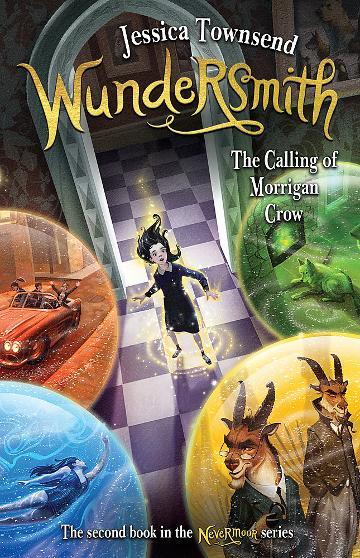
Wundersmith (#2) by Jessica Townsend

Published: 30 October 2018 (print)/26 November 2018 (audio) Goodreads badge
Publisher:
Lothian Children’s Books/Hachette Australia
Pages: 467/11 hrs and 50 mins
Narrator: Gemma Whelan
Format: Audiobook
Genre: Junior Fiction Fantasy
★   ★   ★   ★   ★ – 5 Stars

Wunder is gathering in Nevermoor …

Morrigan Crow may have defeated her deadly curse, passed the dangerous trials and joined the mystical Wundrous Society, but her journey into Nevermoor and all its secrets has only just begun. And she is fast learning that not all magic is used for good.

Morrigan Crow has been invited to join the prestigious Wundrous Society, a place that promised her friendship, protection and belonging for life. She’s hoping for an education full of wunder, imagination and discovery – but all the Society want to teach her is how evil Wundersmiths are. And someone is blackmailing Morrigan’s unit, turning her last few loyal friends against her. Has Morrigan escaped from being the cursed child of Wintersea only to become the most hated figure in Nevermoor?

Worst of all, people have started to go missing. The fantastical city of Nevermoor, once a place of magic and safety, is now riddled with fear and suspicion…

I loved Nevermoor and Wundersmith exceeds it by being even more amazing. I loved seeing Morrigan’s growth as a person, in her abilities and this new world she has become a part of. The same fun and flighty characters are there but in new ways as more of the world and school is explored. Not to mention as new dangers arise.

There is a darker theme running under the story, but with this strange world Morrigan’s in there was always the capacity for darkness given we start off the series with her having a curse. It’s a dangerous world and seeing Morrigan try to understand it and navigate it is wonderful.

Jupiter is always a brilliant character, his erratic nature is balanced by his desire to protect Morrigan, but per usual he always knows more than he lets on and isn’t as flighty as he appears. There’s new and returning characters to fall in love with and the different knacks of the other people in Morrigan’s unit are creative and it shows that everyone’s abilities are diverse but can always have a use.

The lead up to the ending was absolutely divine. It brings together so much and plays out so brilliantly it was hard not to admire this book for those moments alone. I am so keen to see where Townsend is taking Morrigan’s story because I’m certainly hooked so far.

You can purchase Wundersmith via the following

QBDDymocks | Booktopia

  Blackwell’s | Angus & Robertson

Fishpond | Amazon | Amazon Aust | Audible
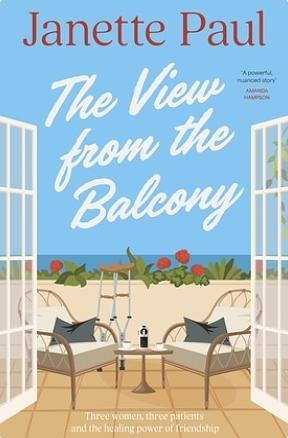
The View from the Balcony by Janette Paul

Published: 25 March 2025 (print)/1 April 2025 (audio) Goodreads badge
Publisher:
Pan Macmillan Australia/Bolinda Publishing
Pages: 400/11 hrs and 9 mins
Narrator: Lucy Moir
Format: Audiobook
Genre: Fiction
★   ★   ★   ★ – 4 Stars

Three women and the healing power of friendship.

Andie has no memory of the man who pushed her out of the way of a speeding car. A week before Coral’s biggest career highlight, her mum has a fall. And the last thing Mara wants is to be assigned to work at the hospital bedside of the much-despised senior partner of her law firm.

Andie, Coral and Mara become the daily visitors to the three patients at the end of East Wing of Hepburn House Rehabilitation Hospital. The balcony that connects the three rooms provides an oasis, a healing place, but more than that, too: a place where their lives will interconnect and never be quite the same again…

A heartwarming and evocative novel of love, friendship and family, where hope overcomes all – even terrible hospital coffee.

This is a wonderful story about women and their lives, it’s also about friendship and support and all the different types of experiences people can have. It’s about the multifaceted aspects of family, friendship, work, and romance, and how responsibility is often a burden when carried alone.

I enjoyed the emotional journey the women went on and even though there were disasters and chaos at times, in all of their lives, I enjoyed that they were allowed a real experience, full of heart. No dramas. It isn’t bland, simple, or emotionally uninteresting either, it was a beautifully real story about three people in different stages of their lives and the struggles and joys they experience.

All three women have stress in their lives and things that are causing chaos for them. Mara deals with the stress of family obligations and lack or support, Coral is dealing with the pressures of family and her obligations, while Andi is dealing with the trauma of her accident and healing.

I don’t know whether I need to worry that someone my age and in my situation resonated with Coral so much. I felt sympathy and had a connection with her and her circumstances as she was pulled in every direction and made to feel bad for wanting a break or time to herself. It might be Paul’s great writing though, you really get into the mindsets of these characters. You understand their stresses, their fears, and with remarkable ease you understand who they are and where they’re coming from.

Paul’s approach of writing about the unseen and oft forgotten people was a great decision. When someone is recovering the temptation is to focus on their story, who they are meeting in the hospital, what their recovery journey is like. To have this flipped and we’re focused now on those in a supportive role it reminds you how even popping in for a visit each day can be draining and a demanding practice.

The setting of a care hospital is a great place to interact because with a mix of patients, staff, plus the fly in fly out nature of family and visitors it makes for a great place to overlap, interact, and gauge these characters and their lives.

I loved all the characters, even the difficult and harsh ones, because you know there’s reasons why, there’s life history, there’s emotional issues or illness that makes them hard to deal with. But their complexity makes them real, turns them into people you know, you’ve met, and the ability Paul has to layer so much depth into the characters without being heavy handed is amazing.

I actually enjoyed the three narrators didn’t find one another until the end of the book. It wasn’t like they were the only three characters either, each one has a little group around them so they are never alone, but they still never cross paths. It works too because it is completely believable and understandable. In a place like the rehab centre people pop in and out all the time, and often you’re so wrapped up in who you’re there to visit you only notice people in passing as you bustle onto your next duty of the day. This is contrasted by the evidence that those in recovery did find one another and formed relationships, which we only catches glimpses of through our main characters. In another book these characters would be the main focus and Coral and co would be the side characters we never get a chance to see deeply.

There’s complications of course. There’s decisions that need making, there’s circumstances that work in a ward but not in the outside world. There’s risks to take and opportunities to weigh up which was as impactful and consequential as any major disaster. I’m glad there wasn’t a huge Event the characters had to deal with. The three main characters had their own events to deal with and overcome and I loved how that was perfect for this type of story.

Paul brings great closure with the ending, Val and Coral finally get to have their moment, the realisation of clarity or whether the clarity was new or just a fluke is irrelevant as it helped heal them both. I was hoping Mara and the physio Riley were going to hook up, they are a good match and the few interactions they had felt like they really clicked. There’s career prospects and personal growth, and new opportunities to leave readers feeling hopeful.

I will admit I am a little annoyed at the ending, but only because I was rooting for Coral so much. She deserved great things and regardless of her acceptance I was annoyed her obligations – despite her decision that they weren’t – stopped her doing something she had earned, worked for, and should be able to celebrate. But my disappointment was made up in the comradery these women showed, the ride or die for someone they barely know and are spurred into by the people around them.

You can purchase The View from the Balcony via the following

QBDDymocks | Booktopia

 Angus & Robertson

Fishpond | Amazon | Amazon Aust | Audible

Dear Sweet Pea by Julie Murphy

Published: 1 October 2019 (print)/1 October 2019 (audio) Goodreads badge
Publisher:
Balzer + Bray/Harper Collins
Pages: 273/6 hours, 20 minutes
Narrator: Phoebe Strole
Format: Audiobook
Genre: Contemporary Junior Fiction
★   ★   ★ – 3 Stars

Patricia “Sweet Pea” DiMarco wasn’t sure what to expect when her parents announced they were getting a divorce. She never could have imagined that they would have the “brilliant” idea of living in nearly identical houses on the same street. In the one house between them lives their eccentric neighbour Miss Flora Mae, the famed local advice columnist behind “Miss Flora Mae I?”

Dividing her time between two homes is not easy. And it doesn’t help that at school, Sweet Pea is now sitting right next to her ex-best friend, Kiera, a daily reminder of the friendship that once was. Things might be unbearable if Sweet Pea didn’t have Oscar–her new best friend–and her fifteen-pound cat, Cheese.

Then one day Flora leaves for a trip and asks Sweet Pea to forward her the letters for the column. And Sweet Pea happens to recognize the handwriting on one of the envelopes.

What she decides to do with that letter sets off a chain of events that will forever change the lives of Sweet Pea DiMarco, her family, and many of the readers of “Miss Flora Mae I?”

This book was enjoyable, had a few issues, but for a book kids will read it was a nice story. There was a lot of diversity and insights into being a kid, body issues and friend dramas, as well as big family changes.

Being in year seven I think Sweet Pea is around 13, which explains the lack of critical thinking and the impulsive actions. But while she is sensible in some areas, and has a well-rounded view on others, she is still quite selfish and judgemental of those around her. Having a character like this is good because why should a kid be perfect when they are still growing, and hopefully this story is the start of her growth. She has a lot of important things happening in her life and her good intentions don’t always work out.

One things I thought was curious was there are no consequences for Sweet Pea hiding her father’s important mail or deleting phone messages. I felt that was the wrong message to send that even if Sweet Pea felt bad, no adult found out what she did and even when it was clear there would have been major consequences nothing seemed to come of it.

Opening all the mail was magically forgotten about too, as was reading everyone’s private letters to Flora Mae and then resealing them (perfectly somehow) and sending them on. Even though there are consequences for the ones she does deal with, it was a weird thing to leave unmentioned.

The way characters are described aren’t blended well, there is a lot of “there is a guy behind the counter, he looks like this and is wearing this” but imagine this for every person Sweet Pea sees. It’s takes you from the story a little, especially in audio form when you stop to describe someone then the story continues. It shows off good representation and shows diversity, even if it’s a one off background character, but the writing needed to make it more streamlined.

Another unrealistic thing is I cannot imagine her school calling her Sweet Pea, even if it has Patricia on her forms. What kind of awkward thirteen year old wants everyone calling her Sweet Pea, I feel that is prime humiliation, even in a small town and a small school. She can’t be awkward and anxious while also being on having everyone call her a personal nickname.

Strole does a good job as narrator, I liked her voice for Sweet Pea and aside from the clunky descriptions I fell into the story easily.

Overall I liked the story, even with the flaws. Murphy writes these characters who are imperfect and finding their way in the world. It’s a bold adventure and a lot of change for Sweet Pea but one I think would resonate with a lot of kids around the same age.

You can purchase Dear Sweet Pea via the following

QBD | Booktopia

WorderyBlackwell’s | Angus & Robertson

Fishpond | Amazon | Amazon Aust | Audible


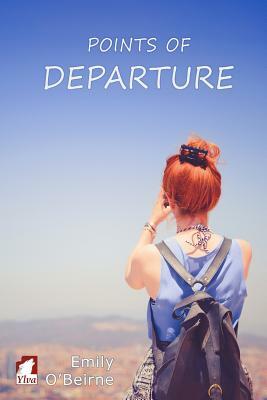
Points of Departure by Emily O’Beirne

Published: 15 June 2016 (print)/28 June 2022 (audio) Goodreads badge
Publisher:
Ylva Publishing/Tantor Media, Inc
Pages: 274/8 hrs and 43 mins
Narrator: Angela Dawe
Format: Audiobook
Genre: Young Adult Contemporary
★   ★   ★ – 3 Stars

In this young adult novel, best friends Kit and Liza have been looking forward to this trip forever.
Five girls, five tickets overseas. It’s exactly what they all need after the final slog of high school. But when Kit’s suddenly forced to drop out, Liza’s left with three girls she barely knows. 

There’s Mai, committed only to partying. There’s Tam, who already has her doubts about leaving her sick father behind. And there’s Olivia, so miserable about screwing up exams she’s not even sure she wants to get out of bed, let alone on a plane. Meanwhile Kit’s stuck working double shifts to pay off a debt, wondering if she’ll ever get it together.

All Liza wants from this trip is to discover a new version of herself. She just hadn’t planned on doing it without Kit by her side.
And they’re all learning that travel isn’t just about the places you go, but who you’re with at the time.

I am no stranger to having a subpar narrator for audiobooks, it’s rare but not unheard of. There have only been maybe two books I couldn’t listen to at all because of the narrator, other times there are narrators who aren’t great at the start but I can get used to by the end of the book. This one, however, annoyed me right until the final minutes. The nasal imitation Australian accent was bad enough when there was dialogue, but the fact the rest of the book was spoken in an American accent was annoying. The main things I kept thinking were why was an American narrating this Australian book and why would you switch between accents?

When I had a small whinge online I did see one response that said audiobooks should be narrated by people who are the nationality of the characters, which would be ideal, support local talent and all that, but if we can’t have that at least can they be vetted that they can do a decent Australian accent that doesn’t make you cringe every time a character spoke? I have to be careful here and not spend the entire time ragging on the narrator, it’s probably not her fault, but it goes to show that the narrator can influence a book’s enjoyment.

I enjoyed that the characters were older teens; they’d finished their schooling and were looking at their open ended future trying to decide what to do with the rest of their lives. It was a great dynamic having the five of them plan this trip with really one person being a key connector between them all. When you remove that connecting point it was interesting to see the interactions these near strangers have as a result.

The story follows multiple points of view but the problem is some characters are a lot more interesting than others. I liked Kit’s story best, and I enjoyed Olivia and Liza, but overall it was a little bit boring. Maybe not boring exactly, but definitely slow. And considering I never got used to the narrator I was very conscious of not letting it impact my enjoyment. Even with an Australian narrator I feel it would still have been slow, under developed, and slightly repetitive.

With multiple points of view you got a little bit of their lives, but their narrative voices mixed together. Kit’s story was the only one that felt separate and her voice unique, and not only because of her isolation at home made her easy to identify. Keeping track of who was who was easier by remember their one defining narrative feature – Liza was a former runner, Olivia worried about her uni scores, and Tam had a sick father. There wasn’t any other way to distinguish them and their voices were non-descript, I don’t think I even got a picture of any of them in my head. The similarities in written voice especially between Liza and Olivia weren’t helped by ?? barely altering her voice either as she switched between the two, and there was definitely an imbalance between perspectives. Olivia and Liza dominated, Kit did as well, Tam barely gets a look in so much I kept forgetting about her, and poor Mai didn’t get a voice at all.

The exploration of European countries, hostels, different approaches and appreciations to each country was a nice insight into how to travel around the world (and how easy it is to jump from country to country when you aren’t girt by sea). Seeing each girl grow and develop friendships through the book and overcome their insecurities, find themselves, and work out who they want to be was nice too.

Overall a nice read, probably one that could have been expanded further in terms of character and balanced better in terms of pace, but it was enjoyable and an interesting look at the older side of young adult and teen lives: not quite complete adults but not bound by schoolyard antics.

You can purchase Points of Departure via the following

Blackwell’s | Wordery | Angus & Robertson

 Amazon | Amazon Aust | Audible

Summer Bird Blue by Akemi Dawn Bowman

Published: 11 September 2018 (print)/11 September 2018 (audio) Goodreads badge
Publisher:
Simon Pulse/Tantor Media Inc.
Pages: 375/9 hrs and 4 mins
Narrator: Em Eldridge
Format: Audiobook
Genre: Young Adult Contemporary
★   ★   ★ – 3.5 Stars

Rumi Seto spends a lot of time worrying she doesn’t have the answers to everything. What to eat, where to go, whom to love. But there is one thing she is absolutely sure of-she wants to spend the rest of her life writing music with her younger sister, Lea. Then Lea dies in a car accident, and her mother sends her away to live with her aunt in Hawaii while she deals with her own grief. Now thousands of miles from home, Rumi struggles to navigate the loss of her sister, being abandoned by her mother, and the absence of music in her life. With the help of the “boys next door”-a teenage surfer named Kai, who smiles too much and doesn’t take anything seriously, and an eighty-year-old named George Watanabe, who succumbed to his own grief years ago-Rumi attempts to find her way back to her music, to write the song she and Lea never had the chance to finish. Aching, powerful, and unflinchingly honest, Summer Bird Blue explores big truths about insurmountable grief, unconditional love, and how to forgive even when it feels impossible.

I’ve wanted to read this book for ages when I was looking to expand my diversity reads, and I’m glad to read it. It’s a good story about grief and sisters as well as a decent mini side plot about identity and working out where you fit in the world.

There is a good exploration of grief – guilt when you catch yourself being happy, the obsession with doing the one thing you think would make it better ie. writing the song, and how less talking is sometimes what you need like her relationship with the neighbour. Kai’s no nonsense friendship is good too. Not tiptoeing around, but she is able to admit that she will be set off if people try to talk about her sister with her, so she isn’t oblivious but can’t help it. And with the rush of being dumped by her mother and trying to adjust away from her friends who could have helped (apparently there’s no phone or internet in this area of Hawai’i?) then of course she is going to be additionally angry.

What I enjoyed was Rumi knows she is being mean and unreasonable sometimes, but she also thinks she has cause, which she translates to the reader without over explaining. She’s sad she hurts her aunt and knows she always does it, but she also things she should be allowed to sit in her grief. Alone.

I liked Rumi being imperfect because she doesn’t change by being sad, she just can’t regulate as well. She has been abandoned, she doesn’t want to distract herself with friends or shopping, she wants to be left in the hole where her sister left behind.

There was a line I loved that was basically she is now alone, without her sister and without her mum, so she needs to be able to work out how to be alone, work out who she is now she’s alone. Her life was so connected to her sister she needs to find things to do without her. I liked this as a justification for her behaviour and her line of thinking. It isn’t her grief pushing her and her anger being unreasonable. She may not translate that to her aunt or anyone around her that well – she is still an emotional wreck and a teenager – but she knows what she is trying to do. And that is be ok being alone. And she can’t work out how to be alone, and work through her grief alone if people keep trying to make her do frivolous things.

So much of this review could be a discussion about how well this story explores grief but it’s already long enough. Bowman has truly done a great job, and the way each character deals with it makes it a wonderfully messy and real response that doesn’t try and hide the reality and pain. This is very much an example of “Put on your own mask before helping others” approach that Rumi isn’t getting.

In terms of the diversity representation, Rumi’s confusion over feeling left behind shown through her memories was integrated well, and connected to Leah being supportive. It was a great approach instead of sole focus being Rumi looking directly at her own feelings/identity. As a reader we see the hints and clues through memories about who she is before she realises.

What I enjoy about books with aromantic characters is it’s the only books you’ll get where there is no romance. There needs to be more YA where people just make friends, even if they are heteronormative, even if they do want love and romance. What I love about this book is a character makes a new friend and the world doesn’t force them together. I love these because finding friends is just as important as romance as a teen. And being friends first is great, but finding a friend and being happy with that should be a goal, not just for the aromatic books – which are rare anyway. It’s another way to have representation without making them specific aromantic books and highlights the importance of good, solid friendships.

Looking at the reviews (which honestly sometimes you really shouldn’t do, even as a reader. Don’t read the comments and all that), I understand how some people think it might be heavy handed, but it’s not. As someone who has read a lot of lesbian and gay books, people need to remember they are so much more well-known now, more accepted, more common. People don’t need a book anymore about ‘do I like girls and is that weird?’. But I think we still need books about ‘why don’t I like any one and is that weird?’. We are still in the early stages in terms of representation, but it isn’t as bad as they make out, it’s well done to be honest. Teenagers have deeper conversations than you’d think. Talking to strangers can be a lot easier and some people are more open than others too. I don’t know how people can revere Loveless when this one also has someone working through their identity, just because it’s more active than passive doesn’t make it worse.

Eldridge does a great job with the audio, though audio certainly highlighted how repeatedly the words “Aunty Ani” is said which does get annoying. But you’re rarely taken from the story and it was easy to stay in this world of grief and family and discovery.

You can purchase Summer Bird Blue via the following

QBDDymocks | Booktopia

WorderyBlackwell’s | Angus & Robertson

Fishpond | Amazon | Amazon Aust

Previous Older Entries Next Newer Entries