Published: 11 September 2018 (print)/11 September 2018 (audio) 
Publisher: Simon Pulse/Tantor Media Inc.
Pages: 375/9 hrs and 4 mins
Narrator: Em Eldridge
Format: Audiobook
Genre: Young Adult Contemporary
★ ★ ★ – 3.5 Stars
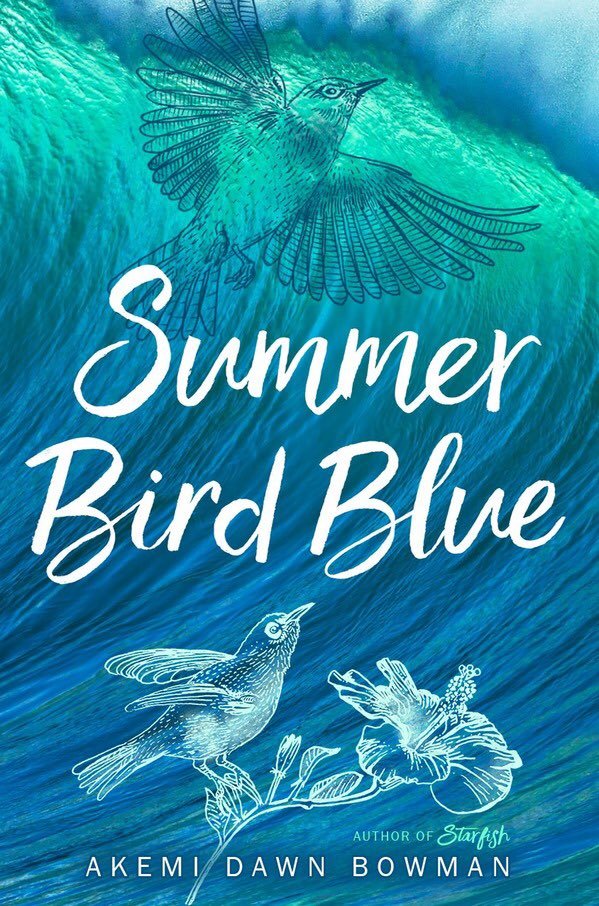 Rumi Seto spends a lot of time worrying she doesn’t have the answers to everything. What to eat, where to go, whom to love. But there is one thing she is absolutely sure of-she wants to spend the rest of her life writing music with her younger sister, Lea. Then Lea dies in a car accident, and her mother sends her away to live with her aunt in Hawaii while she deals with her own grief. Now thousands of miles from home, Rumi struggles to navigate the loss of her sister, being abandoned by her mother, and the absence of music in her life. With the help of the “boys next door”-a teenage surfer named Kai, who smiles too much and doesn’t take anything seriously, and an eighty-year-old named George Watanabe, who succumbed to his own grief years ago-Rumi attempts to find her way back to her music, to write the song she and Lea never had the chance to finish. Aching, powerful, and unflinchingly honest, Summer Bird Blue explores big truths about insurmountable grief, unconditional love, and how to forgive even when it feels impossible.
I’ve wanted to read this book for ages when I was looking to expand my diversity reads, and I’m glad to read it. It’s a good story about grief and sisters as well as a decent mini side plot about identity and working out where you fit in the world.
There is a good exploration of grief – guilt when you catch yourself being happy, the obsession with doing the one thing you think would make it better ie. writing the song, and how less talking is sometimes what you need like her relationship with the neighbour. Kai’s no nonsense friendship is good too. Not tiptoeing around, but she is able to admit that she will be set off if people try to talk about her sister with her, so she isn’t oblivious but can’t help it. And with the rush of being dumped by her mother and trying to adjust away from her friends who could have helped (apparently there’s no phone or internet in this area of Hawai’i?) then of course she is going to be additionally angry.
What I enjoyed was Rumi knows she is being mean and unreasonable sometimes, but she also thinks she has cause, which she translates to the reader without over explaining. She’s sad she hurts her aunt and knows she always does it, but she also things she should be allowed to sit in her grief. Alone.
I liked Rumi being imperfect because she doesn’t change by being sad, she just can’t regulate as well. She has been abandoned, she doesn’t want to distract herself with friends or shopping, she wants to be left in the hole where her sister left behind.
There was a line I loved that was basically she is now alone, without her sister and without her mum, so she needs to be able to work out how to be alone, work out who she is now she’s alone. Her life was so connected to her sister she needs to find things to do without her. I liked this as a justification for her behaviour and her line of thinking. It isn’t her grief pushing her and her anger being unreasonable. She may not translate that to her aunt or anyone around her that well – she is still an emotional wreck and a teenager – but she knows what she is trying to do. And that is be ok being alone. And she can’t work out how to be alone, and work through her grief alone if people keep trying to make her do frivolous things.
So much of this review could be a discussion about how well this story explores grief but it’s already long enough. Bowman has truly done a great job, and the way each character deals with it makes it a wonderfully messy and real response that doesn’t try and hide the reality and pain. This is very much an example of “Put on your own mask before helping others” approach that Rumi isn’t getting.
In terms of the diversity representation, Rumi’s confusion over feeling left behind shown through her memories was integrated well, and connected to Leah being supportive. It was a great approach instead of sole focus being Rumi looking directly at her own feelings/identity. As a reader we see the hints and clues through memories about who she is before she realises.
What I enjoy about books with aromantic characters is it’s the only books you’ll get where there is no romance. There needs to be more YA where people just make friends, even if they are heteronormative, even if they do want love and romance. What I love about this book is a character makes a new friend and the world doesn’t force them together. I love these because finding friends is just as important as romance as a teen. And being friends first is great, but finding a friend and being happy with that should be a goal, not just for the aromatic books – which are rare anyway. It’s another way to have representation without making them specific aromantic books and highlights the importance of good, solid friendships.
Looking at the reviews (which honestly sometimes you really shouldn’t do, even as a reader. Don’t read the comments and all that), I understand how some people think it might be heavy handed, but it’s not. As someone who has read a lot of lesbian and gay books, people need to remember they are so much more well-known now, more accepted, more common. People don’t need a book anymore about ‘do I like girls and is that weird?’. But I think we still need books about ‘why don’t I like any one and is that weird?’. We are still in the early stages in terms of representation, but it isn’t as bad as they make out, it’s well done to be honest. Teenagers have deeper conversations than you’d think. Talking to strangers can be a lot easier and some people are more open than others too. I don’t know how people can revere Loveless when this one also has someone working through their identity, just because it’s more active than passive doesn’t make it worse.
Eldridge does a great job with the audio, though audio certainly highlighted how repeatedly the words “Aunty Ani” is said which does get annoying. But you’re rarely taken from the story and it was easy to stay in this world of grief and family and discovery.
You can purchase Summer Bird Blue via the following
Wordery | Blackwell’s | Angus & Robertson
Fishpond | Amazon | Amazon Aust
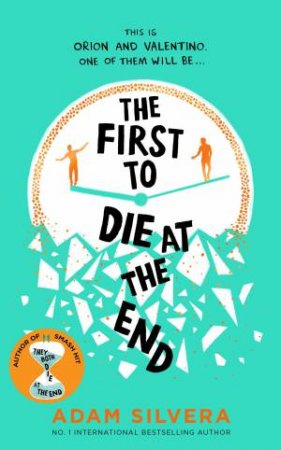 It’s the night before Death-Cast goes live, and there’s one question on everyone’s mind: Can Death-Cast actually predict death, or is it an elaborate hoax? Orion Pagan has waited years for someone to tell him that he’s going to die, given his serious heart condition. Valentino Prince has a long and promising future ahead of him and only registered for Death-Cast after his twin sister nearly died in a car accident.

 Maths wiz Gemma Rowe has found the one problem her maths can’t solve: she’s fallen for her female & very heterosexual best friend.
 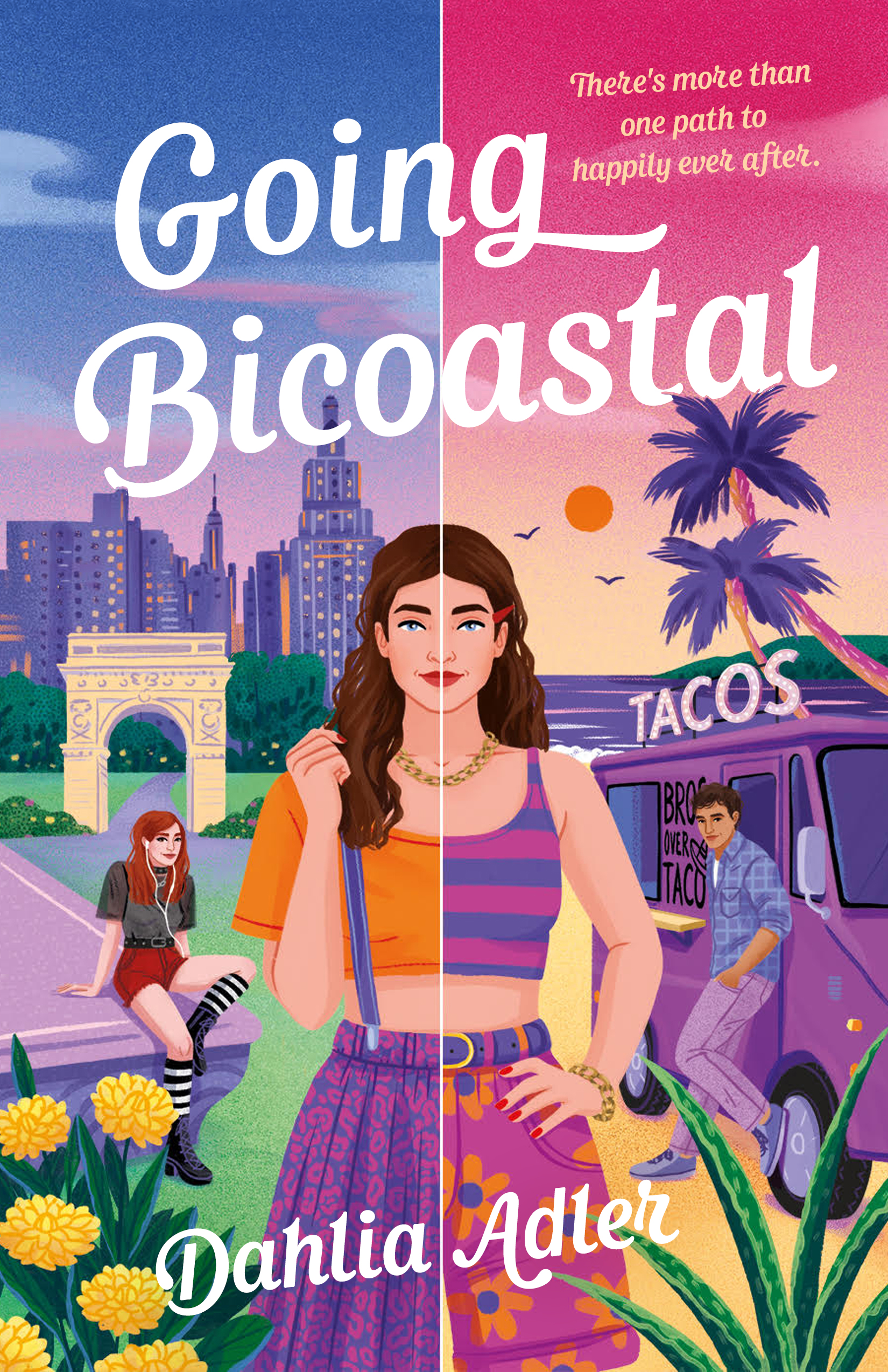 A queer Sliding Doors YA rom-com in which a girl must choose between summer in NYC with her dad (and the girl she’s always wanted) or LA with her estranged mum (and the guy she never saw coming). In Dahlia Adler’s Going Bicoastal, there’s more than one path to happily ever after. Natalya Fox has twenty-four hours to make the biggest choice of her stay home in NYC for the summer with her dad (and finally screw up the courage to talk to the girl she’s been crushing on), or spend it with her basically estranged mum in LA (knowing this is the best chance she has to fix their relationship, if she even wants to.) (Does she want to?)