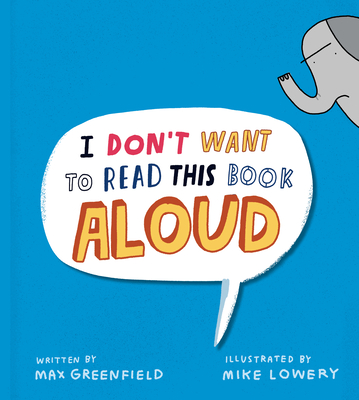
I Don’t Want to Read this Book Aloud by Max Greenfield

Published: 19 September 2023Goodreads badge
Publisher:
G.P. Putnam’s Sons Books for Young Readers
Illustrator: Mike Lowery
Pages: 40
Format: Picture Book
★   ★   ★  – 3.5 Stars

Nobody in the world actually enjoys reading aloud, do they? Impossible! After all, any number of terrible things could happen: you might come across a word you don’t know how to pronounce. Or get distracted by a volcano eruption and lose your place. Even worse, you might accidentally hear the sound of your own voice!

With a nice plaque on the first page telling us this book is meant to be read aloud it then begins the story of someone who emphatically will not read it out loud.

In a meta kind of ‘this is not the song this is just a tribute’ you don’t know what the book is the narrator doesn’t want to read aloud, but the story we do get is enjoyable and clever. Their pontifications and protestations are great and I loved how the text and formatting worked together to help exaggerate the woes of our narrator.

Obviously, if you do choose to read this aloud it is super fun. The creative format and fonts let you play with pronunciation and emphasis, and the interaction between the narrator and the literal elephant in the room is a great way to have a conversation without it being to the reader directly.

The illustrations and the layout is bright and colourful, there are a lot of busy pages that are reminiscent of a kid illustrating the various issues they have and it matches the voice perfectly. It’s easy to picture someone standing before you proclaiming how they will not read this book aloud and the various reasons why.

For those who may be wary or unsure about reading aloud this is a great book to help quell any fears. As our narrator works through their issues (both serious and humorous) it shows that reading out loud can be fun and not as intimidating as it first appears.

You can purchase I Don’t Want to Read this Book Aloud via the following

QBDDymocks | Booktopia

WorderyBlackwell’s | Angus & Robertson

Fishpond | Amazon | Amazon Aust | Audible
Dear Sweet Pea by Julie Murphy

Published: 1 October 2019 (print)/1 October 2019 (audio) Goodreads badge
Publisher:
Balzer + Bray/Harper Collins
Pages: 273/6 hours, 20 minutes
Narrator: Phoebe Strole
Format: Audiobook
Genre: Contemporary Junior Fiction
★   ★   ★ – 3 Stars

Patricia “Sweet Pea” DiMarco wasn’t sure what to expect when her parents announced they were getting a divorce. She never could have imagined that they would have the “brilliant” idea of living in nearly identical houses on the same street. In the one house between them lives their eccentric neighbour Miss Flora Mae, the famed local advice columnist behind “Miss Flora Mae I?”

Dividing her time between two homes is not easy. And it doesn’t help that at school, Sweet Pea is now sitting right next to her ex-best friend, Kiera, a daily reminder of the friendship that once was. Things might be unbearable if Sweet Pea didn’t have Oscar–her new best friend–and her fifteen-pound cat, Cheese.

Then one day Flora leaves for a trip and asks Sweet Pea to forward her the letters for the column. And Sweet Pea happens to recognize the handwriting on one of the envelopes.

What she decides to do with that letter sets off a chain of events that will forever change the lives of Sweet Pea DiMarco, her family, and many of the readers of “Miss Flora Mae I?”

This book was enjoyable, had a few issues, but for a book kids will read it was a nice story. There was a lot of diversity and insights into being a kid, body issues and friend dramas, as well as big family changes.

Being in year seven I think Sweet Pea is around 13, which explains the lack of critical thinking and the impulsive actions. But while she is sensible in some areas, and has a well-rounded view on others, she is still quite selfish and judgemental of those around her. Having a character like this is good because why should a kid be perfect when they are still growing, and hopefully this story is the start of her growth. She has a lot of important things happening in her life and her good intentions don’t always work out.

One things I thought was curious was there are no consequences for Sweet Pea hiding her father’s important mail or deleting phone messages. I felt that was the wrong message to send that even if Sweet Pea felt bad, no adult found out what she did and even when it was clear there would have been major consequences nothing seemed to come of it.

Opening all the mail was magically forgotten about too, as was reading everyone’s private letters to Flora Mae and then resealing them (perfectly somehow) and sending them on. Even though there are consequences for the ones she does deal with, it was a weird thing to leave unmentioned.

The way characters are described aren’t blended well, there is a lot of “there is a guy behind the counter, he looks like this and is wearing this” but imagine this for every person Sweet Pea sees. It’s takes you from the story a little, especially in audio form when you stop to describe someone then the story continues. It shows off good representation and shows diversity, even if it’s a one off background character, but the writing needed to make it more streamlined.

Another unrealistic thing is I cannot imagine her school calling her Sweet Pea, even if it has Patricia on her forms. What kind of awkward thirteen year old wants everyone calling her Sweet Pea, I feel that is prime humiliation, even in a small town and a small school. She can’t be awkward and anxious while also being on having everyone call her a personal nickname.

Strole does a good job as narrator, I liked her voice for Sweet Pea and aside from the clunky descriptions I fell into the story easily.

Overall I liked the story, even with the flaws. Murphy writes these characters who are imperfect and finding their way in the world. It’s a bold adventure and a lot of change for Sweet Pea but one I think would resonate with a lot of kids around the same age.

You can purchase Dear Sweet Pea via the following

QBD | Booktopia

WorderyBlackwell’s | Angus & Robertson

Fishpond | Amazon | Amazon Aust | Audible


Summer Bird Blue by Akemi Dawn Bowman

Published: 11 September 2018 (print)/11 September 2018 (audio) Goodreads badge
Publisher:
Simon Pulse/Tantor Media Inc.
Pages: 375/9 hrs and 4 mins
Narrator: Em Eldridge
Format: Audiobook
Genre: Young Adult Contemporary
★   ★   ★ – 3.5 Stars

Rumi Seto spends a lot of time worrying she doesn’t have the answers to everything. What to eat, where to go, whom to love. But there is one thing she is absolutely sure of-she wants to spend the rest of her life writing music with her younger sister, Lea. Then Lea dies in a car accident, and her mother sends her away to live with her aunt in Hawaii while she deals with her own grief. Now thousands of miles from home, Rumi struggles to navigate the loss of her sister, being abandoned by her mother, and the absence of music in her life. With the help of the “boys next door”-a teenage surfer named Kai, who smiles too much and doesn’t take anything seriously, and an eighty-year-old named George Watanabe, who succumbed to his own grief years ago-Rumi attempts to find her way back to her music, to write the song she and Lea never had the chance to finish. Aching, powerful, and unflinchingly honest, Summer Bird Blue explores big truths about insurmountable grief, unconditional love, and how to forgive even when it feels impossible.

I’ve wanted to read this book for ages when I was looking to expand my diversity reads, and I’m glad to read it. It’s a good story about grief and sisters as well as a decent mini side plot about identity and working out where you fit in the world.

There is a good exploration of grief – guilt when you catch yourself being happy, the obsession with doing the one thing you think would make it better ie. writing the song, and how less talking is sometimes what you need like her relationship with the neighbour. Kai’s no nonsense friendship is good too. Not tiptoeing around, but she is able to admit that she will be set off if people try to talk about her sister with her, so she isn’t oblivious but can’t help it. And with the rush of being dumped by her mother and trying to adjust away from her friends who could have helped (apparently there’s no phone or internet in this area of Hawai’i?) then of course she is going to be additionally angry.

What I enjoyed was Rumi knows she is being mean and unreasonable sometimes, but she also thinks she has cause, which she translates to the reader without over explaining. She’s sad she hurts her aunt and knows she always does it, but she also things she should be allowed to sit in her grief. Alone.

I liked Rumi being imperfect because she doesn’t change by being sad, she just can’t regulate as well. She has been abandoned, she doesn’t want to distract herself with friends or shopping, she wants to be left in the hole where her sister left behind.

There was a line I loved that was basically she is now alone, without her sister and without her mum, so she needs to be able to work out how to be alone, work out who she is now she’s alone. Her life was so connected to her sister she needs to find things to do without her. I liked this as a justification for her behaviour and her line of thinking. It isn’t her grief pushing her and her anger being unreasonable. She may not translate that to her aunt or anyone around her that well – she is still an emotional wreck and a teenager – but she knows what she is trying to do. And that is be ok being alone. And she can’t work out how to be alone, and work through her grief alone if people keep trying to make her do frivolous things.

So much of this review could be a discussion about how well this story explores grief but it’s already long enough. Bowman has truly done a great job, and the way each character deals with it makes it a wonderfully messy and real response that doesn’t try and hide the reality and pain. This is very much an example of “Put on your own mask before helping others” approach that Rumi isn’t getting.

In terms of the diversity representation, Rumi’s confusion over feeling left behind shown through her memories was integrated well, and connected to Leah being supportive. It was a great approach instead of sole focus being Rumi looking directly at her own feelings/identity. As a reader we see the hints and clues through memories about who she is before she realises.

What I enjoy about books with aromantic characters is it’s the only books you’ll get where there is no romance. There needs to be more YA where people just make friends, even if they are heteronormative, even if they do want love and romance. What I love about this book is a character makes a new friend and the world doesn’t force them together. I love these because finding friends is just as important as romance as a teen. And being friends first is great, but finding a friend and being happy with that should be a goal, not just for the aromatic books – which are rare anyway. It’s another way to have representation without making them specific aromantic books and highlights the importance of good, solid friendships.

Looking at the reviews (which honestly sometimes you really shouldn’t do, even as a reader. Don’t read the comments and all that), I understand how some people think it might be heavy handed, but it’s not. As someone who has read a lot of lesbian and gay books, people need to remember they are so much more well-known now, more accepted, more common. People don’t need a book anymore about ‘do I like girls and is that weird?’. But I think we still need books about ‘why don’t I like any one and is that weird?’. We are still in the early stages in terms of representation, but it isn’t as bad as they make out, it’s well done to be honest. Teenagers have deeper conversations than you’d think. Talking to strangers can be a lot easier and some people are more open than others too. I don’t know how people can revere Loveless when this one also has someone working through their identity, just because it’s more active than passive doesn’t make it worse.

Eldridge does a great job with the audio, though audio certainly highlighted how repeatedly the words “Aunty Ani” is said which does get annoying. But you’re rarely taken from the story and it was easy to stay in this world of grief and family and discovery.

You can purchase Summer Bird Blue via the following

QBDDymocks | Booktopia

WorderyBlackwell’s | Angus & Robertson

Fishpond | Amazon | Amazon Aust

The Quiet and the Loud by Helena Fox

Published: 28 March 2023 (print)/28 March 2023 (audio) Goodreads badge
Publisher:
Dial Books/Macmillan Australia Audio
Pages: 384/10 hrs and 35 mins
Narrator: Kaiya Jones
Format: Audiobook
Genre: Young Adult Contemporary
★   ★   ★ – 3 Stars

George’s life is loud. On the water, though, with everything hushed above and below, she is steady, silent. Then her estranged dad says he needs to talk, and George’s past begins to wake up, looping around her ankles, trying to drag her under.

But there’s no time to sink. George’s best friend, Tess, is about to become, officially, a teen mom, her friend Laz is in despair about the climate crisis, her gramps would literally misplace his teeth if not for her, and her moms fill the house with fuss and chatter. Before long, heat and smoke join the noise as dis­tant wildfires begin to burn.

George tries to stay steady. When her father tells her his news and the memo­ries roar back to life, George turns to Calliope, the girl who has just cartwheeled into her world and shot it through with colors. And it’s here George would stay—quiet and safe—if she could. But then Tess has her baby, and the earth burns hotter, and the past just will not stay put.

A novel about the contours of friendship, family, forgiveness, trauma, and love, and about our hopeless, hopeful world.

Having read an amazing award winner recently, it was clearly an exception to my usual experience of award winners being long and boring because this one fell right back into the long and bit boring track. This book is clearly an award winner, there’s big ideas, poetic words, long drawn out emotional explorations. Which is fine. That’s why these books win awards. But it’s something you have to remember going in. I haven’t done a literary award winner in a while and I had to get used to it again.

The plot was interesting but the slowness takes away from your full enjoyment. Needing to move the plot along faster became my main wish and while I enjoyed the characters and their lives, it was drawn out. I had my audiobook on 1.75x speed and it still seemed to take forever. I thought it was almost over and I still had four hours left.

I enjoyed the environment Georgia explores. Living on the water, going out in the kayak and feeling peace in solitude. Those are wonderful moments of peace and reflection, which Fox does well. The emotional release of art as well as being on the water was a great new approach than what usually happens in books. I love Australian YA because we have these amazing stories that are outside of school settings that are about people’s fascinating and complicated lives outside of school drama.

There are a lot of characters in play which breaks up the long emotional and introspective thoughts and contemplations. Her mum and stepmother Mel are the parents, there’s grandad and his eccentricities, as well as the friendships between Tess, Lars, and Georgia. Not to mention a potential new friend in Calliope.

There are emotional moments and a lot of big issues that come into play. Alcoholism, abandonment, pregnancy and complications, as well as a variety of mental illnesses. It’s a complicated and messy life with complicated and messy characters. Lars is annoying, Tess is annoying, but I kind of enjoyed that in it showed imperfect people and how you can still be friends with them. Not to mention the bonds of childhood friendships and the obligations that entails. It’s also a good example of how as people grow up they change and as their lives go in different directions it’s a big thing for friendship groups.

There is actually a lot of things happening but the focus remains on Georgia so we only get bits and pieces as she interacts with it and the action around it is few and far between. The snippets we learn about of her father, the mystery of her flashbacks and various memories, as well as the drama of Tess’ intentional teen pregnancy added some flare.

The mention of the Black Summer fires hits a bit too close to home, as did the Covid mention. The reminder is always so depressing about that fire season and the anxiety rises to the surface as you relive it. It’s good that it isn’t being forgotten though and it plays into the story well. On the flipside, things are still long and overdone and they counteract good plot by distracting from it and making it feel weighed down.

It’s a good coming of age story that deals with changing relationships, discovering who you are, and how trauma shapes your life whether you realise it or not. I’m glad I read it but I also think it could have worked if it was less literary. But that isn’t how profound internal discovery and life changes happens. It was probably the best format to explore these ideas, it certainly makes them more impactful despite the pacing issue.

You can purchase The Quiet and the Loud via the following

QBDDymocks | Booktopia

Blackwell’s | Angus & Robertson

Fishpond | Amazon | Amazon Aust | Audible
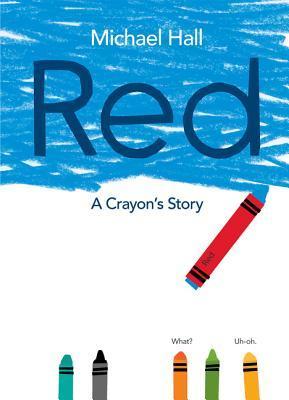
Lola and the Boy Next Door (#2) by Stephanie Perkins

Published: 1 June 2011 (print)/11 October 2011 (audio) Goodreads badge
Publisher:
Usborne Publishing/Books on Tape
Pages: 384/8 hrs and 59 mins
Narrator: Shannon McManus
Format: Audiobook
Genre: Young Adult Romance
★   ★   ★ – 3 Stars

Lola Nolan is a budding costume designer, and for her, the more outrageous, sparkly, and fun the outfit, the better. And everything is pretty perfect in her life (right down to her hot rocker boyfriend) until the Bell twins, Calliope and Cricket, return to the neighborhood. When Cricket, a gifted inventor, steps out from his twin sister’s shadow and back into Lola’s life, she must finally reconcile a lifetime of feelings for the boy next door.

I am well behind the hype for Perkins’ series, though I did experience all the Anna hype at the time, it took me a few more years before I got a chance to read it. But then I never continued with the series. I’m not sure whether Anna didn’t drive me enough to want to keep reading, or it was one of those ‘one day’ books and then suddenly years have passed. The important thing is, I was not a fan.

I don’t think enough was put on the fact twenty one year old Max got together with Lola at sixteen. I know Lola is our perspective so it’s not going to be balanced but I didn’t like it. By the time the story starts Lola is seventeen, Max is twenty two, and they’ve been dating a year was a surprise, I thought it was relatively new. I couldn’t understand why a guy in a band, who tours the country, old enough to drink and be in bars would be ok dating a sixteen year old. One still in high school, with all the childish drama, and be happy with that? It’s not like he was eighteen or nineteen. Are we meant to think it was because he really cares about her? It adds another level when he starts calling her Lolita and all the red flags already raised are suddenly waving around.

Lola’s parents do the best they can in her situation – making Max have weekly meals with them, keeping track of what they’re doing in a non-invasive way. Lola admits that they know if they enforce anything harsher or make them stop seeing each other it would only push them closer. It doesn’t stop her lying and sneaking around though despite the trust they’ve put in her.

Her dads were great characters, and I really enjoyed their scenes and their relationship with Lola and one another. They were fun and interesting and supportive. The Norah element was interesting and spread nicely through the story. You can definitely see Lola being burned before by her birth mother and being the selfish person she is having little understanding of what it means beyond her own feelings.

Aside from the Max thing, the actual story was fine. Lola is a quirky girl who goes to extreme effort in her outfits and how she presents herself. It’s amazing she gets away with it at school, but it is a creative hobby for her.

The whole story arc with Cricket and his family was interesting and I liked how it naturally came together by the end. I can see how everyone thinks it’s sweet and it is, but at the same time Lola doesn’t deserve Cricket. He’s too nice for her.

So much of the praise for this book goes towards Lola and her relationship with Cricket, which isn’t for most of the book. She’s angry at him, wary of him, slowly comes to be ok with him all while still dating Max. Her issues with him are valid, though her absolute fear at them returning was a tad over the top.

Once the story focused more on Cricket and Lola’s friendship the story was better, with a title like this you know how it will end, I just wish there’s been a better way to get them together without having to read about creepy Max. There was enough hurt feelings and history to build on where we didn’t need to normalise that kind of relationship.

You can purchase Lola and the Boy Next Door via the following

QBDDymocks | Booktopia

WorderyBlackwell’s | Angus & Robertson

Fishpond | Amazon | Amazon Aust | Audible

Previous Older Entries Next Newer Entries