They All Saw A Cat by Brendan Wenzel

Published: 30th August 2016Goodreads badge
Publisher:
Chronicle Books
Illustrator: Brendan Wenzel
Pages: 44
Format: Picture Book
★   ★   ★   ★  – 4 Stars

The cat walked through the world, with its whiskers, ears, and paws . . .

In this celebration of observation, curiosity, and imagination, Brendan Wenzel shows us the many views of one cat, and how perspective shapes what we see. When you see a cat, what do you see?

I was pleasantly surprised by this story. The narrative is simple as it describes the cat walking through the world and telling readers who saw the cat, not much more than that. The cleverness is in the illustrations because they show not only that the creatures saw the cat, but what the cat looked like to them when they saw it.

Wenzel’s drawings show how the cat changes depending on the perspective of whoever is looking be it worm, bee, or child. It is incredibly clever and while the story is simple and basic, the illustrations add another level. In an unspoken way it teaches kids that animals see differently to us, and perspective changes depending on the eyes, the vantage point, and the intent.

This is a different type of story as there isn’t so much a story than an exploration of perspective. It’s a good teaching tool about how animals see the world and the journeys of a cat.

You can purchase They All Saw A Cat via the following

QBD | Booktopia | Book Depository

Dymocks | Wordery | Angus and Robinson

 Fishpond | Amazon | Amazon Aust | Audible

Coffee, Cake and Contemporary Women’s Stories

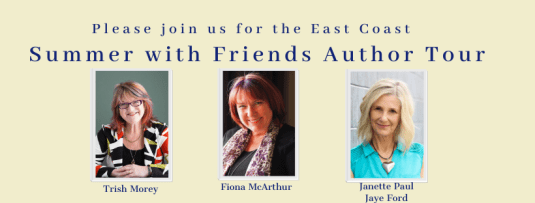
Saturday was my big bookish day and after I had spent my morning up at the Wallsend book sale, I headed down to Lake Macquarie for a coffee, cake and books event in the afternoon. The event was held in a cute little café opposite the lake in Warners Bay and there was a wonderful view of the water from the tables. The authors in conversation were Trish Morey, Fiona McArthur, and special guest for the day Cathryn Hein with Jaye Ford as interviewer. Julie from Lake Macquarie libraries welcomed everyone and said that the event was the first of hopefully many like it. For a first time event it was well attended, the tables were full and there were delectable nibbles provided before and during the event from the café. The authors themselves were lovely as well. I’d met most of them at various other things before and being able to enjoy their conversations, their friendship and their stories was special and not only allowed you to get to know these talented women a bit better, but gain an insight into their craft.

Jaye, Cathryn, Trish, and Fiona

Jaye started the afternoon off introducing everyone and explained that this was part of their Summer With Friends Tour that herself, Trish and Fiona were doing, this time with an extra friend in Cathryn. Jaye spoke to each of the authors about their latest books, their inspirations and how the story developed. Trish explained how her latest book, One Summer Between Friends, got to be set on Lord Howe Island after a holiday there reminded her of its beauty. With a desire for a small town type setting, a place where everyone knows everything and you can’t easily escape, Lord Howe was the perfect location. She explained how she wanted to test the boundaries of friendship, wanted it to be fractured and see if it could be put together again. Trish also explained how life imitating art in her own world helped to make her book stronger because she was able to put personal experience into it. The hands on research she used didn’t change her story a great deal, she explained, but the detail and emotion she was able to now include was based on her real reactions, something which I thought was brave and amazing.

Fiona’s book, The Desert Midwife, came from a previous version which had been rejected from the publisher but had now been reworked into something similar but new. Jaye spoke with Fiona about the concept of love at first sight and Fiona admitted she knew three people who’d experienced the phenomenon, herself included with her own husband. This notion is explored in her novel and how a woman is able to cope when her loving husband suddenly no longer remembers her. Jaye asked about Fiona’s research and we heard stories of travelling around communities near Uluru and how interactions with the communities influenced Fiona’s story. She spoke about midwifery and how she always likes to promote that birth is natural, how if left to nature it usually sorts itself out and she joked that often midwives instruct doctors on better ways to do things. Their conversation turned to Fiona’s new endeavour into indie publishing with her book Midwife on the Orient Express and she expressed how nice it was to be able to select her own cover, keep the title she wanted and how she had been inspired by others, like Cathryn, who had gone out on their own.

Cathryn’s own story, Eddie and the Show Queen – the fifth in her series set in the Levenham’s area, goes to some emotional places but it is one filled with humour too. Jaye spoke to Cathryn about how she came up with her ideas for the various, amusing fundraising solutions in the story and Cathryn admitted it was the most fun she’d had coming up with all of those options. Bringing it back to the dual tones, Jaye asked how it felt to write both emotions and Cathryn said she enjoyed the contrast between the two. She said it wasn’t real if people were happy all the time and if she can make herself cry when she’s writing it, that’s good. Being the fifth book in a series, Cathryn spoke about how after writing the first – Rocking Horse Hill – she wanted to explore the stories of more characters. She explained how she comes up with the titles and then writes the book to that title. Cathryn explained with this new one, Show Queen was originally Show Girl but in an international market Show Girl means something different entirely and so she changed it.

Jaye spoke with the women about creative blocks, Cathryn explaining how some medical issues recently had halted her creativity, but she was slowly gaining it back as she got better. She explained the fear she had when she couldn’t write, she told us writing was her dream and not being able to write was horrible. One thing that really resonated with me was Cathryn saying that “100 words a day gives you a book in the end” which I think I might need to paint in large letters on my wall. It is a wonderful piece of advice and one I know I need. Trish spoke about how writing intense books was hard when her own life had become intense with family issues and so she needed to write a different kind of book, this also included not writing about sex all the time. Fiona told us that in the beginning she had trouble finding the time to write with children and a husband to care for and so she found some hours in the early morning that were all hers. Between 4:30am and 6am there was time no one wanted her for anything and it allowed her to write. Now she had retired she has all day which is even better. Fiona also offered some more fabulous advice telling us “if you keep going, eventually you get there”. Another for my wall.

Jaye spoke with the women about their routines and how they started their days, where their writing process took them. From long walks to doing Sudoku and taking afternoon naps there were numerous routines to get the brain kicked into gear and allowing time for plot points to be nutted out. Cathryn reminded everyone that you have to be disciplined because it is a business, and Jaye invited each author to talk about their writing process and how they gain their ideas and start planning (a plotter), or whether they make it up on the fly (a pantser). Trish acknowledged everyone has a different process, she likes to start with a ‘what if?’ situation and a character then venture into a story. Fiona is a pantser, and while Cathryn admitted she too is a pantser, she also mentioned that she needs to know how her story starts and she needs a crisis moment before she can start.

By now we’d all been served our afternoon tea and cakes and the audience was able to ask questions. There were some great questions like further clarification on the plotters vs pantsers and how do you start a story in the first place. Fiona sees her scenes like one would a movie and she builds on that first scene, Cathryn told us that the story takes as many pages as it takes to tell the story, whatever that length may be, as long as it doesn’t bore the reader.

Another question from the audience was how to identify and keep track of continuity. Fiona told us that when you start you don’t know your characters well, but you get to know them as you write the book. You get the story out then you can go back and fix it later. Trish said you need to keep your characters grounded, you give them a description at the start and use it as a reference and do the same for personality, find words and titles that go with the characters. I loved Cathryn’s approach, she mentioned she finds three things for her characters: something physical that sets them apart, some verbal tick/saying that is theirs alone, and a gesture that identifies them.

The two hours flew by and I easily could have sat there listening for two hours more. A whole lot more was spoken about, laughed about, and explored but I wrote eight pages of notes and to recap the afternoon in its entirety would be never ending. I will say though, if you ever get a chance to go to an event similar to this I insist you do; it is so wonderful to be allowed access into this world where authors discuss their work, their inspirations and to see the friendships and support that have formed over decades. I was entertained, I was moved, I was inspired not only in my writing but in many other ways too. It was a wholly delightful afternoon.

Book Sale Bargains

I had a huge bookish day on Saturday – the first was I went to the Wallsend Library book sale. This is a huge sale where you can pick up ex library stock for free with a donation to charity on entry. The second thing was I attended a fabulous coffee, cakes and books discussion in Lake Macquarie, but that is a story for later this week.

The book sale scene was familiar, but not too familiar, I have been to a few of these in the past but this one was absolute chaos, I had never seen it that crowded. Thankfully people refrained from using a trolley because I honestly couldn’t even fathom how they would have managed. From the moment the doors opened the crowd surged in, while they all waited you could hardly see the stairs on the way in so seeing them converge on this relatively small room was quite something. Once you were in it was basically on for young and old and you got to become quite intimate with people as we shuffled around, far too close to one another than strangers should ever be. One lady joked that in some places we’d be considered married being this physically close to someone.

The table of children’s and junior fiction books was unruly as mothers emptied boxes at an alarming rate, piling up and gathering, discarding empty boxes and pulling the unopened ones under the table open with their bare hands. It was very similar to seeing a piranha in action and just devour their food. It wasn’t just that table, watching grown adults go after these books with such hunger with no real consideration for the fact we’re all stuck in here like sardines was quite something to behold.

I have been to A LOT of these book sales, not only at Wallsend but also in Newcastle and closer to home. I can’t say I’ve ever seen it as wild as it was that day, and while people behaved, it was still quite chaotic as people ripped into boxes and snatched up books and DVDs with alarming rate. I was in and out in 45 minutes because, ironically, it wasn’t actually the best sale I’d been to there. I didn’t even attempt to look at the adult fiction table because of the crowds around it but the majority of that disappeared pretty fast anyway. By the time I left there wasn’t a lot left so I pitied whoever decided to turn up a couple hours later, I almost hoped there was a second stash out the back for the lunch crowd because there was certainly only scraps remaining when I walked out.

But enough of the crowds, this was my haul:

Stuff Happens: Michael by Philip Gwynne

Stuff Happens: Jack by Tony Wilson

Stuff Happens: Fadi by Scot Gardner

The Interrogation of Ashala Wolf by Ambelin Kwaymullina

The protected by Claire Zorn

Rain Dance by Karen Wood

Love-Shy by Lili Wilkinson

Stagefright by Carole Wilkinson

It was fortunate because I managed to pick up the remaining three Stuff Happens books so I could finish reading the series. Even more fortunate because the Will Kostakis one I had actually owned wasn’t there but the other ones were. I grabbed the Lili Wilkinson and Claire Zorn to add to my collection of their books and in my efforts to expand my #LoveOzYA I grabbed a few unknown titles as well. But overall, not a huge pull and a lot of these I took a gamble on because they sounded good. Here’s hoping they living up to the blurb!

There’s an Alien in Your Book by Tom Fletcher

Published: 16th May 2019Goodreads badge
Publisher:
Puffin
Illustrator: Greg Abbott
Pages: 32
Format: Picture Book
★   ★   ★   ★  – 4 Stars

Tom Fletcher and Greg Abbott have created a new interactive adventure, this time featuring an adorable alien who has crash-landed in YOUR book!

You’ll have to help Alien back up into space, because aliens don’t belong on Earth . . . do they?

What I love about Fletcher’s books is how interactive they are. They require you to blow on pages, turn the book upside down, or pretend to draw on the pages. This time an alien has crashed into our book and we have to help him get home.

I love how the narration openly speaks to the reader and asks them to participate. It makes the alien into a real creature who is tampering and having consequences in and on the book itself. The text moves and changes as the narrative instructs so if you don’t follow along you may find it hard to read if you haven’t turned the book upside down, and it certainly is a lot more fun if it feels like your actions have an effect on the alien.

Abbott’s illustrations are a stand out once again. The adorableness of his creations are one reason why I love these books. While Fletcher’s words and instructions are entertaining, there is an extra level added by seeing the character react to these actions.

The story teaches kids about being helpful and also that everyone deserves to belong no matter what they look like. Being unique and different is not a bad thing and I love that Fletcher doesn’t leave it vague, he makes a point and then changes his mind to make the message clear.

If you loved having fun with Fletcher’s dragon and his monster then you will certainly love this story as well, especially since there is a nice surprise cross over.

You can purchase There’s An Alien in Your Book via the following

QBD | Booktopia | Book Depository

Dymocks | Wordery | Angus and Robinson

 Fishpond | Amazon | Amazon Aust

Growing Up Queer in Australia edited by Benjamin Law

Published: 6th August 2019Goodreads badge

Publisher:
Black Inc
Pages: 288
Format: Paperback
Genre: Non-Fiction
★   ★   ★   ★ – 4 Stars

Compiled by celebrated author and journalist Benjamin Law, Growing Up Queer in Australia assembles voices from across the spectrum of LGBTIQA+ identity. Spanning diverse places, eras, genders, ethnicities and experiences, these are the stories of growing up queer in Australia.

For better or worse, sooner or later, life conspires to reveal you to yourself, and this is growing up.

With contributions from David Marr, Fiona Wright, Nayuka Gorrie, Steve Dow, Holly Throsby, Sally Rugg, Tony Ayres, Nic Holas, Rebecca Shaw, Kerryn Phelps and many more.

Growing Up Queer is filled with voices of all aspects of the LGBTQIA+ community with stories about gay relationships, being intersex, having first loves, lost loves, and those who were important to the lives of all these authors, demonstrating the crucial roles some of them had to play in them finding who they are. The introduction is a good place to start because it includes the content warnings and apologies if the content upsets anyone. The stories are filled with discrimination, family rejection, suicide mention and violence. It is important to warn readers but these are crucial moments because these are stories about growing up queer in Australia, these are real stories and real experiences and knowing that these are hardships that these authors have had to deal with is part of the understanding.

There are stories that show the complex relationships with parents around cultural boundaries, about religion, as well as the struggles and the wins about coming out to family and friends. It isn’t only recent coming out stories either, many previous decades are covered from the 70s to the 90s and 2000s. There is even a story from the 50s that covers hiding your true self until an older age. I wasn’t keeping a real record about when each story was set, nor do all the stories really identify when they take place, but it felt like there were a lot more from the last thirty years than earlier. Not that the last thirty years isn’t a large amount of time for society to change it’s opinions, but I would have loved to hear more stories about the earlier years a well.

There were a lot of stories connected to the marriage equality survey and how the results affected people and their families. Some stories were wonderful, while others were a little heartbreaking. The authors talk about the impact it had on their relationships, their feeling of inclusion, not to mention their anger that it was being debated at all and how it changed how they saw some of their friends and family. Obviously this was a huge change to people’s lives and it was interesting to see their opinions and perspectives.

The “growing up” aspect of the title I was expecting their childhood or young adult experience, and many stories explore that time with recollections from moments in time that were important or crucial to them understanding or embracing . But there were also stories of being older, in their twenties, or an older adult. One author wrote that the growing up part of their queer life was when they were more comfortable in their queerness, not necessarily when they were young which I thought was an interesting approach.

I found myself writing down some brilliant insights and quotes that I think encapsulate what it means to be queer, what society thinks they should be and say, and how those critical and offensive towards them feel they are privileged to say and do. These essays are written by people who are masters with words and I found it helps explain just how different their experiences are from other people and how they are also not the alien figures people think they are. These are just some of my favourites:

“Try as they might, our subversive bodies will always tell us the truth…What censorship is really designed to achieve is the sort of silence that turns what our bodies tell us into shame. This calls for more than censorship of books and films. It also needs the censorship of learning.” – David Marr

“If you can’t be yourself in your own way then god help you when you die with a wallet full of fake IDs.” – Tim Sinclair

“All identities, queer or not, are fictional stories. The important of queer storytellers is not in how they prove their truth, but in how they prove it is necessary to tell our stories in a way that makes us comfortable.” – Oliver Reeson

The anthology is made of essays, but some were more essay like, some were memoirs that told of a certain moment, and some felt like wonderful fictional stories they were so beautifully told. I found myself getting quite caught up in some of these tales, drawn in by their way with words and their fascinating lives about being part of the LGBTQIA+ community and the experiences they had had. While there were stories of trauma and trouble, there isn’t a huge focus on it. Many contributors wrote about how amazing it is nowadays that sexuality is spoken about more openly than ever before, but it’s acknowledged that fear is still there.

I was expecting more stories that talked about the struggles of discrimination, especially in the earlier decades about fighting to decriminalise homosexuality or other discrimination. I completely understand though that hiding who you were was the best defence you could ever have and embracing your queerness by celebrating the good moments is better than focusing on the bad. Initially I thought these types of stories needed to be included because the history is important and acknowledging the past is important even if it hurts. But it is also important to tell stories of happiness and hope, and there are mentions of the violence some people experienced, it isn’t focused on a lot but it isn’t omitted either.

This is a wonderful collection that could help people understand who they are, and it is a wonderful way to understand he lives of others, the struggles they have faced and makes you realise that as wonderful as things have become, there is still a way to go.

You can purchase Growing Up Queer via the following

QBD | Booktopia | Book Depository

Dymocks | Angus and Robinson

 Fishpond | Amazon | Amazon Aust | Audible
Previous Older Entries Next Newer Entries