The Way I Used to Be (#1) by Amber Smith

Published: 22 March 2016 (print)/23 May 2023 (audio) Goodreads badge
Publisher:
Margaret K. McElderry Books/Spotify Books
Pages: 385/9 hrs and 36 mins
Narrator: Rebekkah Ross
Format: Audiobook
Genre: Young Adult
★   ★   – 2.5 Stars

Eden was always good at being good. Starting high school didn’t change who she was. But the night her brother’s best friend rapes her, Eden’s world capsizes.

What was once simple, is now complex. What Eden once loved—who she once loved—she now hates. What she thought she knew to be true, is now lies. Nothing makes sense anymore, and she knows she’s supposed to tell someone what happened but she can’t. So she buries it instead. And she buries the way she used to be.

Told in four parts—freshman, sophomore, junior, and senior year—this provocative debut reveals the deep cuts of trauma. But it also demonstrates one young woman’s strength as she navigates the disappointment and unbearable pains of adolescence, of first love and first heartbreak, of friendships broken and rebuilt, all while learning to embrace the power of survival she never knew she had hidden within her heart. 

I know this is supposed to be about the emotional impact of trauma and it is. But as much as I tried to appreciate the story it was telling me I couldn’t get into it. It has been compared to Speak, and I think Speak was more impactful, but at the same time there is no one way to experience trauma and react to trauma so it’s also not a fair comparison.

Smith captures characters well with little effort. We understand exactly who Eden’s mother is early on, as well as her father. But living inside Eden’s head we see how trapped she is, and how the want to be asked or seen is like a burning flame no one is paying attention to. Starting at a young age it’s easy to see why she is voiceless, unable to even begin to process what has happened to her. The reveals through the novel are aptly timed and it’s interesting to see the changes made as each new year passes.

With such a sensitive topic it feels wrong somehow to say I got bored reading this. Smith jumps through four years remarkably well, we don’t have to read about every passing day and the jumps are a great way to see how time has changed Eden and those around her. It also helps you avoid having to fill in the blanks around conversations and answer questions that may come up. I had a lot of questions and how some things were feasible, but it is never addressed and time jumps miss a lot so it’s easy not to think about.

One thing I found, and it’s my own fault for continuing to read American YA, they are obsessed with always deeply setting them in a school to the small details. It’s 2024, and while this book was published in 2016, have schools in the States still not grown out of the class system at school of jocks and nerds, the weird kids and the ostracised? Everyone regulated to their own table, never shall they cross, and we will pick on you in the cafeteria for being different? Maybe if you didn’t all eat in one room you could sit away from the tormenting kids. Get some Vitamin D and maybe you’ll calm down. It’s sad in a way if the experiences are still like what the 80s movies always depicted. They wouldn’t keep putting it in books if it was relatable to someone’s life, right? It kicks off key plot points but it’s a tired trope but one I’m starting to think is still incredibly realistic.

What annoyed me most about this book is at the very end, the very final few chapters Smith managed to get me intrigued about the sequel. After putting up with the story, I now have to decide if I want to see what happens next. It isn’t that that we shouldn’t hear stories like Eden’s, far from it. It’s how such an emotional and empowering story managed to feel boring and unengaging. I persevered because you want to see where Eden’s going to end up, how she is going to tackle this through her developmental years and the impact it will have on those around her. I read enough into things myself to add insights. You can implant how she has denied her trauma because she was too young to understand, how she has embraced her rumours, or how she reacts to her trauma without even knowing about it. I only wish I had loved the story more because I think it is important.

The ending gave it the extra half star and I think the half star might get me to read the sequel.

You can purchase The Way I Used to Be via the following

QBD | Booktopia

WorderyAngus and Robinson | Blackwell’s

 Fishpond | Amazon | Amazon Aust | Audible

If It Makes You Happy by Claire Kann

Published: 04 June 2019 (print)/2021 (audio) Goodreads badge
Publisher:
Swoon Reads/Spotify Audio
Pages: 352/9 hrs and 48 mins
Narrator: Caroline Sorunke
Format: Audiobook
Genre: Young Adult Contemporary
★   ★   ★ – 3 Stars

Winnie is living her best fat girl life and is on her way to the best place on earth. No, not Disneyland–her Granny’s diner, Goldeen’s, in the small town of Misty Haven. While there, she works in her fabulous 50’s inspired uniform, twirling around the diner floor and earning an obscene amount of tips. With her family and ungirlfriend at her side, she has everything she needs for one last perfect summer before starting college in the fall.

 …until she becomes Misty Haven’s Summer Queen in a highly anticipated matchmaking tradition that she wants absolutely nothing to do with.

 Newly crowned, Winnie is forced to take centre stage in photoshoots and a never-ending list of community royal engagements. Almost immediately, she discovers that she’s deathly afraid of it all: the spotlight, the obligations, and the way her Merry Haven Summer King, wears his heart, humour, and honesty on his sleeve.

 Stripped of Goldeen’s protective bubble, to salvage her summer Winnie must conquer her fears, defy expectations, and be the best Winnie she knows she can be–regardless of what anyone else thinks of her.

I almost gave up on this book quite early on. It was uninteresting and I wasn’t connecting to these characters or their weird small town celebration. It is one of those small town beauty pageants that is revered to only those in the town limits. Puddin’ had something similar which was also just as strange.

I persisted because I wanted to see the diversity rep, it had appeared on a few lists and I was reading it as a box ticker instead of any real interest in the plot. Thankfully it got better by the halfway point, by then you get to know the characters and could work around the weird stuff and pick out some good moments.

I liked Winnie, and I liked her opinions and her fight against injustice. The weird pageant isn’t as big of a plot point as I thought it would be which made it better. I zoned out on a few bits but it didn’t impact the plot or my understanding.

It is a great book for representation because it covers a lot of different experiences. Winnie is queer, kinda bi, kinda pan, but queer easily covers it. Despite armed with this knowledge I’m still not entirely sure what the deal is with Cara. There is mention of a queer platonic relationship which is fantastic, and she has been pegged as aromatic but it is vague within the story. Again, unspecified is totally fine, there doesn’t need to be neon signs and labels pointing everything out to a reader, but sometimes it is nice having things confirmed. I think the implications are enough to go on though, especially given Kann’s history of writing LGBTQIA rep.

Around the strong opinions and the personal strife the story does get boring again but you power through. There’s generational issues to explore plus there are good, serious, and honest conversations between friends and family members which is a nice change from unrealistically avoiding conversations for plot tension.

Overall it’s slow, it’s a bit boring, but I can see it is important and Winnie is a good character to tell the story. Sorunke is a decent narrator and brought Winnie’s voice to life. I liked that the ending wasn’t a perfect happily ever after. It felt real, and it felt hopeful, which is all you could ask for really.

You can purchase If It Makes You Happy via the following

QBDDymocks | Booktopia

WorderyBlackwell’s | Angus & Robertson

 Fishpond | Amazon | Amazon Aust | Audible
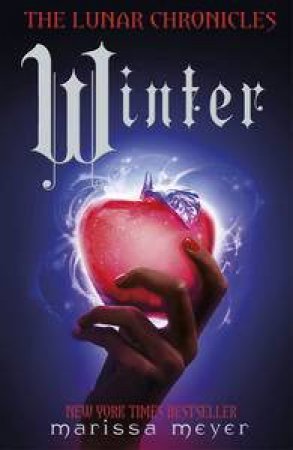
Long Lost Review: Speak by Laurie Halse Anderson

Long Lost Reviews is a monthly meme created by Ally over at Ally’s Appraisals which is posted on the second Thursday of every month. The aim is to start tackling your review backlog. Whether it’s an in-depth analysis of how it affected your life, one sentence stating that you only remember the ending, or that you have no recollection of reading the book at all. 

Published: 01 April 2001Goodreads badge
Publisher:
Puffin
Pages: 202
Format: Paperback
Genre: Young Adult
★   ★   ★ – 3 Stars

The first ten lies they tell you in high school.

“Speak up for yourself—we want to know what you have to say.”

From the first moment of her freshman year at Merryweather High, Melinda knows this is a big fat lie, part of the nonsense of high school. She is friendless, outcast, because she busted an end-of-summer party by calling the cops, so now nobody will talk to her, let alone listen to her.

As time passes, she becomes increasingly isolated and practically stops talking altogether. Only her art class offers any solace, and it is through her work on an art project that she is finally able to face what really happened at that terrible party.

This book is revered and I enjoyed it when read it in 2017. I never got around to writing a review though. Not for lack of want, but time got away from me and then I didn’t have many notes to be able to give it a proper analysis, only the memory of a few scenes and the feeling it was impactful and important. Looking at my rating I only gave it three stars which isn’t terrible, but I was surprised given how impactful I remember some scenes being. Though a few great scenes mean little when I can’t remember a lot of the rest of the book.

What I do know is I really resonated with Melinda. I understood her, I understood her silence, and art was a great form of expression for her. You understand as you read what has happened, you piece it together and even though you know, you’re compelled to keep reading.

It definitely doesn’t escape you that this is an important book, and Halse Anderson has done a fantastic job at telling it from Melinda’s experience. We are shown so much more than we are told but shown so beautifully it’s basically spelled out on the page. Certainly from 1999 it was groundbreaking book and even now it’s been released as a graphic novel so Melinda can share her experience with a new audience.

It’s only short but packs a punch. Ironically writing this Long Lost Review might make me reread it again and understand why I gave it a three star rating. I feel a lot of the rest of the book was the usual US American high school stuff that feels unnatural and unrealistic (whether that’s true or not it’s how I feel sometimes reading it). I might pick up the graphic novel and see, or revisit the book and give it another chance.

Long Lost Review: Can’t Say it Went to Plan by Gabrielle Tozer

Long Lost Reviews is a monthly meme created by Ally over at Ally’s Appraisals which is posted on the second Thursday of every month. The aim is to start tackling your review backlog. Whether it’s an in-depth analysis of how it affected your life, one sentence stating that you only remember the ending, or that you have no recollection of reading the book at all. 

Published: 14 September 2021Goodreads badge
Publisher:
HarperCollins
Pages: 384
Format: Paperback
Genre: Contemporary Young Adult
★   ★   ★  – 3 Stars

School’s out.

Forget study, exams and mapping out the future.

For the next seven days, the only homework is partying with friends, making new ones and living in the moment.

 There are no parents or curfews – and no rules. 

Zoe, Samira and Dahlia are strangers, but they have something in common: their plans for a dream holiday after their final year of school are flipped upside-down before they even arrive at the beach.

From hooking up and heartache, to growing apart, testing friendships and falling in love, anything can go down this week. 

Interestingly I remember reading this book which is often rare for a LLR, but I can’t actually think of anything to say about it. I have tried twice before to read a Tozer book, I didn’t like the other two, but I was willing to give this one a shot. Unfortunately it befell the same fate. I felt it was a little too long, or at least too drawn out, after a while it started to fade out and I became disinterested.

The characters were fine, I never became attached to them and there were a lot to keep track of. There were three different groups with numerous storylines between them so you had to pay attention. I did enjoy when the different groups would cross paths and when they eventually joined up. There is decent character development for a few of the characters but it took a long time. I didn’t expect a quick change, but with the story feeling drawn out the moments in between anything happening felt eternal.

There’s characters to like and characters to dislike, and it was good to see our main players come to their senses and not deal with the idiots they come across. Being a schoolies week of course there had to be the toolies, but Tozer manages them really well and I liked her approach to their inclusion. Clear judgement of a guy who is too old to still be hanging around.

There is still one more Tozer book, I have it on my shelf but deciding when to finally read it will be hard. Do I dive in and get it over with? Wait a few more years to give it a gap between the last one, or do I never even try? These are the questions. It might be that Tozer isn’t the author for me and I should give up.

The Fat Girl by Marilyn Sachs

Published: 1 January 1984 (print)/20 April 2021 (audio) Goodreads badge
Publisher:
Flux/Everand Publications
Pages: 226/4 hrs and 15 mins
Narrator: Trever Goble
Format: Audiobook
Genre: Young Adult
★   ★   ★ – 3 Stars

Jeff Lyons can’t stand Ellen de Luca, the fat girl in his ceramics class. She’s huge, clumsy, can’t throw a pot to save her life, and stares at Jeff all the time. But he’s a “nice guy” and feels terrible when Ellen overhears his hurtful remarks about her. The “crumbs of kindness” he tosses her way soon turn into advice on weight loss, college, clothes, hair . . . and, to everyone’s surprise, good-looking Jeff actually dumps his pretty girlfriend to be with the fat girl Re-creating Ellen is a labor of love, Jeff thinks. But as her pounds melt away, Jeff resents the happy, independent young woman he has unleashed. Where is the gratitude for all he’s done for her? With this darkly ironic take on the classic Pygmalion tale, Marilyn Sachs offers young readers a candid portrayal of what happens when the intoxicating thrill of control is confused with love.

I know we’re meant to hate Jeff.

I know we are meant to hate Jeff.

I have to keep reminding myself we are meant to hate Jeff.

I don’t know why I chose to read this book. Reverse Pygmalion grabbed my attention. Being a short read grabbed my attention. I was curious. But my god, the willpower it takes to push through the hatred is incredible. Kudos to Sachs for writing someone I wanted to punch more than Holden Caulfield.

Jeff is shallow, he is openly shallow. He is unashamedly shallow. I liked seeing Jeff get called out, his mother thinks he’s selfish, he is petulant and a baby. It’s great when he is called out. But the rest is rough.

Jeff is the kind of guy who would be murdered and there’d be no one to miss him.

Sachs goes hard. Jeff is almost hateful in his treatment towards Ellen (or as he frequently refers to her ‘the fat girl’). He is openly hostile and detests her mere existence, even once saying he was turning her “into a human being.”

It is a short read but it is a fascinating study into people like Jeff. People who feel they are superior to those around them and anyone beneath them needs punishing. That when they have their egos bruised even a tiny bit they retaliate, or worse, when they feel they aren’t being appreciated enough, or praised enough for doing the bare minimum, retaliate.

Ellen is the stereotypical overweight person. She eats too much, she’s clumsy, she bumps into things and Sachs really digs it in deep by mentioning Jeff thinks she smells. Everyone other than Ellen is referred to as ‘normal’, Jeff thinks he is a ‘nice guy’ and blames Ellen for him being mean and not making him a good person. It’s incredible.

We see a lot from Ellen’s side, we see her home life and explore her enjoyment of hobbies but we also see her vulnerabilities. Jeff’s mission is to improve Ellen, and she wants his help, she doesn’t want to be the way she is, but she lets Jeff control her. Even when he’s being nice he’s being horrible. His ego grows and he makes Ellen’s achievements about himself.

You see Jeff’s shift at the halfway point. If it took guilt and fear to change him then that’s a start. The great thing is Sachs doesn’t let him off that easy.

It is a fantastic book about making you aware of people like Jeff. If you come across someone like Jeff, run for your life.

Weirdly I didn’t hate the book, but with Jeff behind the wheel I didn’t like reading it. But Sachs points out people’s flaws well, despite the fast pace and the minimal detail and depth. You get a sense of who these characters are and even though the story rushes through days and events, you can see the characters in their elements succinctly.

We have no idea what is happening with other characters further than Jeff’s observations because he is so up himself.

¾ of the way in you see Ellen’s confidence grow, and my own desire for Ellen to drop kick him increased. I needed Jeff to be dealt with. The only shining light in his whole irredeemable life is she scares him into being a decent human being.

The blurb mentions the confusion of control vs love, and Jeff 100% loves being in control, and controlling Ellen. He patronises her, controls how she looks and acts. He dismisses her opinions and thoughts, he is belittling and tells her what she thinks. He ignores her protests, she begs him not to make her do things but he convinces her to do them.

The worst part is Jeff isn’t an idiot, he knows when he mistreats people, but he doesn’t seem to be bothered by it. It’s interesting to see the similarities between Jeff and his family: emotionally manipulative who get their kicks from degrading others.

The good news is you still get to hate Jeff by the end. I was worried, but no. Ellen and another character Norma escape, and we still get to hate Jeff, doomed forever with his mother and their desires to control other people to becoming the people they think they should be.

I was initially going to give this book 1.5 stars, the .5 because Ellen and Norma were the only sensible people in there. But then I remembered you can’t mark a book down because you dislike a character who is designed to be unlikable. So I had another think through and while I disliked Jeff, Sachs tells him in a way we’re supposed to dislike him, supposed to see he is wrong. Not pity him, certainly not. But we see his flaws, his mother’s flaws, see them trapped by their own making. Be grateful to those who escape it. I had to look at the other characters, not through Jeff’s eyes but through their actions.

Writing wise it’s quick, it’s basic detail, jumping quickly through days, but that isn’t a deal breaker. I’m happy with the three. I liked the story it told, but it a different liking the story than anything I have ever read. I hated the story but I liked what happens. I’m going to be confused about this one for a while.

You can purchase The Fat Girl via the following

QBD | Blackwell’s

 Amazon | Amazon Aust | Audible

Previous Older Entries Next Newer Entries