Published: 2 June 2026 (print)/2 June 2026 (audio) 
Publisher: Bloomsbury YA/Bloomsbury YA
Pages: 384/6 hrs and 6 mins
Narrator: Allegra Verzella
Format: Audiobook
Genre: Young Adult Magical Realism
★ ★ ★ ★ ★ – 5 Stars
 Calla Quick has no future. At least, that’s how it feels. Her parents disowned her via text message, and now she can’t afford to go to an all-women’s college with her girlfriend Ramona like they planned. But Calla wonders if maybe that’s for the best—because even though Calla told Ramona her parents disowned her because they found out she’s gay, the truth is, Calla has been questioning whether she’s a girl at all.
Calla wishes she had more time to figure everything out, and one night, her wish is seemingly granted. When Calla and Ramona stumble upon a mysterious farmhouse the woods, they meet five teens who claim they’ve lived there for decades. The land, which they call Amaranth, acts as a safe haven for queer kids throughout history—a place free of hate, free of violence, free of time itself. Here, Calla can be Cal, and they feel instantly accepted. They don’t have to worry about the future because at Amaranth, it will never come—until one night when the clock strikes twelve.
Now under a literal ticking clock, the housemates must find a way to stop time again or face going back to their harsh realities, but as Cal learns everyone’s story, they begin to wonder what queer people lose when their history is lost to time.
I love this book. It is a wonderful example of honesty and truth with a happy ending without ignoring reality. I got a lot of Royals vibes from this but I think that came only from the magic, timeless, mysterious, somehow alive building that catered to everyone’s needs. Not a loop exactly just time standing still.
There is a lot of potential to make the harsh realities of queer people through history better. But that isn’t the point of the house. This is a refuge, a safe haven for people to be themselves, find themselves, and work out who they are. Once they solve that they are transported back into the world they left, whatever that was.
St Jude had every chance to make these characters suffer through their hard lives – they escaped hard lives after all. There was nothing stopping them being thrown back into that prison or that relationship and have it end in tragedy even if they did die standing on their feet knowing who they are. I will not give anything away, but I do want to mention that there isn’t a ‘bury your gays’ moment. They suffer yes, but they survive. And while it is a small spoiler, I think it is important and a good thing to know going in because what they endure is hard and it reflects the lives of queers through history as they conform, are imprisoned, beaten, and are harassed for trying to exist. But they survive. It never felt unrealistic to have these endings. Someone had to survive their experiences against the odds and I think the experiences in the house helped that along.
St Jude has taken great care in how they write characters regarding pronouns and identity plus the switch between internal thoughts and public perception, and how it switches is very well done. There is a note about historical references at the start but even then there is respect to the characters and the wording of sentences carries a lot of respect while implying meaning so readers know what is happening.
Cal and Ramona are good characters and good together. I understood Cal’s internal fears and why she couldn’t say anything about her feelings. It isn’t blown out of proportion and her own uncertainty is evident. I appreciated how St Jude turns expectations on your head while never feeling outlandish either. It just isn’t the common expectation which makes conflicts and interactions refreshing.
I loved all of the characters. They are a range of personality types and being stuck in a house together forever Verzella is a great narrator and really distinguishes these characters; you get each unique voice coming through and that brings full personalities as well.
I loved the historical ranges of characters and the different eras. It was interesting to see what stays the same and what changes for queer youth and society. There is a natural discussion about the evolution of language and I liked seeing modern terminology and understanding trying to be applied to those from different eras. While you can’t always fit historical experiences into modern contexts, I liked that these characters helped each other understand their feelings that they may not have known were fully there aside from their own sense of self.
Queer representation aside, I really like the magical element and the unexpected chaos of time suddenly moving forward as an interesting conundrum for these eternal timeless people. The house rules and the laws of magic St Jude has developed make sense and the otherness of Amaranth is mysterious enough but solid in that you never need any further explanations.
This is my second St Jude book and while I really enjoyed This is How It Ends, this one is better. I loved the depth this story had which you don’t realise right away with so many characters. But it never felt big and grand but it is. It’s quietly powerful and quietly about strength and belief and being yourself, whoever that is. The safety of the house is a paradise in a way and a prison in another but the way it’s navigated after Cal’s arrival is about celebrating living.
You can purchase where You’ll Find Us via the following

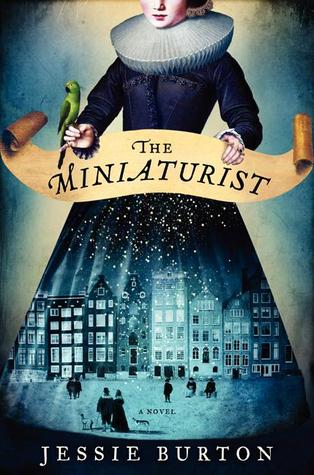 On a brisk autumn day in 1686, eighteen-year-old Nella Oortman arrives in Amsterdam to begin a new life as the wife of illustrious merchant trader Johannes Brandt. But her new home, while splendorous, is not welcoming. Johannes is kind yet distant, always locked in his study or at his warehouse office–leaving Nella alone with his sister, the sharp-tongued and forbidding Marin.