Isla and the Happily Ever After (#3) by Stephanie Perkins

Published: 14 August 2014 (print)/14 August 2014 (audio) Goodreads badge
Publisher:
Dutton/Books on Tape
Pages: 339/8 hrs and 37 mins
Narrator: Grace Experience
Format: Audiobook
Genre: Young Adult Romance
★   ★  – 2 Stars
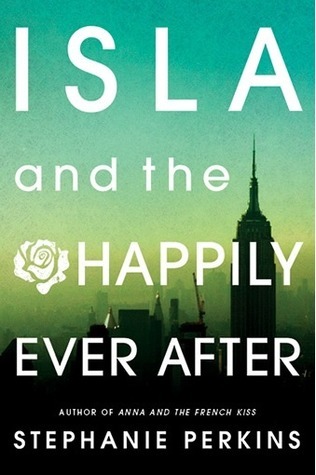
Hopeless romantic Isla has had a crush on introspective cartoonist Josh since their first year at the School of America in Paris. And after a chance encounter in Manhattan over the summer, romance might be closer than Isla imagined. But as they begin their senior year back in France, Isla and Josh are forced to confront the challenges every young couple must face, including family drama, uncertainty about their college futures, and the very real possibility of being apart.

Featuring cameos from fan-favorites Anna, Étienne, Lola, and Cricket, this sweet and sexy story of true love—set against the stunning backdrops of New York City, Paris, and Barcelona—is a swoonworthy conclusion to Stephanie Perkins’s beloved series.

I can’t really complain, it does what it says on the tin, it is a happily ever after. It’s a book of a perfect romance and a perfect love. Can’t really argue with that.

But I am still going to.

I disliked it from quite early on. I don’t know whether it was Isla’s voice or when I realised it was all falling into a perfect set of circumstances. I know it’s a romance, but even the romances I have read don’t lay it on so thick.

It is saccharine and aside from that technically there was nothing wrong but it felt uneventful. Isla and Josh have always loved each other, they get to be together, everyone is ok with it. The minor issues are barely issues and are overcome, and nothing bad ever happen. So much so something has to be fabricated to have some kind of conflict but it felt hollow. Like Perkins needed to have something bad before she wrote a book that sounded like a fairy tale romance. But even a fairy tale romance has some kind of real drama to overcome.

So we put up with this everything is perfect for the first half of the book, and by now I am begging for something to happen. Not dire, but some real conflict or consequential plot. I ended up skipping chunks, even the promise of cameos from other characters in the series wasn’t enough to keep me going. They are a blink and you’ll miss it moment so they may as well not be there. I ended up skipping through a lot of the second half of the book. Which from what I’ve read is more of Isla being utterly obsessed with Josh and their relationship and having no other personality.

I’m pretty sure I liked Josh on his own, but I needed him to stop treating Isla like a perfect and innocent person. Isla even does it herself by mentioning how she shocks people when she swears because no one expects someone so petite to swear. What does that even mean?

I did like how Isla and Kurt’s friendship was demonstrated. I liked how she fought for him, and stood up for their relationship. I also liked how she took him for granted, it gave some realism to the story about how knowing him for ages meant she sometimes became selfish and overlooked his needs. It was a nice break from the lovefest. I needed more of Kurt in the book though because Isla was exhausting and Josh and Isla together were exhausting.

Having someone knocked up on pain meds is a great way to break through the shyness barrier and have your characters confess things to each other, but the story needed to bring itself down to earth for the rest of the story. Even though the ending was ok, I didn’t have any interest in them because of course everything was going to work out for both of them. Everything was fixed and they were living their best lives. At least there was a small amount of growth you could point at.

You can purchase Isla and the Happily Ever After via the following

QBD |  Dymocks | Booktopia

Wordery |  Blackwell’s | Angus & Robertson

Fishpond | Amazon | Amazon Aust

Hooray, Hooray, It’s Library Day by Julie Ann Grasso

Published: 1st July 2024
Publisher:
Scholastic Australia
Illustrator: Heath McKenzie
Pages: 32
Format: Picture Book
★   ★  – 2 Stars

Initially I thought this book was about going to visit a library and borrowing books, and it is, but it is told from the perspective of a single book. It’s a first person narration too which is ok, if not a bit weird.

The little book waits impatiently as they wait to be chosen from the shelf, disappointed as other books around them are chosen. When finally selected they go on a chaotic journey back home, all with the dream of being read in a cosy bed at night.

I was going to mention the horror at mentioning a child trying to touch a book with chocolate covered hands, but then I kept reading and realised it was going to get much worse.

I am always fascinated by these books normalising books going home from the library and being stained, drawn on, or covered in food. I get that there can be some rough times, torn pages, and yes ok, a scribble or two. But please can we start promoting that library books are for everyone, and you spilling spaghetti sauce all over it isn’t funny, because now that is going to be unable to be borrowed by someone else?

Since this book is about sentient books and their perspectives, it should be sadder that now it’s going to be recycled and never borrowed again because this curly red headed child doesn’t know how to look after things that belong to other people.

But in the magic picture book world the book is returned unharmed despite a lot of near misses (somehow being fine despite the spaghetti sauce???) and returned on the shelf ready for another exciting library day.

Cranky librarian aside, it is fun story about the poor book having a rough time before finally getting read. If you look at it from that perspective it could be funny. But that doesn’t fix there isn’t a lot of story to hold onto. There are other books that talk about the experience of library books that still talk about the chaos of going home while being a bit more interesting and engaging.

McKenzie’s illustrations are nice and colourful. Full page spreads that bring Grasso’s words to life, interacting with the text in fun onomatopoeic ways.

It was an ok read, not quite what I thought but a fun adventure of your library experience from the perspective of the books you take out.

You can purchase Hooray, Hooray! It’s Library Day via the following

QBD | Dymocks | Angus & Robertson

 Fishpond | Amazon Aust

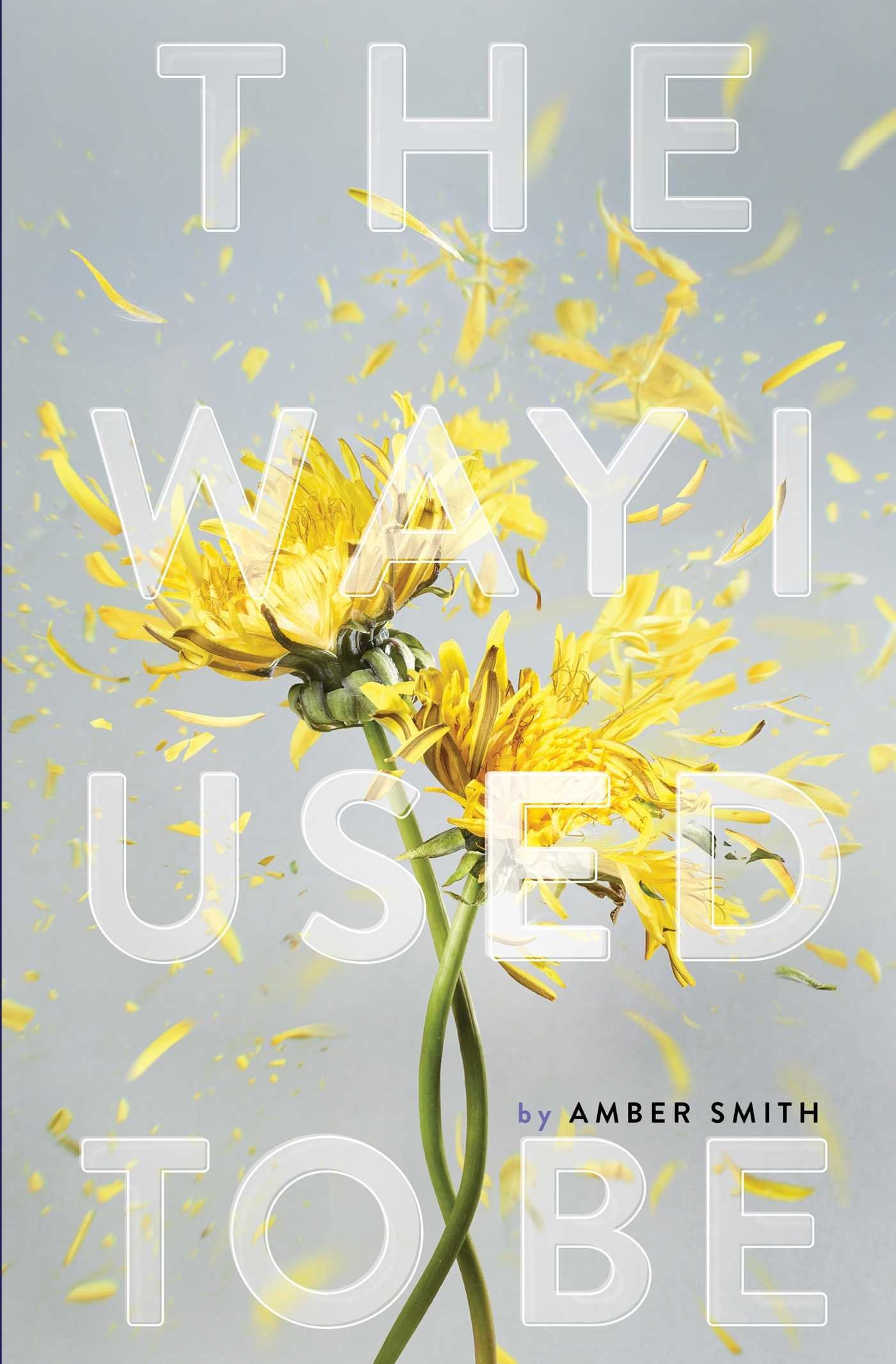
The Way I Used to Be (#1) by Amber Smith

Published: 22 March 2016 (print)/23 May 2023 (audio) Goodreads badge
Publisher:
Margaret K. McElderry Books/Spotify Books
Pages: 385/9 hrs and 36 mins
Narrator: Rebekkah Ross
Format: Audiobook
Genre: Young Adult
★   ★   – 2.5 Stars

Eden was always good at being good. Starting high school didn’t change who she was. But the night her brother’s best friend rapes her, Eden’s world capsizes.

What was once simple, is now complex. What Eden once loved—who she once loved—she now hates. What she thought she knew to be true, is now lies. Nothing makes sense anymore, and she knows she’s supposed to tell someone what happened but she can’t. So she buries it instead. And she buries the way she used to be.

Told in four parts—freshman, sophomore, junior, and senior year—this provocative debut reveals the deep cuts of trauma. But it also demonstrates one young woman’s strength as she navigates the disappointment and unbearable pains of adolescence, of first love and first heartbreak, of friendships broken and rebuilt, all while learning to embrace the power of survival she never knew she had hidden within her heart. 

I know this is supposed to be about the emotional impact of trauma and it is. But as much as I tried to appreciate the story it was telling me I couldn’t get into it. It has been compared to Speak, and I think Speak was more impactful, but at the same time there is no one way to experience trauma and react to trauma so it’s also not a fair comparison.

Smith captures characters well with little effort. We understand exactly who Eden’s mother is early on, as well as her father. But living inside Eden’s head we see how trapped she is, and how the want to be asked or seen is like a burning flame no one is paying attention to. Starting at a young age it’s easy to see why she is voiceless, unable to even begin to process what has happened to her. The reveals through the novel are aptly timed and it’s interesting to see the changes made as each new year passes.

With such a sensitive topic it feels wrong somehow to say I got bored reading this. Smith jumps through four years remarkably well, we don’t have to read about every passing day and the jumps are a great way to see how time has changed Eden and those around her. It also helps you avoid having to fill in the blanks around conversations and answer questions that may come up. I had a lot of questions and how some things were feasible, but it is never addressed and time jumps miss a lot so it’s easy not to think about.

One thing I found, and it’s my own fault for continuing to read American YA, they are obsessed with always deeply setting them in a school to the small details. It’s 2024, and while this book was published in 2016, have schools in the States still not grown out of the class system at school of jocks and nerds, the weird kids and the ostracised? Everyone regulated to their own table, never shall they cross, and we will pick on you in the cafeteria for being different? Maybe if you didn’t all eat in one room you could sit away from the tormenting kids. Get some Vitamin D and maybe you’ll calm down. It’s sad in a way if the experiences are still like what the 80s movies always depicted. They wouldn’t keep putting it in books if it was relatable to someone’s life, right? It kicks off key plot points but it’s a tired trope but one I’m starting to think is still incredibly realistic.

What annoyed me most about this book is at the very end, the very final few chapters Smith managed to get me intrigued about the sequel. After putting up with the story, I now have to decide if I want to see what happens next. It isn’t that that we shouldn’t hear stories like Eden’s, far from it. It’s how such an emotional and empowering story managed to feel boring and unengaging. I persevered because you want to see where Eden’s going to end up, how she is going to tackle this through her developmental years and the impact it will have on those around her. I read enough into things myself to add insights. You can implant how she has denied her trauma because she was too young to understand, how she has embraced her rumours, or how she reacts to her trauma without even knowing about it. I only wish I had loved the story more because I think it is important.

The ending gave it the extra half star and I think the half star might get me to read the sequel.

You can purchase The Way I Used to Be via the following

QBD | Booktopia

Wordery | Angus and Robinson | Blackwell’s

 Fishpond | Amazon | Amazon Aust | Audible

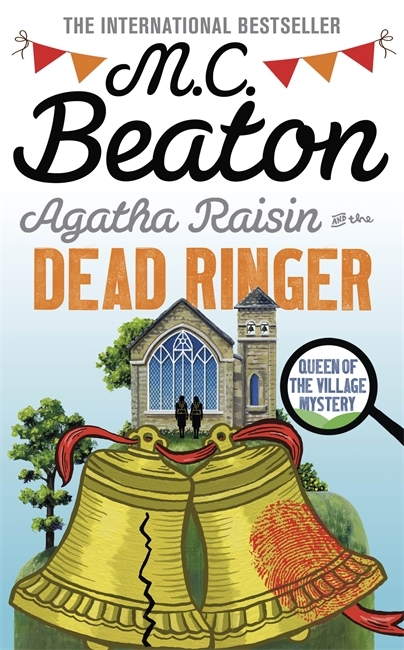
Agatha Raisin and the Dead Ringer (#29) by M. C. Beaton

Published: 2 October 2018 (print)/4 October 2018 (audio) Goodreads badge
Publisher:
Minotaur Books /Audible
Pages: 233/6 hrs and 25 mins
Narrator: Penelope Keith
Format: Audiobook
Genre: Cosy Mystery
★   ★  – 2 Stars

The team of bells at St. Ethelred church is the pride and glory of the idyllic Cotswolds village of Thirk Magna, together with the most dedicated bell ringers in the whole of England: the twins Mavis and Millicent Dupin.
As the village gets ready for the Bishop’s visit, the twins get overly-excited at the prospect of ringing the special peal of bells created for the occasion and start bullying the other bell ringers, forcing them to rehearse and rehearse . . . so much so that Joseph Kennell, a retired lawyer, yells at the sisters that he ‘felt like killing them’!

When the twins’ home is broken into one night and Millicent is found dead, struck from a hammer blow, suspicion falls onto the lawyer.

Will Agatha unmask the real killer and clear Joseph’s name?

I gave this book two stars because I didn’t want to claw my eyes out listening to it like I have in the past but that doesn’t make it good it makes it bearable. It’s so long winded and disjointed with random events and jumps there isn’t a coherent story to really pay attention to. I found I could tune out and come back in and have it in the background and not lose what was happening because nothing is actually happening of any consequence.

Agatha is in a foul mood for the entire first part of the book and all the characters are angry or abusive. Everyone goes from zero to threatening death when mildly inconvenienced and no one can yell at anyone without wishing them dead because they will end up dead a page later. I understand there is a formula to these mysteries, but a formula is different to the exact same thing happening in the same way every single time. We should be able to have multiple suspects in ways other than publically calling for their demise.

There were no pleasant characters and even the familiar regulars seem put out. People go from zero to abuse and while there are no swear words, calling every character a bitch or slut is tiring not to mention a little jarring in a cosy. The writing contains the same sexism and misogyny it’s always had but with James barely in the story thankfully it isn’t through him, Agatha does a lot of it herself.

One thing I noticed is no one is really sad about the death of anybody, and there are plenty to pick from this time round. Even the death of one of the multiple romantic obsessions and affairs Agatha has in this book isn’t enough to pull any great sympathy. The second they’ve died it breaks the spell and she’s back lusting after the next warm, breathing male in the nearby radius.

Somewhere along to way the police stopped telling Agatha to stop interfering and instead now tell her and everyone else things all the time. I guess there’s only so many times you can weakly say “no, don’t, stop” and then have no follow up consequences. The constant ringing of press was ridiculous and annoying too, the police should definitely stop Agatha from doing that, no matter how accepting they now are of her involvement.

The continuity and structure of the storyline is shot with scenes fractured and all over the place, there’s mistakes where main characters have their names changed, not to mention no solid connection to previous books. The budding romance between Charles and Agatha is gone, Agatha’s perpetual unhappiness is a far cry from the rough around the edges but sharp and competent woman we were first introduced to. For someone stuck the same age you can’t even wonder if her sudden despondency is due to her aging, it seems to be a character shift and not one for the better. Despite this our descriptions never change, that is something you can always rely on from Beaton and her bear-like eyed glossy haired woman with the long legs.

It was always a rare delight when you have a little more character development or background revealed because there is no escape from these cyclical stories. Any progression is shoved back down and reversed immediately in the next book and it frustrates you as a reader to see good work being undone. If characters could grow properly it would make for a much better series, you may sacrifice being able to pick up the books at any point in the series but with the poor quality this late in the series it really couldn’t hurt to try and make them tolerable.

You can always tell what year these books were written because social commentary makes its way in through Beaton’s writing and this time we’re treated to Brexit getting mentioned. Keeping Agatha perpetually 53 is one thing not to date your books, but that is certainly one thing that will.

After a while you get sick of Agatha being almost killed and saved, traumatised or totally fine depending what is needed for the story. Epilogues end up being the resolutions to the book and the murders of the next book and as a cliff hanger to lure you in it’s a poor attempt when you’ve had no desire to finish the current one.

It’s amazing to look back at my earlier reviews and see I gave them four stars, something I couldn’t comprehend doing now and they certainly had their issues them. One theory I have is Beaton getting older, or her reluctance to keep writing the series but had an obligation whether she cared about it or not. Another was that they’d started to be ghost written, which would explain the lack of consistency and each book undoing the progress of the last. It isn’t like they were amazing to begin with, but there has definitely a shift that’s been detrimental.

You can purchase Agatha Raisin and the Dead Ringer via the following

QBD | Booktopia | Book Depository

Dymocks | Wordery | Angus and Robinson

 Fishpond | Amazon | Amazon Aust | Audible

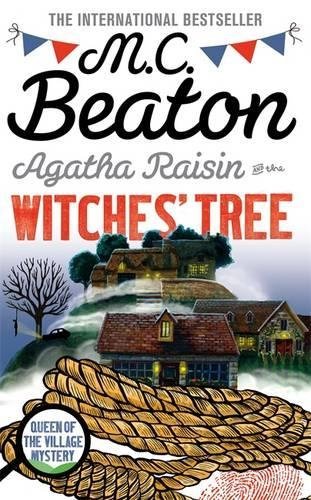
Agatha Raisin and the Witches’ Tree (#28) by M. C. Beaton

Published: 3 October 2017 (print)/ 23 November 2017 (audio) Goodreads badge
Publisher:
Minotaur Books /Audible
Pages: 192/6 hrs and 33 mins
Narrator: Penelope Keith
Format: Audiobook
Genre: Cosy Mystery
★   ★  – 2 Stars

Cotswolds inhabitants are used to inclement weather, but the night sky is especially foggy as Rory and Molly Devere, the new vicar and his wife, drive slowly home from a dinner party in their village of Sumpton Harcourt. They strain to see the road ahead―and then suddenly brake, screeching to a halt. Right in front of them, aglow in the headlights, a body hangs from a gnarled tree at the edge of town. Margaret Darby, an elderly spinster, has been murdered―and the villagers are bewildered as to who would commit such a crime.

Agatha Raisin rises to the occasion (a little glad for the excitement, to tell the truth, after a long run of lost cats and divorces on the books). But Sumpton Harcourt is a small and private village, she finds―a place that poses more questions than answers. And when two more murders follow the first, Agatha begins to fear for her reputation―and even her life. That the village has its own coven of witches certainly doesn’t make her feel any better…

I didn’t care much about the murders or the mystery, I paid more attention to the filler bits about the characters and their day to day which is odd since usually that’s the tedious part. This time around it was certainly the more interesting part of the book.

I have no issue admitting I have no idea what was going on in the wider story, a lot of little things happened that involved a range of people that favoured my attention more. I genuinely got to the end and realised I had no idea who had been the murderer. It could be Beaton brushed over it so quickly that it truly was a non-event but I think that the murders are less of a feature in these books of late. So often they seem to take a back seat to the general interactions around Agatha and other characters, despite this approach rarely paying off successfully.

The different village is always a nice addition. I think you really can’t sustain multiple murders in a single village, even if they are always the newcomer. Beaton’s crude humour and jarring references can shock you from what is meant to be a cosy mystery but so many books in you can only roll your eyes and keep going.

I found there were contradictory moments around Agatha, it’s like Beaton couldn’t decide if she was fearful for her life or doesn’t care what happens, either through bravado or something else. Agatha must always have her life threatened by various people but this time she alternated between fearful and blasé. If it switched between books that would be one thing, but to have it change within the same book felt strange. This fits in with the overall inconsistencies of the story though, so many books lately need a tighter edit, both to stop inconsistencies and flesh out characters and dialogue more. With so many books now in the series it’s crying out for something new and fresh on the page instead of the usual diatribe.

James rears his head long enough to be an absolute horrible person and I don’t know whether the fact he is Agatha’s on and again off again neighbour, ex-husband, and once established character is why we can’t cast him out, make him move villages or outright murder him and dump him in a local pond.

I am still waiting for Agatha and Charles to realise they should be together. It is truly some of the only good writing in these books the interactions between these two. I like their banter and how Charles cares for Agatha despite the fact he is cheap and a philanderer, and Agatha cares about him in her own way. Beaton is definitely hinting at it and comes so close that to take the extra step it would be an amazing move, and one to finally stop her lusting after every man she meets. Redoing her makeup five times a day, changing her outfit all the time, and wallowing about her age, envious of teenagers and general irritability would all be fixed if she settled with Charles and be satisfied with herself.

I’m so close to finishing this series I can see the end in sight. I’m hoping for good and better things but I’ve been hit with whiplash before as all the progress made suddenly is shafted and we’re back to resetting the characters into shadows of their evolved selves. One can only reluctantly pick up the next book and find out.

You can purchase Agatha and the Witches’ Tree via the following

QBD | Booktopia | Book Depository

Dymocks | Wordery | Angus and Robinson

 Fishpond | Amazon | Amazon Aust | Audible

Previous Older Entries Next Newer Entries