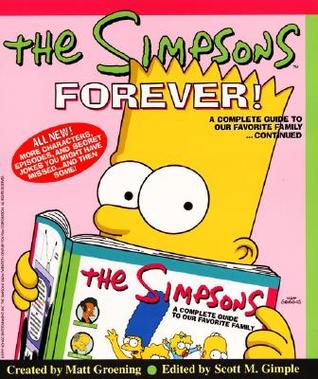
Stardust by Neil Gaiman

Published: October 1st 1998 (print) / 1 May 2017 (audio)Goodreads badge

Publisher:
 Harper Perennial / Bolinda / BBC audio
Pages: 248 / 2 hours 32 minutes
Narrator: Eleanor Bron
Format:
 Audio
Genre: Fantasy
★   ★   ★   ★  – 4 Stars
Life moves at a leisurely pace in the tiny town of Wall—named after the imposing stone barrier which separates the town from a grassy meadow. Here, young Tristran Thorn has lost his heart to the beautiful Victoria Forester and for the coveted prize of her hand, Tristran vows to retrieve a fallen star and deliver it to his beloved. It is an oath that sends him over the ancient wall and into a world that is dangerous and strange beyond imagining…

I had watched the movie years before I even knew it was a book, and was glad enough time had passed that I didn’t remember it so I couldn’t compare the two. I listened to this as an audiobook too which was actually a full-cast dramatization from the BBC. That made it a really great experience, aside from the fact they get a bit too detailed and you have to listen to people talk while they’re eating and drinking which for me was super uncomfortable to listen to. The cast did a great job telling the story. It had great voice casting as well as accompanying soundtrack and sound effects. It was a little something extra than a normal audiobook experience.

One thing I found really interesting about this is that it felt like a short story, even though it was a full novel. The whole book had this duel sense to it, it had a simple premise but it felt full whilst reading it, and it felt substantial even when it wasn’t an overly busy plot.

Tristran is naïve in a way, he is in love which makes him idealistic. He doesn’t pick up on cues from Victoria about her lesser interest in him and he is determined to win her heart. On his quest to find the fallen star we see his good nature shine, and we become involved with his story and worry for his safety because there is no telling where this story might go. The unexpected and the cruel happen much like any fairytale story, but there is still a sense of good shining through.

The thing I love about magic is how the rules can be interpreted and how the regular rules of the universe don’t work. I loved the way Gaiman told this story, I loved how magic is used and how the rules of the magical world play out in the human one in different ways. There are twists and turns and for a simple find and recover story, there are intricate subplots happening that intertwine and connect, even when you don’t realise it. This is where Gaiman is good at his storytelling, creating a story that captivates you and pulls you in, without making it needlessly complicated or grand, yet still providing substance and beauty.

One thing which I both enjoyed and was a bit struck by, was the ending. It is great certainly, but it does end rather abruptly. You get a satisfactory ending for the story that’s told, but I feel like more could have been said just to round off the edges better instead of cutting it so sharply. But that may be the way of the fairy tale Gaiman was trying to tell.

When I finished I did sit down with the intention to rewatch the movie, but from the first instance I saw the differences I turned it off. Even if it was a decent adaptation, one of the things I loved most about the book was changed in the movie and I chose to preserve that memory instead. The way Gaiman uses magic was some of the best parts and when that didn’t translate I chose to not continue, though I’m sure it was a decent movie, it was more a personal choice than that it was a poor adaptation.

You can purchase Stardust via the following

Dymocks | Booktopia

Book Depository | QBD

Amazon | Amazon Aust

Fishpond | Wordery | Angus & Robertson

Artemis by Andy Weir

Published: 14th November 2017Goodreads badge
Publisher:
Broadway Books
Pages: 352
Format: Paperback
Genre: Science Fiction
★   ★   ★  – 3 Stars

Jazz Bashara is a criminal.

Well, sort of. Life on Artemis, the first and only city on the moon, is tough if you’re not a rich tourist or an eccentric billionaire. So smuggling in the occasional harmless bit of contraband barely counts, right? Not when you’ve got debts to pay and your job as a porter barely covers the rent.

Everything changes when Jazz sees the chance to commit the perfect crime, with a reward too lucrative to turn down. But pulling off the impossible is just the start of her problems, as she learns that she’s stepped square into a conspiracy for control of Artemis itself—and that now, her only chance at survival lies in a gambit even riskier than the first.

As someone who ADORED The Martian almost to a serious fault, I was disappointed this didn’t live up to the same feeling. Once I adjusted my expectations and stopped trying to compare it to The Martian, I enjoyed the story. Pushing past that barrier proved extremely difficult because I found myself constantly thinking back to Weir’s other work which, not only is unfair to him, but unfair to my reading experience. I kept expecting it to feel the same, to have the same likeable characters, and the same awe inspiring world.

Jazz is a character who is who normally doesn’t get up to too much trouble herself, she merely aides the illegalities of others. She is clever, too clever for what she is doing but she is stubborn and doesn’t listen when people tell her she has great potential. One of her clear character “charms” is that she is continuing her teenage rebelling well into her twenties which is something you have to get used to because it gets on your nerve a bit. I kept forgetting how old she was meant to be with her behaviour sometimes, but taken with the perspective of her whole story and experience it is slightly forgivable.

Some of Weir’s justifications for her behaviour and relationships was a bit thin, a stolen boyfriend at 17 causes a 10 year rift between friends, and a strange jealously of a fellow co-worker adds to her childish nature as well. There is nothing wrong with having an unlikable character, my only concern was that she was meant to be likeable on some level and it hasn’t hit that mark at all. But character assessment aside, once you accept who she is as a character you can focus more on the story around her.

My interest increased when I realised it was to become somewhat of a mystery. I liked the detective aspect and the problems that needed to be solved. I enjoyed the challenges Jazz faced, especially being in the unique situation of being on the moon. It added new problems and barriers, and it allowed Weir to introduce us more to this world he had created. The only downside was I felt the language was repetitive, and the delivery of information wasn’t always as seamless and natural as it could have been.

Weir has created a great world, one that works in a believable manner. It is futuristic while being grounded in a known reality, combined with a long held science fiction premise: a society on the moon with people who visit, people who live there, and people who are born there. His complicated world construction is aided once again by maps to help you picture the location of everything  and get a sense of this futuristic location with logistics about the day to day life explained through plot points and exposition. The science once again came across as realistic and plausible. It didn’t feel quite so seamless and natural as The Martian, but that might have something to do with the story structure itself. Instead of Watney writing his journal and explaining his process in that form, Jazz tells us her own story in first person and it feels clunky and at times unnatural.

I know it sounds like I didn’t enjoy it but that’s not true. I didn’t love it, but I liked it and I liked the story Weir told. The plot went beyond just a space story and it shows that people will always be people no matter their circumstance or location. There was mystery and intrigue, and there was clever science that I really enjoyed learning about and seeing put into practice.

I quite liked the ending, I think Weir redeemed himself with how he handled the final chapters. There is intrigue, mysteries, and the suspense of things not going to plan. I’d gotten used to Jazz by the end and while I actually thought there were going to be a few more surprises I enjoyed the ending. It made sense for the journey we’d been on and the story Weir was trying to tell.

You can purchase Artemis via the following

Book Depository | QBD

Dymocks | Fishpond | Booktopia

Amazon | Amazon Aust

Angus & Robertson


Chasing Odysseus (#1) by S. D. Gentill

Published: 1st March 2011 Goodreads badge
Publisher:
 Pantera Press
Pages: 353
Format: ebook
Genre: Fantasy/Young Adult
★   ★  – 2 Stars

Weak-eyed Hero is the beloved daughter of Agelaus, a Herdsman of Mount Ida, which looms over the fortified citadel of Troy. Hero, raised under the gentle hand of her father, in the protective company of her three wild, but noble, brothers, is ruled by a fierce piety, and tormented by her Amazon heritage. 

The Herdsmen of Ida hold a sacred trust. Throughout a 10-year Greek siege, they have been feeding the citizens of Troy using the secret tunnels that run beneath the fortress walls. Faithful and fearless, they traverse the ancient passages that only they know. Now Troy has fallen, and despite having led the survivors out of the carnage, the Herdsmen are falsely accused of betrayal. 

Agelaus is murdered by the anguished Trojans. The Herdsmen find themselves hated and hunted by both the Greeks and their friends, the people of Troy. They are forced into hiding, labelled cowards and traitors. Desperate to free their people from the stigma of treachery, young Hero and her brothers accept a magical ship from Pan, their beloved woodland god. They chase after Odysseus, the strategist of those who laid siege to Troy. Only he can explain how the Greeks entered the city, and in doing so cleanse the Herdsmen of the stain of treachery. 

I have wanted to read this book for ages and totally forgot I’d gotten a copy from NetGalley (bad reviewer!). What I found though when I did start reading it, was that it was quite underwhelming. I had been so intrigued by this book for ages and heard good things that I genuinely thought I would enjoy this more than I actually did. I like Greek mythology and I like The Odyssey but while this had familiar characters and references, it did not hold my interest. I found myself skimming just to get through faster.

The story begins up in the mountains that overlook Troy with the herdsman Agelaus and his four children; Hero and her three brothers, Machaon, Cadmus and Lychon. We are introduced to their lives as the Trojan War enters its tenth year and we’re shown what life has been like for those outside the city. We learn early on of Hero’s heritage as an Amazon and how she was rejected by them and left with Agelaus because of her poor eyesight and she is adopted into his family.

The main story kicks off with the fall of Troy and Agelaus is accused of being a traitor who helped the Greeks raiders get into the city. This of course sparks outrage and backlash and it falls on Hero and her brothers to clear the name of her father and discover how the Greeks breached the walls of Troy. This of course means chasing after Odysseus in an effort for him to reveal how he got into the city.

The premise of the story seems intriguing enough, but it is the characters that I feel let it down. I didn’t like Hero as a character. I kept waiting for her Amazonian heritage to come into play and have her be some mighty force, even with her poor eyesight. Instead she is subdued and focuses more on praying to the gods than doing much in terms of helping. Her brothers constantly mock her for her devotion to the gods, and I will say I did like the reminder that just like the present day, not everyone believed in the gods. Her brothers aren’t that interesting either. They all kind of mixed into one another and I didn’t feel connected to them at all.

As for the story, I was intrigued by the premise but it just seemed so strange and mediocre. Gentill does well to reference the original story of The Odyssey, following Odysseus after he ransacks Troy and all the places he visits, but aside from that familiarity I wasn’t that interested. Nothing seems to happen, following after Odysseus isn’t very captivating and even though Gentill tries to add danger and suspense, my lack of interest in the characters didn’t make me concerned for their safety or success and following an already established story didn’t add any real mystery as to what might happen next, probably not in the way Gentill expected it to.

There are heartfelt moments and sad moments which tries to give depth to the narrative, but not executed well enough to feel substantial in my opinion. This is only the first book in a trilogy so it is highly possible all the characters will get some kind of development and growth as the story progresses. The only problem with that though is my interest hasn’t been piqued enough in this book to want to keep going with the series.

You can purchase Chasing Odysseus via the following

Booktopia | Dymocks | Fishpond

QBD | Angus & Robinson

Amazon | Amazon Aust

Norse Mythology by Neil Gaiman

Published: 6th March 2018Goodreads badge
Publisher:
 W. W. Norton & Company
Pages: 304
Format: Paperback
Genre: Fantasy
★   ★  – 2 Stars

Neil Gaiman, long inspired by ancient mythology in creating the fantastical realms of his fiction, presents a bravura rendition of the Norse gods and their world from their origin through their upheaval in Ragnarok. In Norse Mythology, Gaiman stays true to the myths in envisioning the major Norse pantheon: Odin, the highest of the high, wise, daring, and cunning; Thor, Odin’s son, incredibly strong yet not the wisest of gods; and Loki son of a giant blood brother to Odin and a trickster and unsurpassable manipulator.

Gaiman fashions these primeval stories into a novelistic arc that begins with the genesis of the legendary nine worlds and delves into the exploits of deities, dwarfs, and giants. Through Gaiman’s deft and witty prose, these gods emerge with their fiercely competitive natures, their susceptibility to being duped and to duping others, and their tendency to let passion ignite their actions, making these long-ago myths breathe pungent life again.

I know that this is a Neil Gaiman book, and Neil Gaiman is a great storyteller, this time, however, I can’t say that is the case. I loved his work for younger kids, Coraline and The Graveyard Book are amazing. But this…it was boring. It was dull and read like an information dump and I couldn’t get into the “story”. I’d read Gaiman’s introduction and heard all the praise from reviews and readers and I was ready to be taken into this world of mythology alongside Loki and Thor and all their misadventures.  I wanted to be thrown into this world and be captured by their charm and cheek and might. But there was none of that. It was dry and needed a bit more substance to make it less like a textbook of names and facts.

I’m sure this was not Gaiman’s intention, mythology doesn’t need to just be “this god did this and then that happened and then this other god did this” which is how this felt for me reading it. A bit of interesting and creative storytelling could have been included to make it read more like a story without losing the well known mythology. I wasn’t expecting it to read like The Odyssey or anything like that, I didn’t need poetic verse, but I thought Gaiman could have made it more seamless and natural, more of a novelisation of these myths. This was not a story, nor was it even a bunch of short stories. It was a weird experience and one that I grew to dislike very early one.

Now, I will admit some parts were funny. I did laugh at a few scenes and lines, and in the end I had learnt things I hadn’t known about Norse mythology. The problem was that by the midway point I was losing interest and resorted to skimming a few stories and going back in for the final few chapters. The disappointing thing was that nothing much of the stories was lost on me since the book just had key points listed one after another I could get the gist of what I needed to learn and the story that was trying to be told.

The final chapters were interesting, Ragnarok being a hard thing to really ruin, but it was the same style of writing that failed to grab me. I chose to focus instead on looking at the bigger picture and thinking back to the entire story as a whole and making my own story and connections to bring the entire mythology to an end. Something maybe Gaiman could have done a bit better himself.

You can purchase Norse Mythology via the following

Book Depository | Dymocks | Booktopia

Amazon | Amazon Aust 

World of Books | Fishpond | Angus & Robertson

QBD | The Nile


The Simpsons Forever! by Matt Groening

Published: 3rd November 1999Goodreads badge
Publisher:
 Harper Design
Pages: 96
Format: Paperback
Genre: Graphic Novel
★   ★   ★   ★  – 4 Stars

Picking up where The Simpsons: A Complete Guide to our Favorite Family left off, The Simpsons Forever! brings all the history, tidbits, and cold hard facts on every episode from the past two years, and much, much more. Fans will find the highlights of all the shows from seasons nine and ten, plus eyeball–busting two–page spreads for special episodes (like the annual Halloween show). Heavily packed into these pages are updated favourites like Best Homerisms, Famous Chalkboard Sayings, All–New Simpsons Singalong Lyrics, Couch Gags, and classic screen images. And, yes – it’s all cross-referenced!
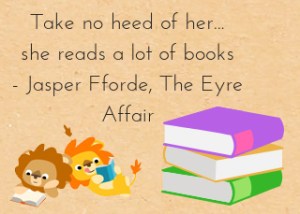

This book is the second as part of a series released by Matt Groening that start at season one and work through the series aired at the time up until season 14. Each book is a continuation of the previous publication with multiple seasons covered within. This is important because anyone who reads this book, especially thinking they are getting a full series exploration, will no doubt be disappointed. While the first book covered seasons 1-8, this second one is very short, covering only seasons 9 and 10 but it still is filled with detail. Each episode overview for both seasons includes quotes, blink and you miss it things you may have missed, as well as fun information about background characters, songs, show highlights, character bios as well as the numerous and varied movie and pop culture references made by the writers and animators.

This is a great read if you like the attention to detail that The Simpsons have always had and the clever and creative signs, references and homage, or unique characters that have been created over the years. The trivia is enlightening and I was reminded of things I had long forgotten and even learnt a few things that made me even more in awe of the genius minds of the people who work on the show.

I went looking for these books when I learnt of them because I’m a long time fan of The Simpsons. This book is from early on in the shows run, when only 10 seasons had been aired, and nowhere near as comprehensive as the later publication featuring the first 20 seasons, which even now is old given the new 30th season. Having said that, it is still a great read. I think being closer to the airdates there were more things to include, and more focus could be put on each episode without worrying about making anything too long or cluttered. If you are a trivia nut like I am the little random facts are fun to learn and it’s great to read about just how much thought goes into background characters and crowd scenes. Hopefully I can track down the rest of these early books because I think they would be an enlightening read, especially ones that cover more seasons.

You can purchase The Simpsons Forever via the following

Amazon | Amazon Aust

World of Books

Previous Older Entries Next Newer Entries